What Can Go Wrong
Median household income in Sugar Grove runs $116,250, above the $106,211 median across the wider service area we cover from Aurora. That number matters more than it sounds like it should, because it's the line where a repair call and a full door replacement start to look like the same decision. At this income level, most owners we talk to would rather pay for one good torsion spring job or a new opener logic board than live with a door that's been limping for two years. If your door is under fifteen years old and one spring broke, that's a repair, not a replacement conversation.
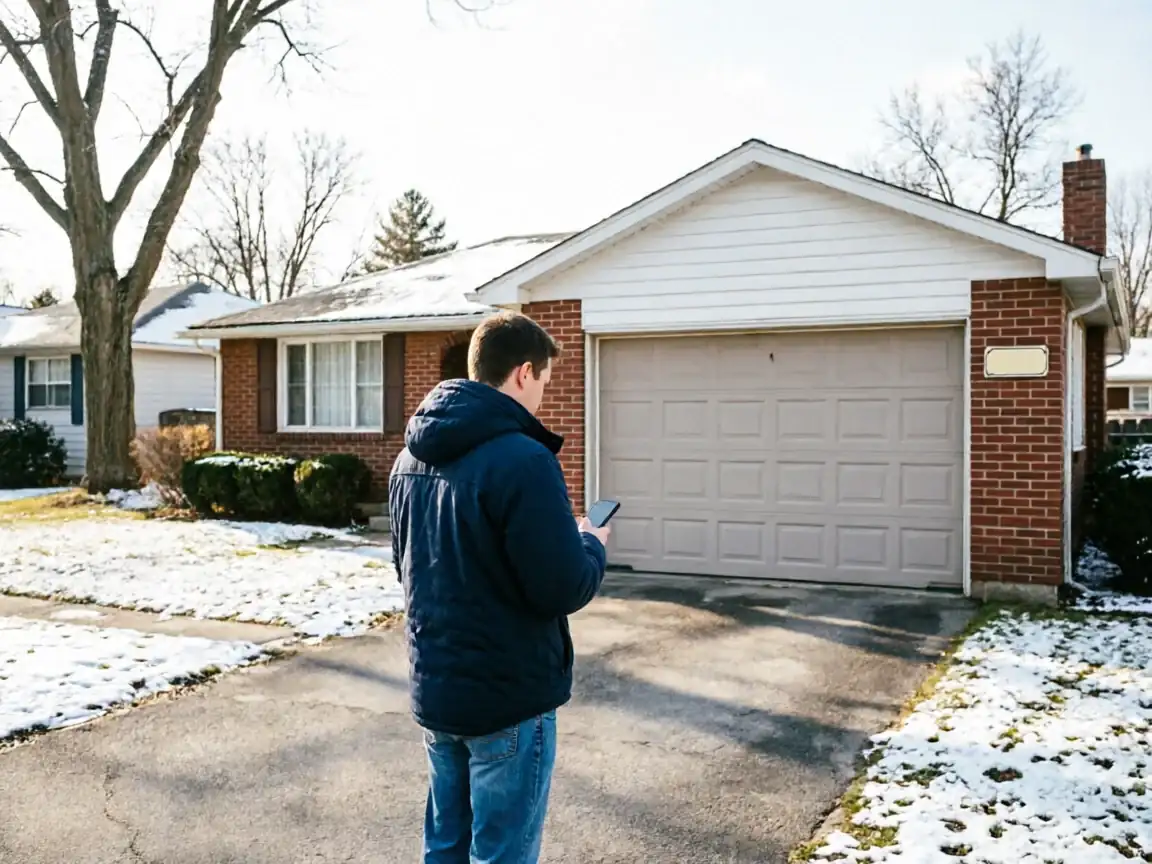
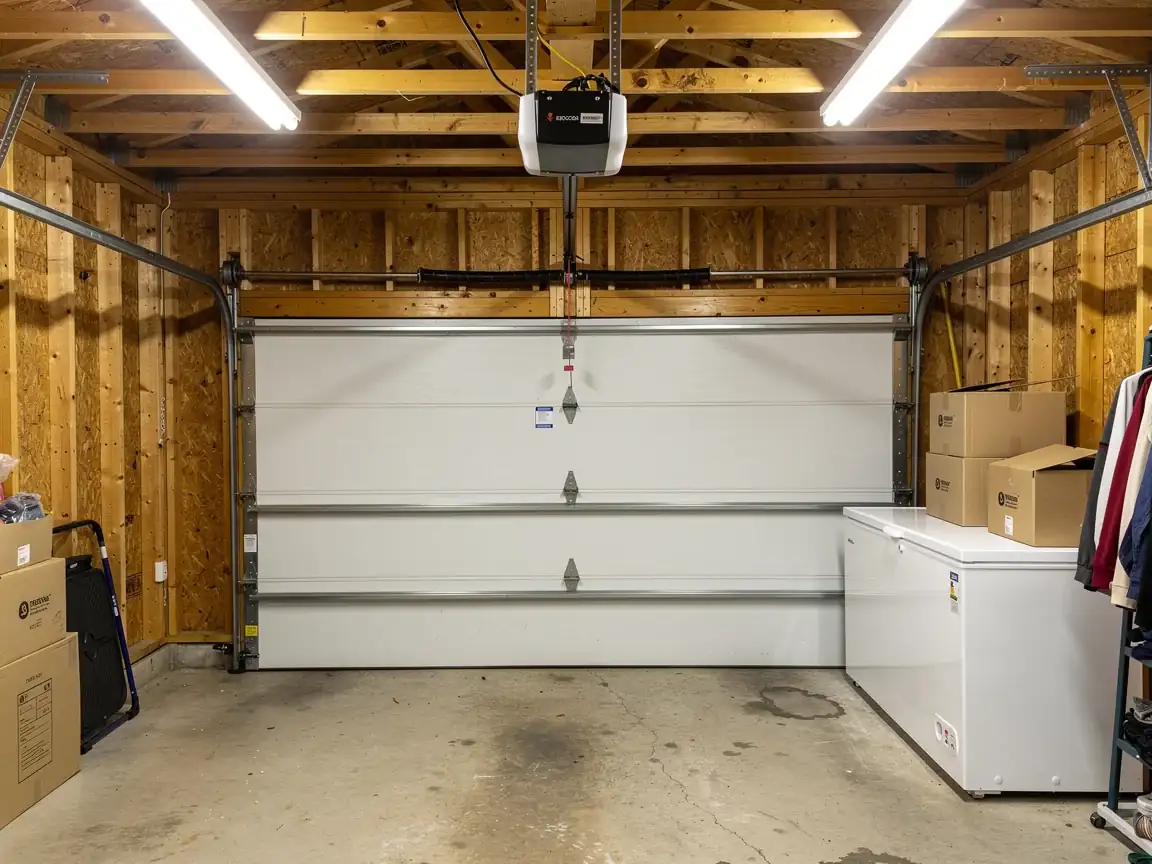
Sugar Grove's housing stock is newer than a lot of what we see closer to Aurora. The broader service area runs 1958 to 2003 with a median build year of 1981, but Sugar Grove's own median build year is 2002 - late in that window, sometimes past it. That means steel sectional doors on torsion springs are standard here, not the one-piece or extension-spring setups you find in older subdivisions. The failure points shift too: circuit boards and safety sensors on openers installed in the early 2000s are now old enough to fail, while the doors themselves are usually still structurally fine. Rollers wear out. Cables fray. Photo-eye sensors drift out of alignment and the door won't close - common on this era of opener.
Doing It Yourself
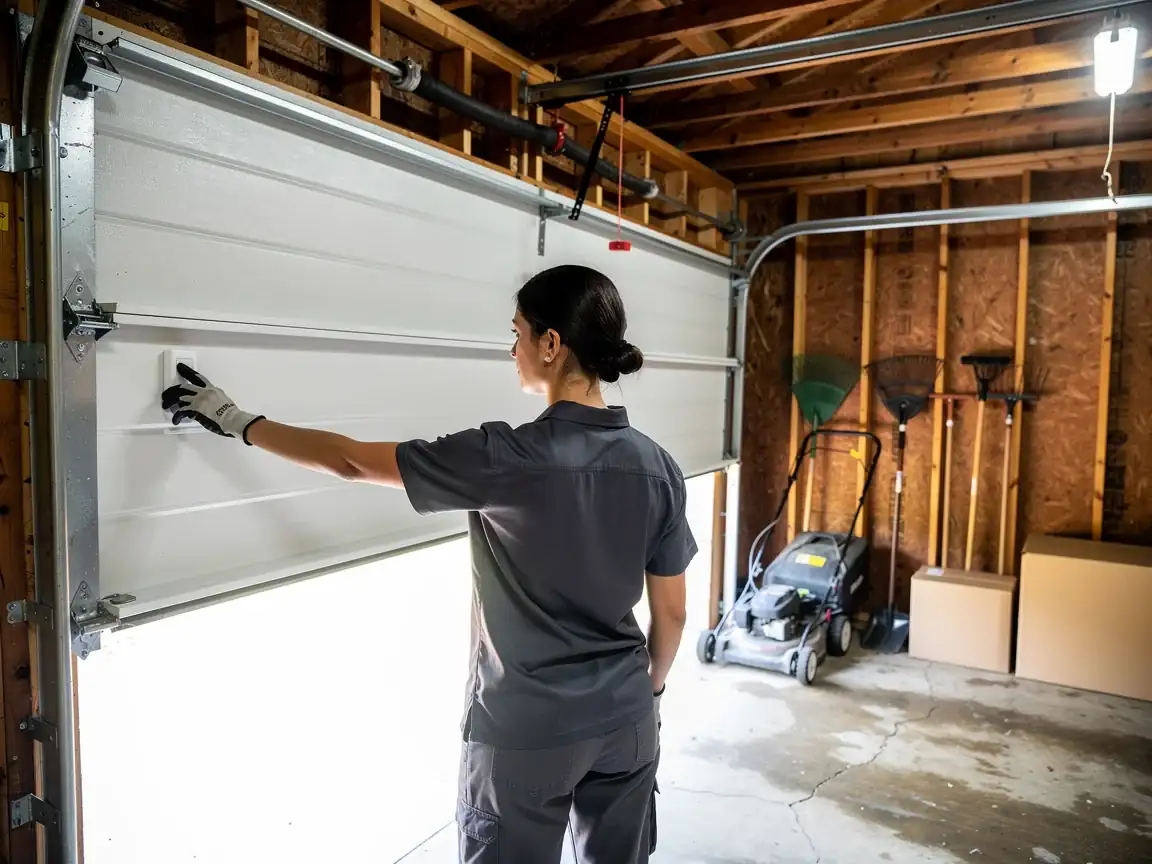
A torsion spring under tension can put someone in the hospital, and that's true no matter how new or old the door is. We're not going to walk you through replacing one. What you can do yourself: check that the photo-eye sensors near the floor are aligned and not blocked, since misalignment is the single most common reason a newer opener won't close the door. You can also test the auto-reverse by placing a 2x4 flat on the ground under the door - it should reverse on contact. If it doesn't, stop using the opener until someone looks at it.
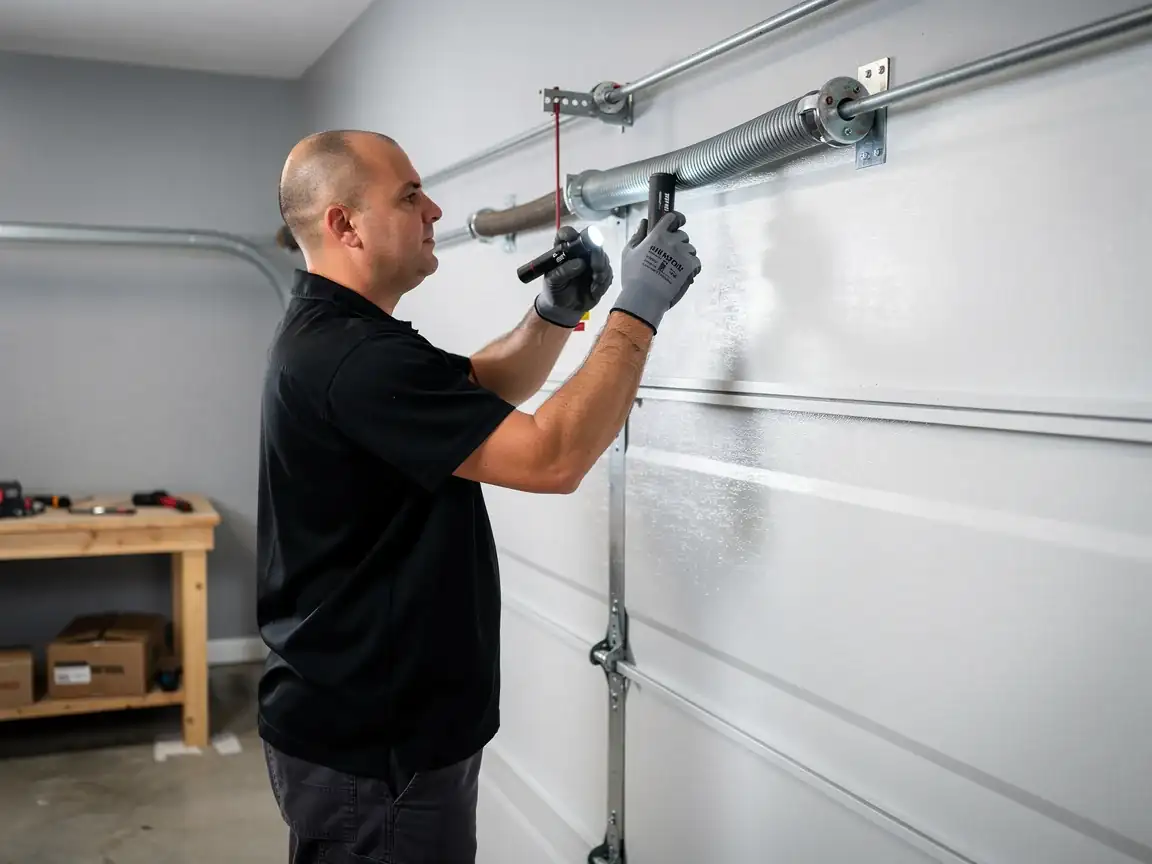
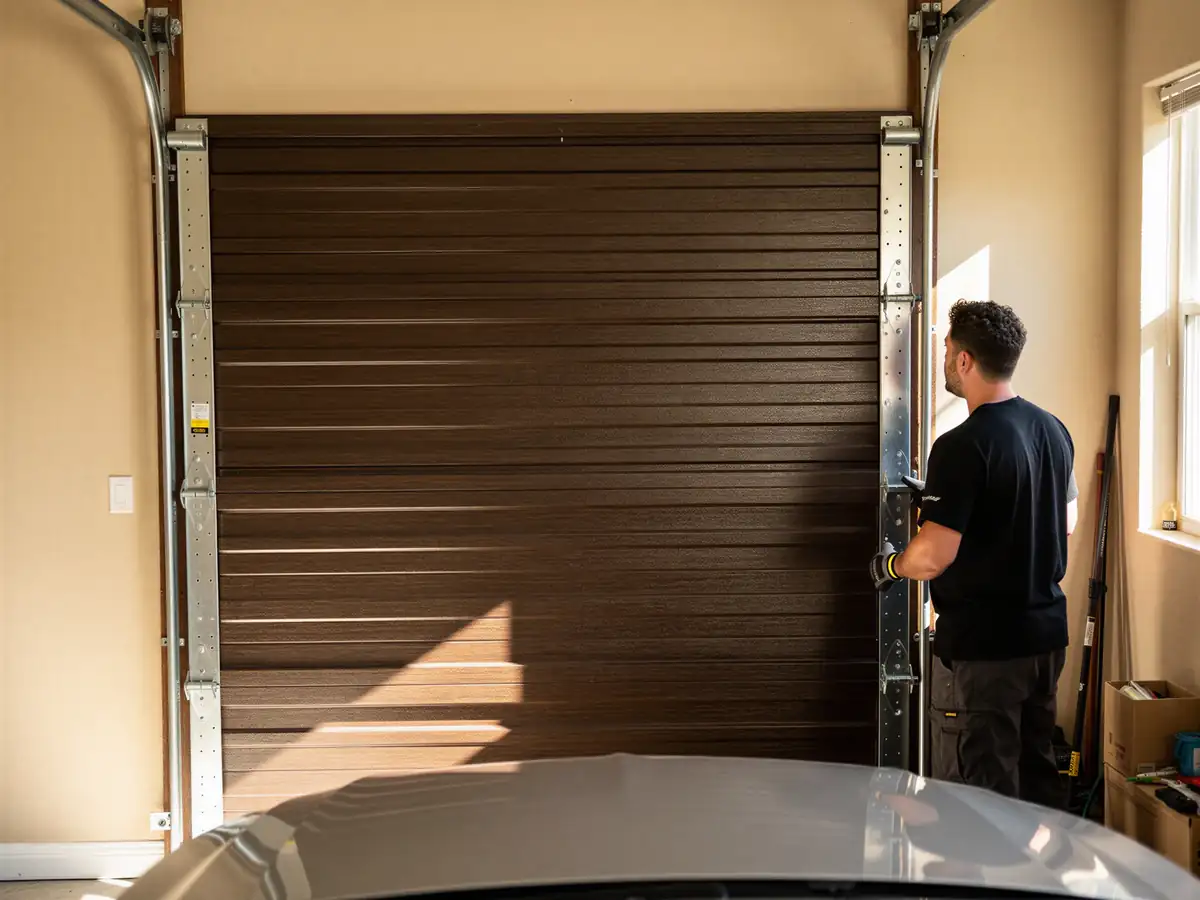
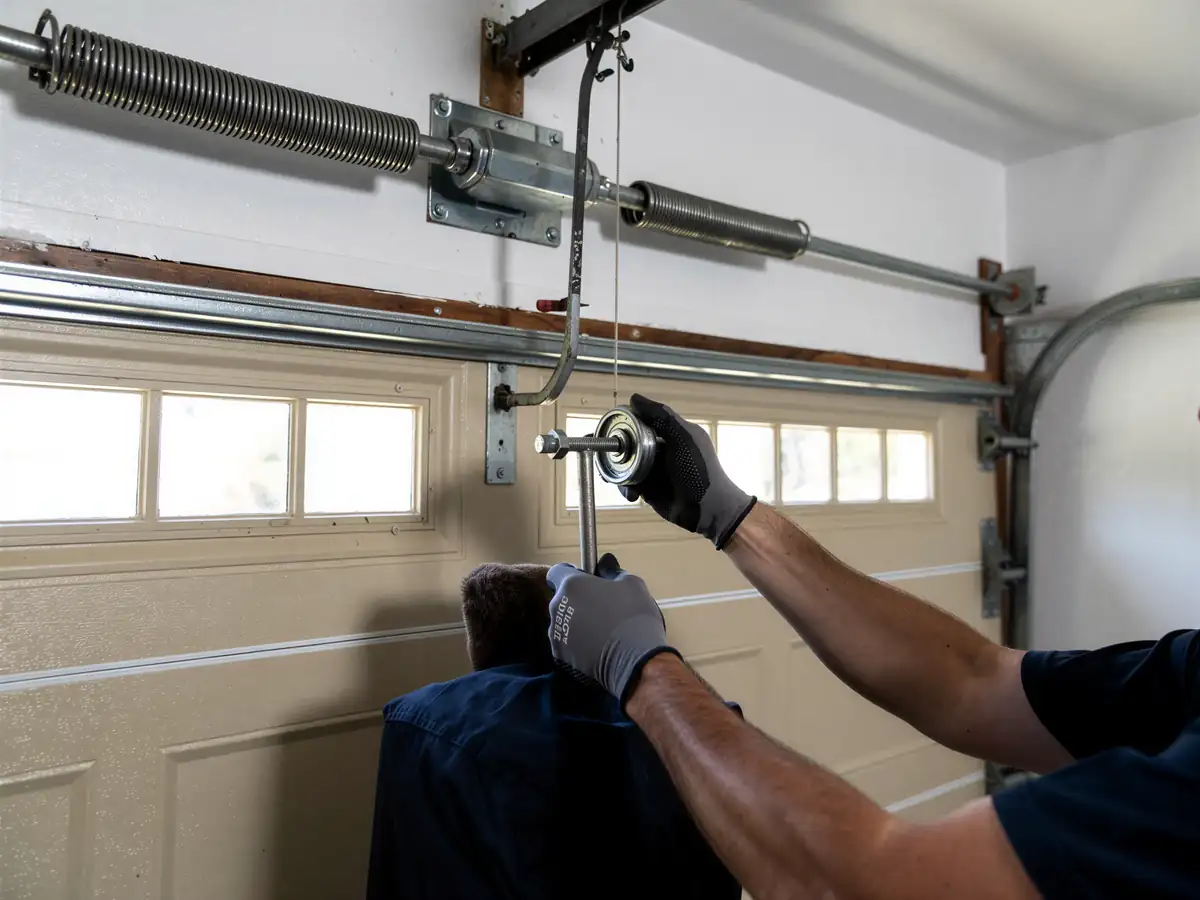
What you shouldn't touch: springs, cables, and anything involving the torsion bar over the door. On a door this age, the hardware is usually still under a manufacturer's original spec, which means parts need to match what's there rather than whatever's on the shelf. Guessing on spring wind or cable gauge on a door built in the early 2000s is how a DIY job turns into a bent track and a bigger bill than the original problem. We'd rather get a call before that happens than after.
The Symptom
The complaint we hear most from homes built around 2002 isn't a door that won't move
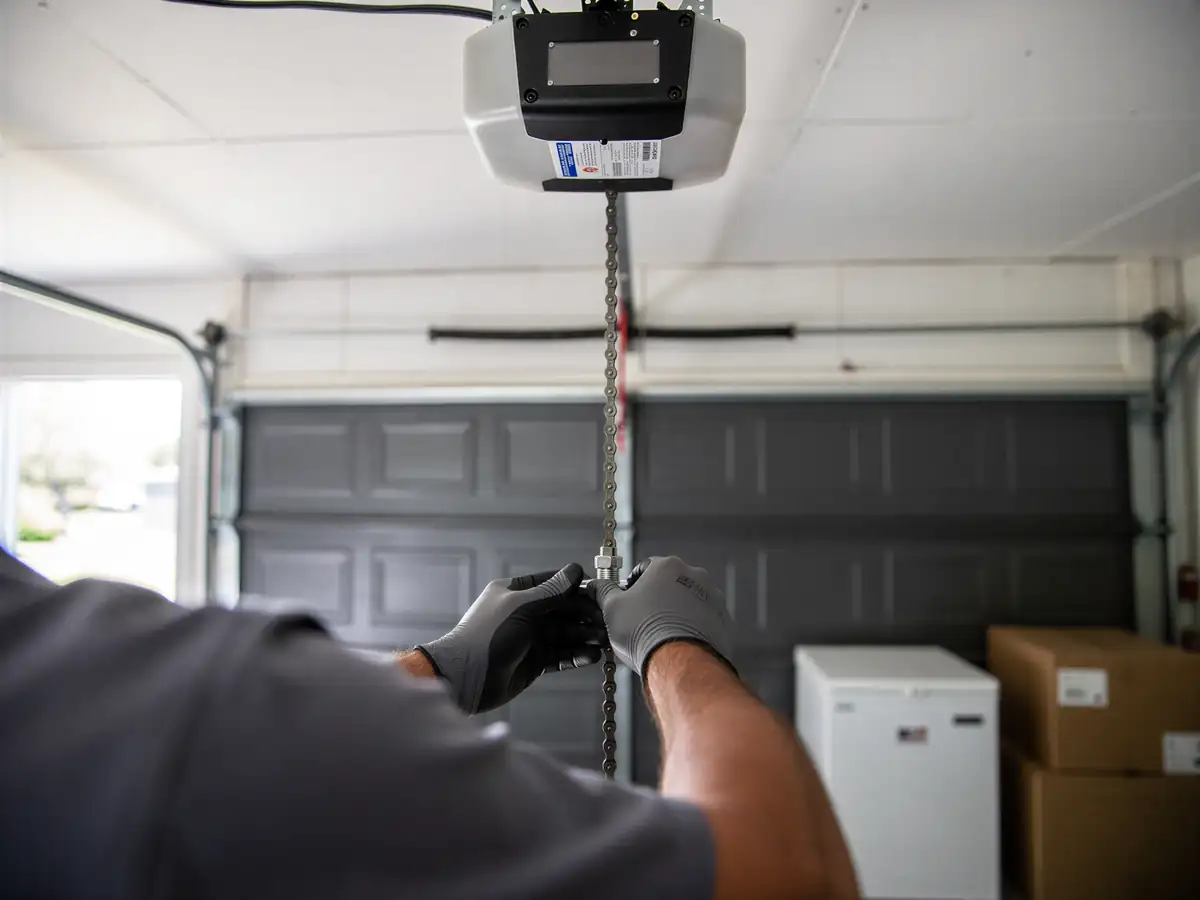
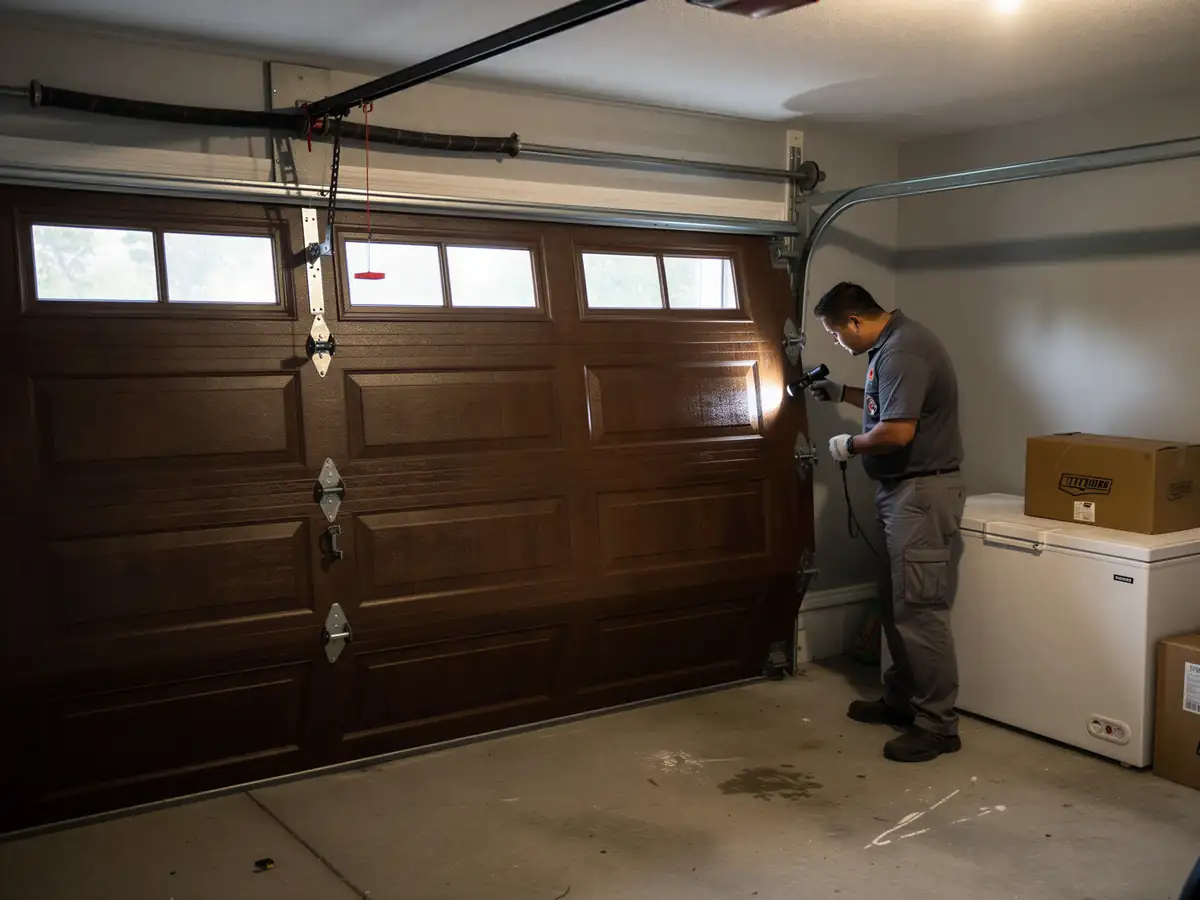
It's a door that reverses right after it starts closing, or an opener that runs but the door doesn't budge. Both point to the opener generation common in houses from that build era: logic boards and photo-eye sensors that are now old enough to degrade, even when the door itself is sound. Illinois winters put real stress on these systems too - the cold-moderate climate band covering this area means condensation and temperature swings inside the garage, which is exactly the environment that corrodes a sensor contact or stiffens an opener gear over fifteen-plus years.
A second common symptom: the door closes, but slowly settles open an inch or two overnight
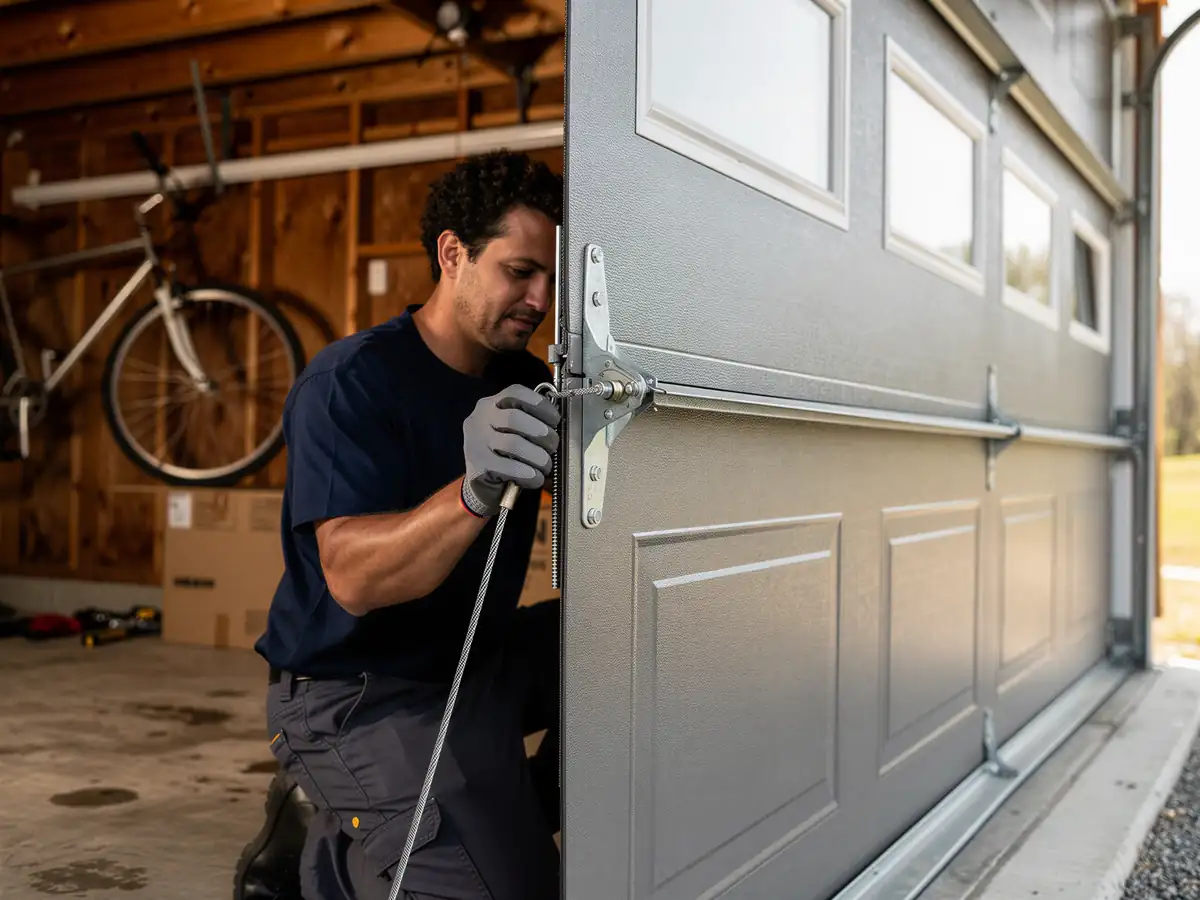
That's a spring losing tension, not a broken spring yet, but it's heading there. On a 2002-era door, if one spring is weak, the other is close behind it - we replace them in pairs. If your door makes a bang on the way down, that's usually a cable, not the spring at all, and it's a different fix.
Stocked Parts
We carry springs, cables, rollers, and opener sensors sized for the torsion systems common in houses built since the late 1990s and early 2000s, which covers most of what's installed in Sugar Grove. Standard-width residential torsion springs and extension kits for openers from that era are truck stock - we don't need to order those. Where we do run into a wait: specialty opener logic boards for models that have been discontinued, and wide double-door torsion springs on custom openings. Those sometimes take a few days to source.
We work out of Aurora, about 8 miles from Sugar Grove, so there's drive time built into any visit - we're not claiming a same-day window here, just that the parts for this housing stock are usually already on the truck when we head out.