What Causes It Around Here
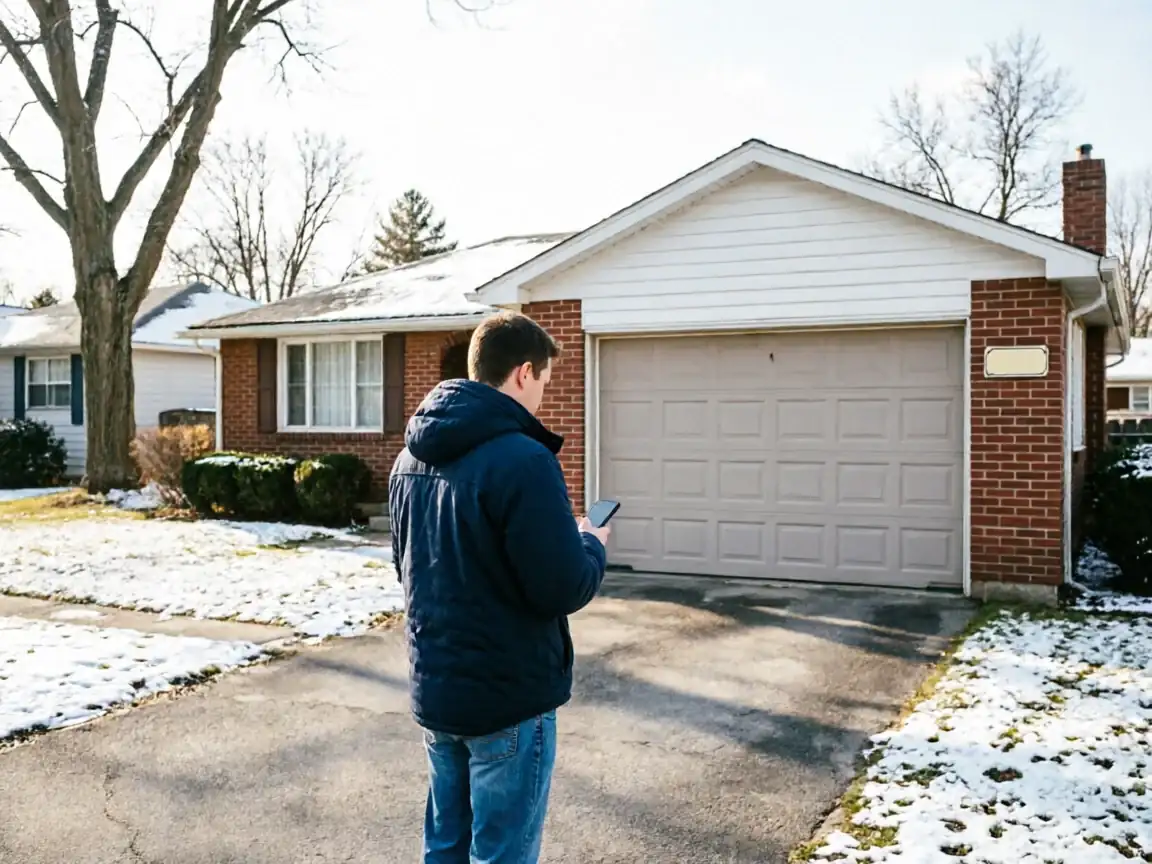
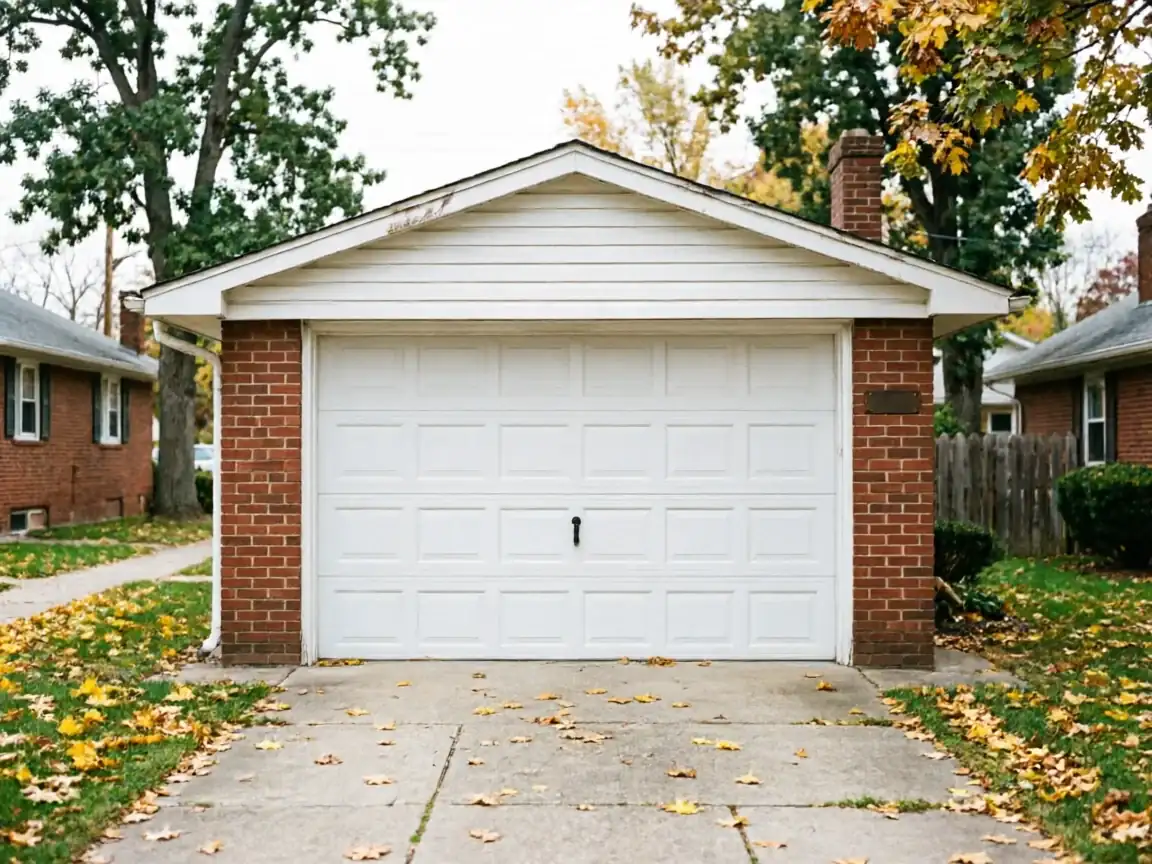
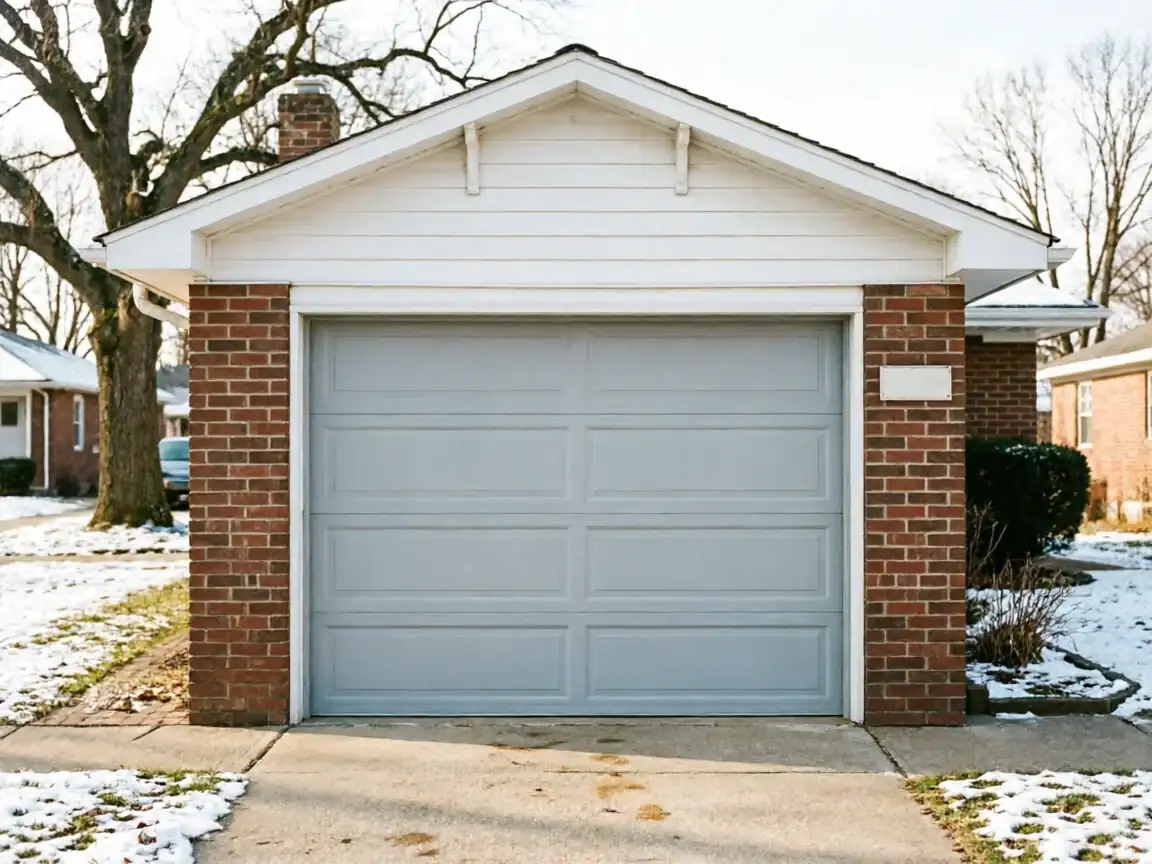
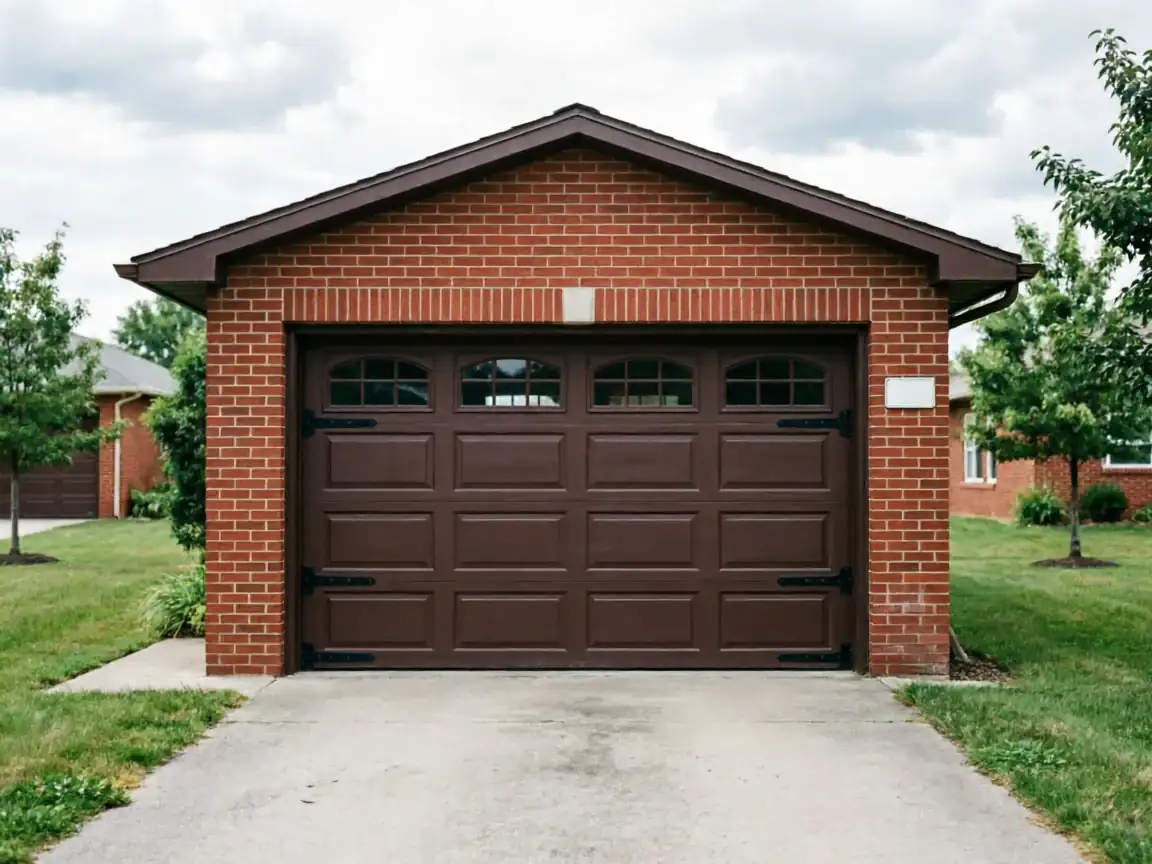
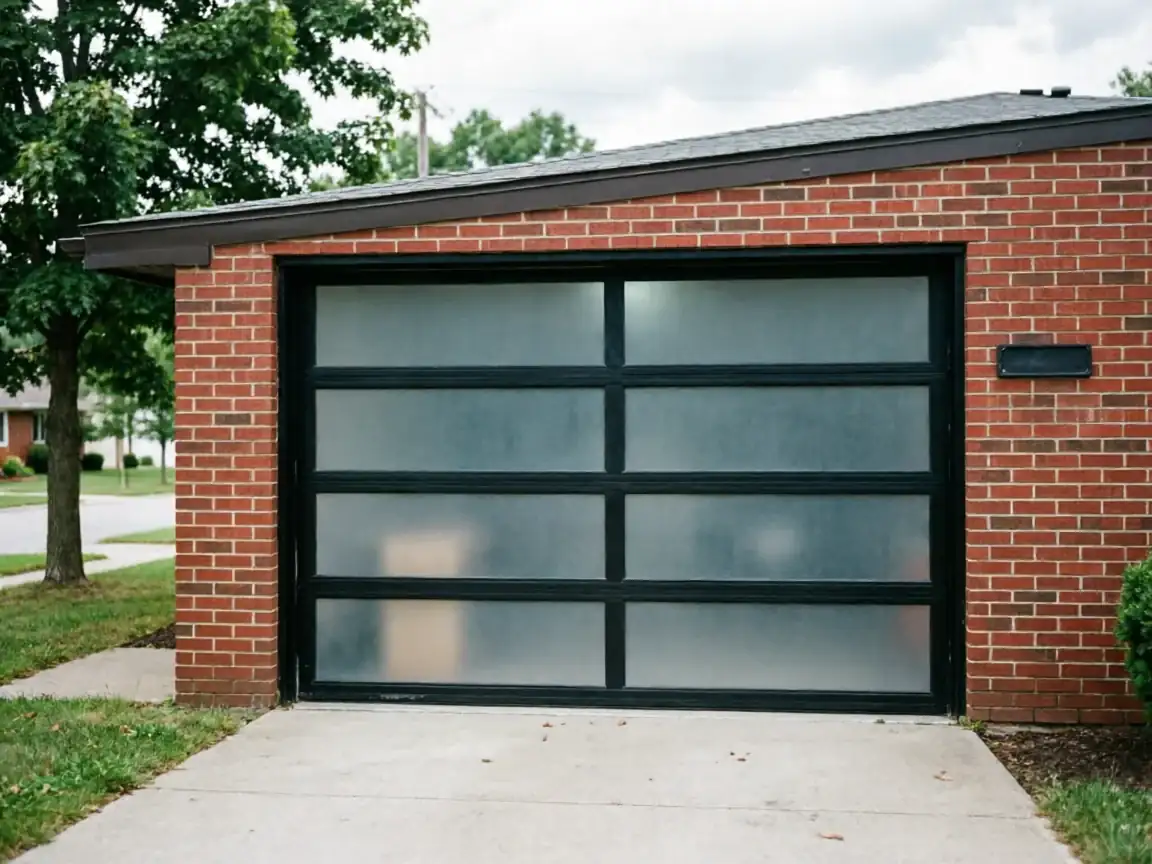
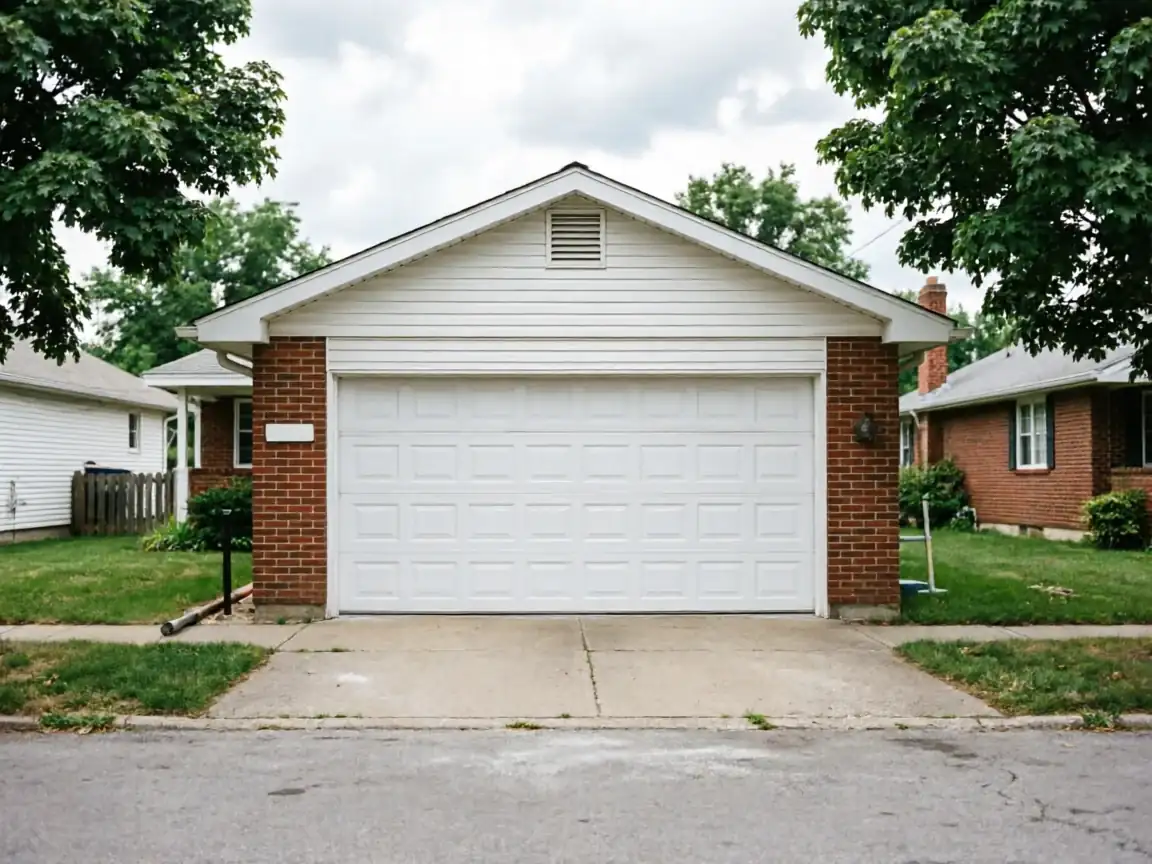
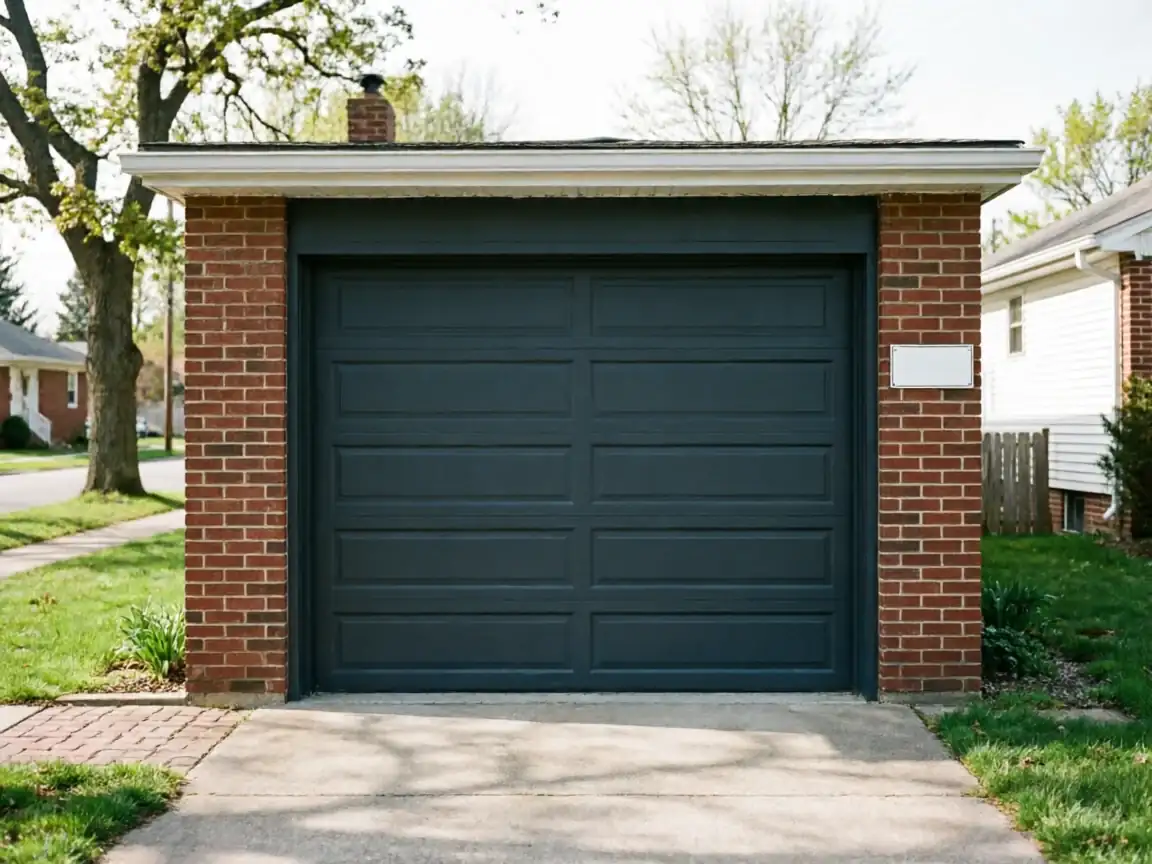
Most of the houses we get called to sit on housing stock built between 1958 and 2003, with the bulk going up in the 1980s and 90s. That matters because a torsion spring has a rated cycle life, and a door installed in 1985 is pushing 40 years of openings on hardware nobody has touched since the original install. The springs on these doors are reaching the end of their rated life right now, all at once, because they all went in within a tight 20-year window.
Aurora sits in a cold, moderate climate band, which means the steel in an older spring sees real temperature swings between a July afternoon and a January morning. Cold steel is brittle steel. A spring that's been stretching and compressing for three decades doesn't need much of a cold snap to finally let go. We also see a lot of bottom brackets and cables fatigued from the same age factor, not from any one bad part but from decades of ordinary use on hardware that was never meant to last forever.
The short version: this is an age-of-housing problem as much as a weather problem. Newer subdivisions see fewer of these calls. The older sections of the service area see them constantly.
How Long You Are Without the Door
A broken spring doesn't mean a broken door forever, but it does mean the door is not safe to run on the opener alone, full stop. Running a garage door opener against a dead spring puts the full weight of the door on the opener's gears and the top section of track, and that's how you turn one repair into three.
We can't give you a universal number for every job, because a double door with two springs out and a bent track is not the same job as a single spring swap on a door that's otherwise sound. What we can tell you is that spring and cable repairs are same-day work when the part is a stock size, which covers the great majority of doors built in this area's 1980s-90s construction boom. Openers are a different story if a board or a specific drive gear needs to be ordered rather than carried on the truck.
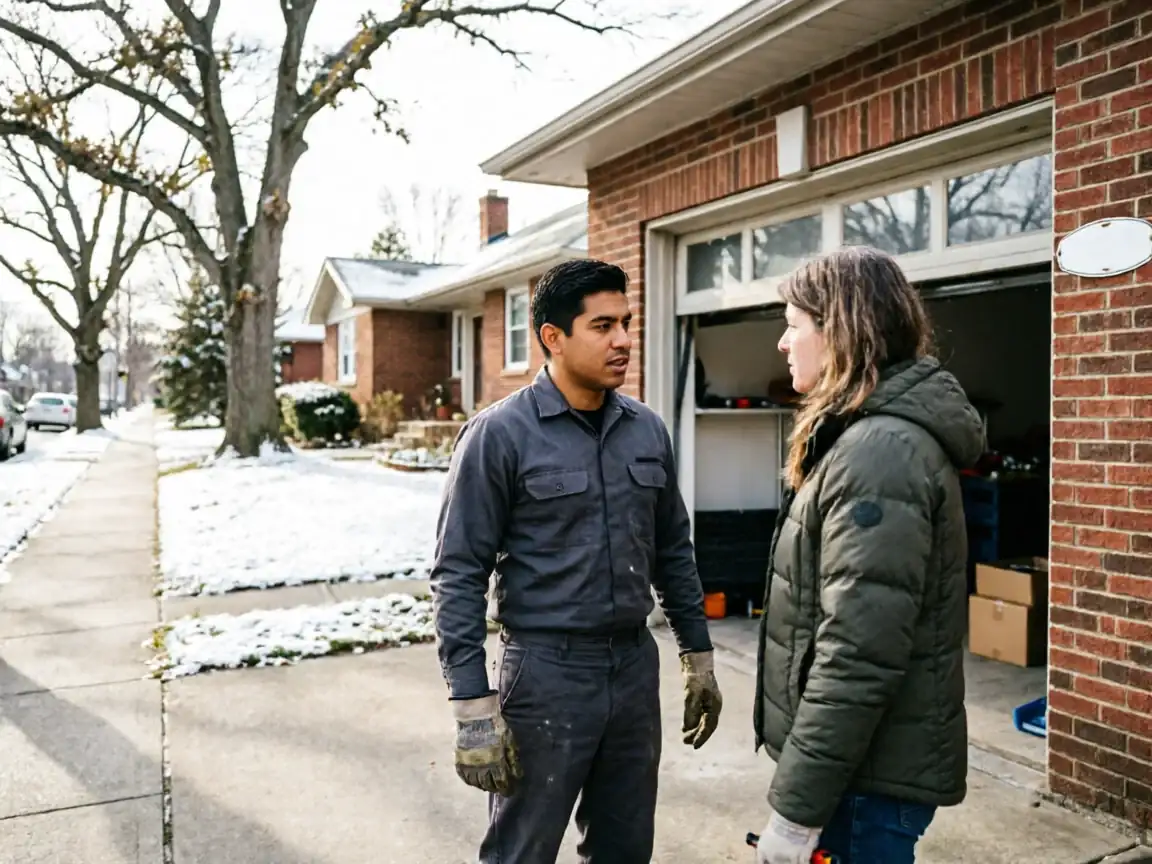
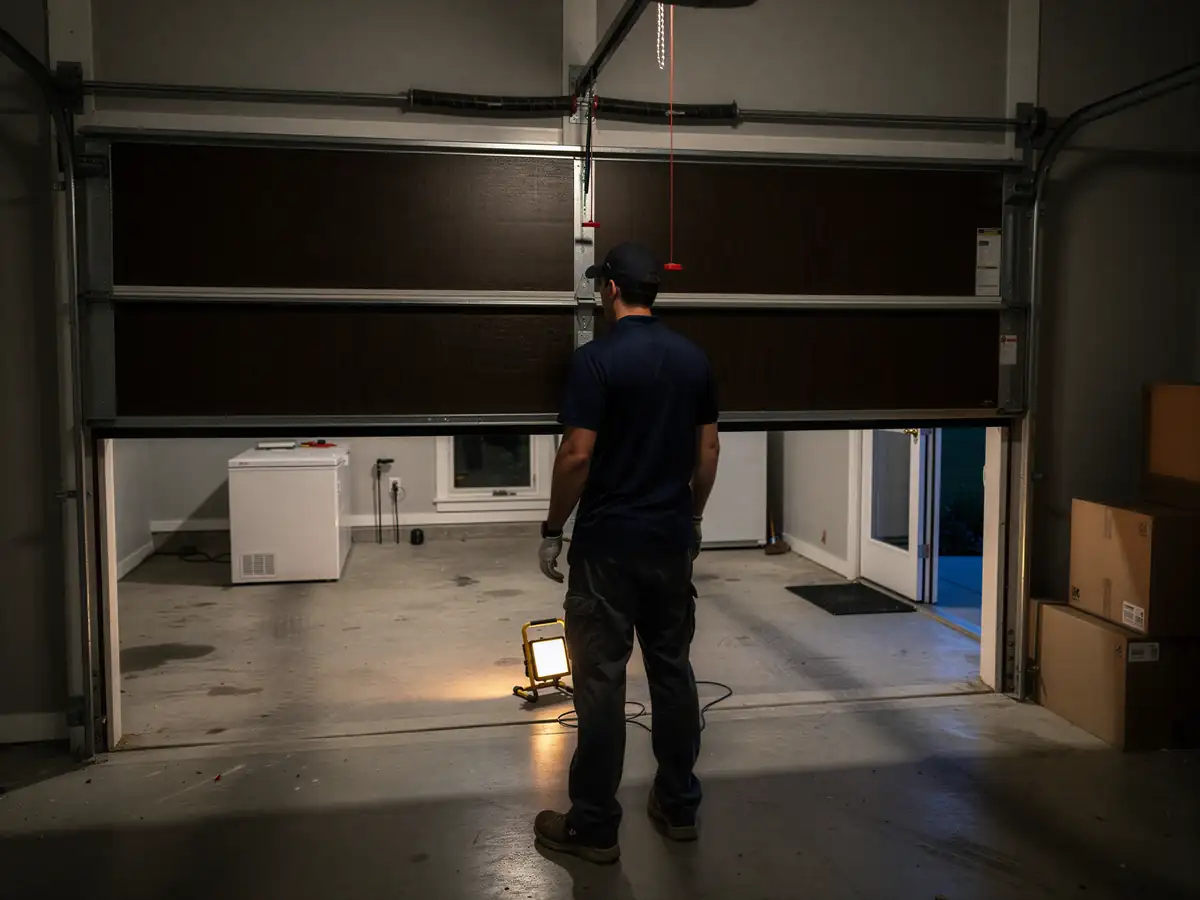
If your door won't move at all and the car is trapped inside, say so when you call. That changes how we sequence the day.
The Symptom
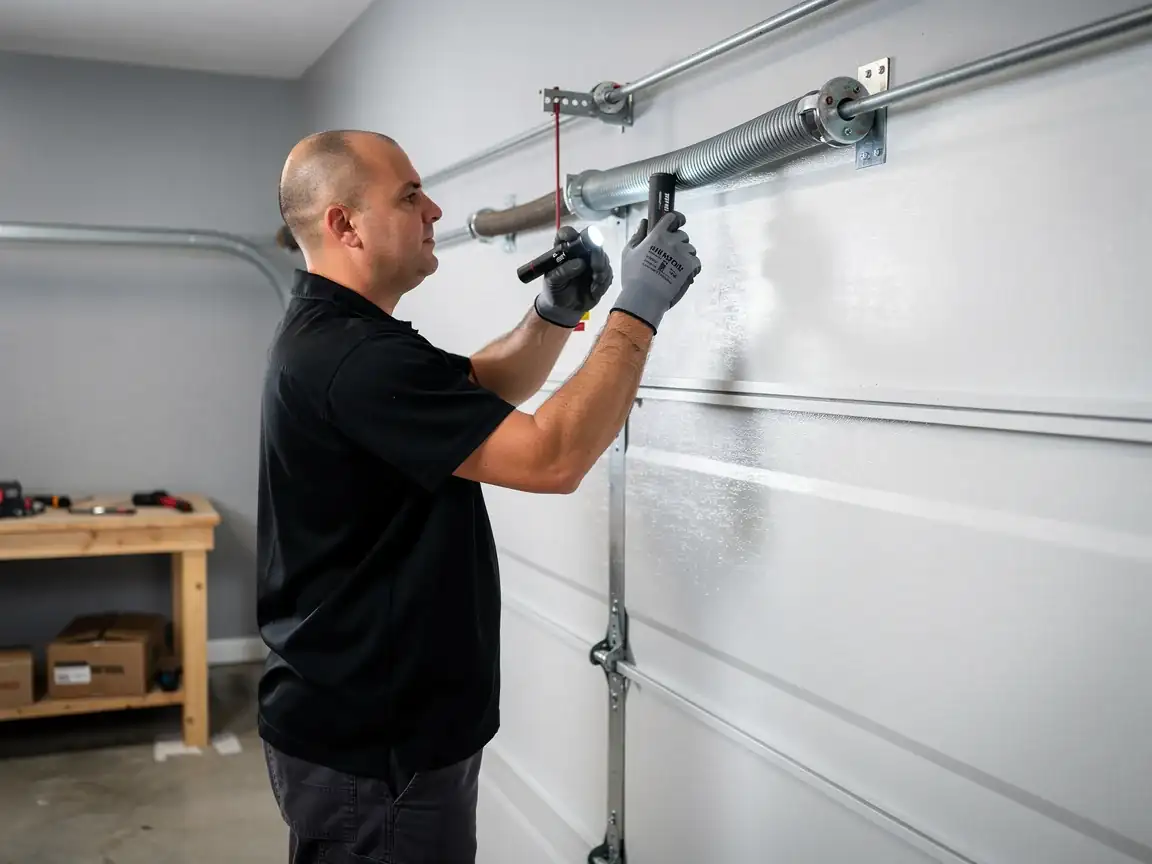
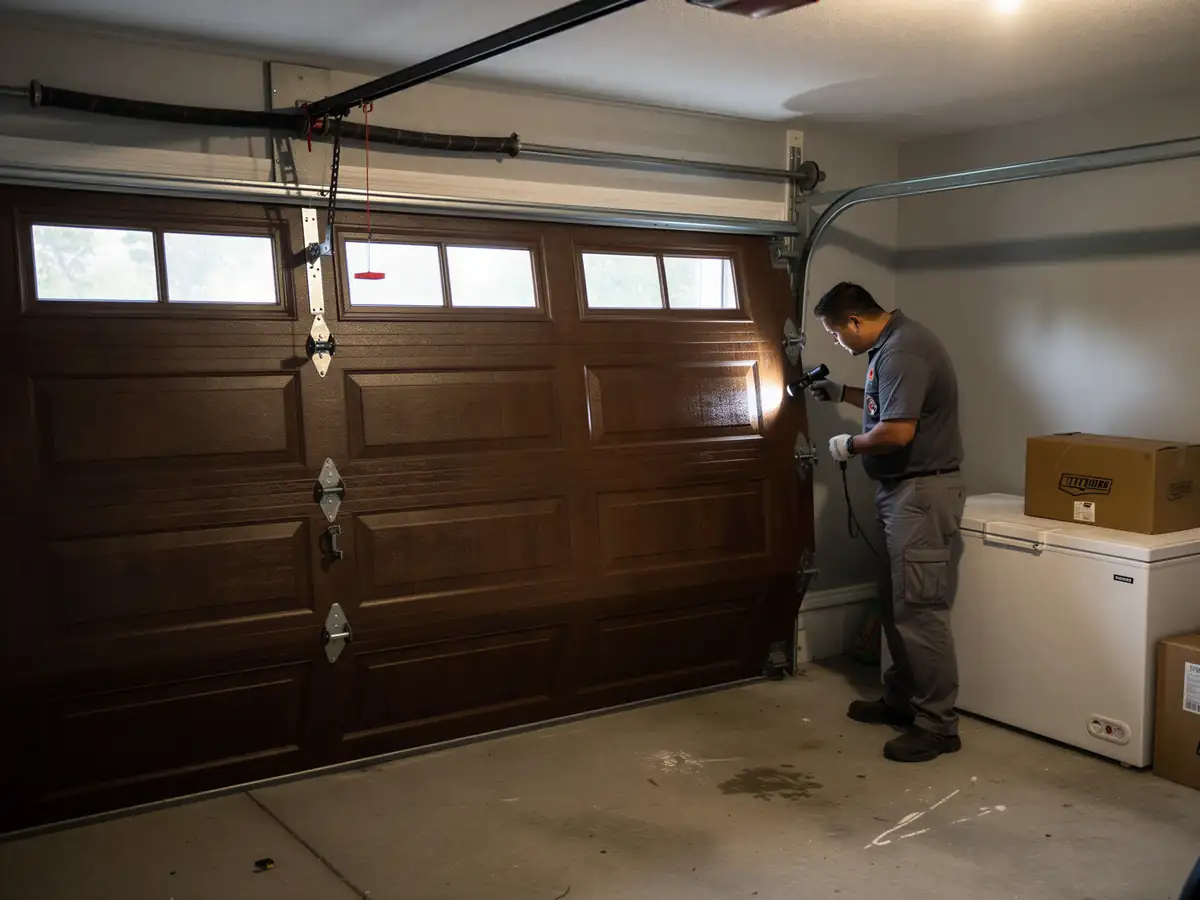
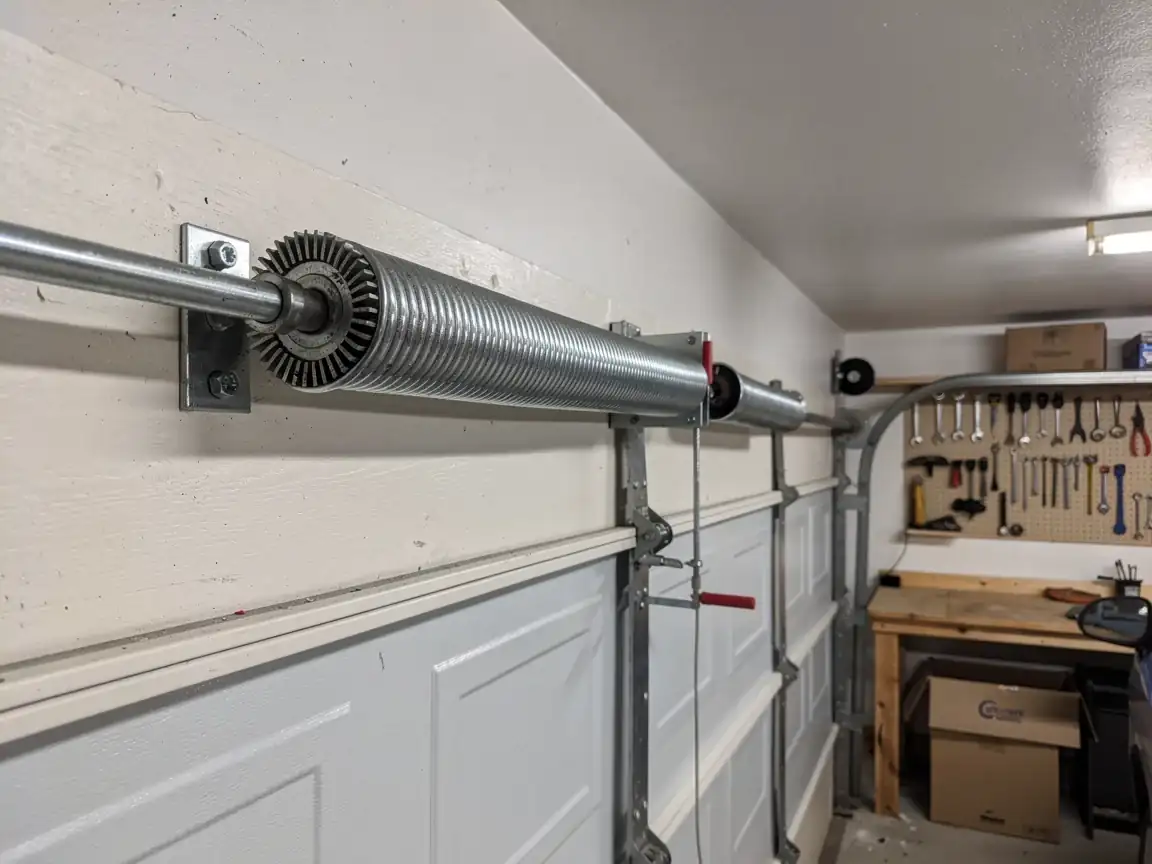
The classic sign of a snapped torsion spring is a door that feels like dead weight the second you try to lift it by hand, or an opener that hums, strains, and then reverses itself without the door moving
You might also hear a loud bang from the garage, often mistaken for a car backfiring or something falling off a shelf, followed by the door refusing to open on the next try.
A cable failure shows up differently
One side of the door drops lower than the other, or the door runs crooked in the track and jams partway up. Roller and track failures tend to announce themselves with grinding or a door that walks sideways out of its track over several openings before it finally quits.
None of these are cosmetic
A door running on one working spring, or dragging on a bent track, is working harder than it should on every single cycle, which turns a one-part repair into a multi-part one if you keep using it. If the door won't fully close and you can see daylight at the bottom corner, stop opening and closing it and call.
What the Fix Involves
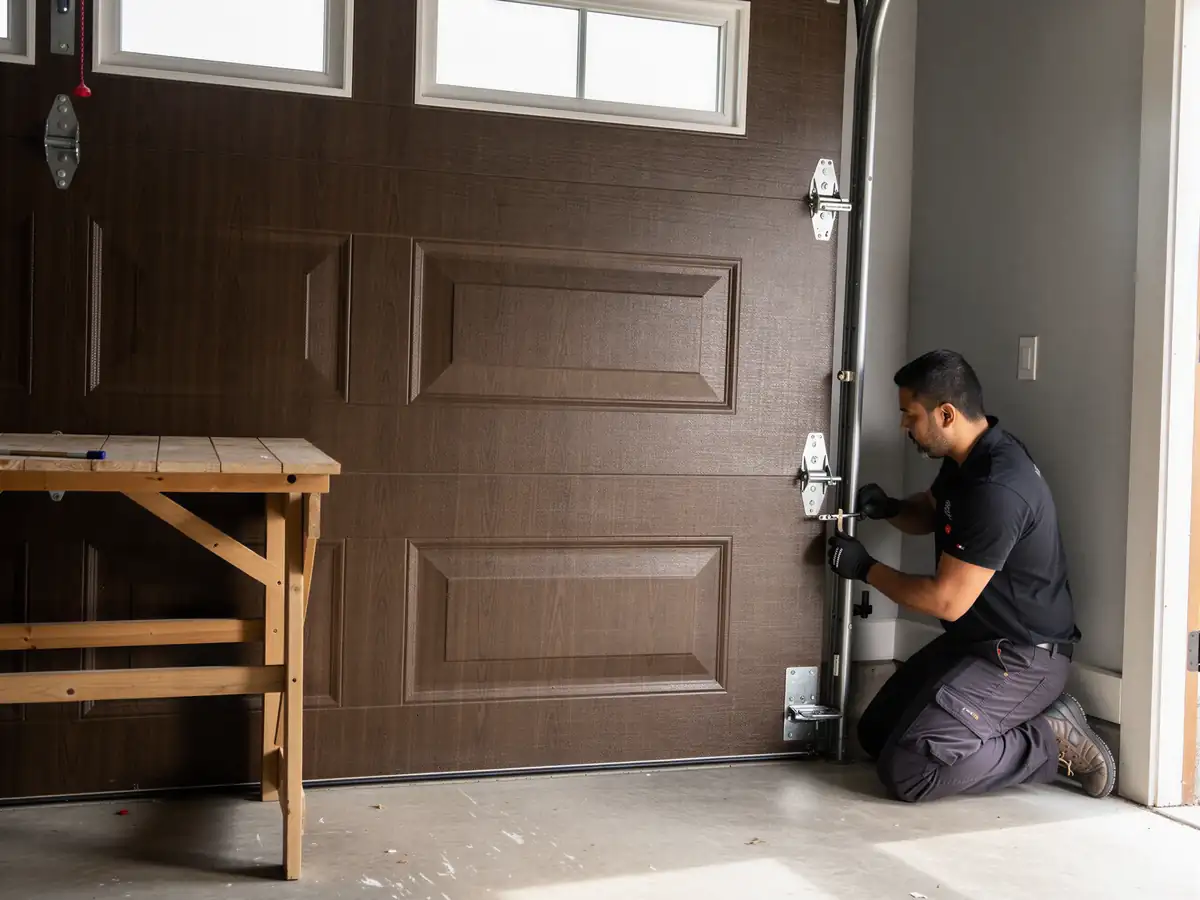
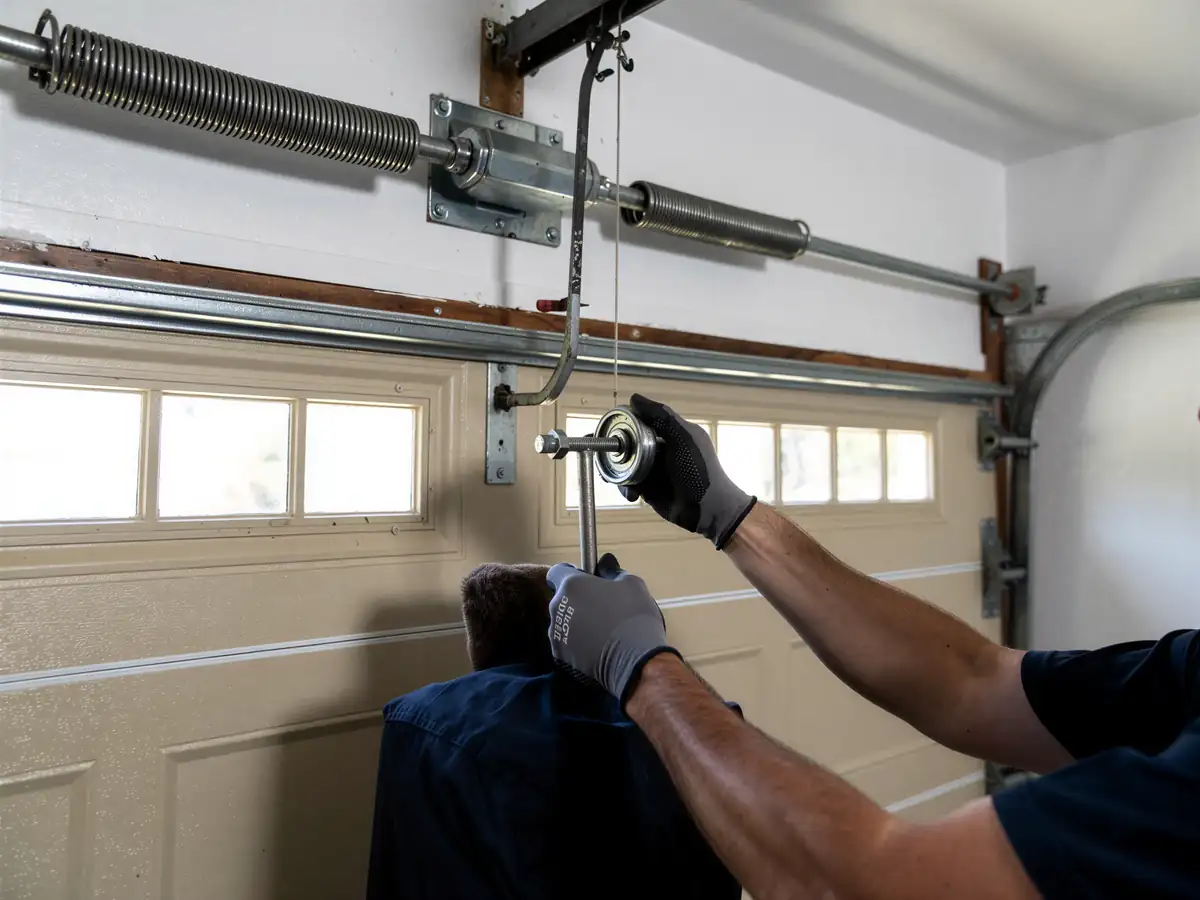
For a broken torsion spring, the job is matching the spring to the door's weight and drum size, not grabbing whatever's closest. Get that wrong and you've got a door that slams down or won't stay up, which is its own hazard. We carry common sizes for the stock that makes up most of this area's housing - doors from the 1980s and 90s building boom use a handful of predictable configurations - so most spring jobs finish in one visit.
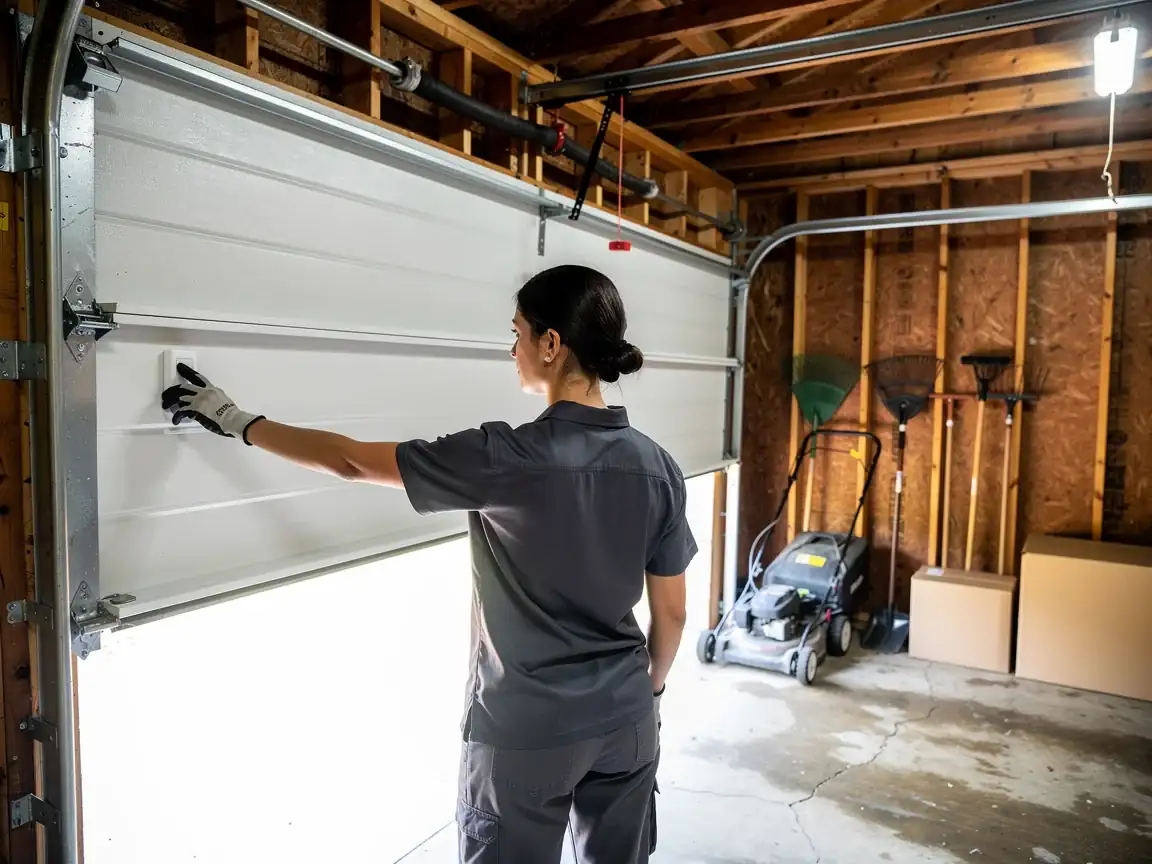
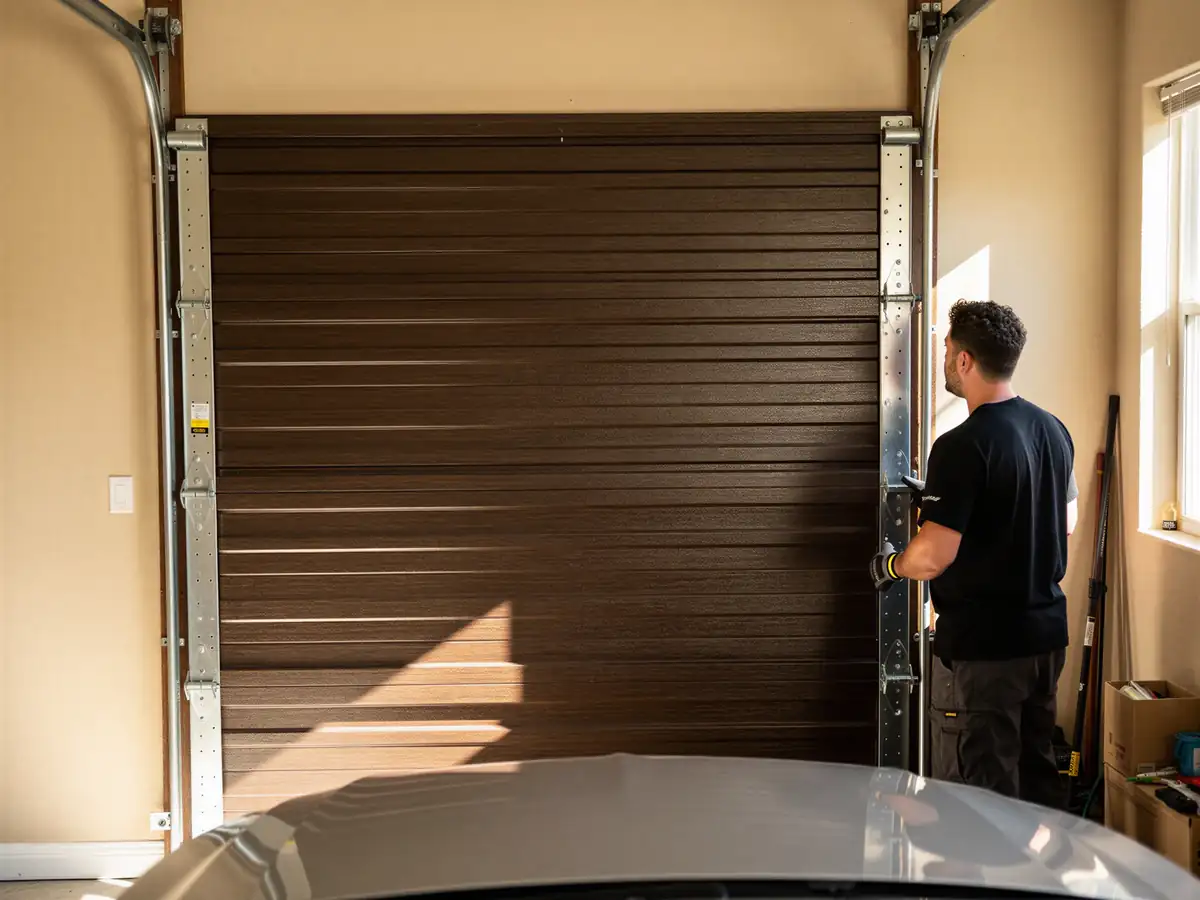
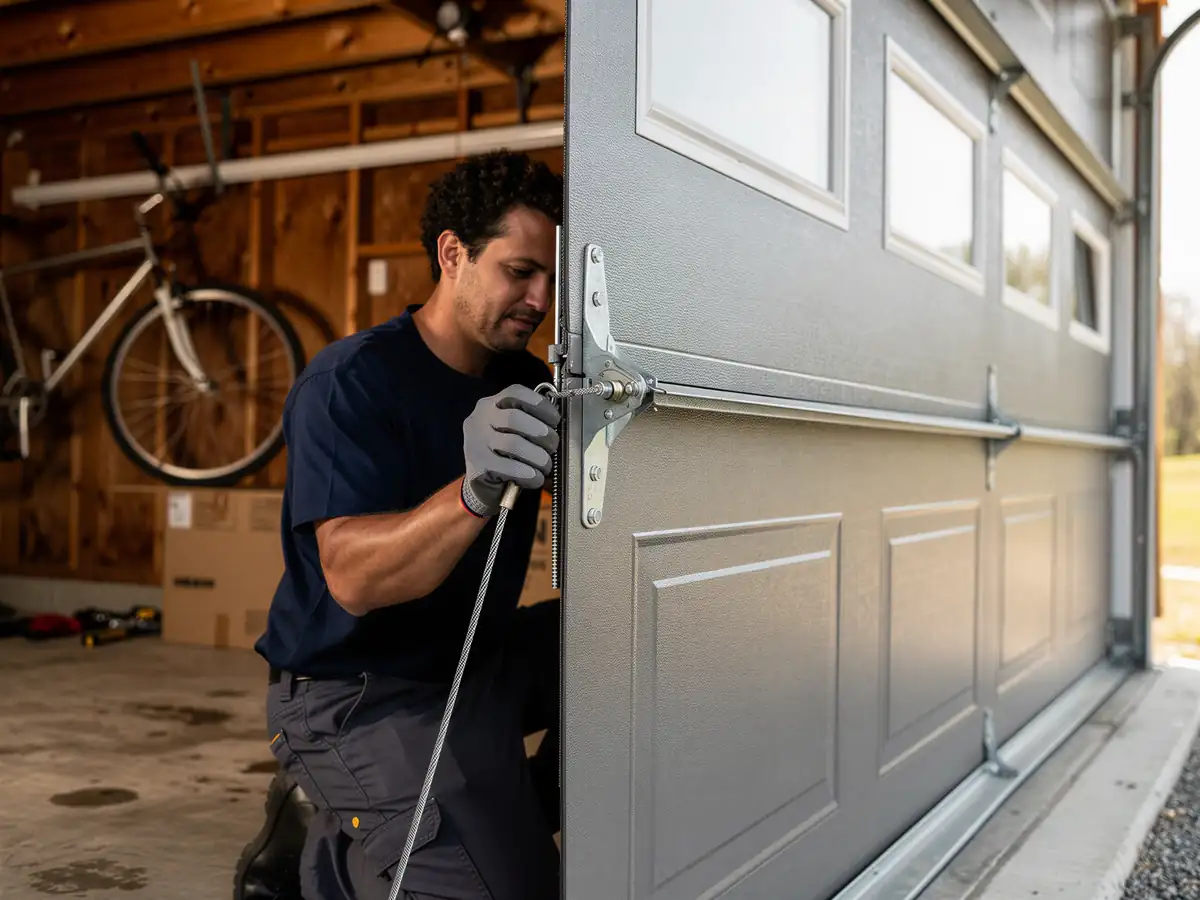
A cable or roller repair is more straightforward: the old part comes off, the new one goes on, and we run the door through a full cycle to check balance before we call it done. Track repair depends on how bent the rail is - minor bends bang back into shape, but a track that's kinked badly from a car impact usually needs the section replaced rather than straightened, because a straightened rail rarely holds true for long.
One honest limit: if the door itself is original to a 1960s or 70s build and the panels are rusted through or the wood has rotted, we'll tell you plainly that a spring repair on a dying door is money spent twice. Sometimes replacement is the cheaper fix in the long run, and we'd rather say so up front than sell you a spring on a door that won't outlast the part.