What Causes It Around Here
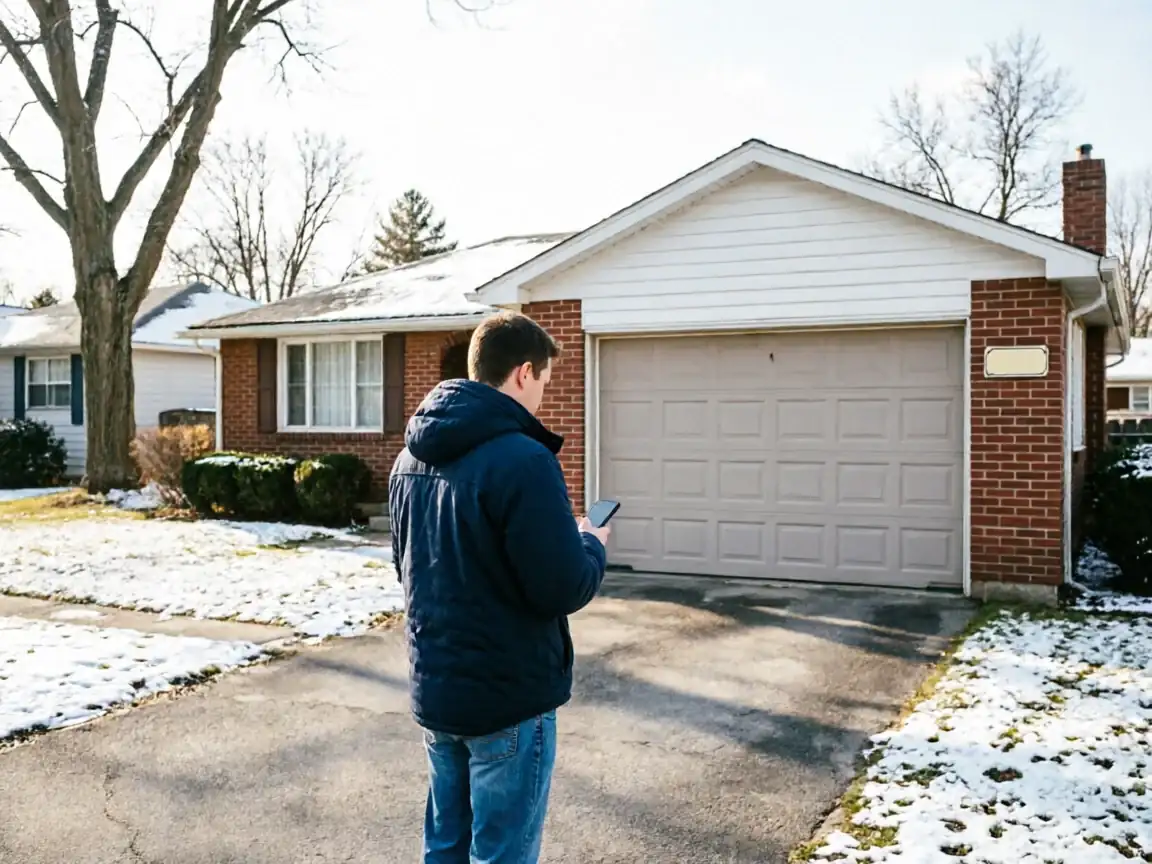
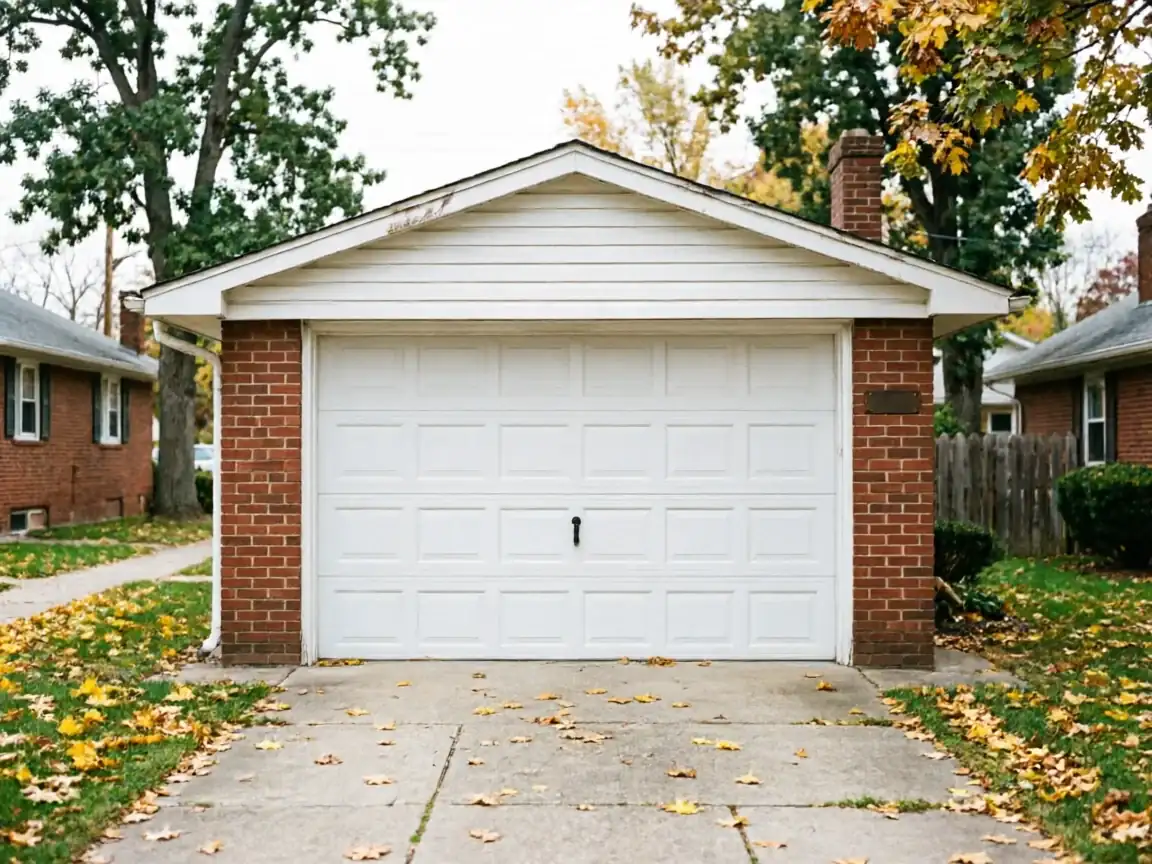
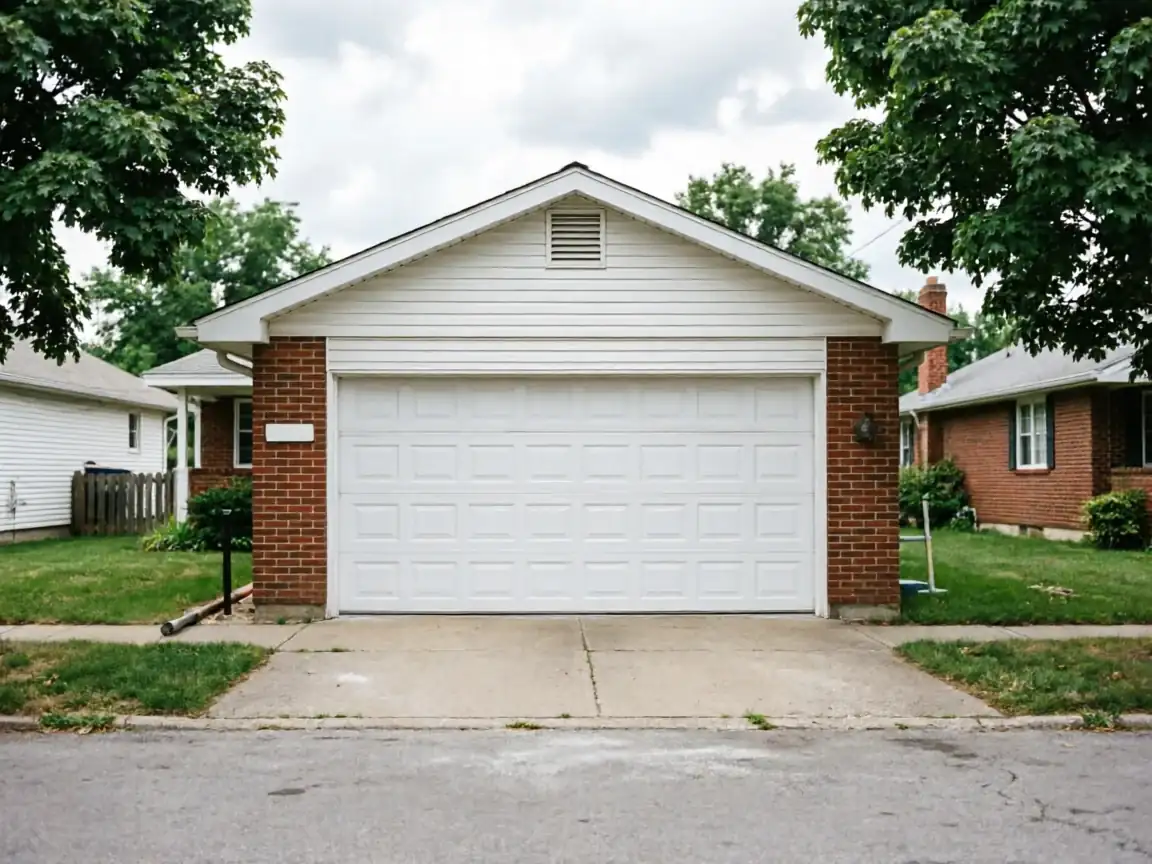
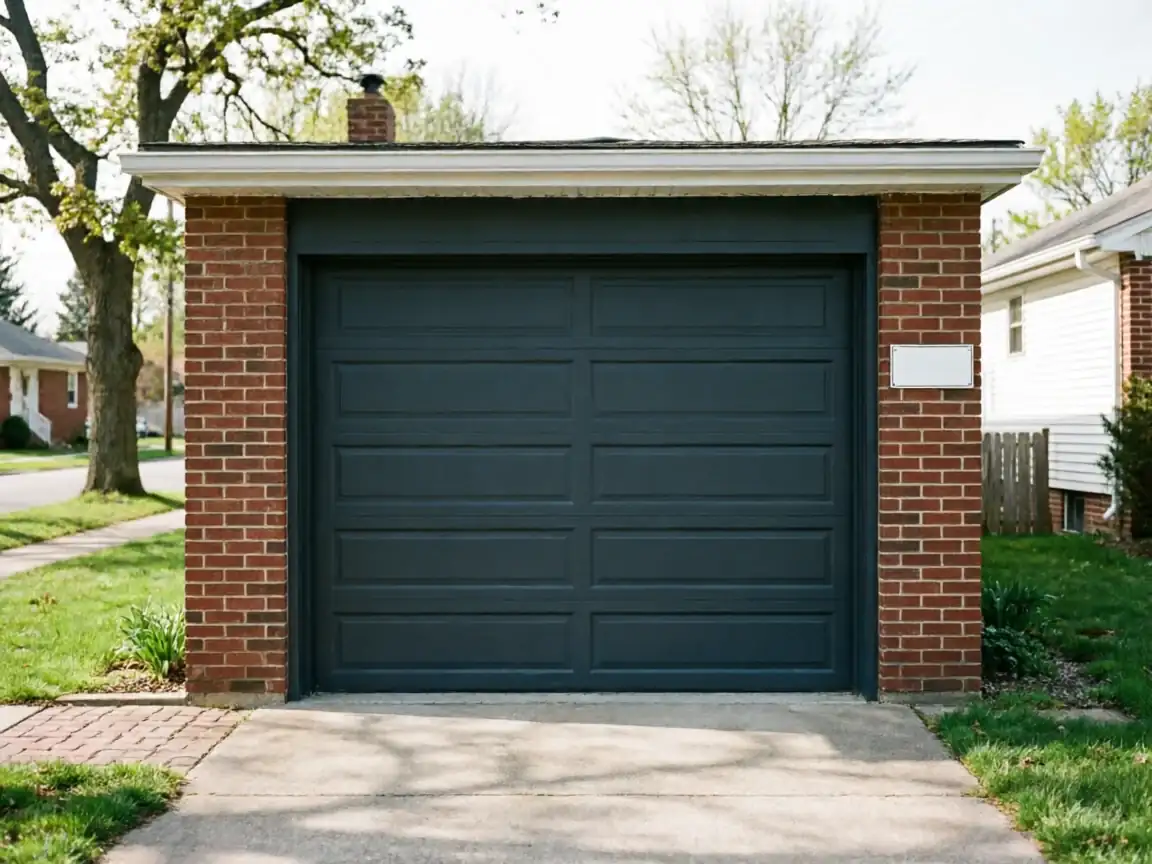
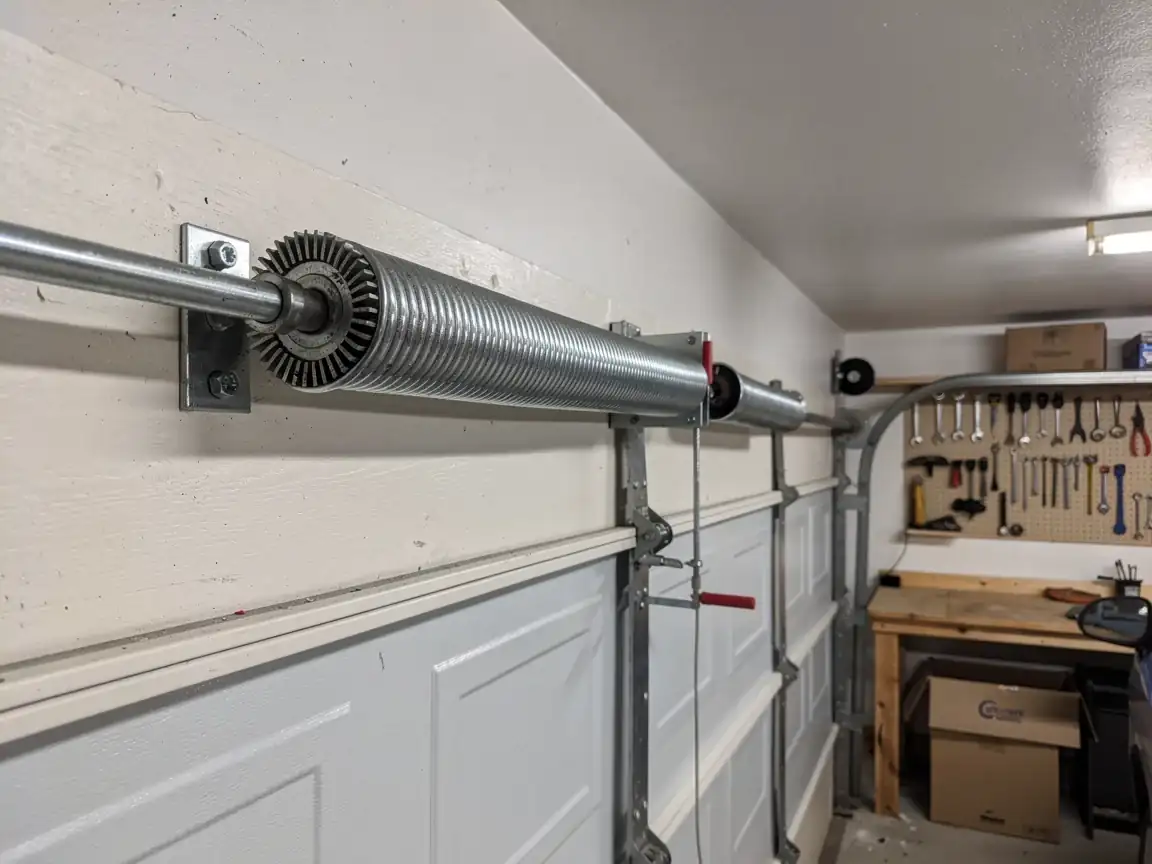
Most of the houses we get called to in this part of the service area were built somewhere between 1958 and 2003, with the bulk of that stock going up in the 1980s and 90s across the 48 named areas we cover. That matters because a torsion spring is rated for a cycle count, not a calendar date, and a 30-to-40-year-old spring has usually seen enough winters to be near the end of its life whether or not anyone's touched it.
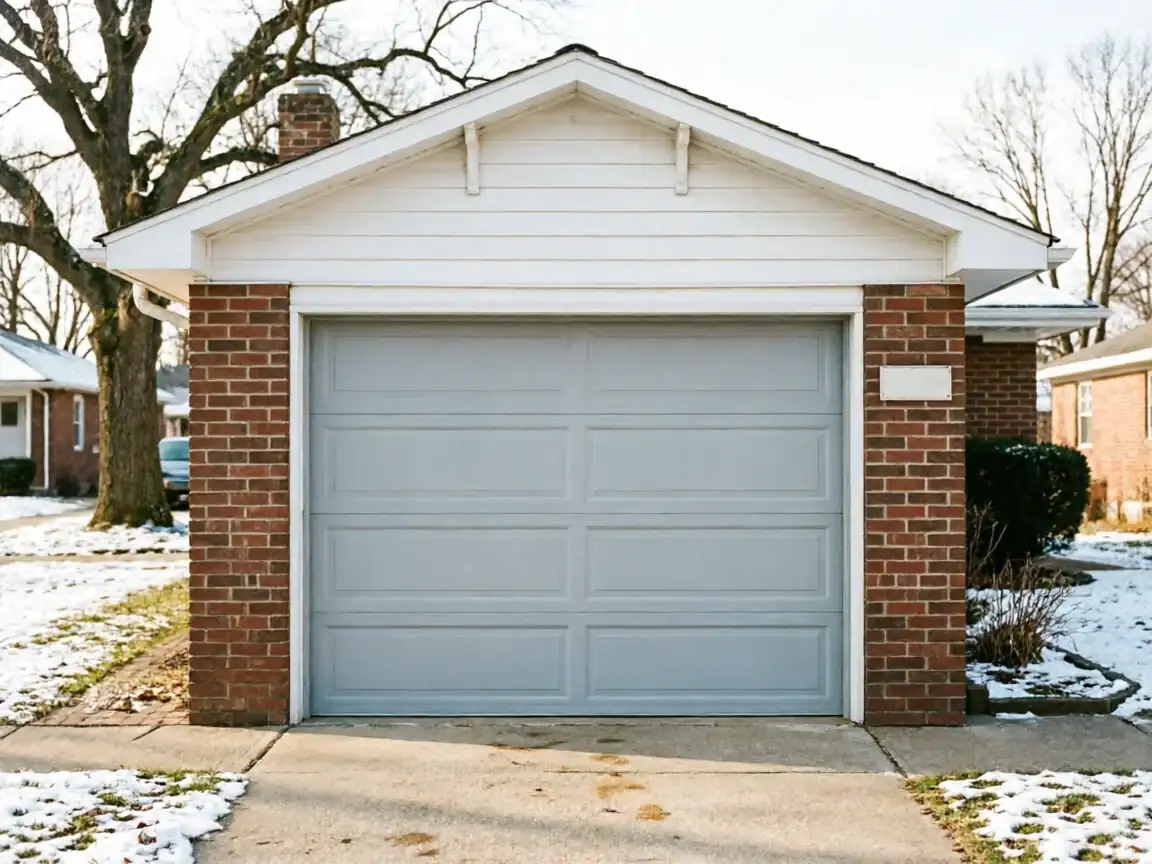
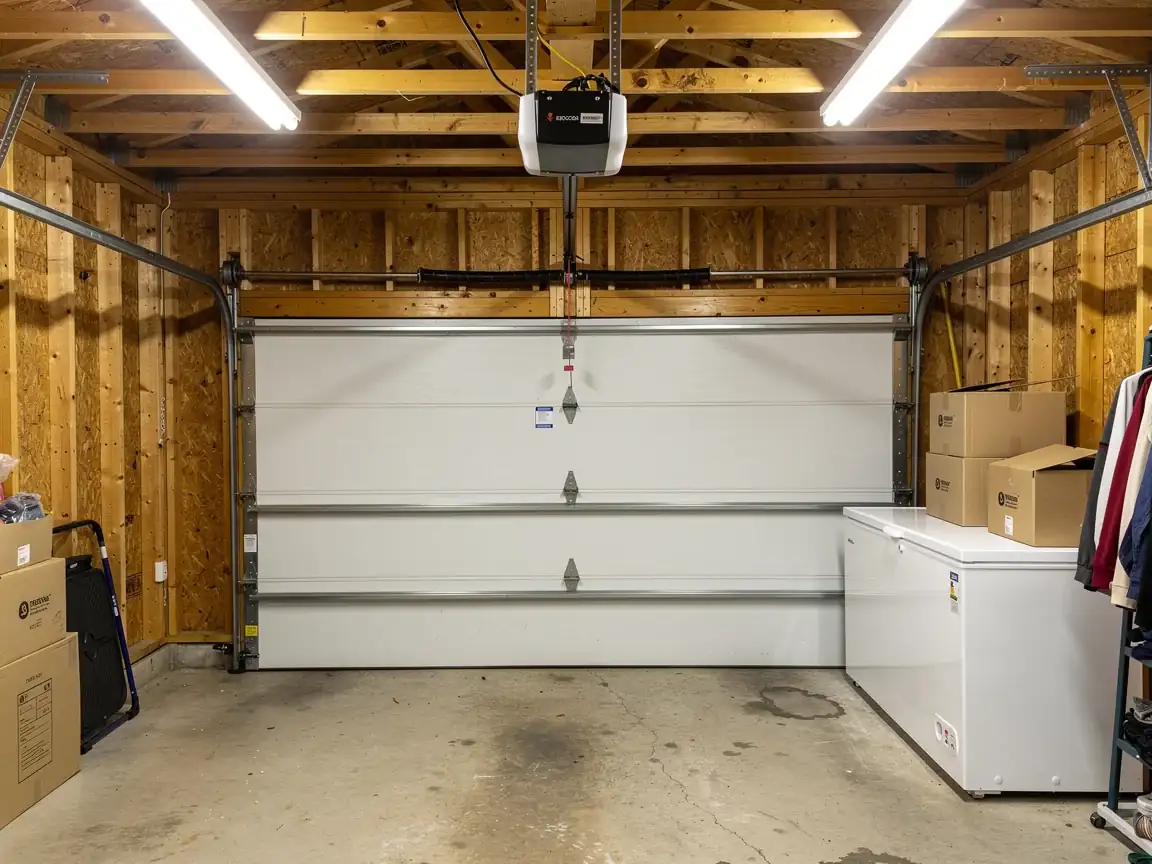
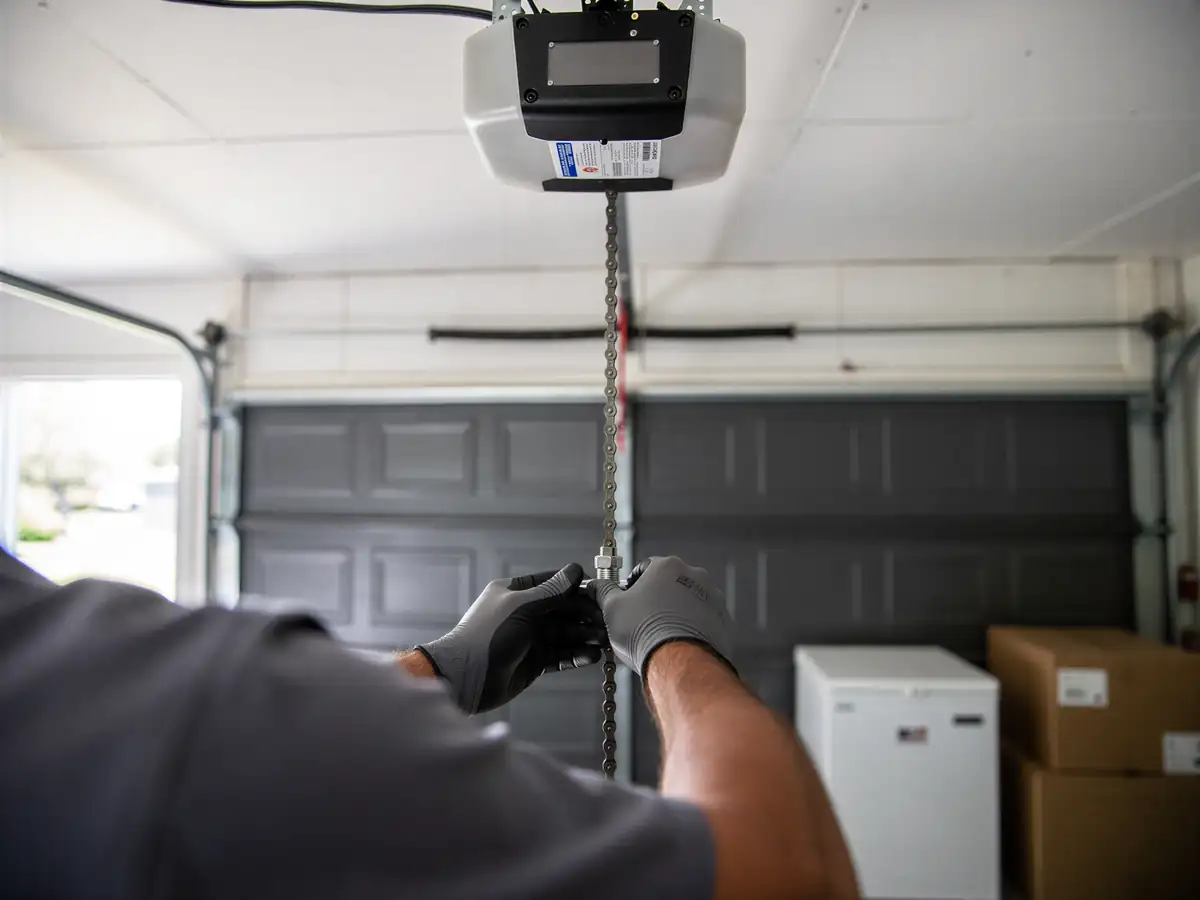
The climate here is cold-moderate, which means the steel in these original springs and the galvanized coating on the cables go through repeated contraction every winter. Cold steel is less forgiving - it doesn't flex the way it does in July, so a spring that's been fraying slowly for a few seasons tends to let go on one of the first hard-freeze mornings, not gradually. Openers from that same era are chain-drive units with aging capacitors, and those fail the same way: fine in September, dead on a 10-degree morning. We see a lot of both.
How Long You Are Without the Door
A broken torsion spring on a standard double door is not a same-day parts gamble if we're already carrying the right size on the truck - most jobs like that close out in one visit. Where you lose time is a door that needs a part we don't stock, usually an older opener logic board or a odd-width track no longer made for a door from the early part of that 1958-2003 build window.
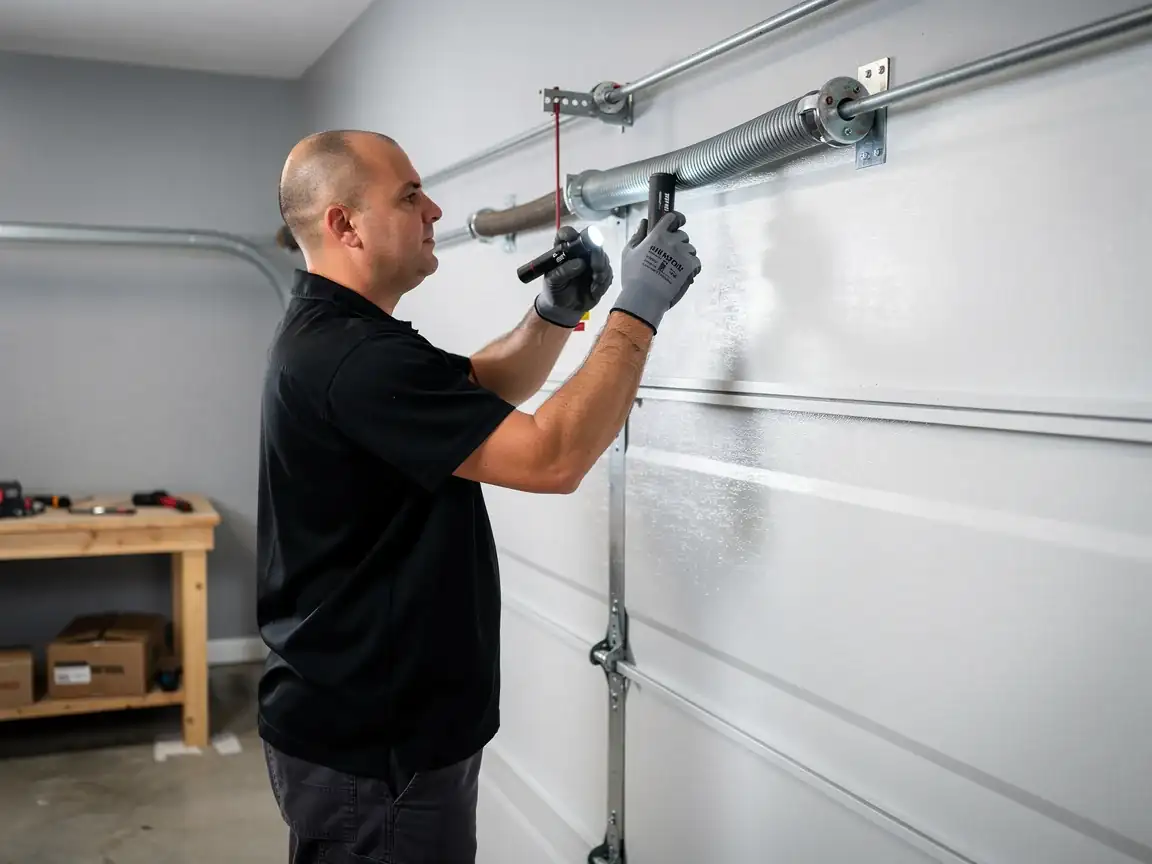
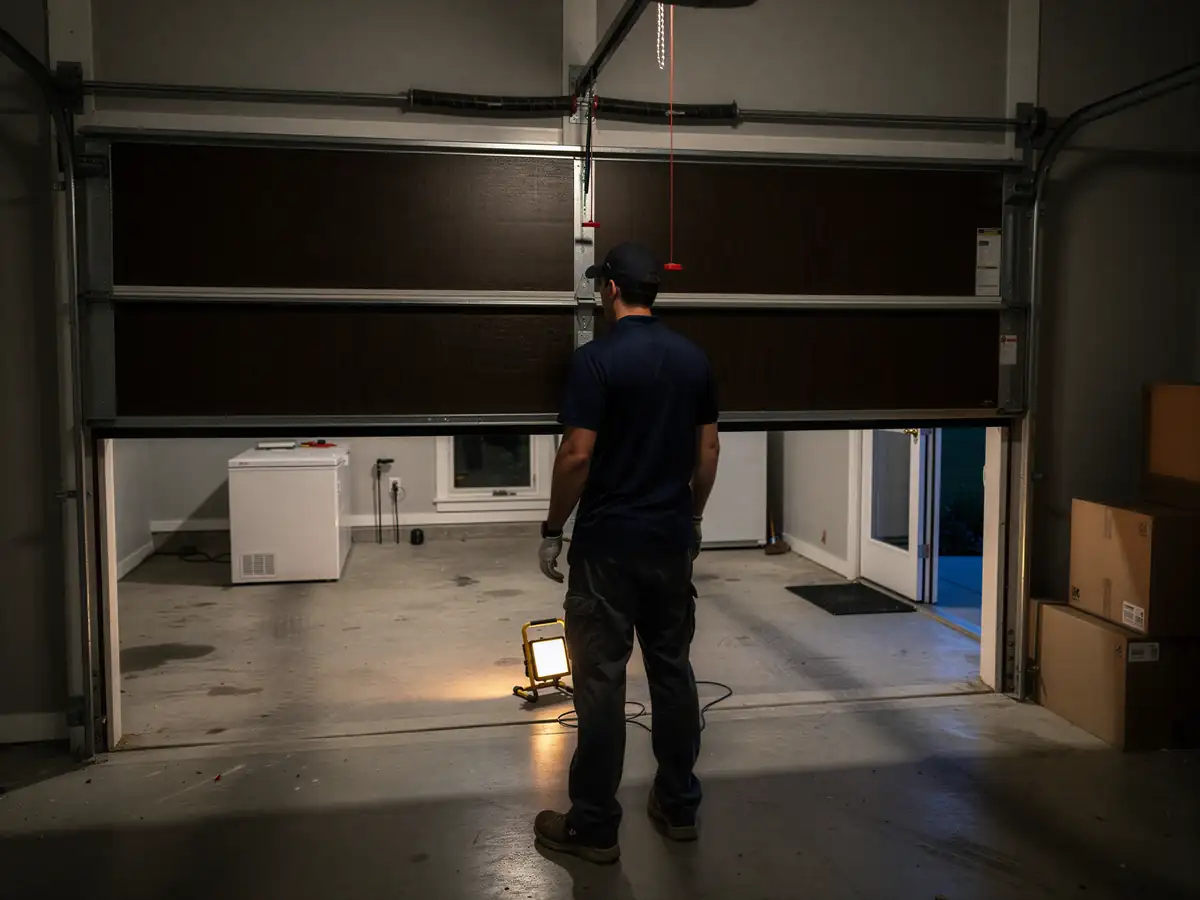
In the meantime the door is heavy and the opener will not lift it safely with a broken spring - don't try to force it by hand past a few inches, and don't let the opener keep trying either, since that's how you burn out a motor on top of the spring. If you've got one working spring left on a two-spring door, both get replaced together, not just the broken one, because the other one is on the same clock.
The Symptom
The classic version
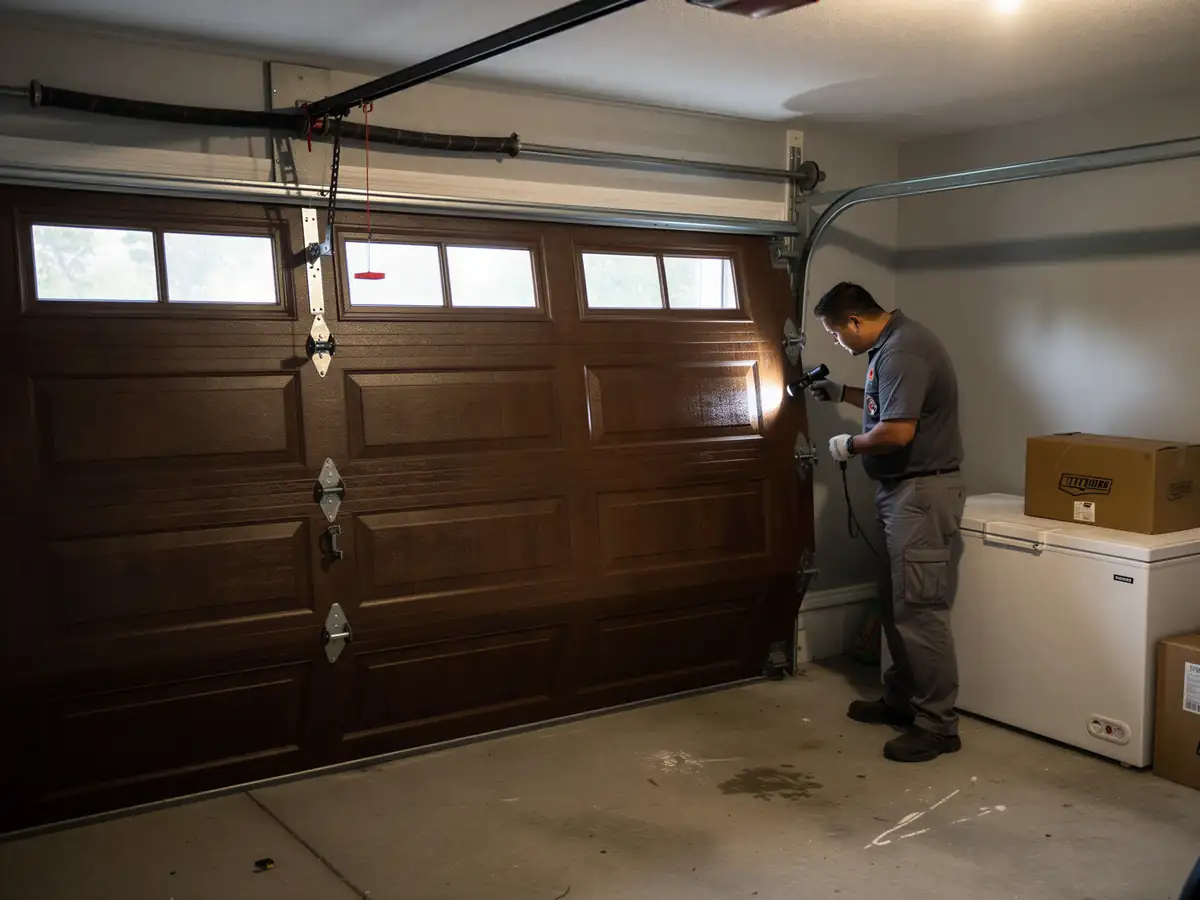
You hit the remote, the opener hums, the light comes on, and the door doesn't move - or it jerks up two inches and stops. That's a spring that's lost its tension, and it's the single most common call we get from houses in this area built in that 1980s-90s stretch. A loud bang from the garage before any of that happens is usually the spring letting go on its own, often overnight when the temperature drops hard.
A different symptom
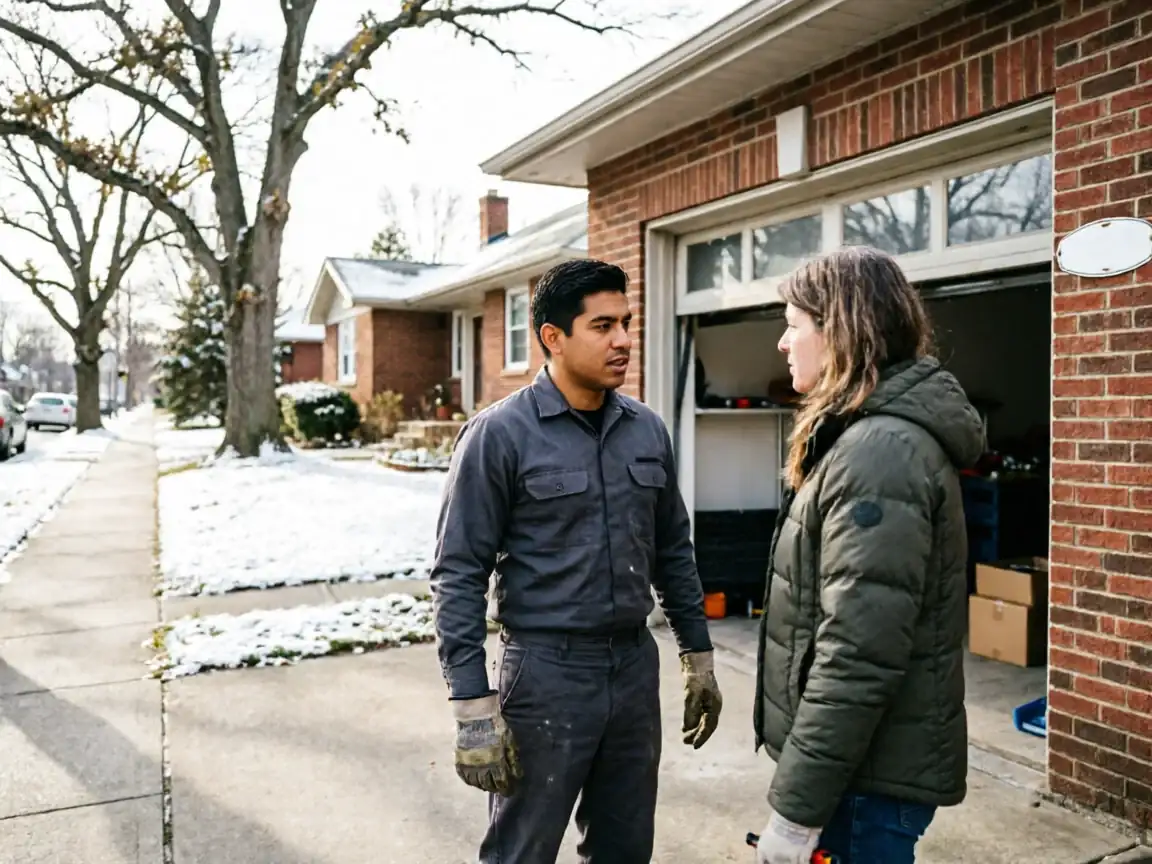
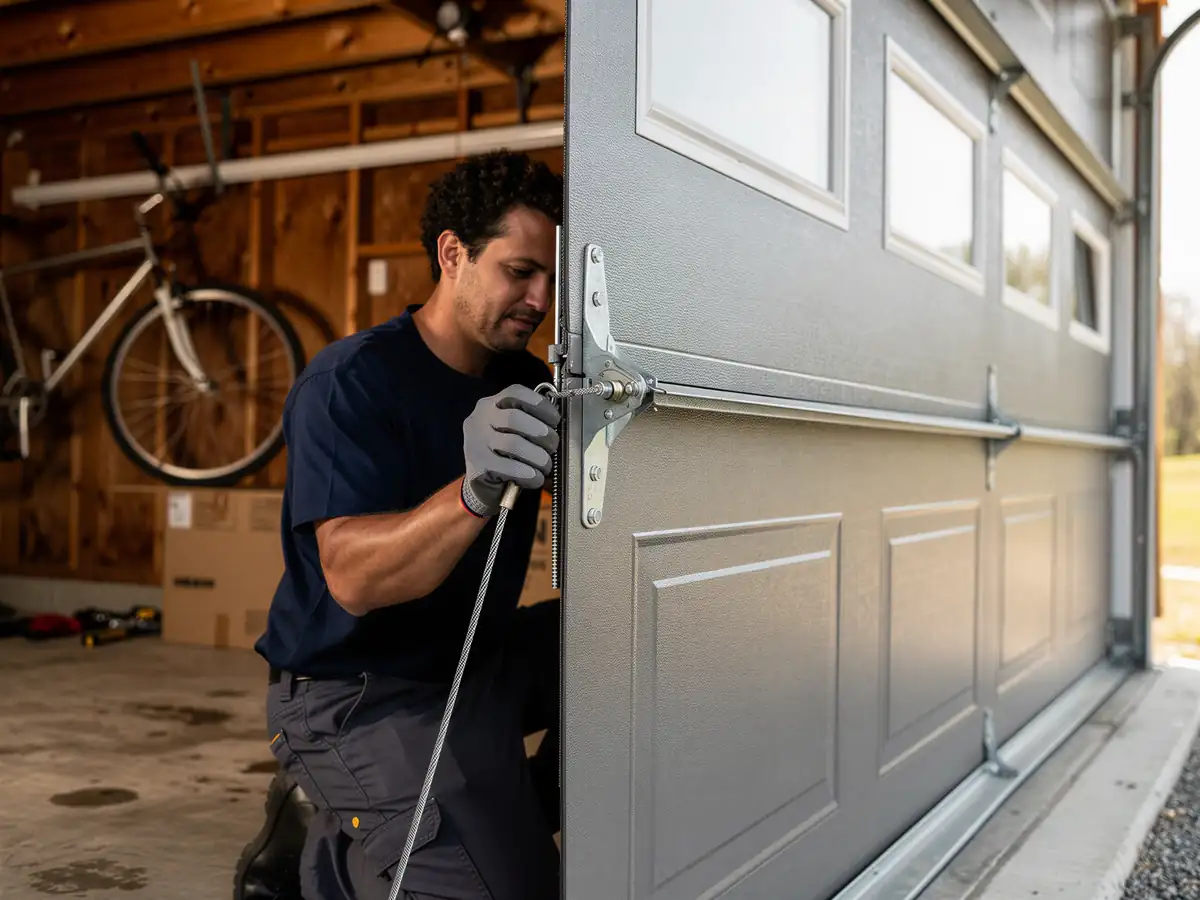
The door moving unevenly, one side higher than the other, or a grinding sound from one track - points to a roller or cable issue rather than the spring itself, and it's worth telling us which one you're seeing when you call, since it changes what we bring on the truck.
What the Fix Involves
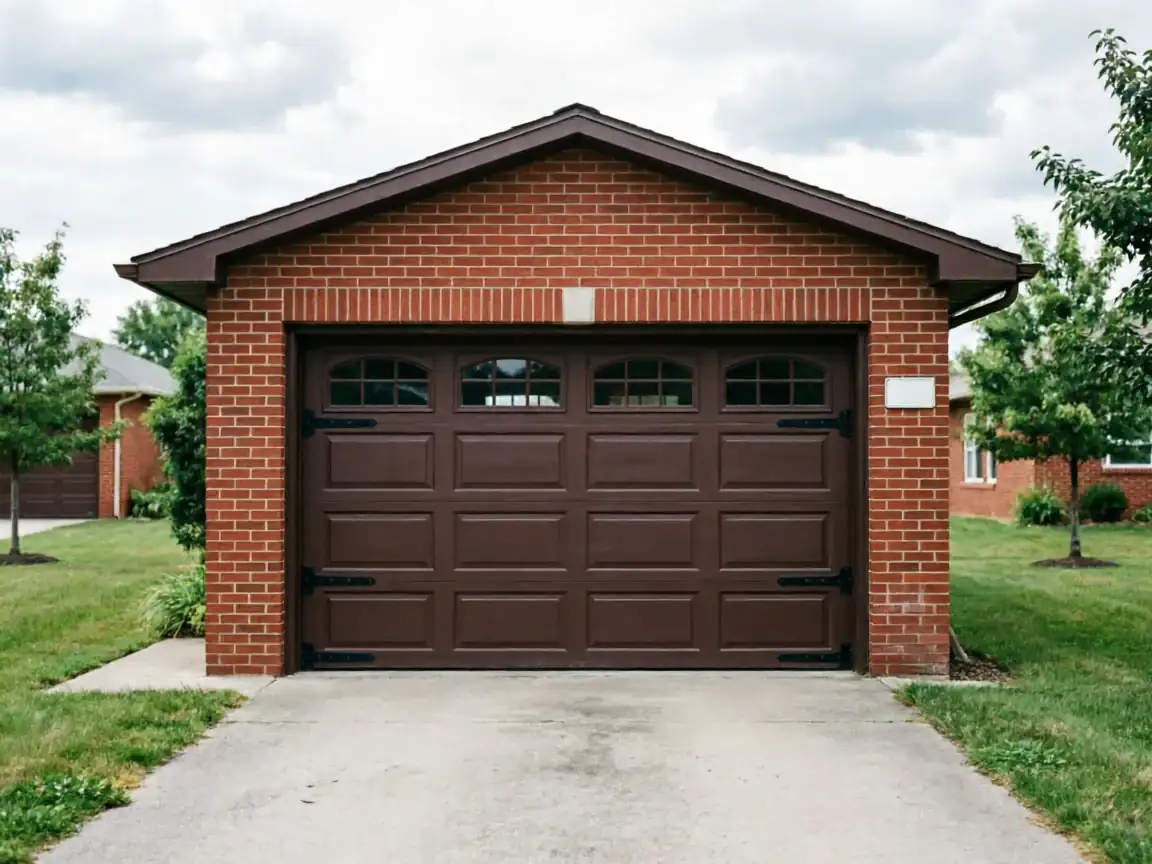
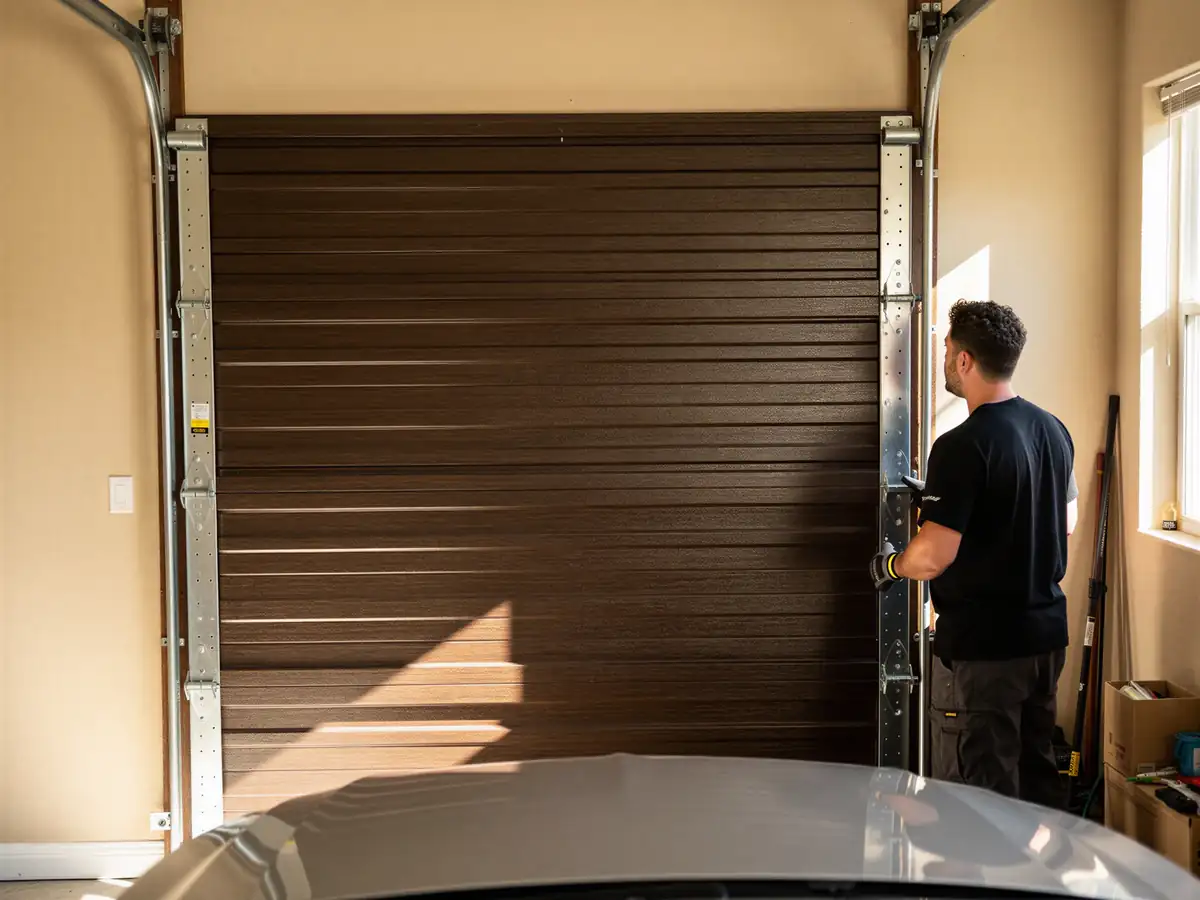
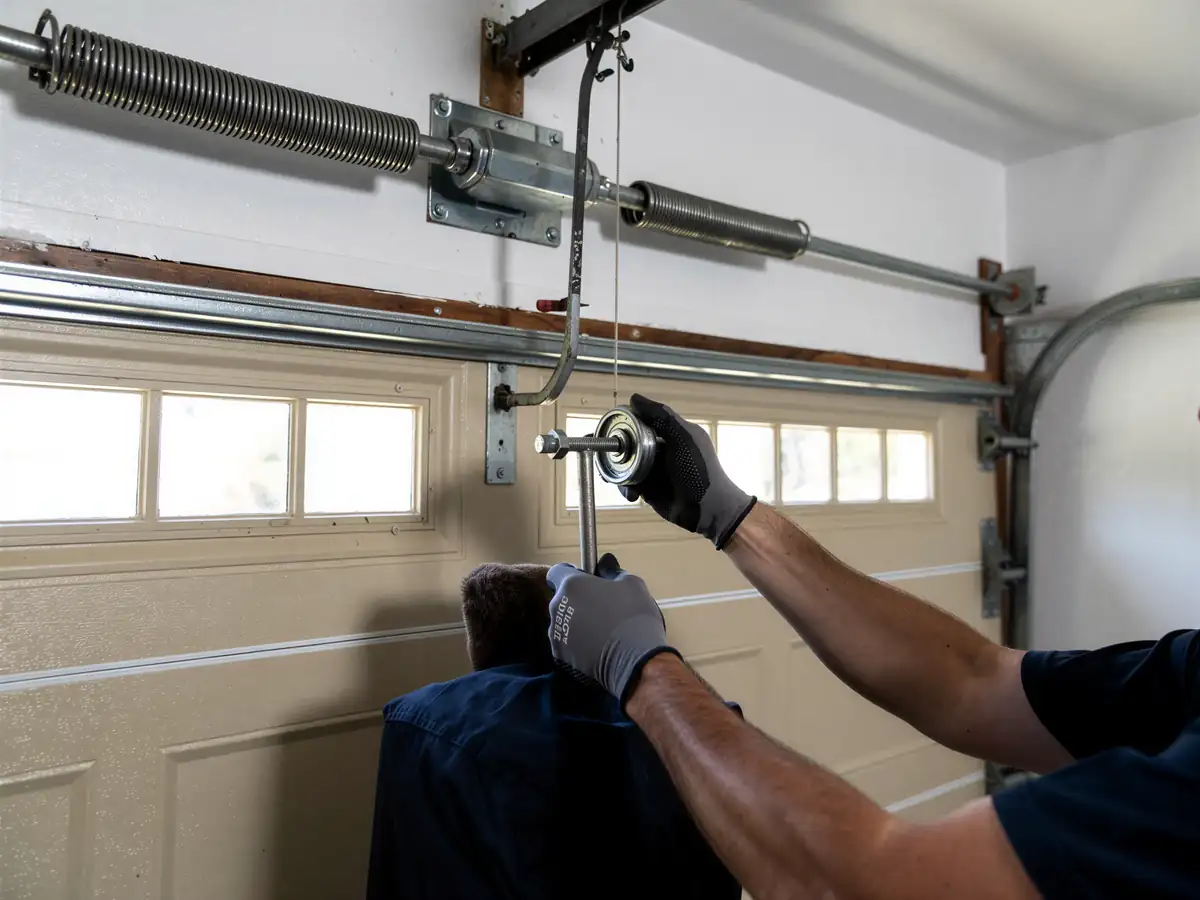
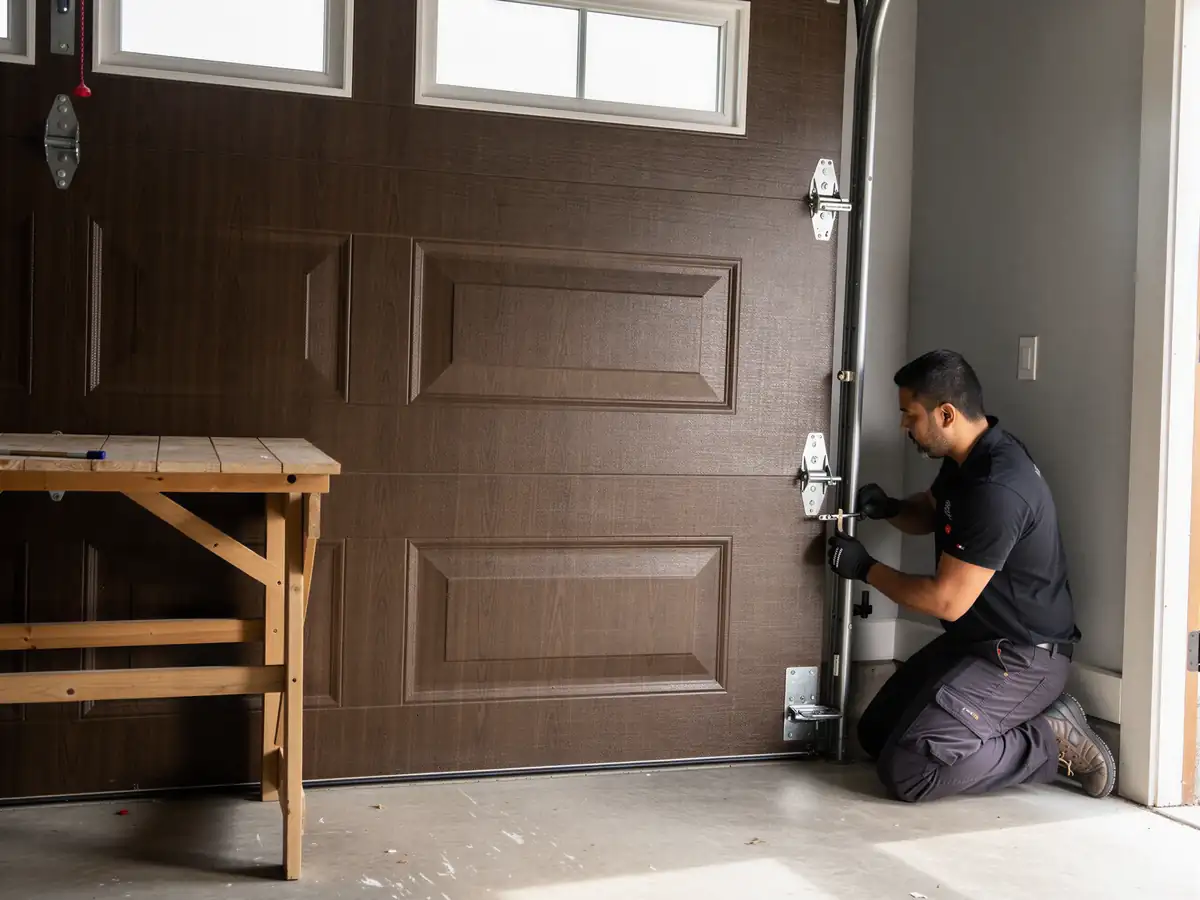
For a spring job, we match the wire gauge and wind to what the door actually needs - not a universal size - because an undersized spring on a heavier insulated door just means you're back to square one in a year. On original doors from the 1958-2003 window we're often working with side-mounted torsion hardware or dated track spacing, so the bracket work takes a little longer than it would on a newer install.
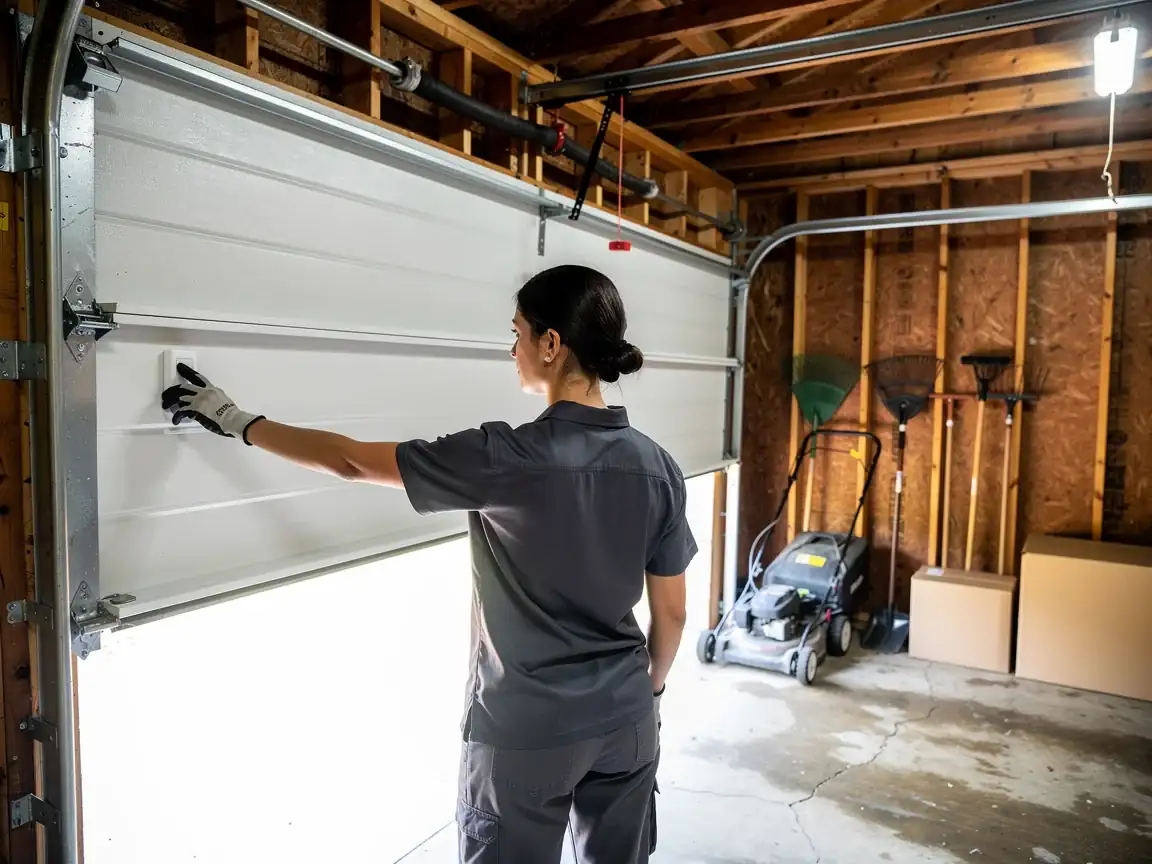
We'll also check the opener's force settings while we're in there, since a spring replacement changes the balance of the door and an opener still set for the old weight will either strain or won't engage the safety reverse correctly. One honest limit: if the door itself is a wood panel original from the early part of that build era and it's warped or delaminating, replacing the spring won't fix the real problem - at that point we'll tell you straight that a new door is the better money, not another repair.