Serving Aurora, IL & nearby
(630) 415-1529
Aurora, IL

Is Your Aurora Garage Door Worth Fixing, or Done

Aurora homes mostly date 1958-2003, median 1981. Here's how that housing stock and our cold climate decide whether your door is worth repairing.

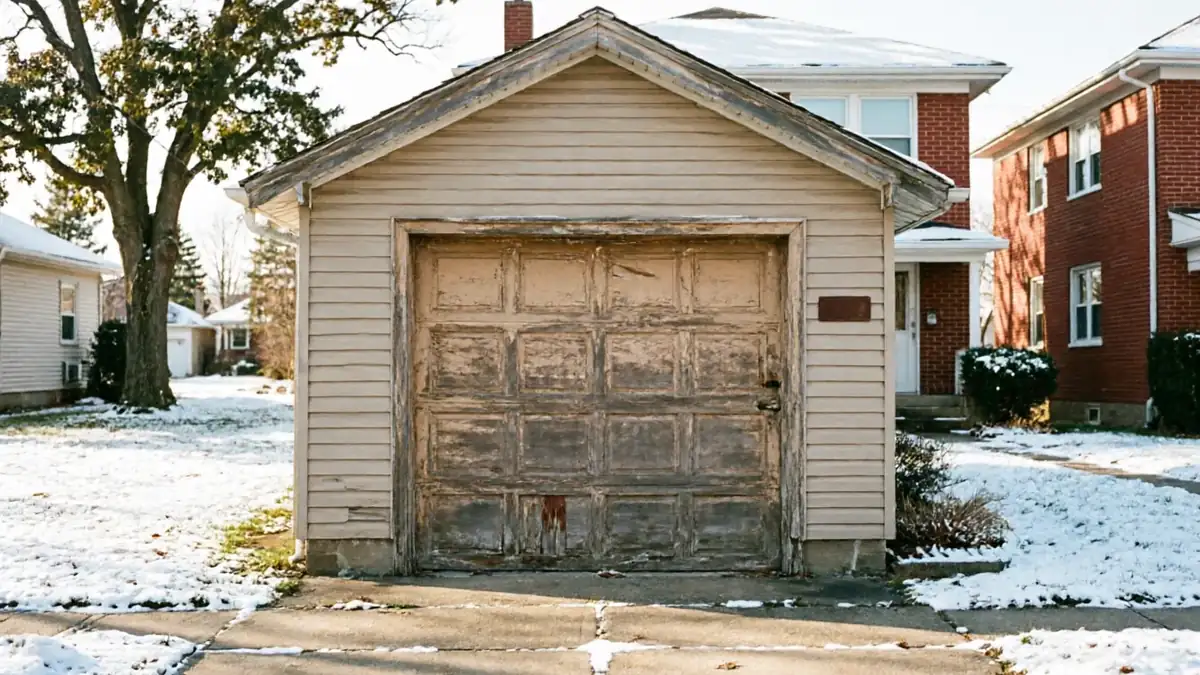
The garage door is old and peeling, with a small hole at the bottom.

How Local Conditions Play In

Most houses across Aurora's 48 named subdivisions went up between 1958 and 2003, with the median build year sitting around 1981. That matters because a door installed when a house was built is now somewhere between 20 and 65 years old, and the hardware era tells you a lot before you even open the garage. Doors from the 1980s and 90s often run on steel tracks and spring setups that have been superseded twice over, which means some parts are special-order rather than something a tech carries on the truck.

Our winters sit in the cold-moderate band, not the brutal extreme-cold zone, but still enough freeze-thaw cycling each year to work on steel panels, weatherstripping, and track alignment. A door built in 1981 has been through four decades of that cycling. Expansion and contraction loosens fasteners, dries out rubber seals, and can warp a panel just enough that it binds on the track in January and seems fine again by April. If your house falls in that 1958-2003 build window, the door's age and our climate are working on the same hardware at the same time, and that combination is what decides whether a repair holds or just buys you a few more cold snaps.

When to Get Help

Call before the door fails completely, not after. A door that's hard to lift by hand, that slams the last foot of travel, or that the opener strains against is telling you the spring is going, and a spring that lets go under load can take a panel or a finger with it. On the 1980s and 90s stock common across this area, springs are well past any reasonable service life even if they haven't snapped yet.

Get someone out if you hear a new grinding or popping sound from the track, if one side of the door sits visibly lower than the other, or if the door reverses on its own partway down. Those are track and sensor issues that get worse, not better, with Aurora's winter cycling working against them. We won't pretend every call is an emergency - a door that's just slow to close because of a dirty sensor eye isn't the same as a snapped cable - but if you're unsure which one you have, that's a reasonable thing to ask about on the phone before anyone drives out.

The Common Mistake

  1. The mistake we see most in houses built in this 1958-2003 window is swapping a broken spring or opener and leaving the original track and rollers in place

    Assuming they're fine because they're not the part that failed. On a door that old, the track has usually taken decades of the same freeze-thaw movement that killed the spring, and steel rollers wear a groove into it over that much time. Replace the spring on a track that's already out of alignment and you've just put new stress on old metal - it'll fail again, usually within a year or two.

  2. The other version of this mistake is the reverse

    Replacing the whole door when only the spring and a cable were the problem. If the panels are straight, the track isn't bent, and the opener still pulls its rated weight, a full replacement on a door that age is often money spent for no real gain. Worth fixing versus worth replacing comes down to what's actually worn, not just what year the door was installed.

The Problem

The real issue with Aurora's housing stock is that a lot of it clusters in a narrow band of build years, which means a lot of garage doors are aging out at roughly the same time. A door installed when a house in this area was built in, say, 1985 has had close to forty winters of cold-moderate freeze-thaw cycling on its hardware, and that kind of wear doesn't show up all at once - it shows up as a spring that's slightly weaker every year until one day it isn't.

The honest limit here: we can tell you what's worn and what isn't once we're looking at the door, but we can't tell you over the phone whether a 1981-era door is worth fixing without seeing the track, the panels, and the spring size in person. Age alone isn't the deciding factor - condition is. A well-kept door from that build era can still be worth another decade of service; a neglected one from the same year might not be.
How it works

From “it’s stuck” to “it’s fixed”

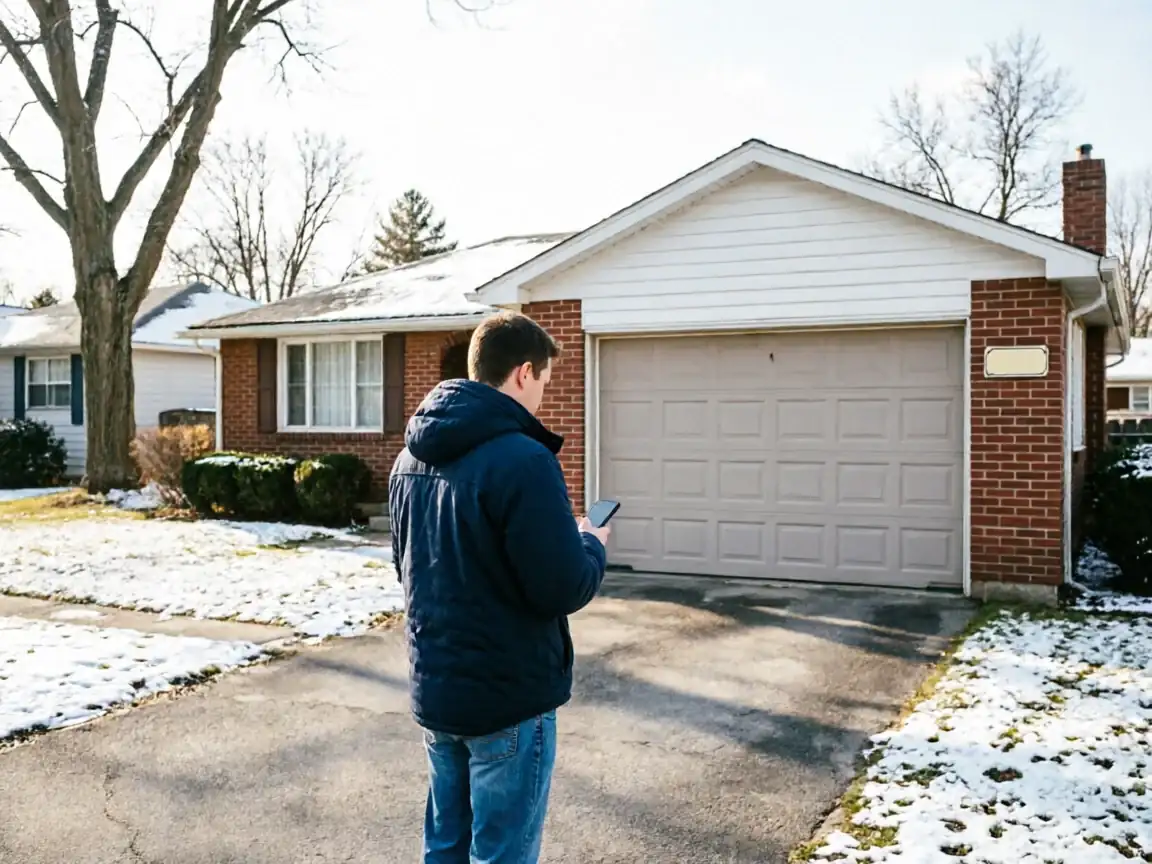
A man stands in a snowy driveway looking at his phone, facing a closed garage door.

Tell us what’s wrong

Describe the symptom - won’t open, loud bang, opener runs but the door won’t move.

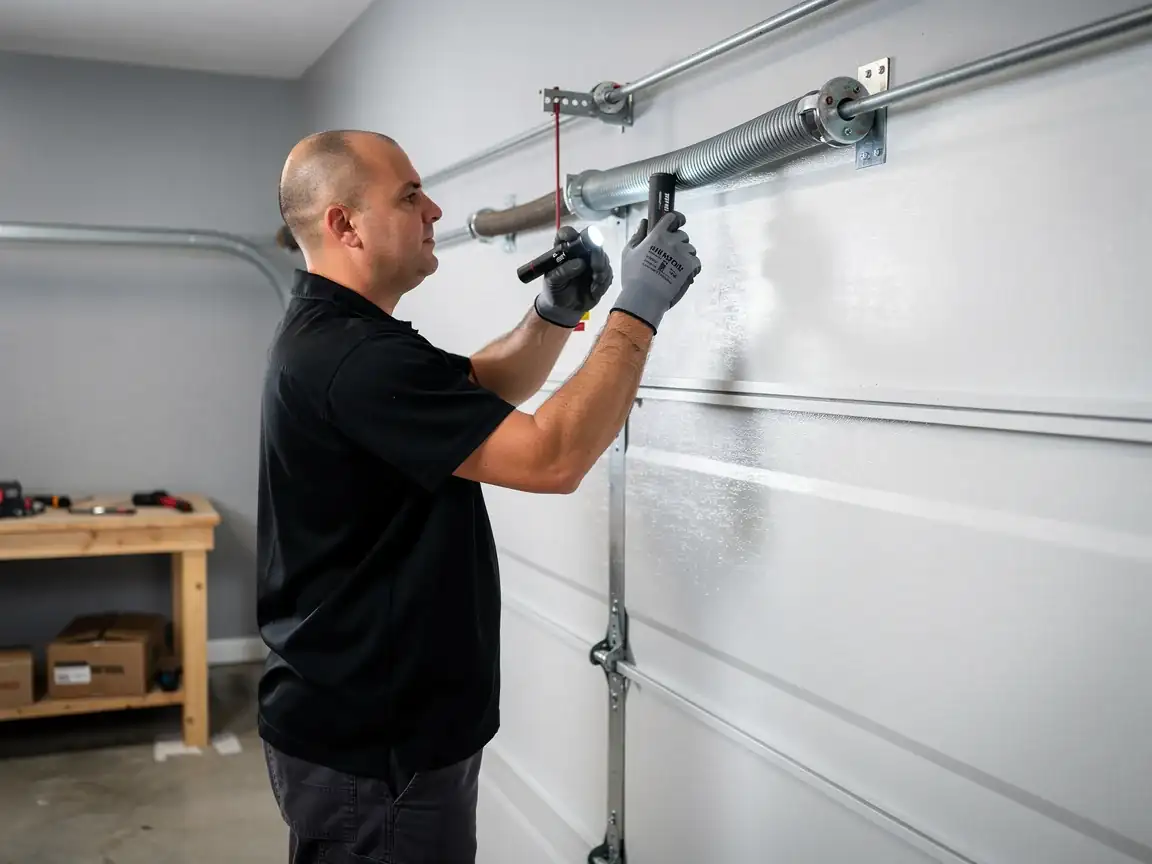
A technician inspects a garage door torsion spring with a flashlight.

On-site diagnosis

A technician tests the door under power and by hand and finds what actually failed.

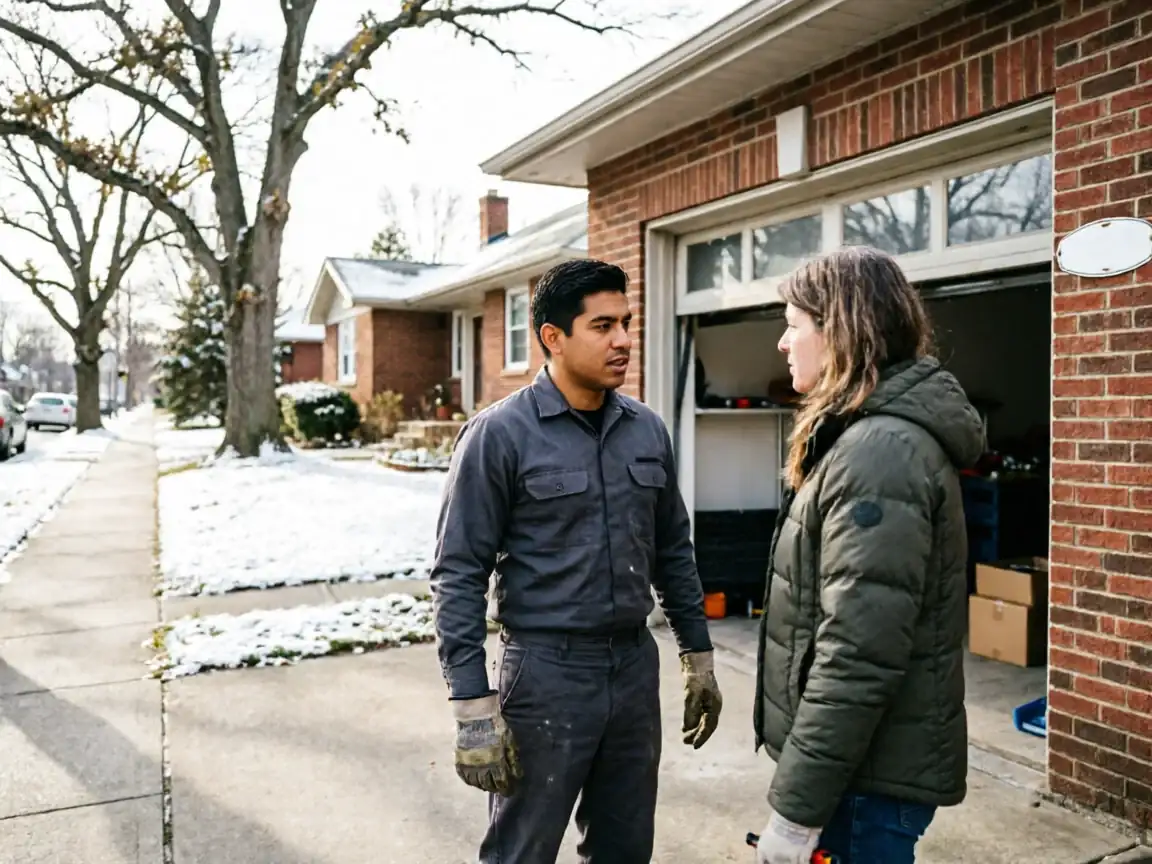
A technician talks to a woman in front of a house with an open garage door.

Clear, up-front plan

You get the fix that’s needed and what drives the cost - before any work starts.

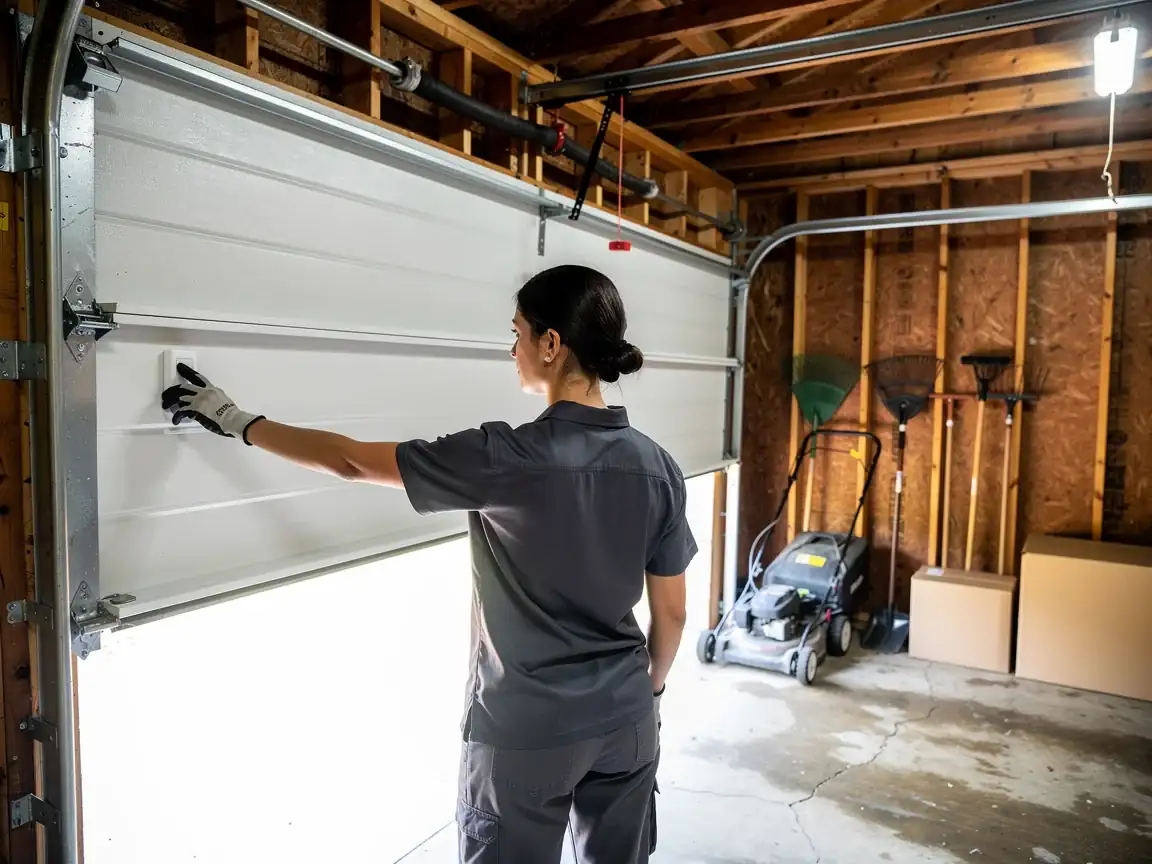
A technician in a gray uniform presses a button on a white garage door.

Repaired & tested

The repair is done, the door is set true and tested, and the work area left clean.

Not sure which repair your door needs in Aurora, IL? Describe what it’s doing - every job starts with a diagnosis.

How we work

What to expect

Diagnosis firstEvery visit starts by finding what actually failed - not a pre-written parts list.
The right part for the doorSprings and openers matched to the door’s weight and age, so the fix holds up.
Straight answersWhen a repair makes more sense than a replacement - or the reverse - you hear it plainly.
Clean, careful workTension released safely, hardware set true, the door tested under power before we leave.
What we do

Garage Door Services

Repair and installation work for Aurora homes and businesses.

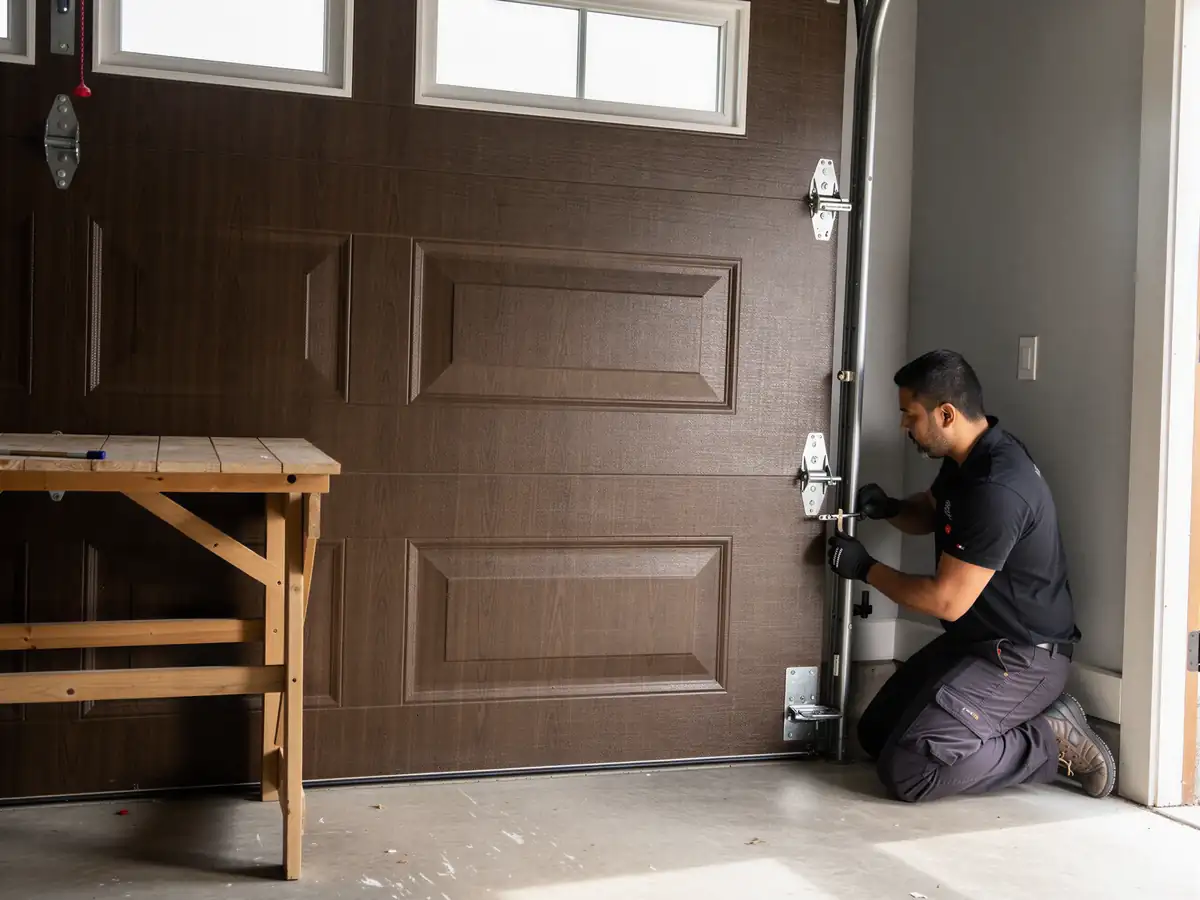
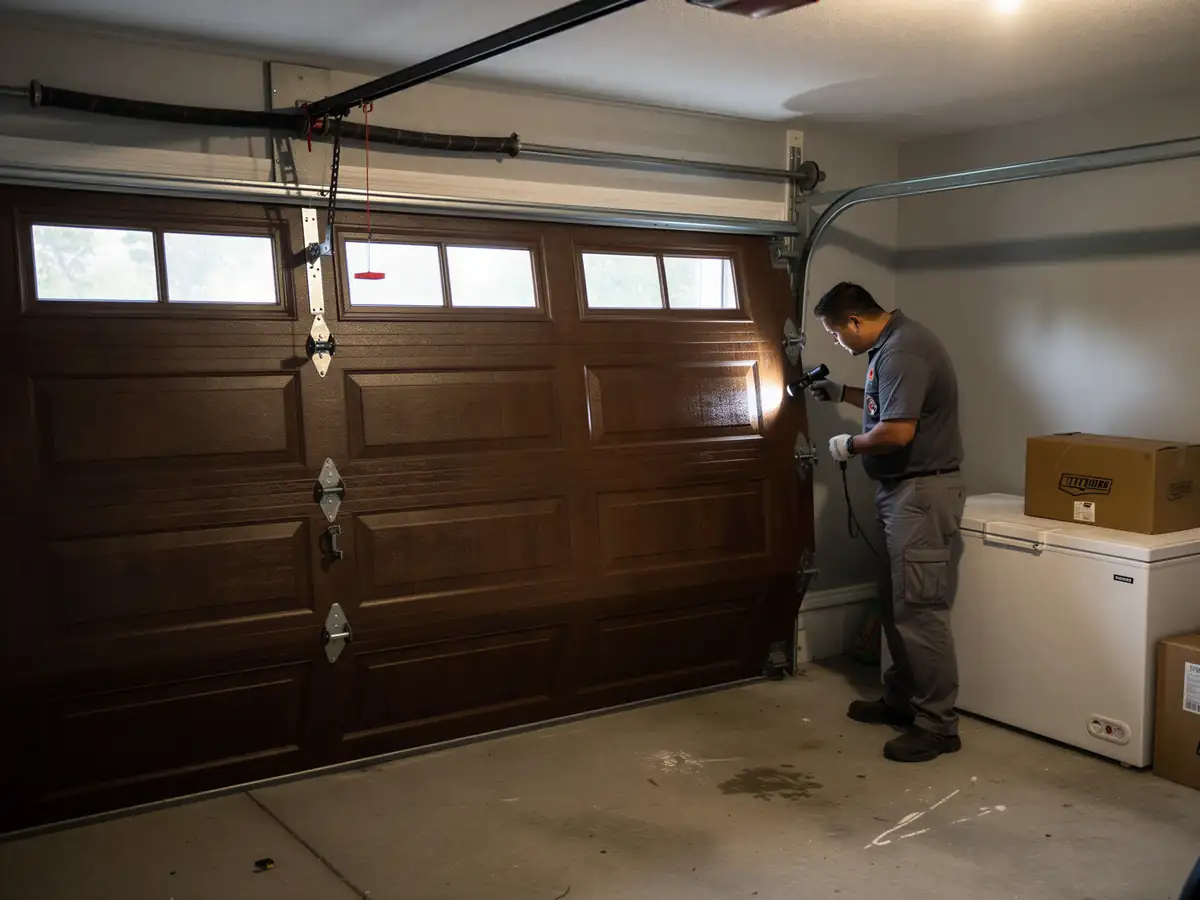
A technician kneels, adjusting the brown garage door's track and hinges.

Garage Door Repair

Aurora Garage Door Pros fixes springs, openers, and tracks on the 1958-2003 housing stock common across Aurora, IL, built for a cold-moderate climate.

Learn more
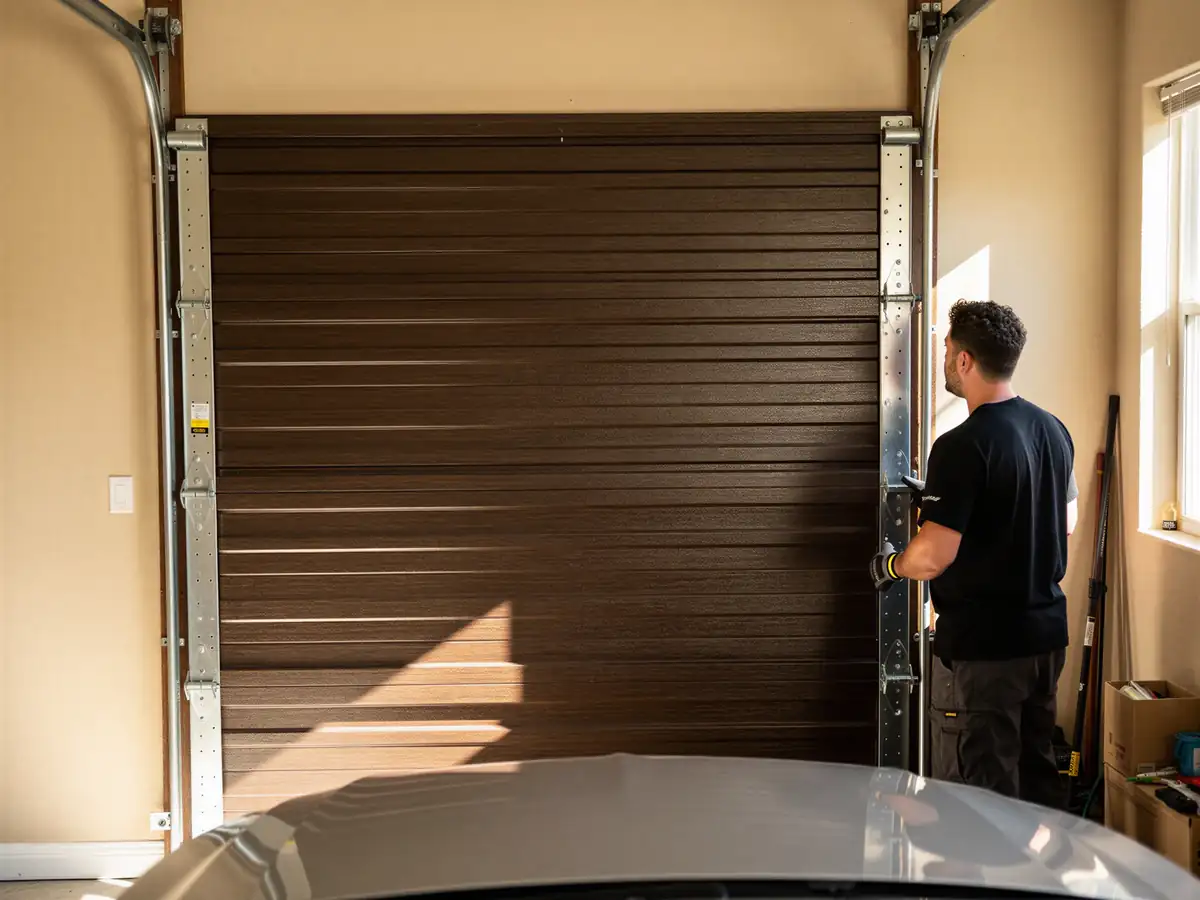
A technician stands next to a closed brown garage door.

Garage Door Installation

New garage door installation in Aurora, IL, built around the area's 1958-2003 housing stock and cold-moderate climate. Insulated doors sized for openings this area actually has.

Learn more
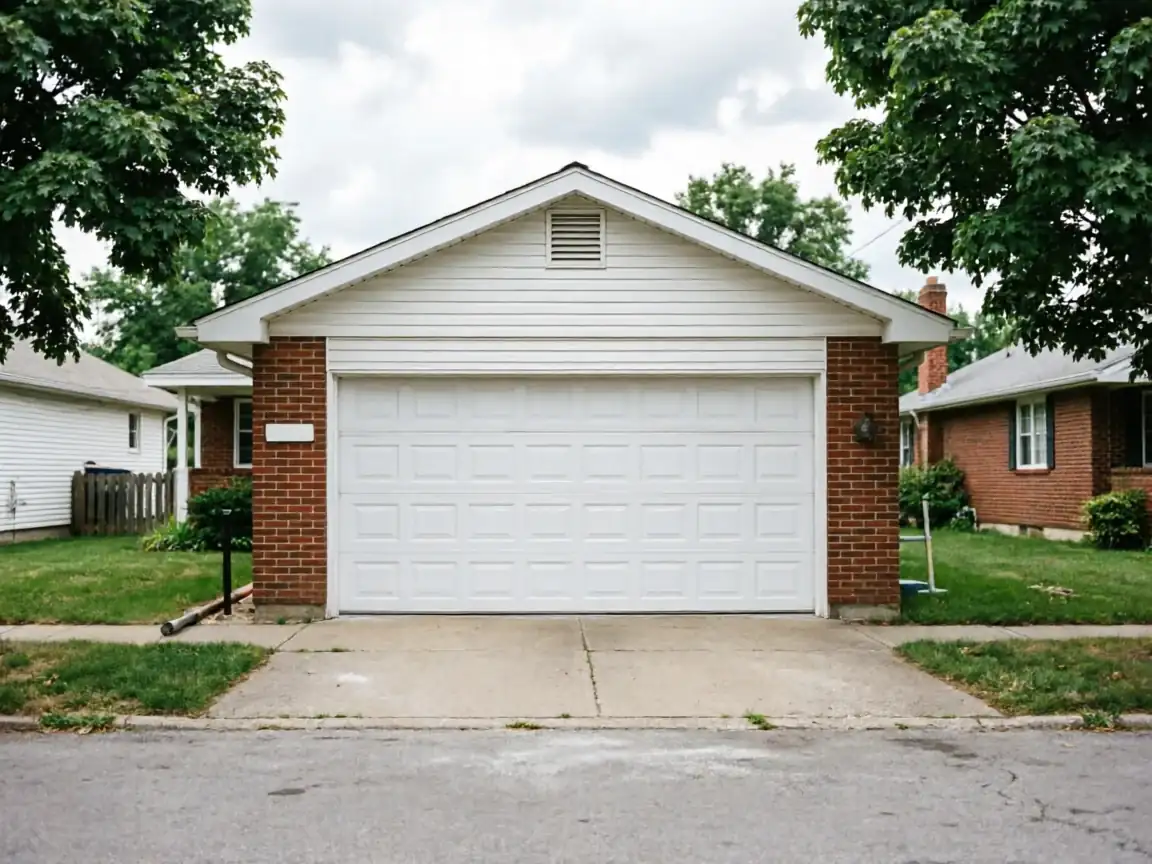
A white garage door on a brick house with white siding and a driveway.

Garage Door Service

Aurora homes built mostly between 1958 and 2003 wear out original springs and openers at a predictable rate. Here's what fails, why, and what the fix looks like.

Learn more
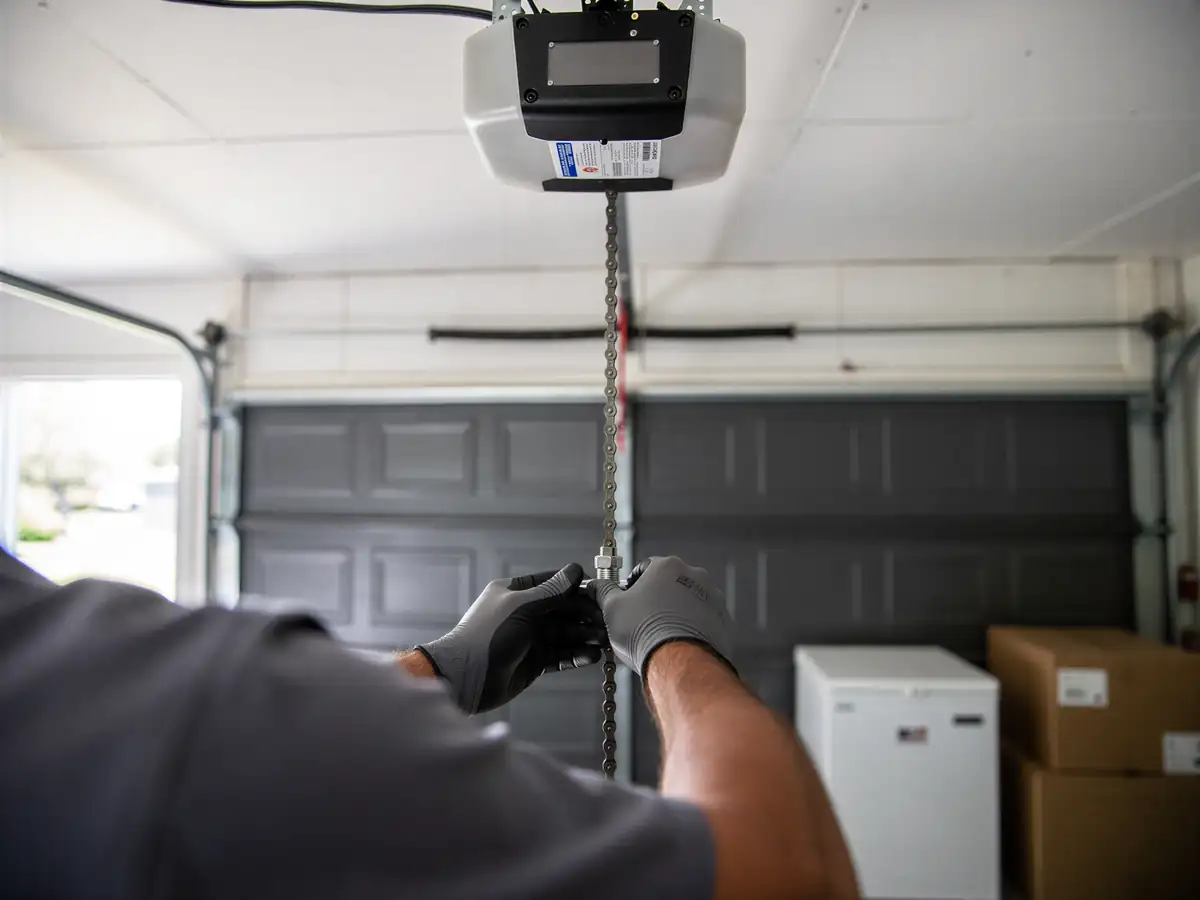
A technician in gloves adjusts the chain on a garage door opener.

Opener Repair

Garage door opener repair across Aurora, IL. We fix dead openers, grinding gears, and dropped remotes on the 1980s-90s openers common in local housing stock.

Learn more
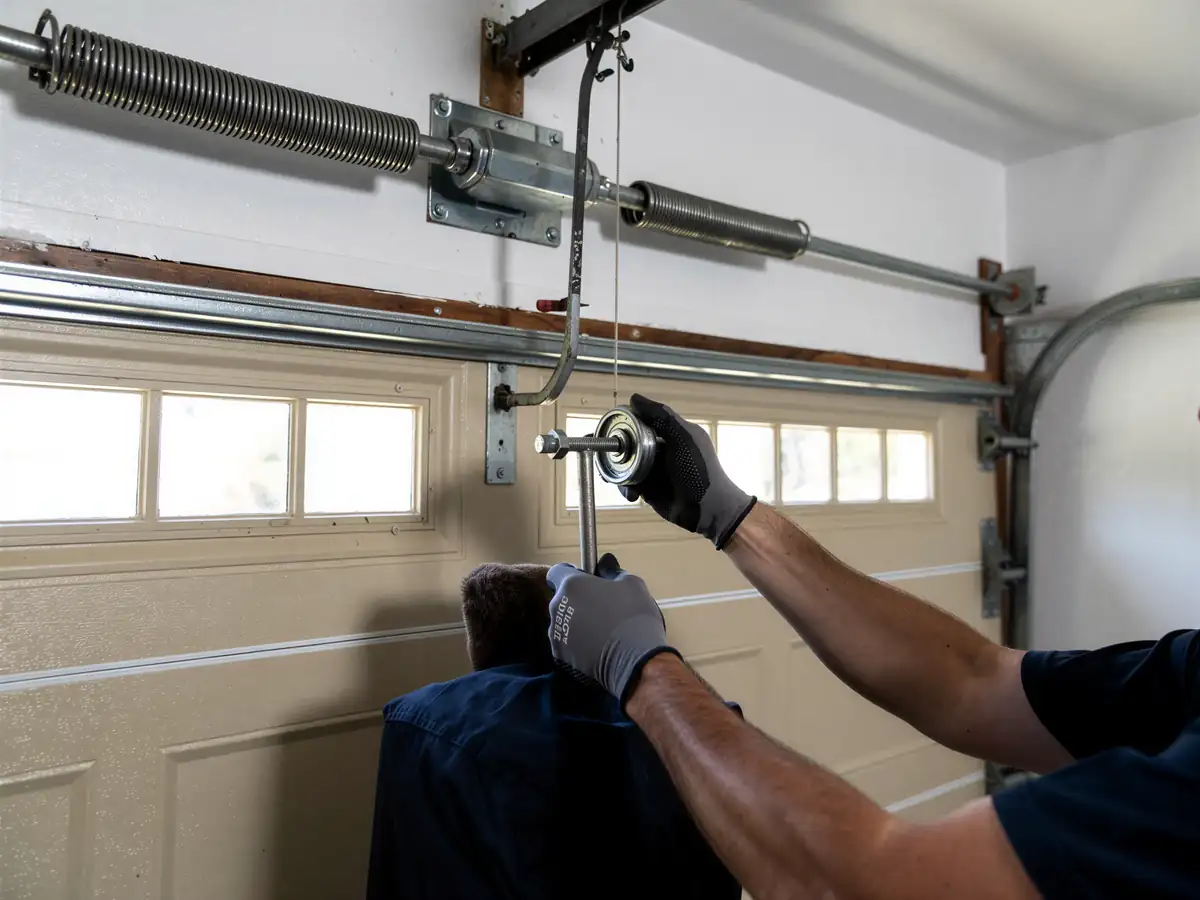
A technician adjusts the torsion spring and cable drum of a garage door.

Spring Repair

Torsion and extension spring repair for Aurora, IL homes built mostly in the 1958-2003 window, where cold winters and original hardware wear springs out fast.

Learn more
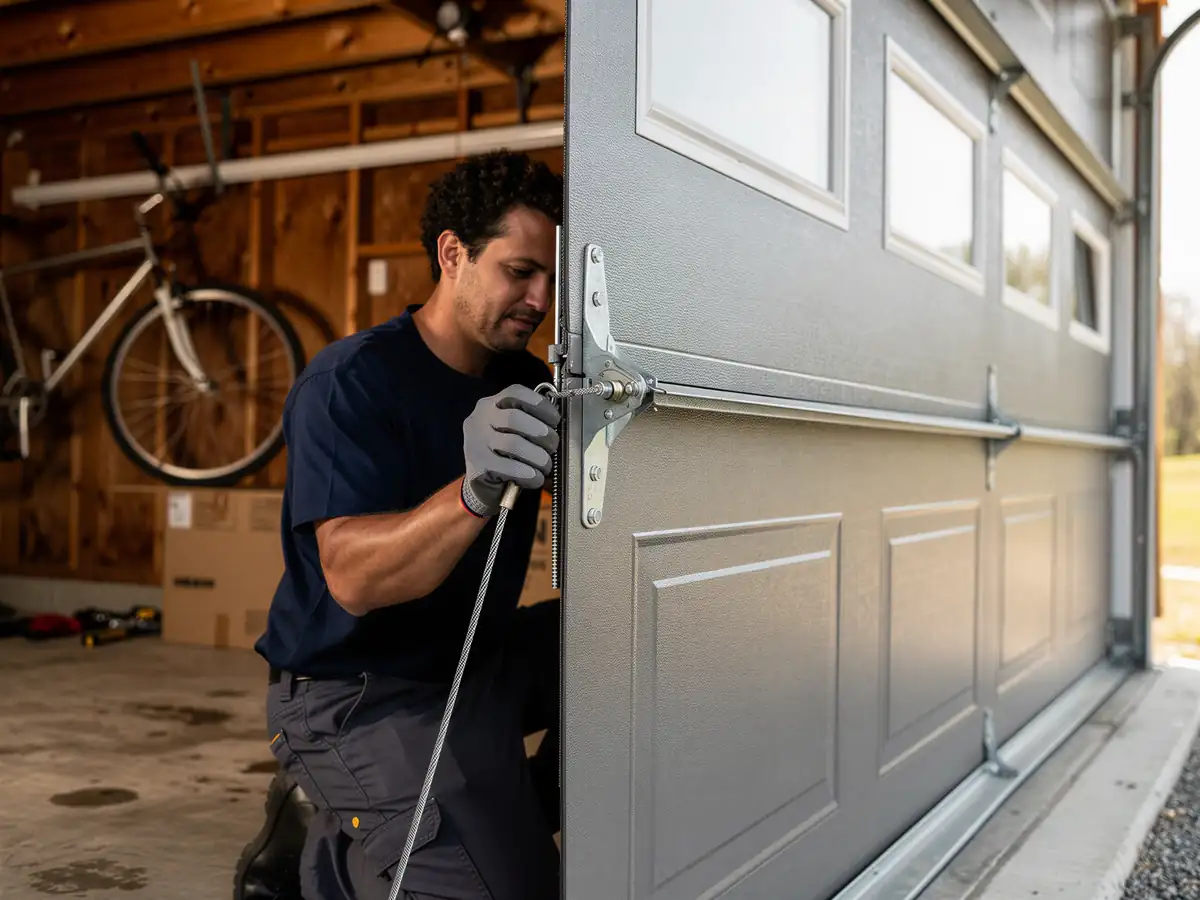
A technician kneels, working on the cable and roller of a gray garage door.

Cable Repair

Cable repair for Aurora homes built mostly between 1958 and 2003, where cold winters and original hardware wear through lift cables faster than owners expect.

Learn more
A technician inspects a brown garage door with a flashlight.

Off-Track Repair

Garage door off track in Aurora? We work on the 1958-2003 housing stock across the service area and know how cold snaps bend track on older rollers. Call for a fix.

Learn more
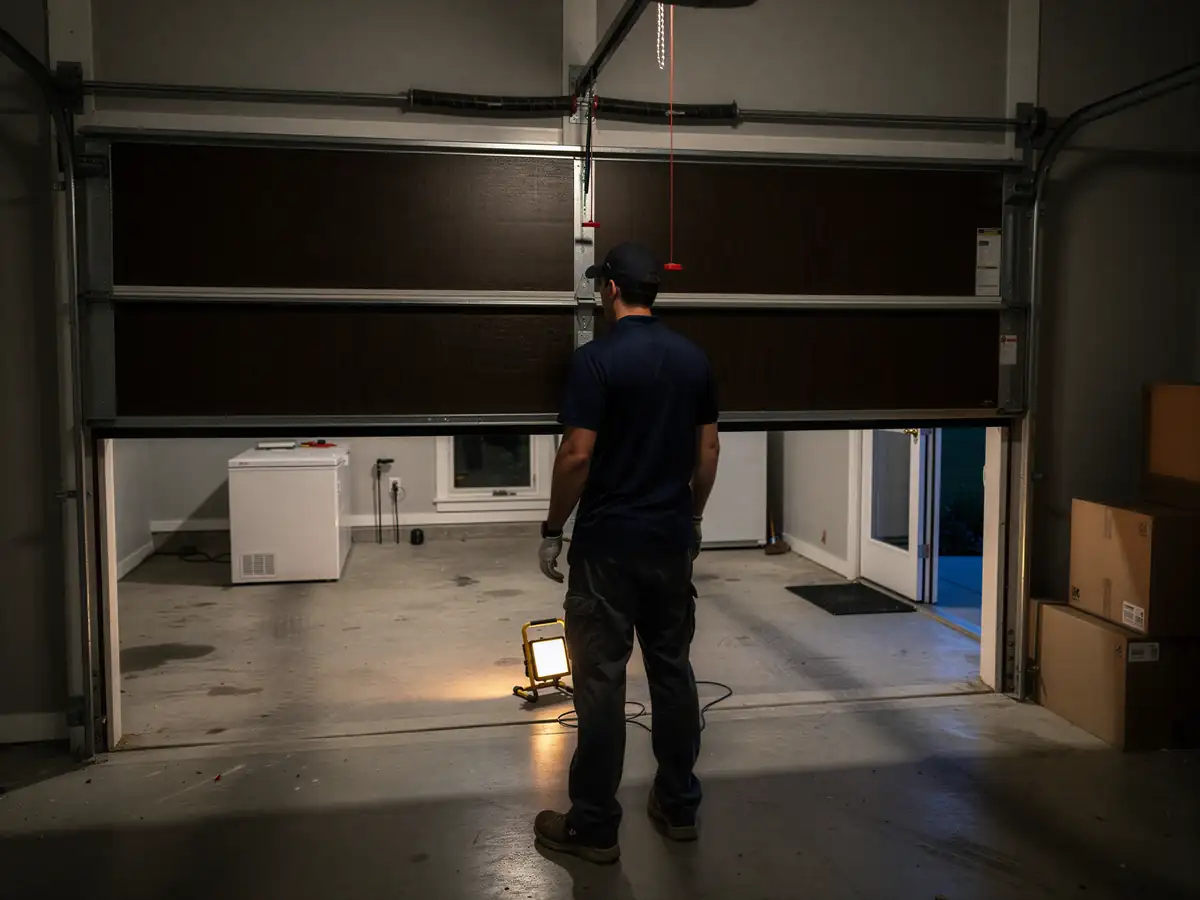
A technician stands in a garage looking at a partially open garage door.

Emergency Garage Door Repair

Broken spring or dead opener in Aurora, IL? We fix the doors common to 1958-2003 housing stock fast, with parts on the truck for cold-weather failures.

Learn more
Questions

Frequently asked

Straight answers about garage door repair in Aurora. Still unsure? Ask us directly.

How do I know if my garage door is too old to repair?

Age by itself doesn't decide it. A door built when Aurora homes in the 1958-2003 range went up can still be solid if the track is straight and panels aren't warped. What matters more is whether the spring, cables, and rollers show real wear from decades of our cold-moderate winter cycling, not just the year on the opener.

Does Aurora's winter actually damage garage doors?

Yes, through repeated freeze-thaw cycling rather than one bad storm. Over 20 to 60 years, that cycling loosens fasteners, dries out weatherstripping, and can shift panels just enough to bind on the track. It's slow wear, which is why doors from the 1980s and 90s often need attention even without a single dramatic failure.

Is it cheaper to fix a spring or replace the whole door?

On most doors from this area's common 1958-2003 build era, fixing a spring is far cheaper than replacing the door, provided the track and panels are still in good shape. Full replacement makes more sense when the track is bent, the panels are rusted or warped, or the opener can no longer pull the door's rated weight.

Ready to get your garage door sorted?

Tell us what it’s doing and where you are in Aurora - we’ll take it from there.

Request a QuoteCall