What Can Go Wrong
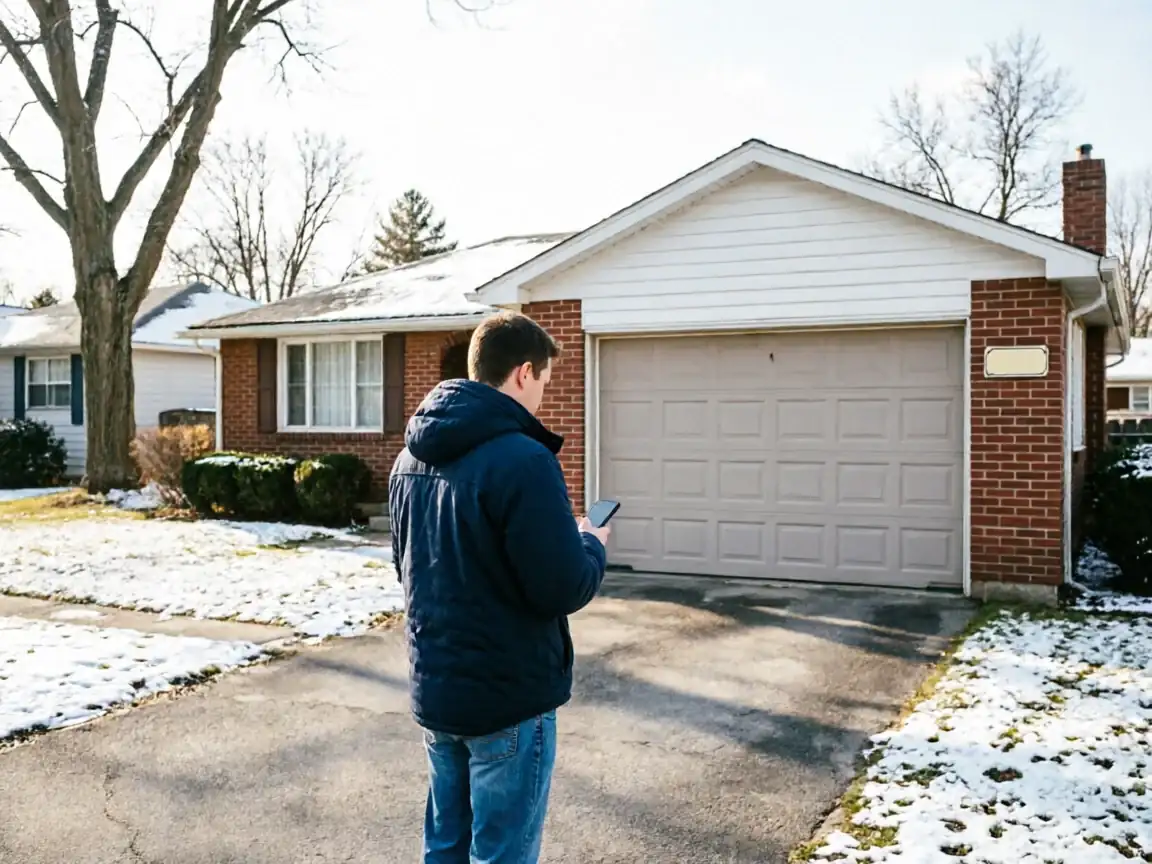
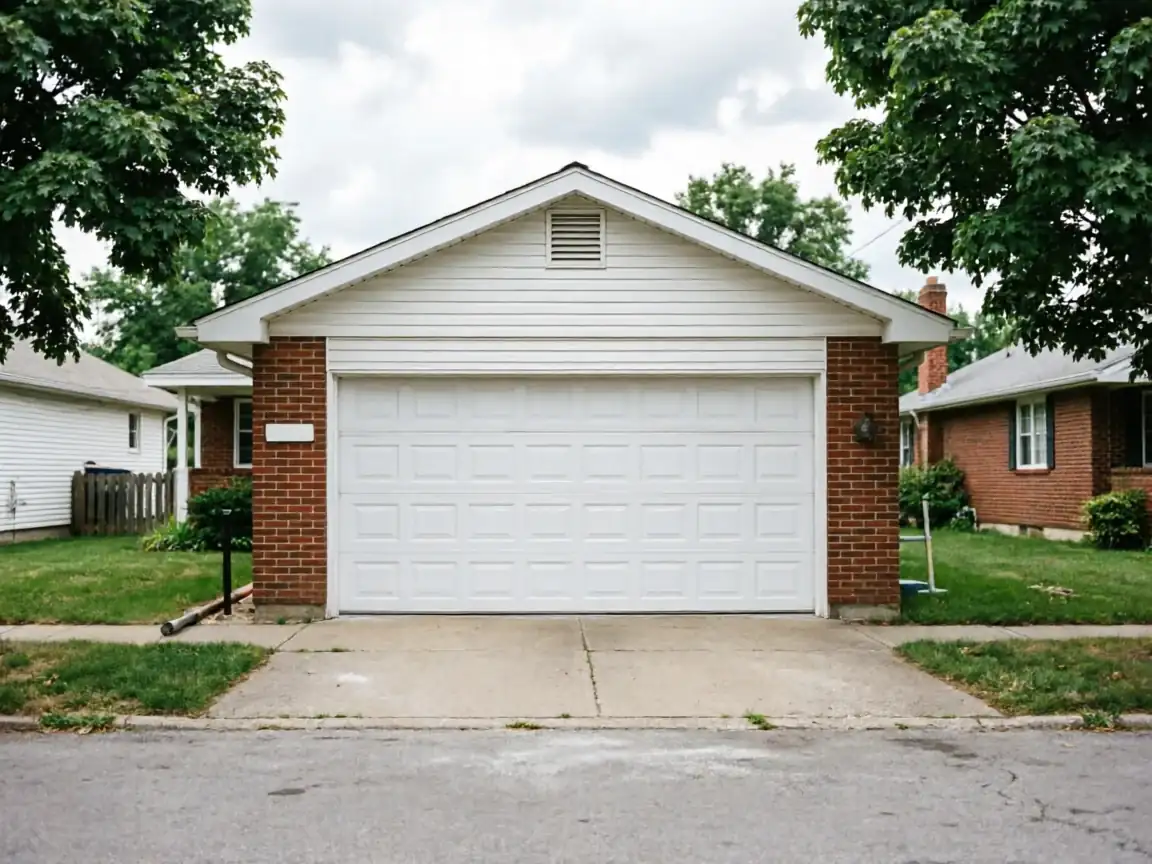
Sugar Grove's median home was built around 2002, which puts most of this town's garage doors a full generation newer than the housing stock we see closer into Aurora, where the service-area median sits at 1981. That matters for cable work because a lot of these doors still have their factory-installed lift cables - galvanized aircraft cable on a drum system, installed once during a building boom and never touched since. Nobody's replaced it because nothing's forced the issue yet.
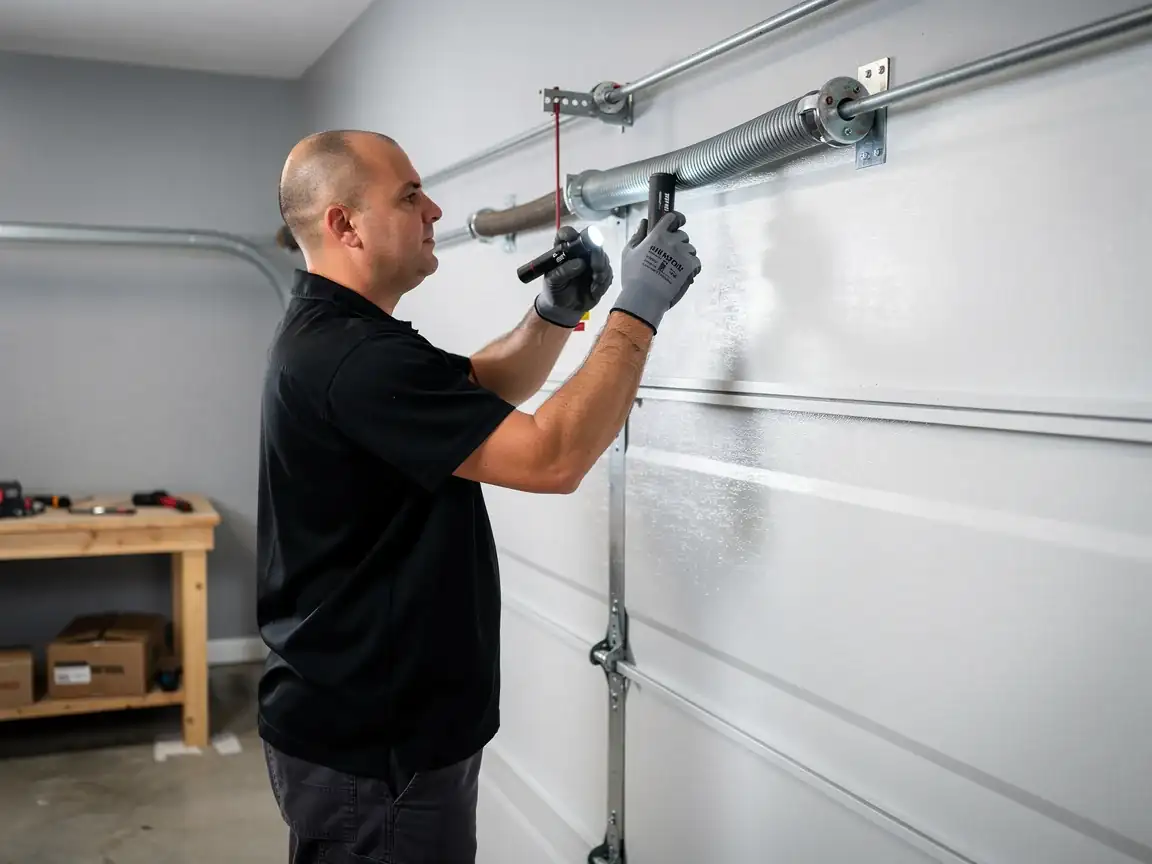
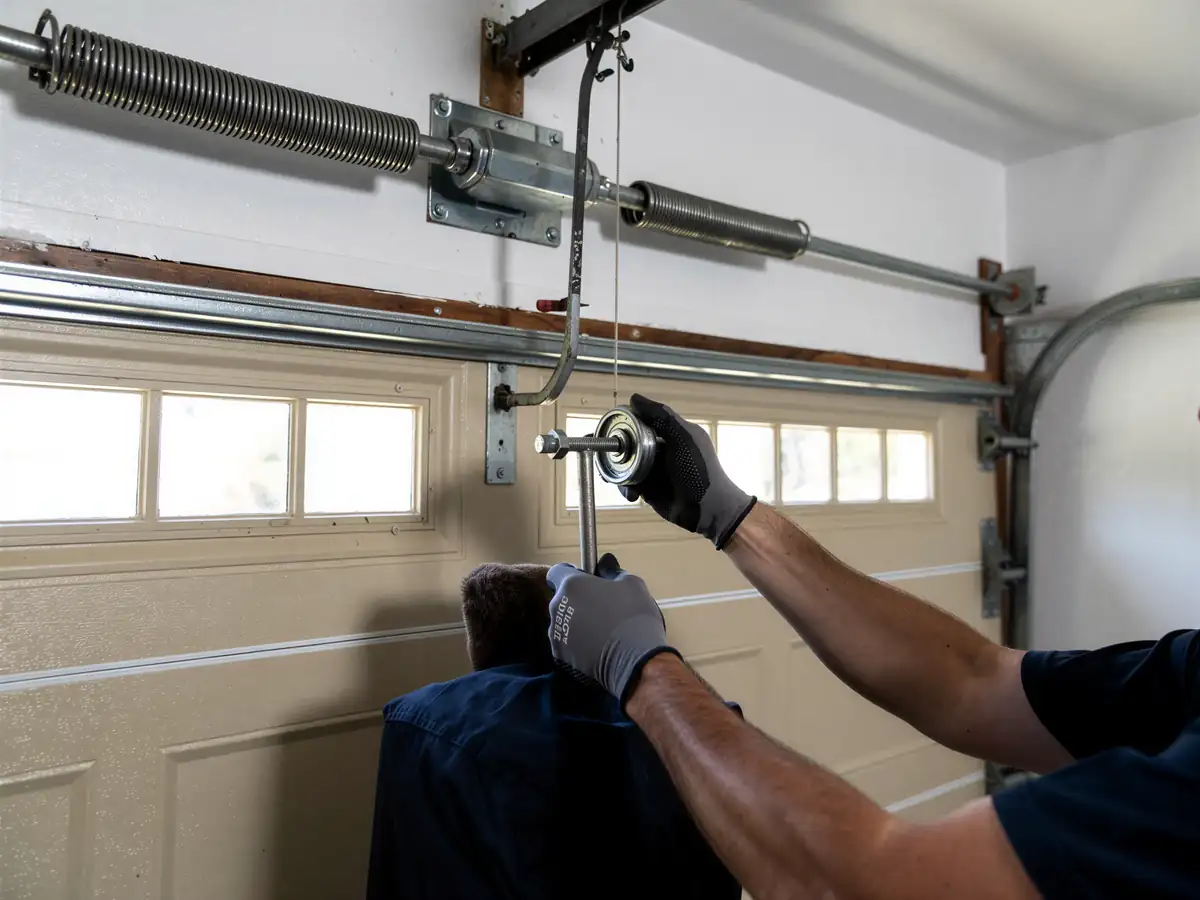
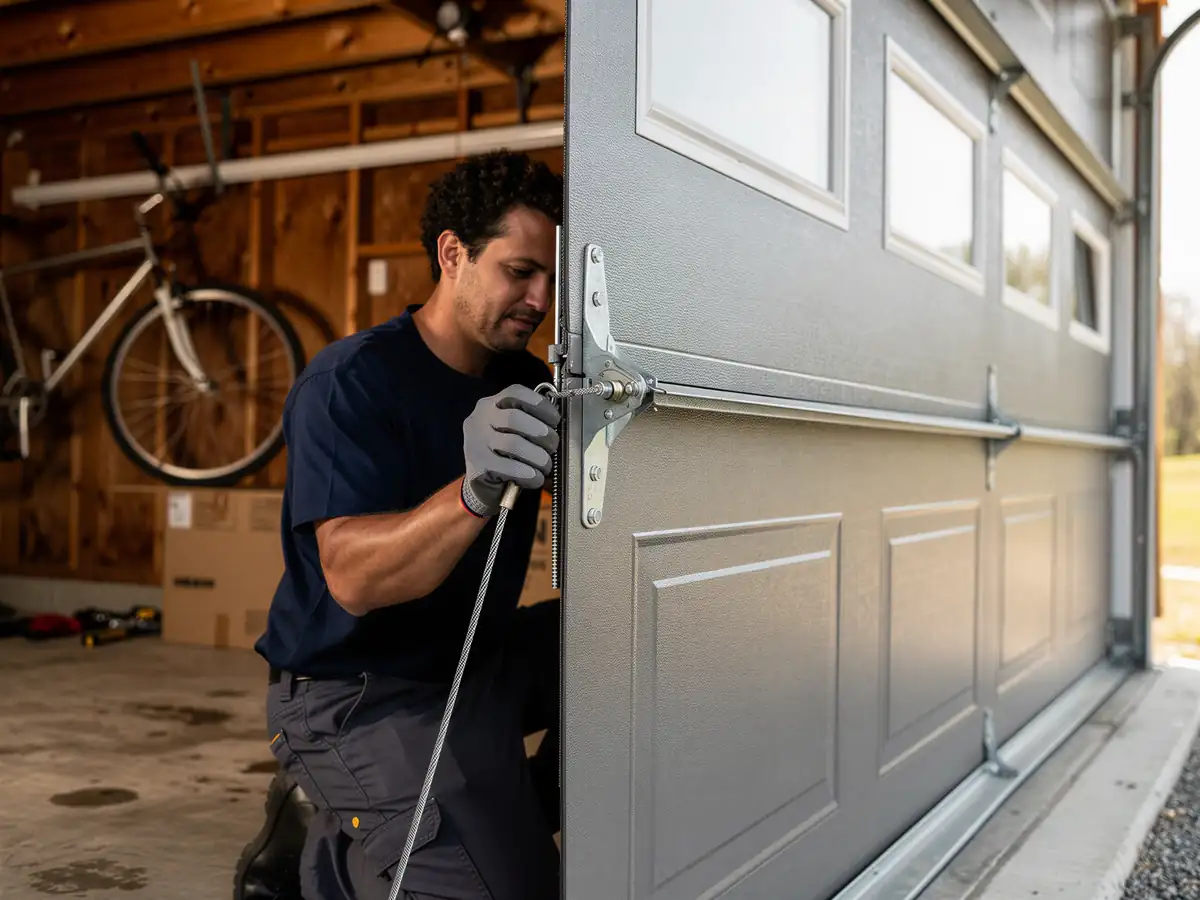
What fails first is usually the cable at the bottom fixture, where it wraps around the bracket and takes the most flex every time the door cycles. After twenty-plus years that strand starts to fray, one wire at a time, until it lets go - usually on a cold morning when the steel has contracted and the door's heavier to lift. We work in a cold moderate climate band here, and that seasonal swing is hard on any cable that's never been inspected.
The other common cause is a drum that's walked out of position on the shaft, which lets the cable spool unevenly and jump the groove. That's a different fix than a snapped cable, and it's worth knowing the difference before you start pulling on anything.
Doing It Yourself
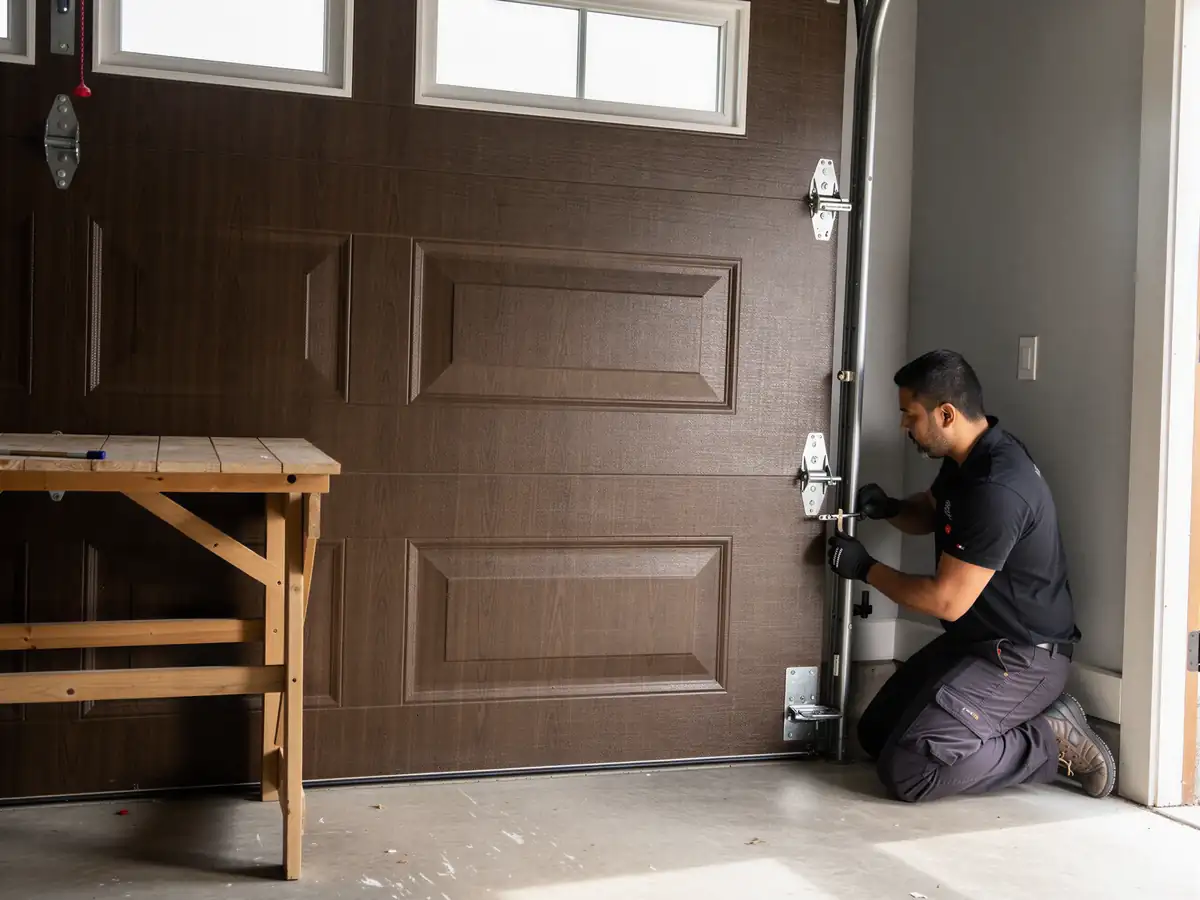
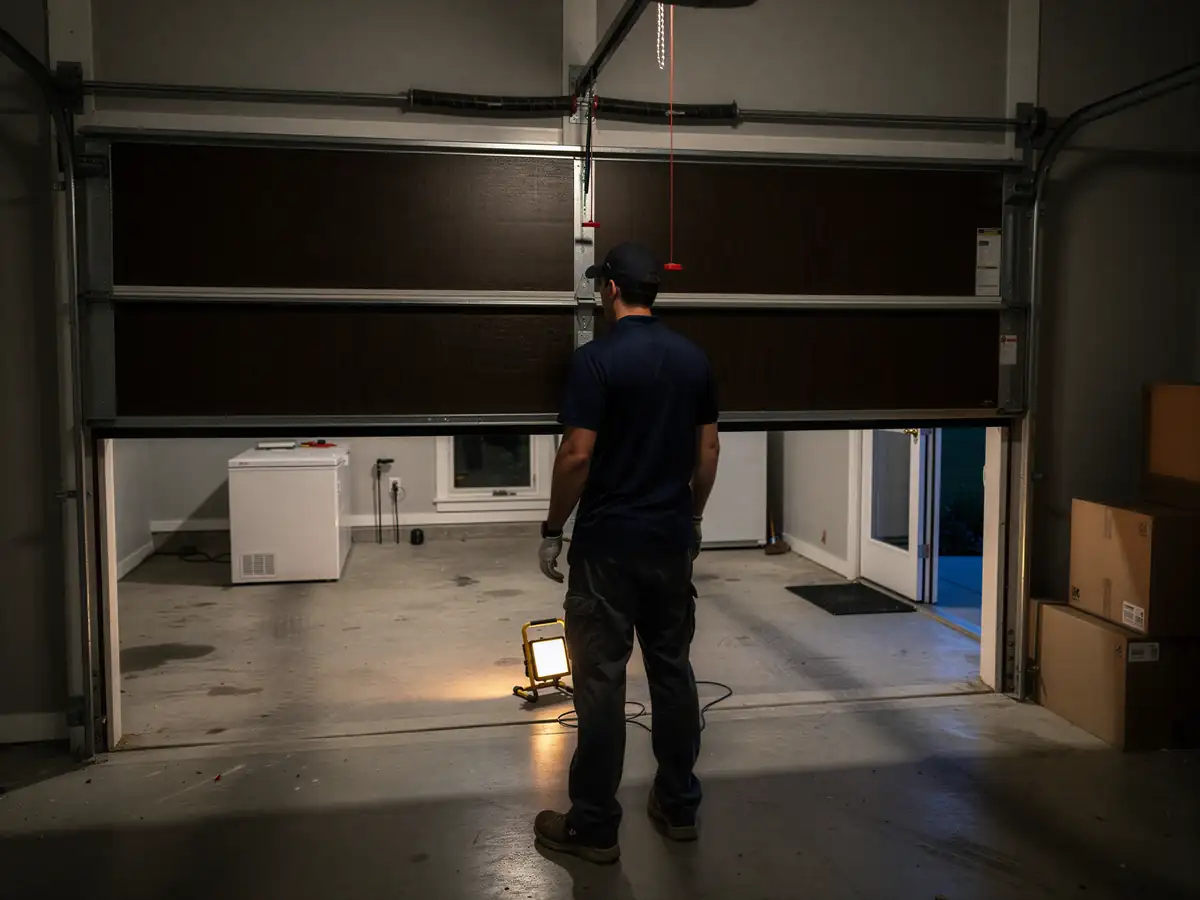
A garage door under spring tension with a broken cable is not a project to free-hand. The door is either stuck down, hanging crooked on one side, or barely held by the opener arm - any of those states means the torsion spring is still loaded and the cable drum can spin fast enough to take a finger with it.
We'll say the honest part plainly: if you're comfortable releasing spring tension safely and you've done it before, replacing a lift cable on a newer torsion system isn't exotic work. But most homeowners haven't done it before, and the two-car doors common on 2000s-era Sugar Grove builds use high-cycle springs sized for heavier sectional panels - enough stored force that a mistake here isn't a minor one.
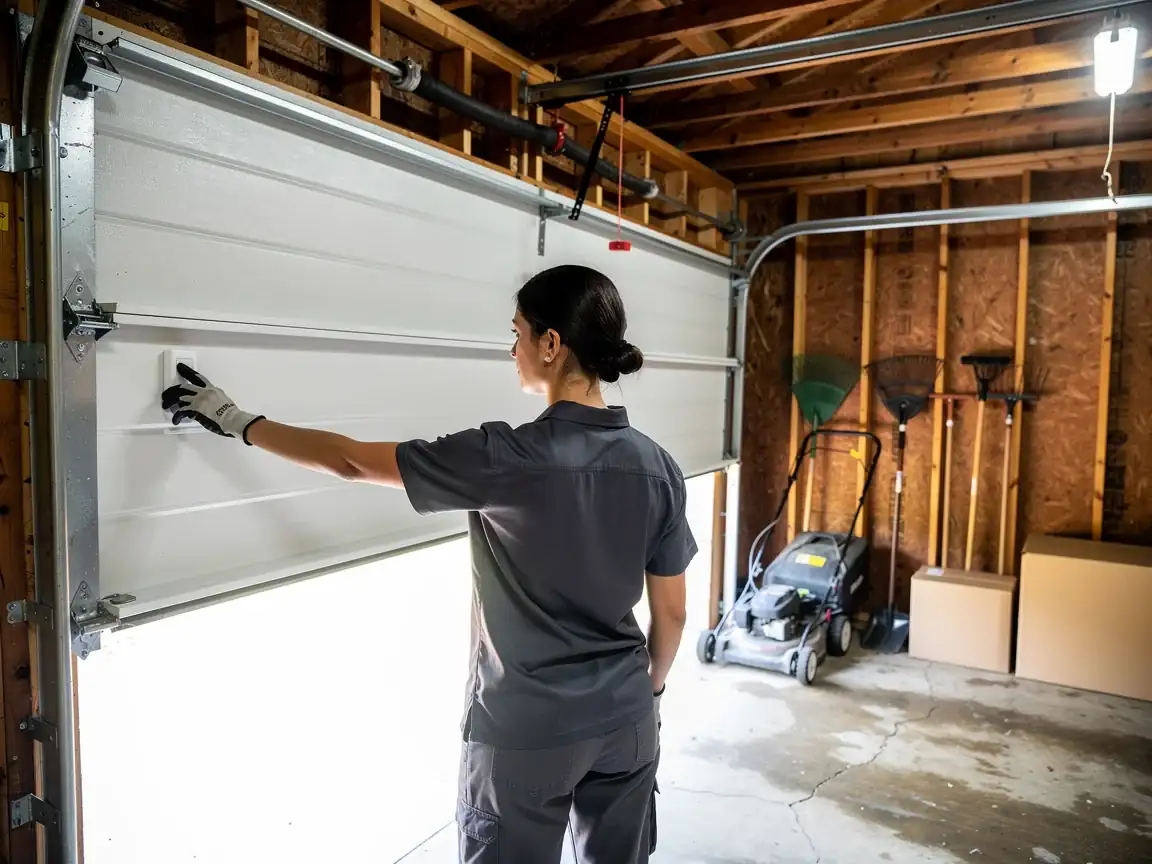
What you can safely check yourself: whether the cable is frayed versus simply off the drum, whether the door is binding on a track rather than a cable problem at all, and whether the opener is trying to run against a stuck door (turn it off at the wall if so, you'll save the gears). Past that, it's a call.
The Symptom
The giveaway on a cable failure is almost always lopsided
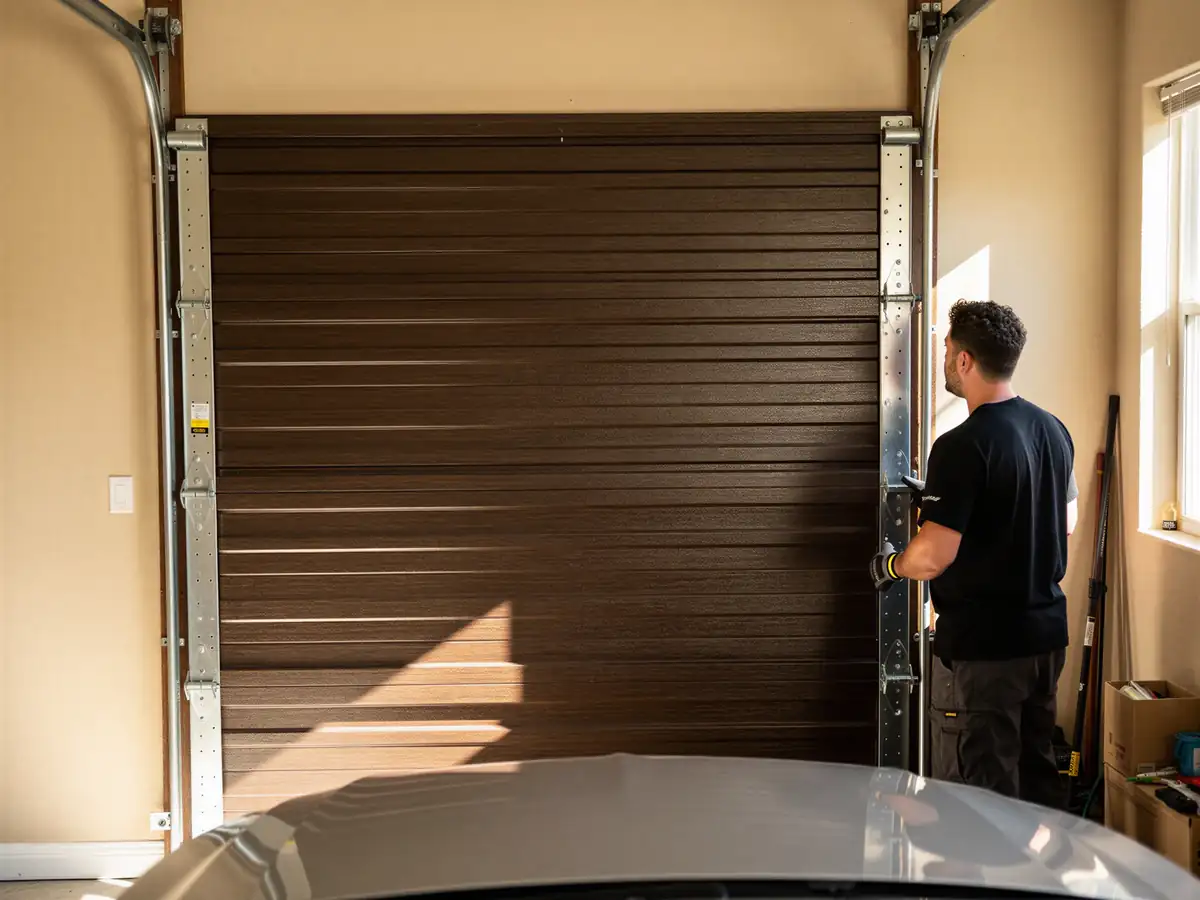
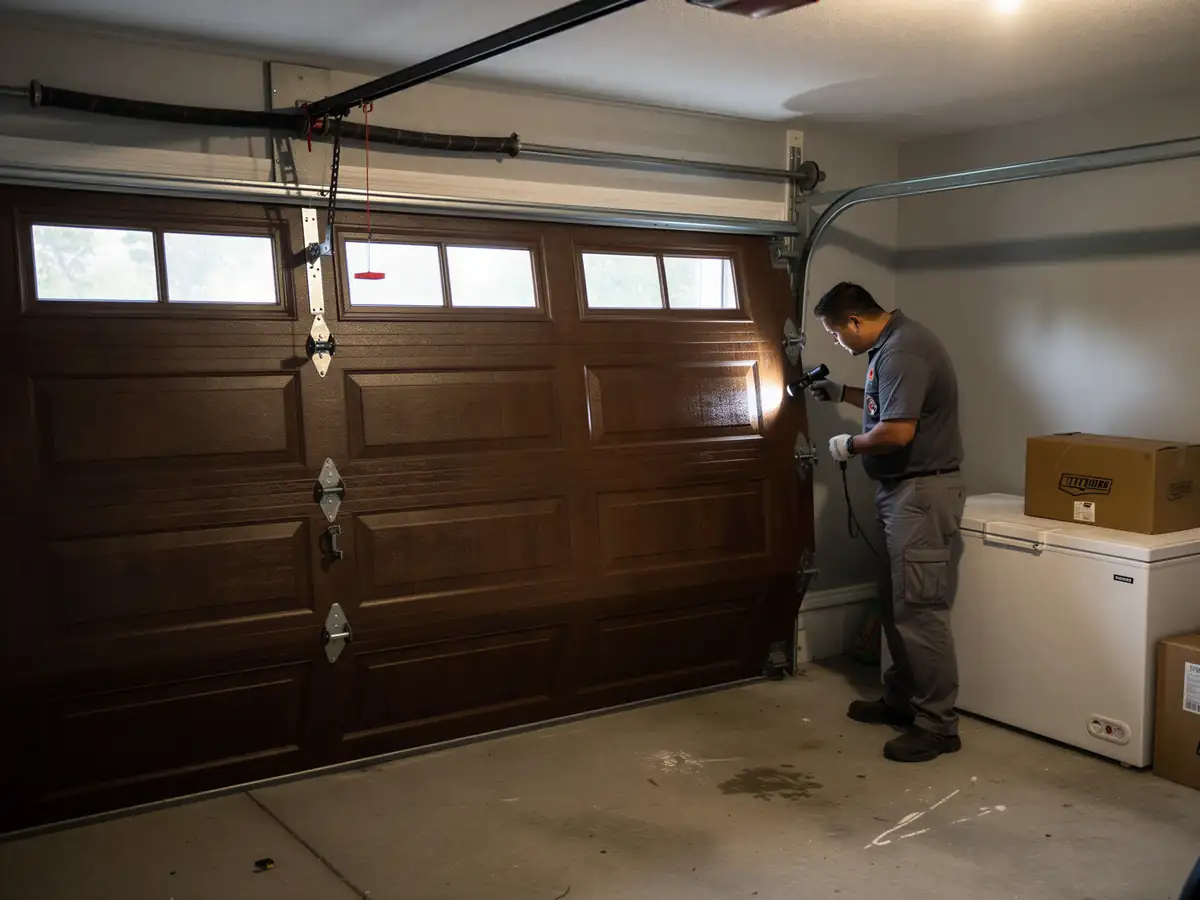
One side of the door hangs lower than the other, or the whole panel tips at an angle in the opening instead of sitting flat. If you hear a sharp snap followed by the door dropping on one corner, that's a cable letting go at the bottom fixture, not a spring.
A second pattern we see on Sugar Grove's newer builds
The cable hasn't snapped, it's jumped off the drum and bunched up, which jams the door partway and makes a grinding noise as the opener keeps trying to pull. That's often the walked-drum issue rather than a worn-out cable, and it needs the drum reset and the cable re-seated in its groove, not a full cable swap.
Either way, don't keep running the opener once you notice the tilt
Running a door on one working cable stresses the track and the remaining hardware fast, and turns a cable job into a track and roller job.
Stocked Parts
We carry galvanized lift cable in the standard lengths used on residential torsion systems, plus the bottom fixtures and drums that commonly go out together with a cable failure. For the newer doors typical of Sugar Grove's early-2000s housing stock, that covers the overwhelming majority of calls - the hardware is standard-sized stuff, not a discontinued part off a door nobody makes anymore.
Where we run into lead time is specialty cable lengths for oversized or custom doors, which some of the larger newer-construction garages in this area were built with. If that's what you've got, we'll confirm the size on-site before quoting a timeline rather than guess.
We travel out to Sugar Grove from our Aurora base, about 8 miles up the road, so the parts come with us on the truck rather than from a local stock point. For most cable jobs on standard torsion hardware, that's a same-visit fix.