What Causes It Around Here
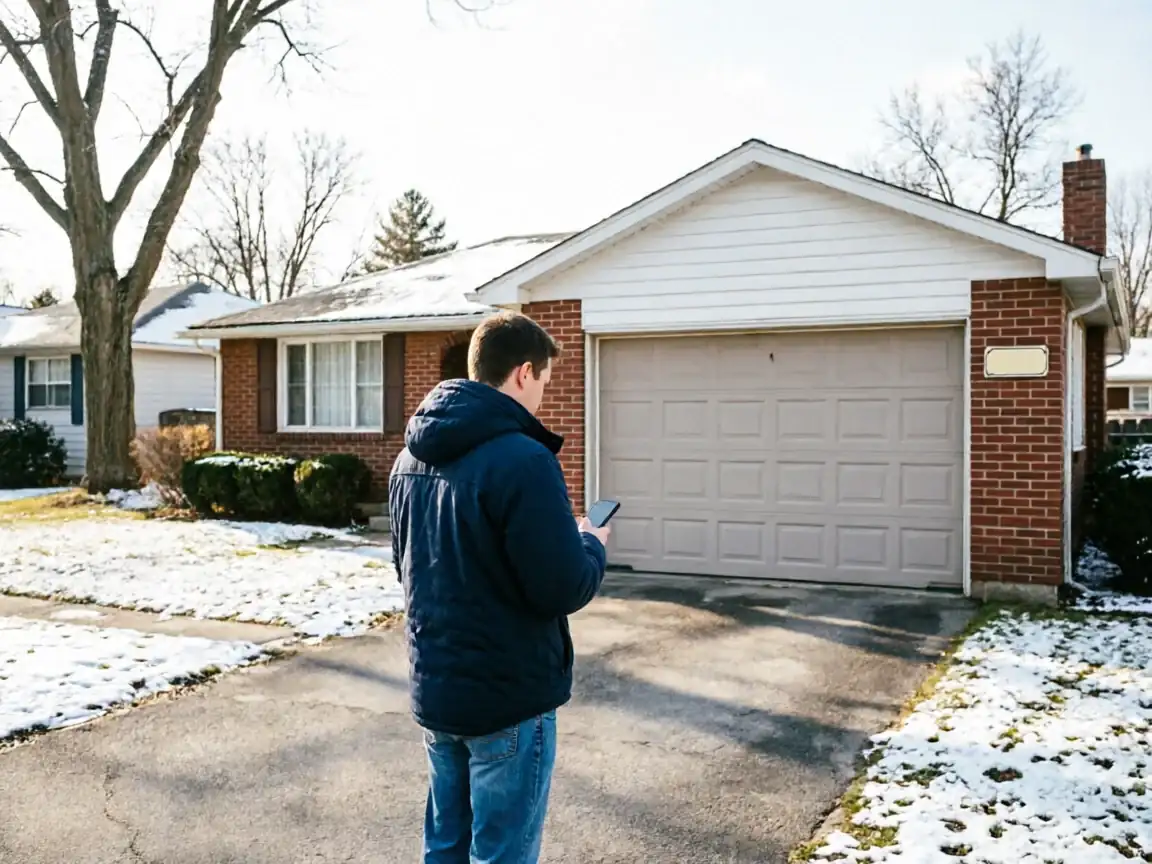
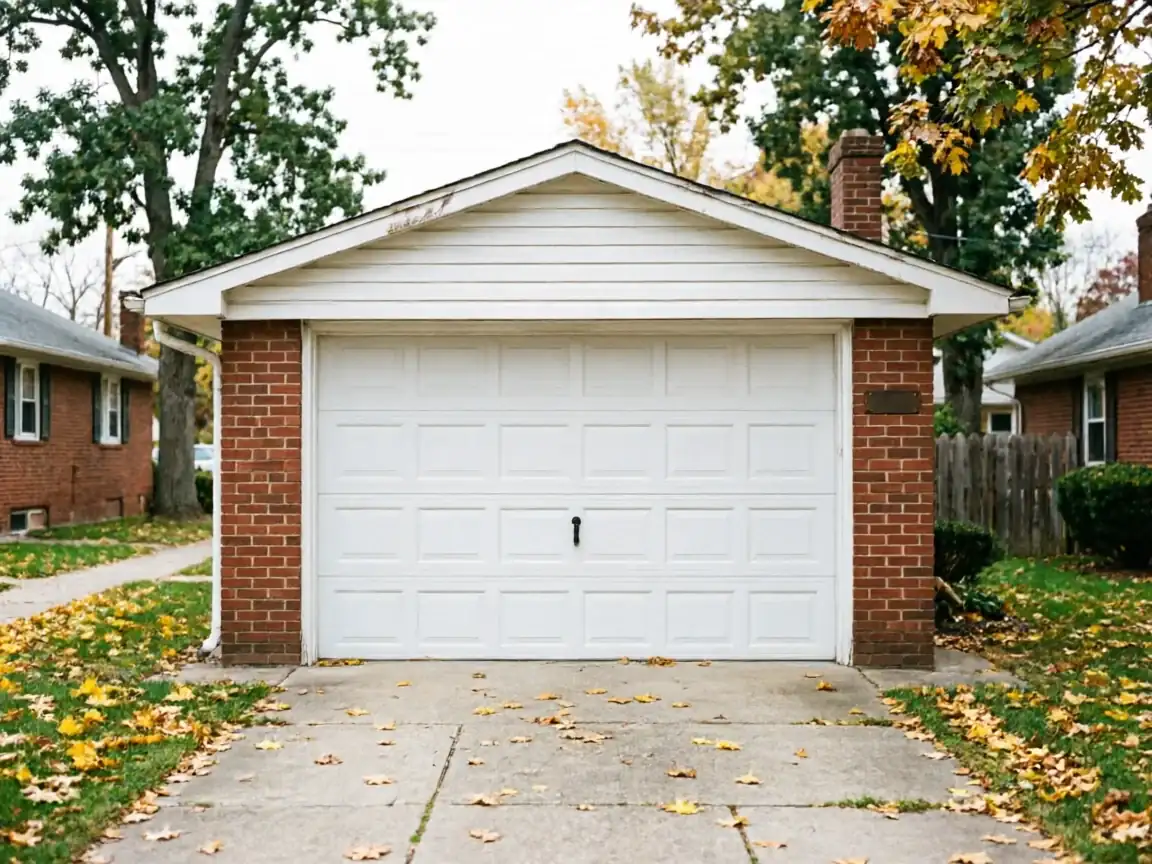
Most of the houses we get called to were built somewhere between 1958 and 2003, with a big cluster from the 1980s and 90s across the 48 named areas we cover. That era of construction means steel track hung on wood jambs that have had forty-plus years to shift, settle, or warp a half-inch out of square. A door that was aligned fine when the house was new can walk off true over decades, and nobody notices until a roller finally pops the rail.
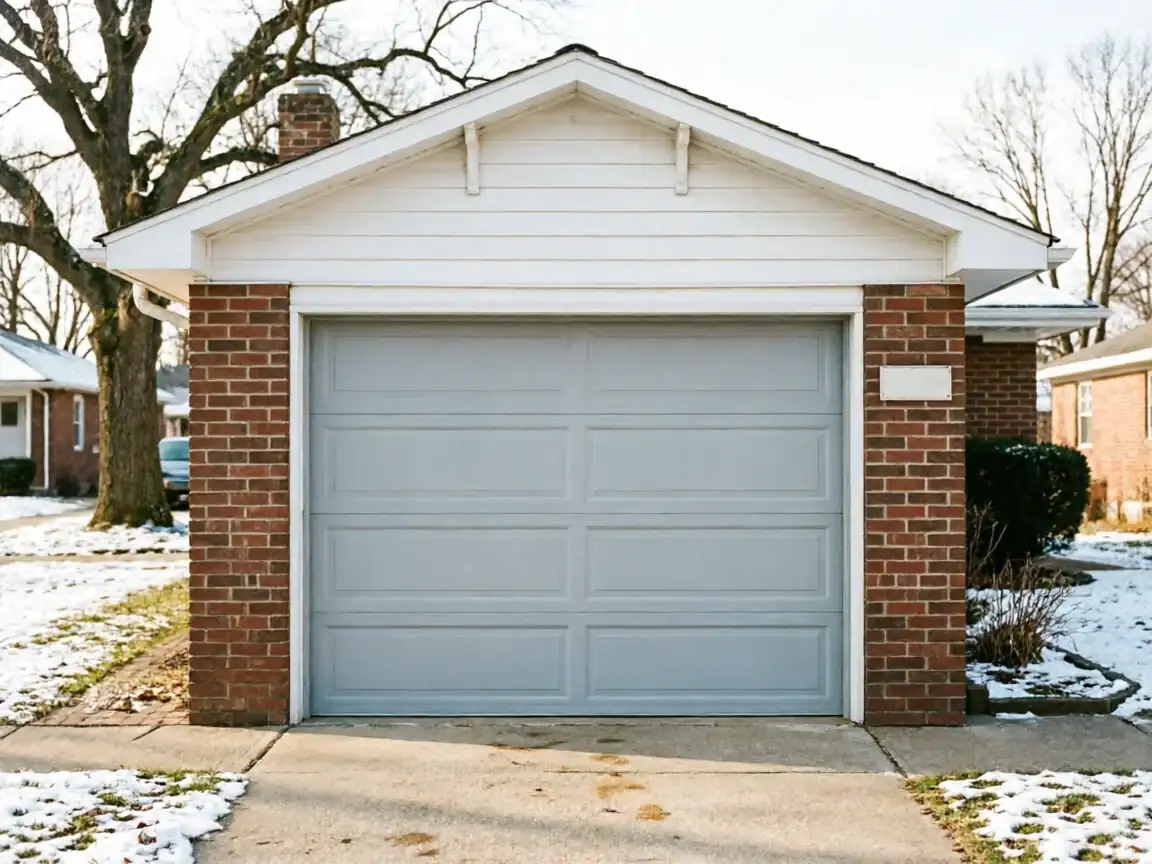
Cold is the other half of it. This is a cold-moderate climate band, and track metal contracts in a hard freeze. A door that's already running a little loose on worn rollers or a bent section will find the one cold morning where it jumps the track instead of riding through it. We see this spike every winter, not because the hardware is bad, but because original rollers and track from a 1980s build were never rated for forty more years of expansion and contraction.
Add a slightly bent track from a car bumper tap or a dropped basketball, and a door that was marginal becomes a door that's actually off the rail. It's rarely one cause - it's old hardware plus cold plus something that finally tips it over.
How Long You Are Without the Door
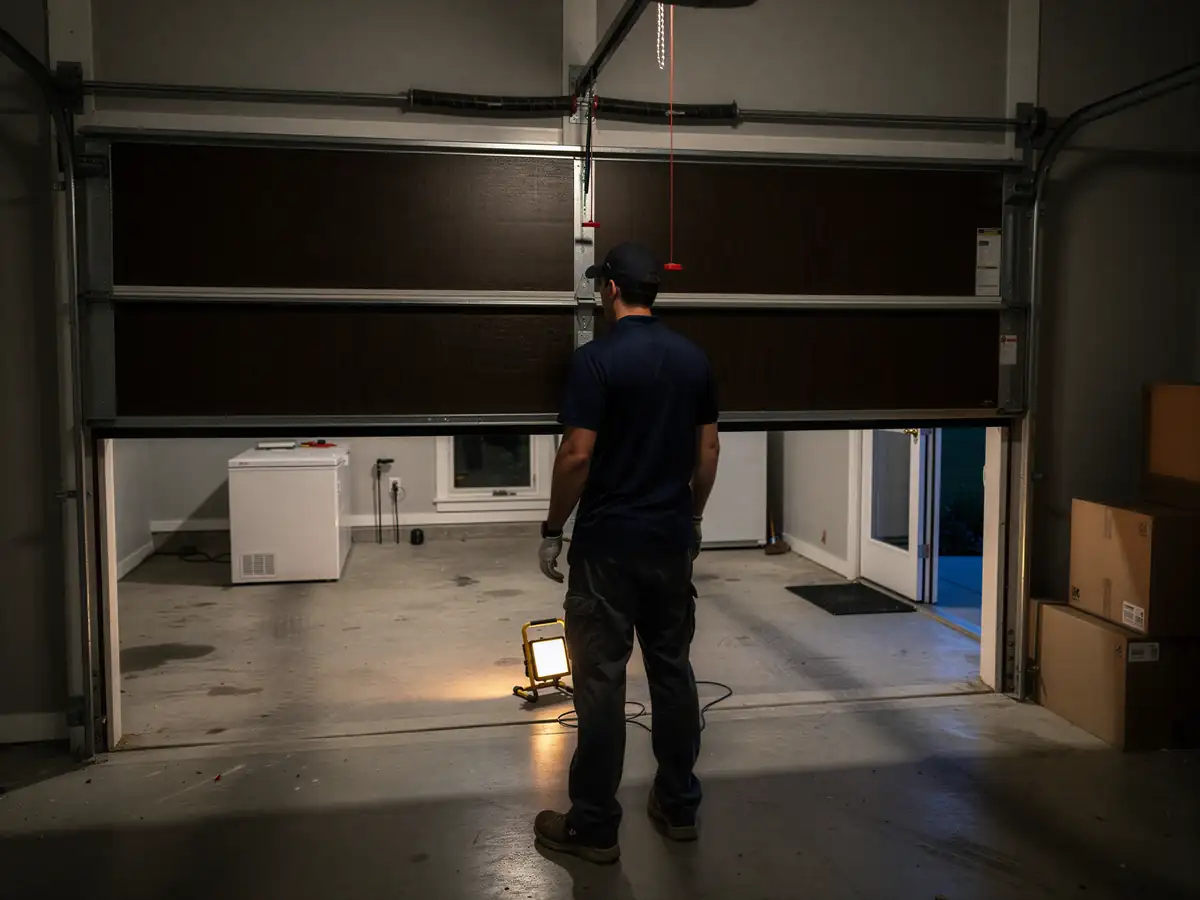
An off-track door usually means you can't open or close it safely at all - the panel is cocked in the frame, the opener won't pull it straight, and trying to force it with the remote just bends things worse. That's a no-use situation, not a slow-leak one.
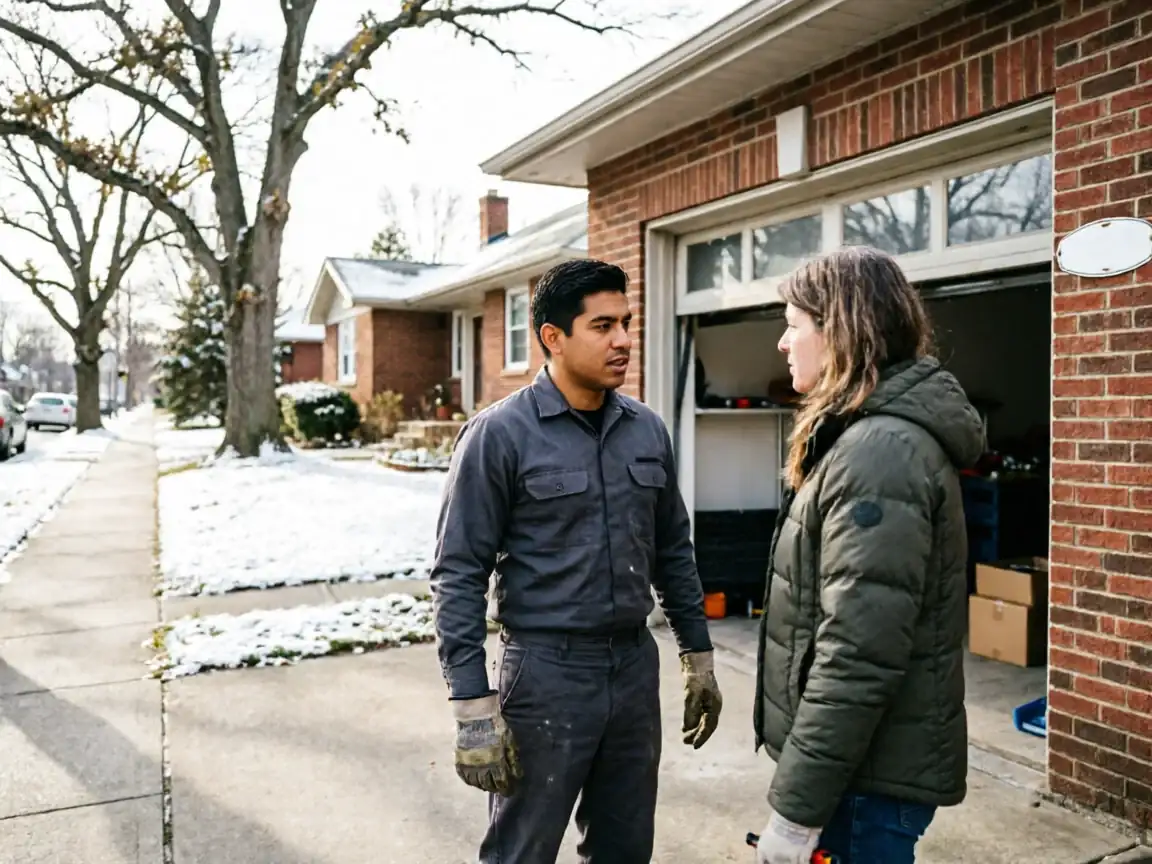
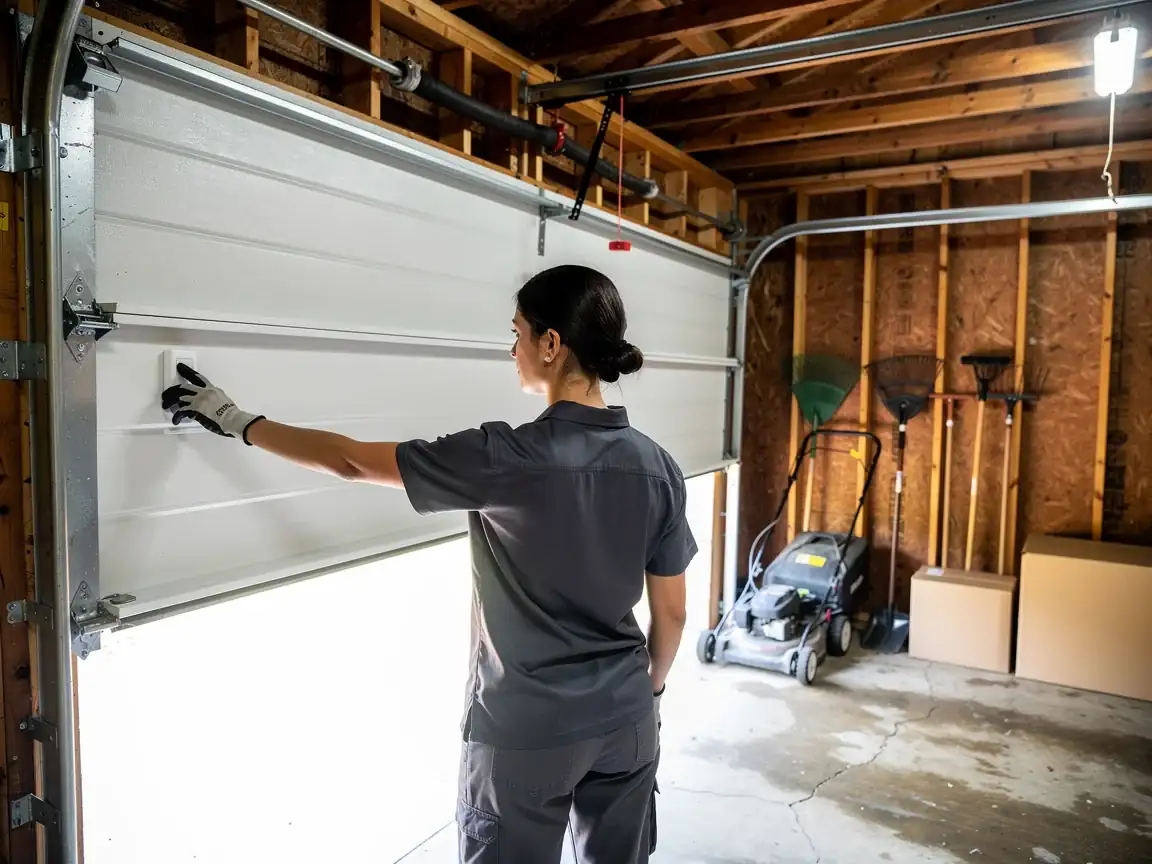
Most off-track calls are a same-visit fix: re-seat the rollers, true up the track, check the cable drums, and test the door through a full cycle before we leave. If the track itself is bent rather than just knocked loose, that section gets replaced rather than hammered back into shape - bent steel doesn't hold alignment twice. We carry common roller and track sizes for the housing stock in this service area, since so much of it falls in that 1980s-90s build window.
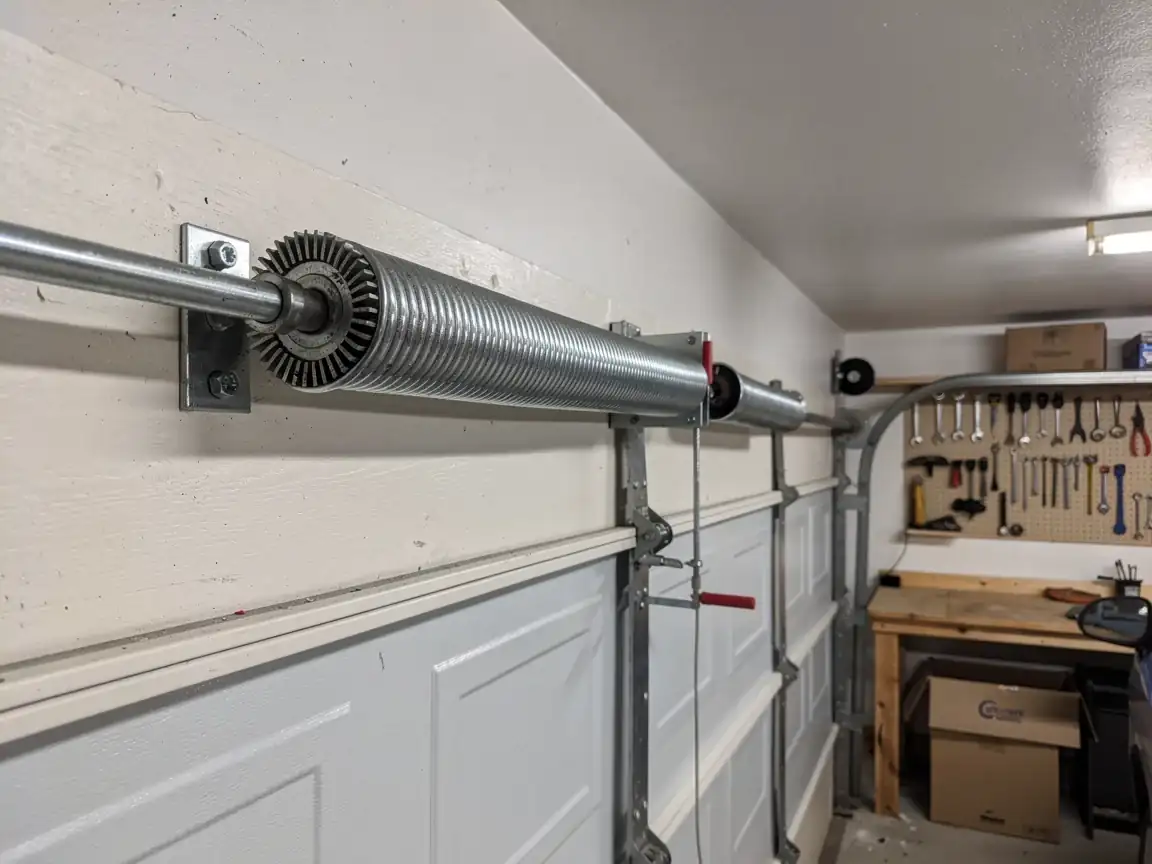
Where it runs longer is if the door came off during a spring failure or if a panel got crushed in the process - that's a different repair with different parts, and we'll tell you straight if that's what we're looking at before we start work.
The Symptom
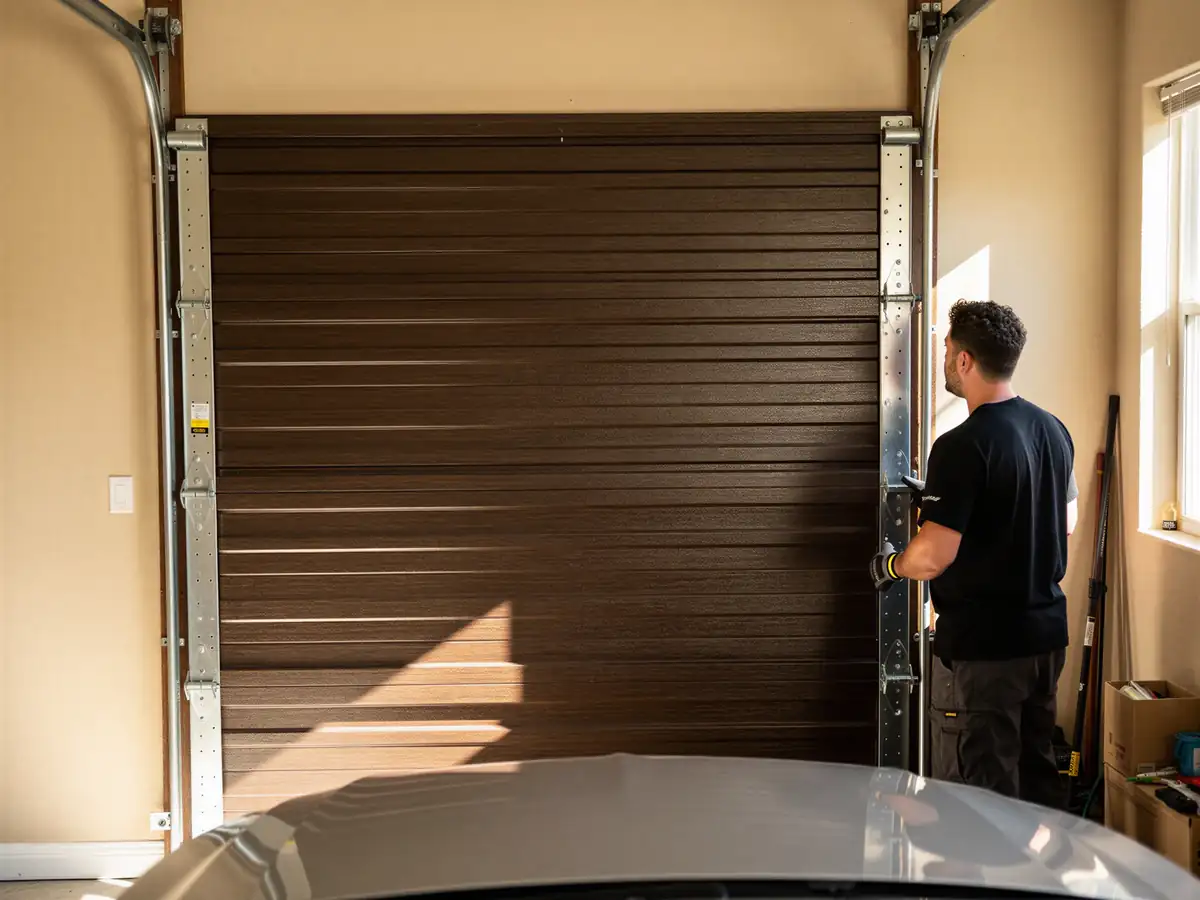
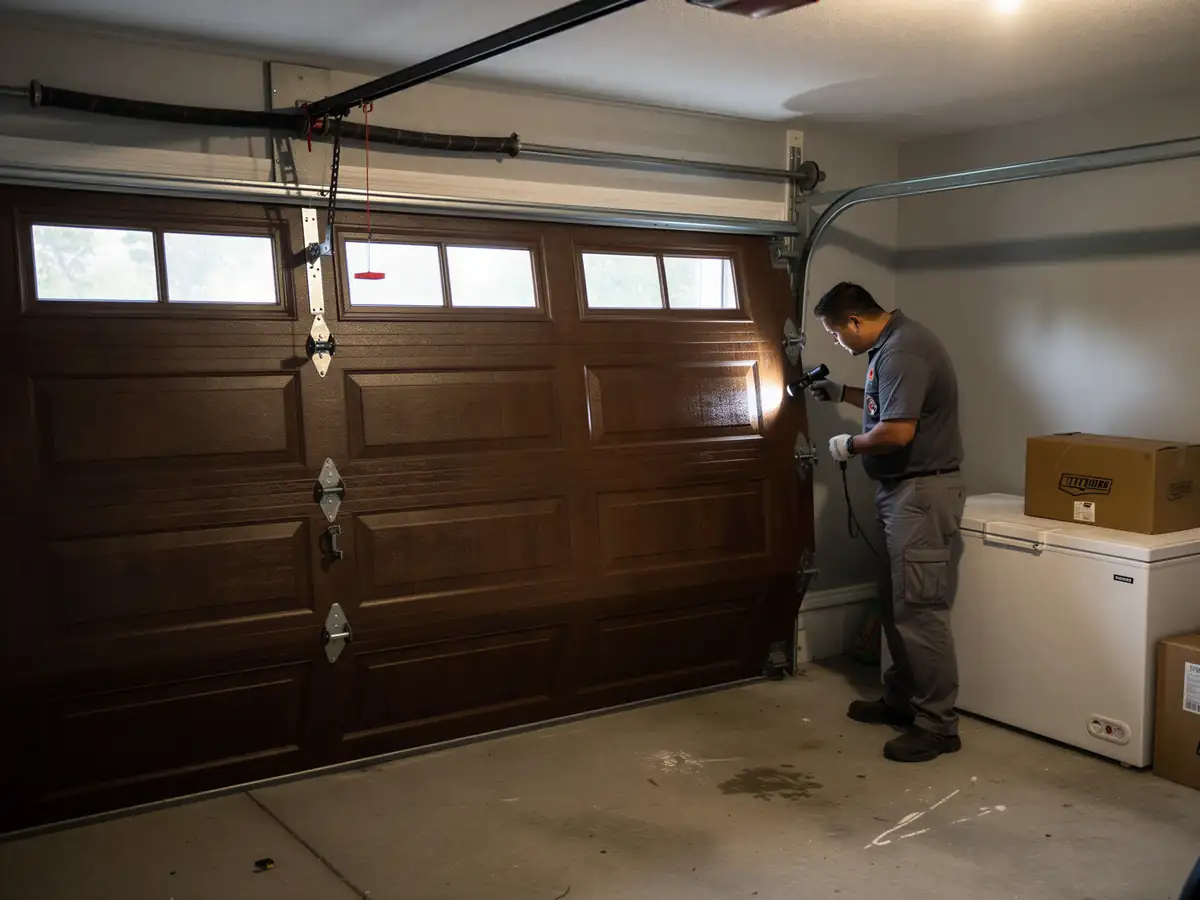
You'll usually see it before you hear the word "off track." The door hangs crooked in the opening
One bottom corner lower than the other, or a visible gap shows along one side of the track where a roller has popped out. Sometimes it's subtler - the door runs rough for a few cycles, grinding or jerking on one side, before it finally jumps clean off the rail.
Other times the first sign is a bang
The door comes down off-center and slams instead of seating flush on the floor. If you hear metal-on-metal scraping that wasn't there last week, that's often a roller already riding the edge of the track rather than inside it - a warning sign worth a call before it becomes a full derailment.
Do not keep hitting the opener button if the door looks crooked
That's the single fastest way to turn a one-roller fix into a bent track, a torn cable, or a cracked panel.
What the Fix Involves
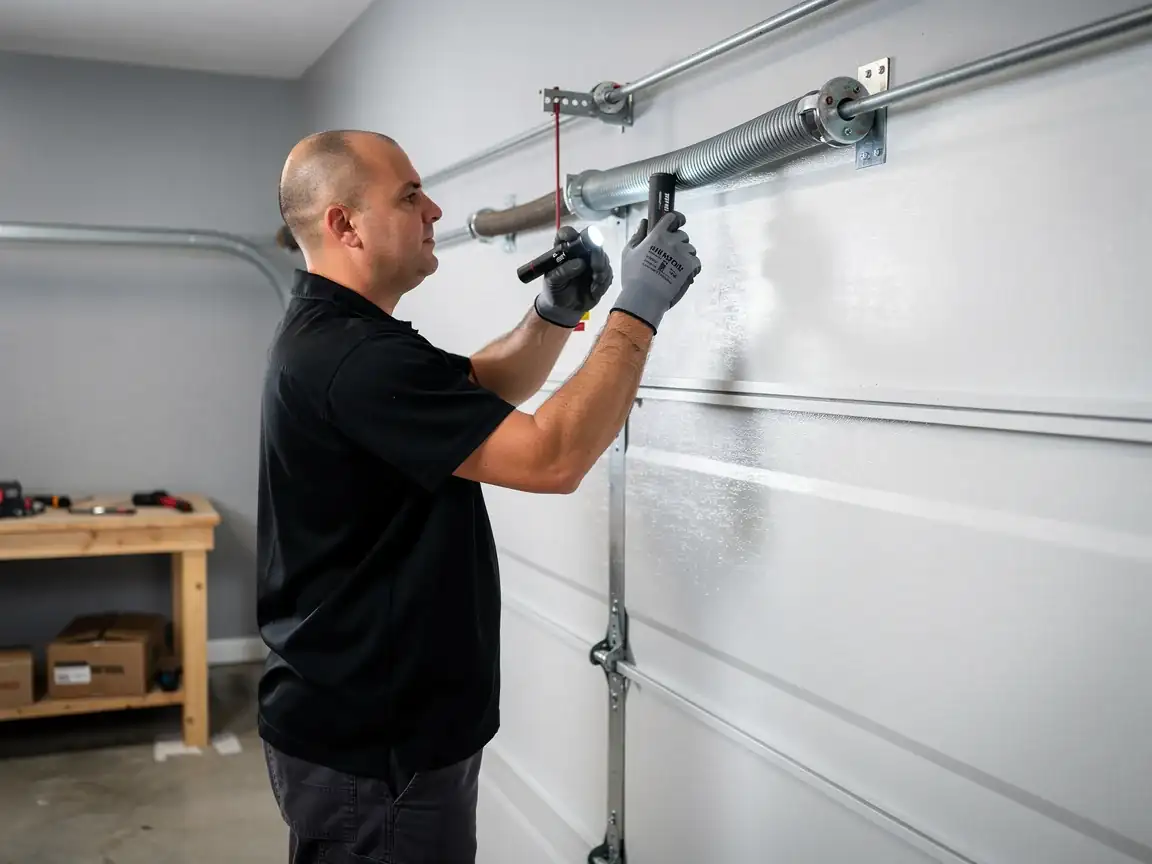
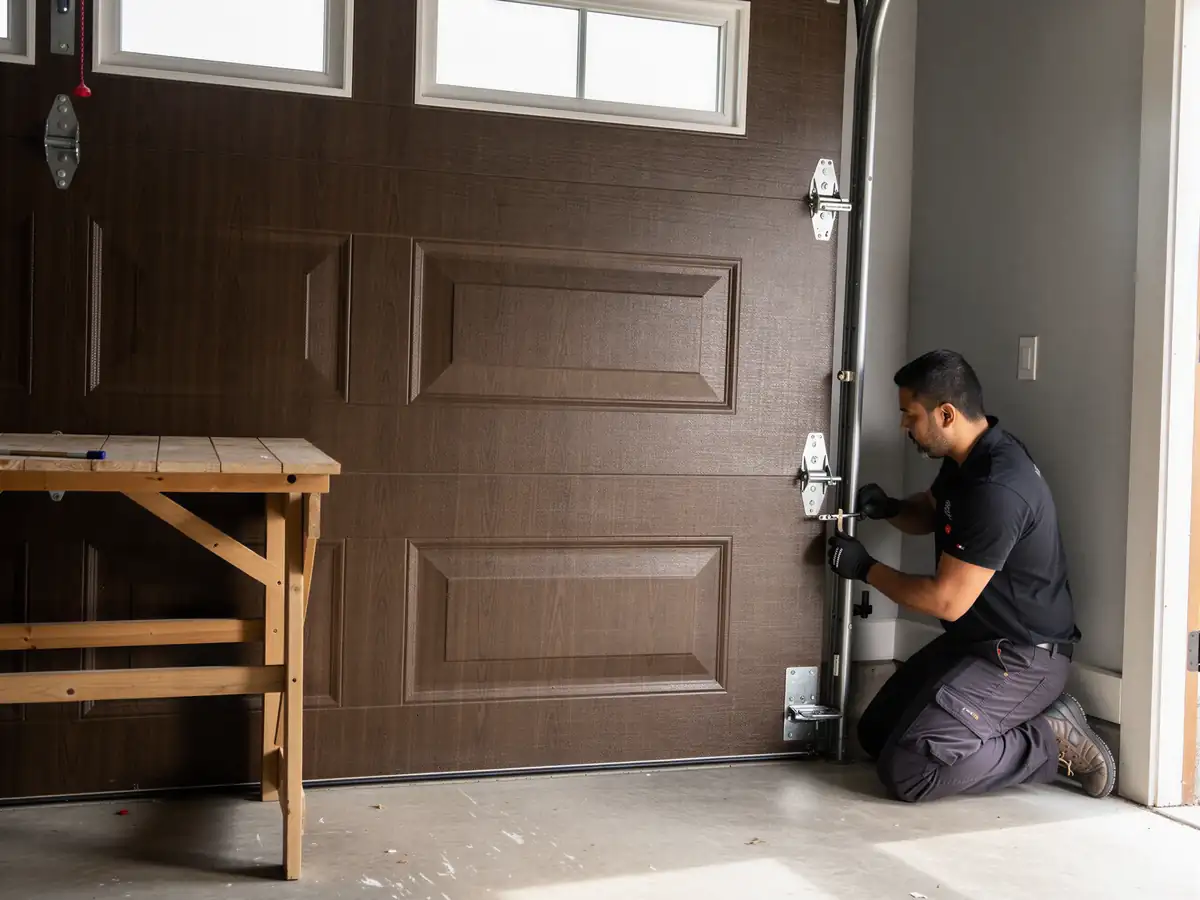
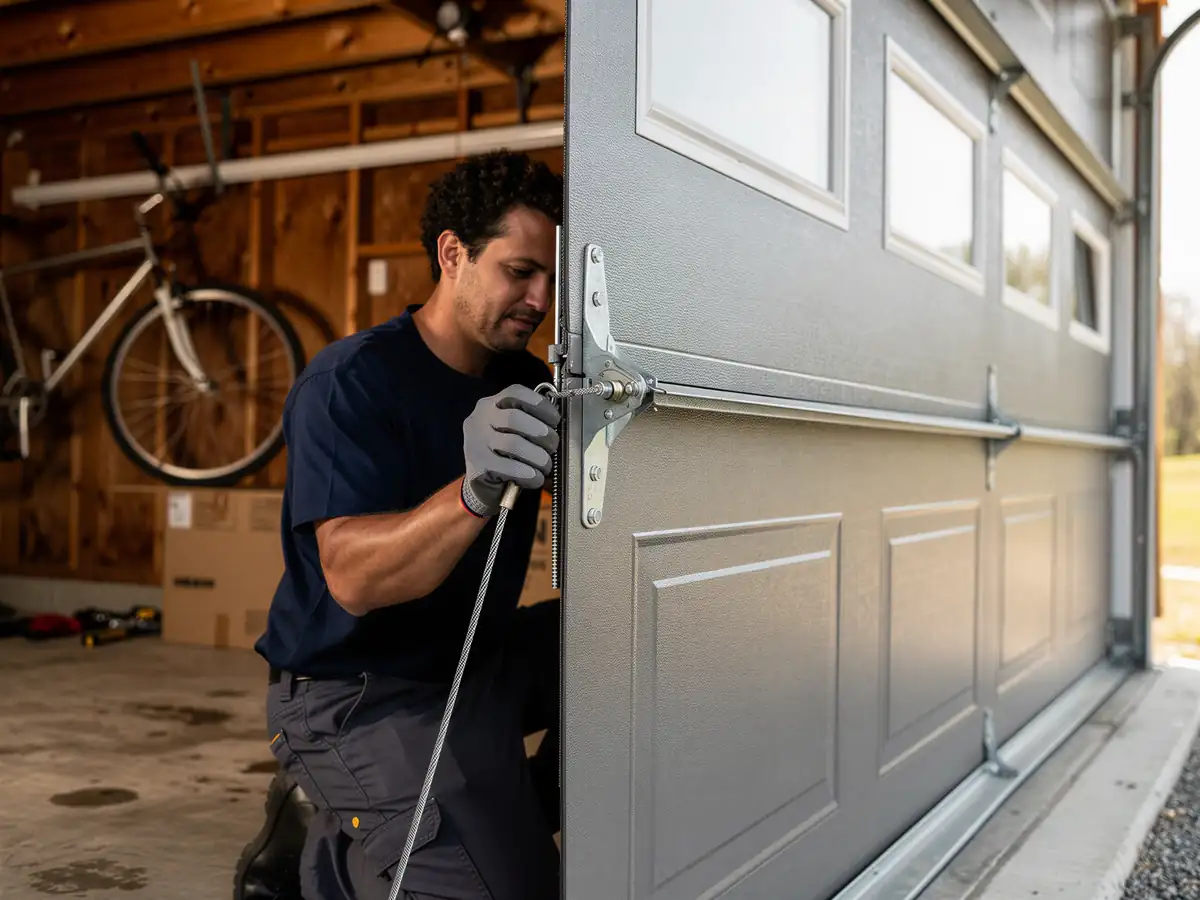
The repair starts with figuring out why it came off, not just putting it back on. We check the rollers for wear, the track for bends or loose brackets, and the cables and drums for anything that pulled unevenly - on housing from the 1958-2003 window, loose lag screws in the jamb are common enough that we check those too.
If the track is straight and the rollers just slipped, re-seating them and tightening the brackets is quick work. If the track has a kink in it, that section gets swapped rather than bent back - a track that's been straightened once tends to let go again, especially once cold weather hits and the metal contracts.
We're straight about limits here: if the door is old enough that the roller size and track gauge are both obsolete, or if a panel got bent badly enough in the derailment, patching it isn't always the better money move versus replacing that section or the whole door. We'll walk you through that choice rather than just billing for parts that won't hold.