What Can Go Wrong
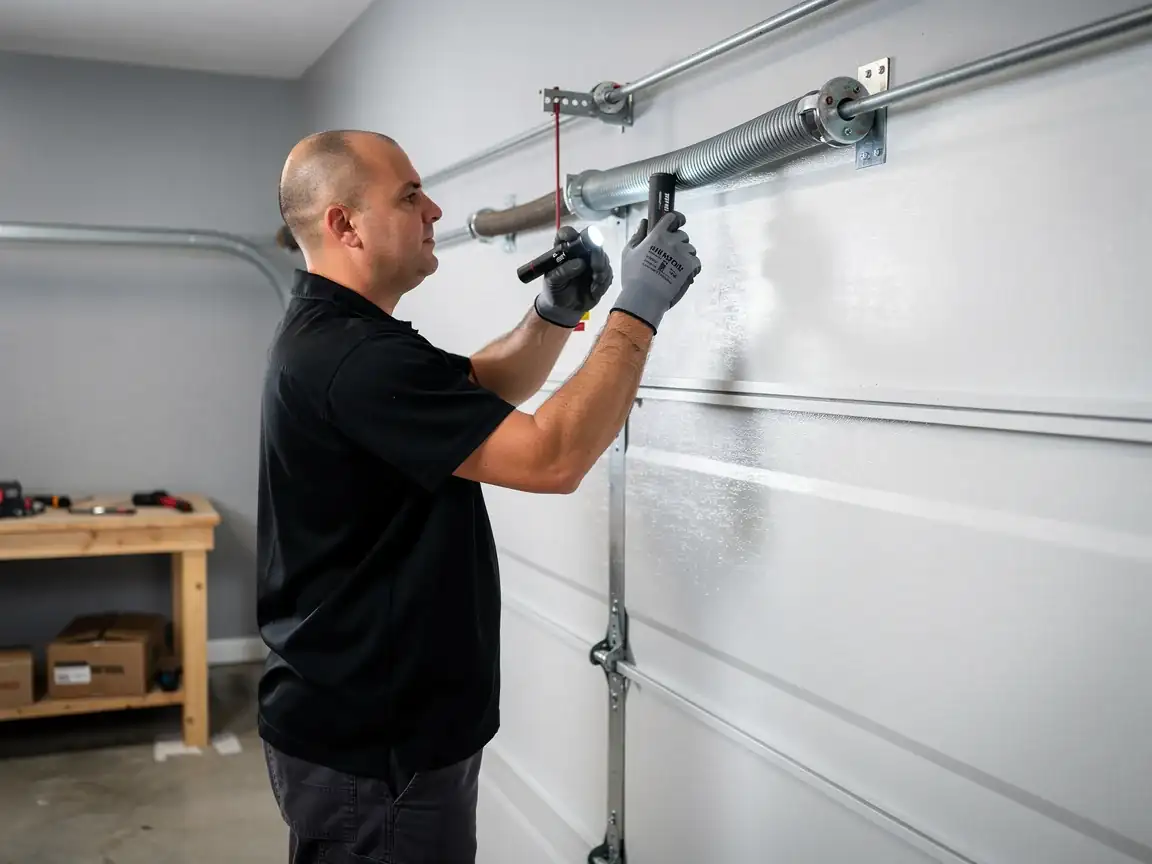
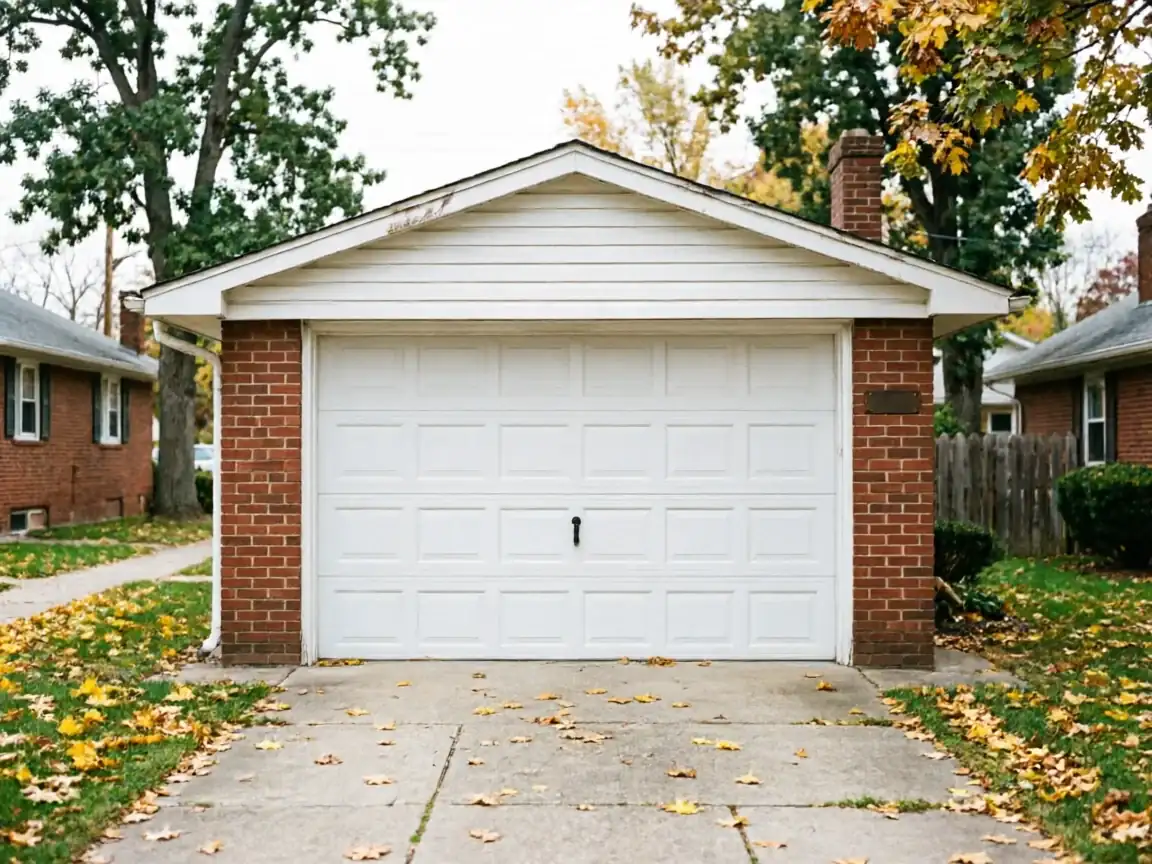
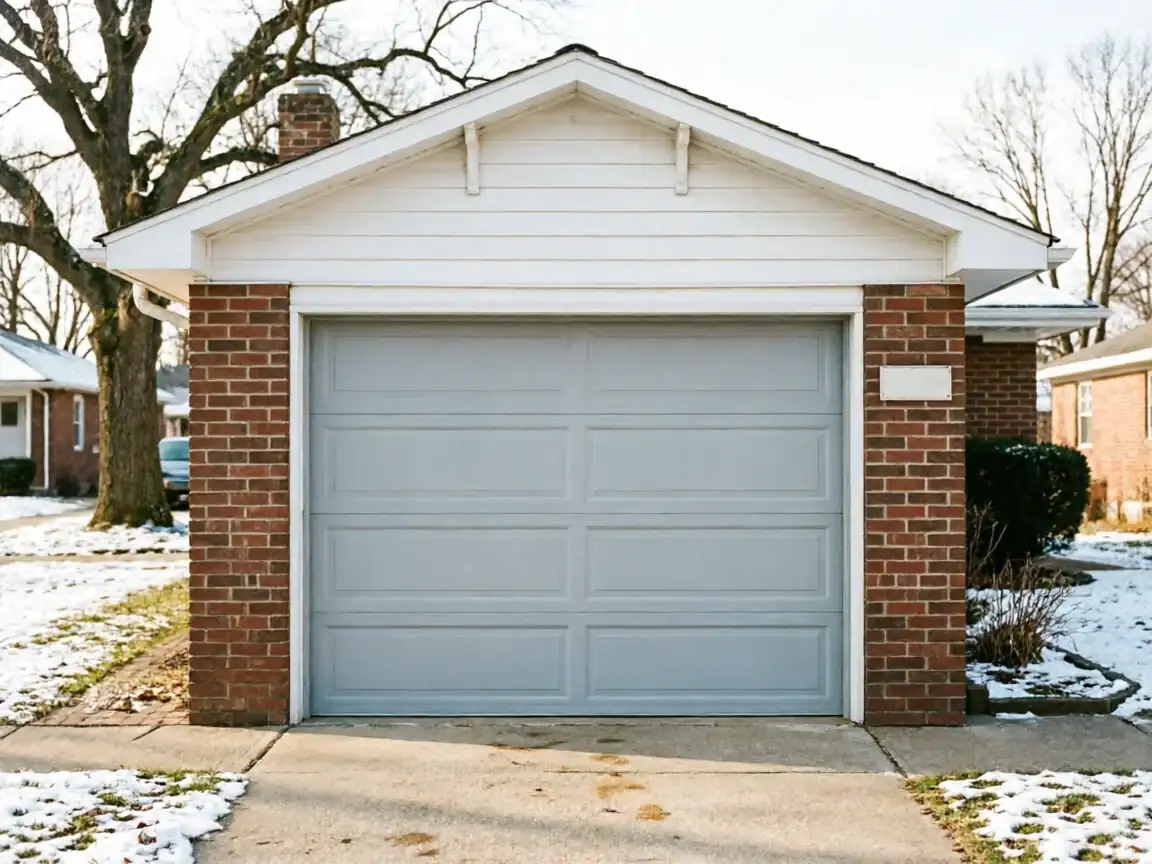
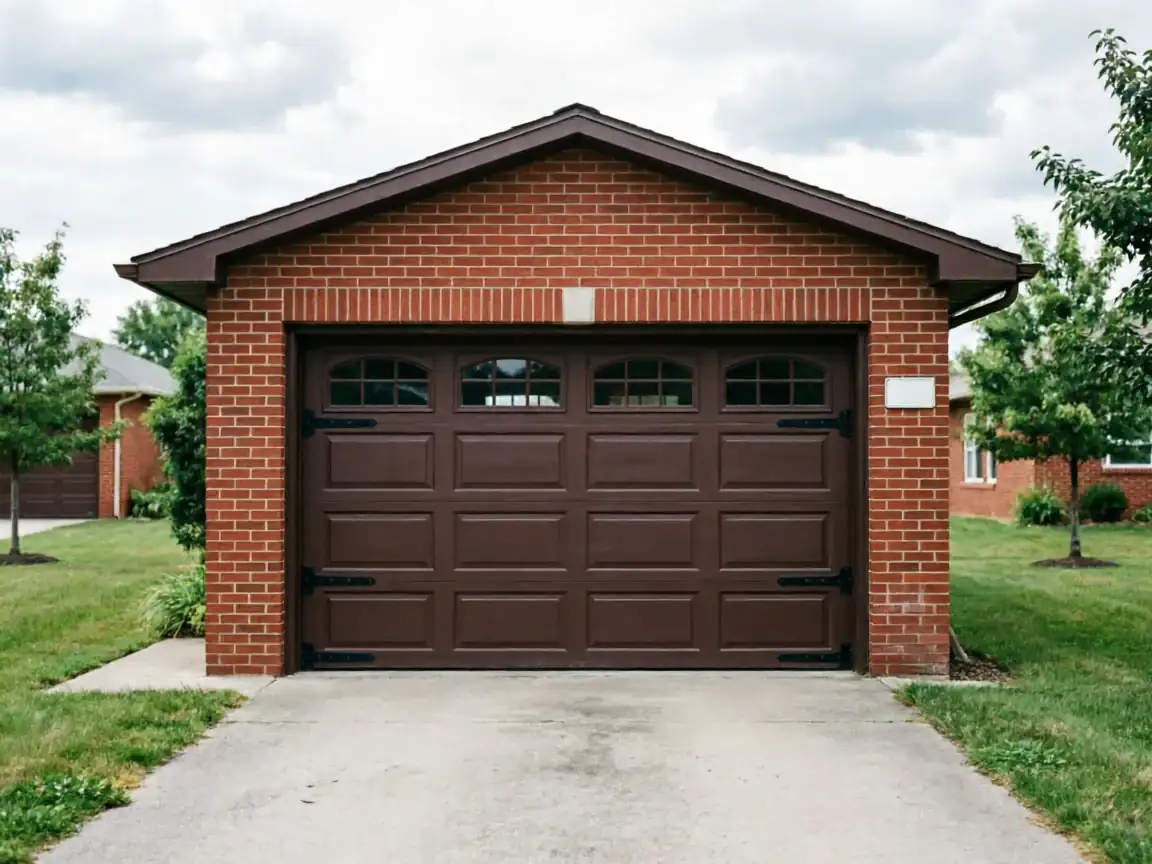
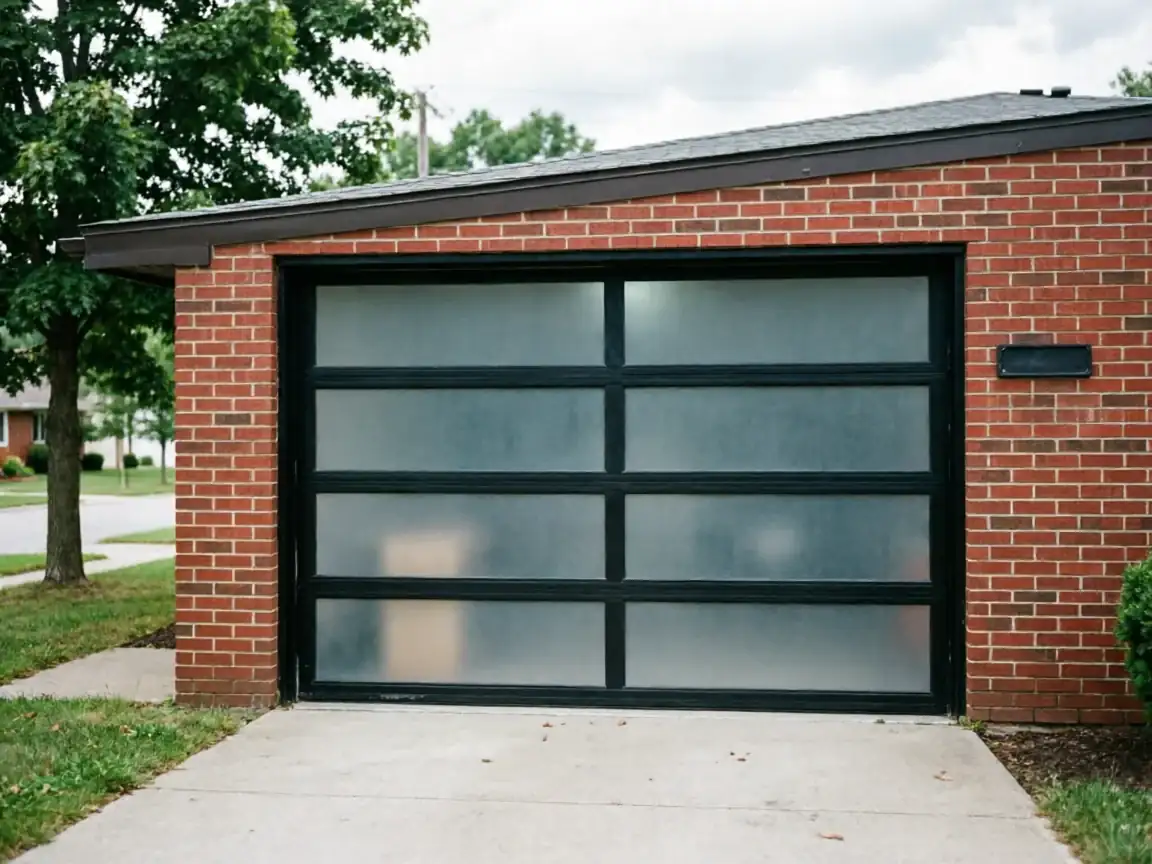
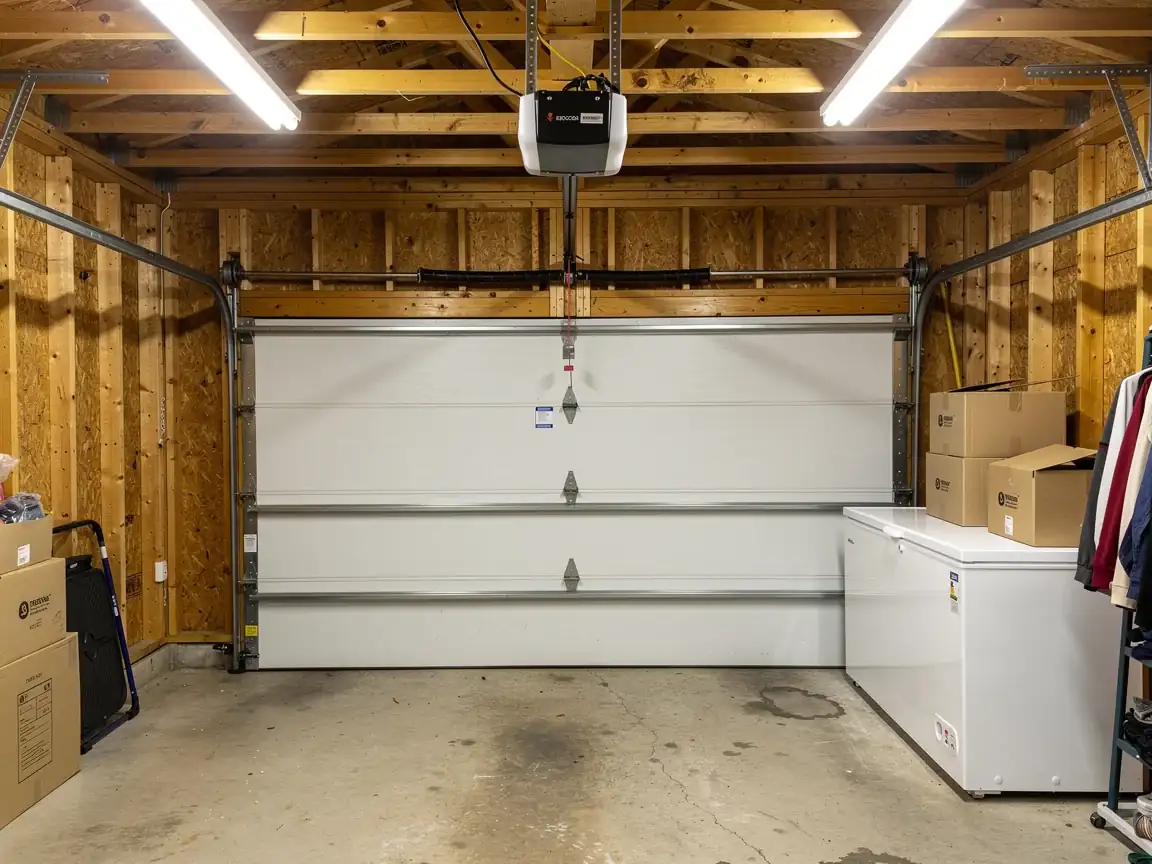
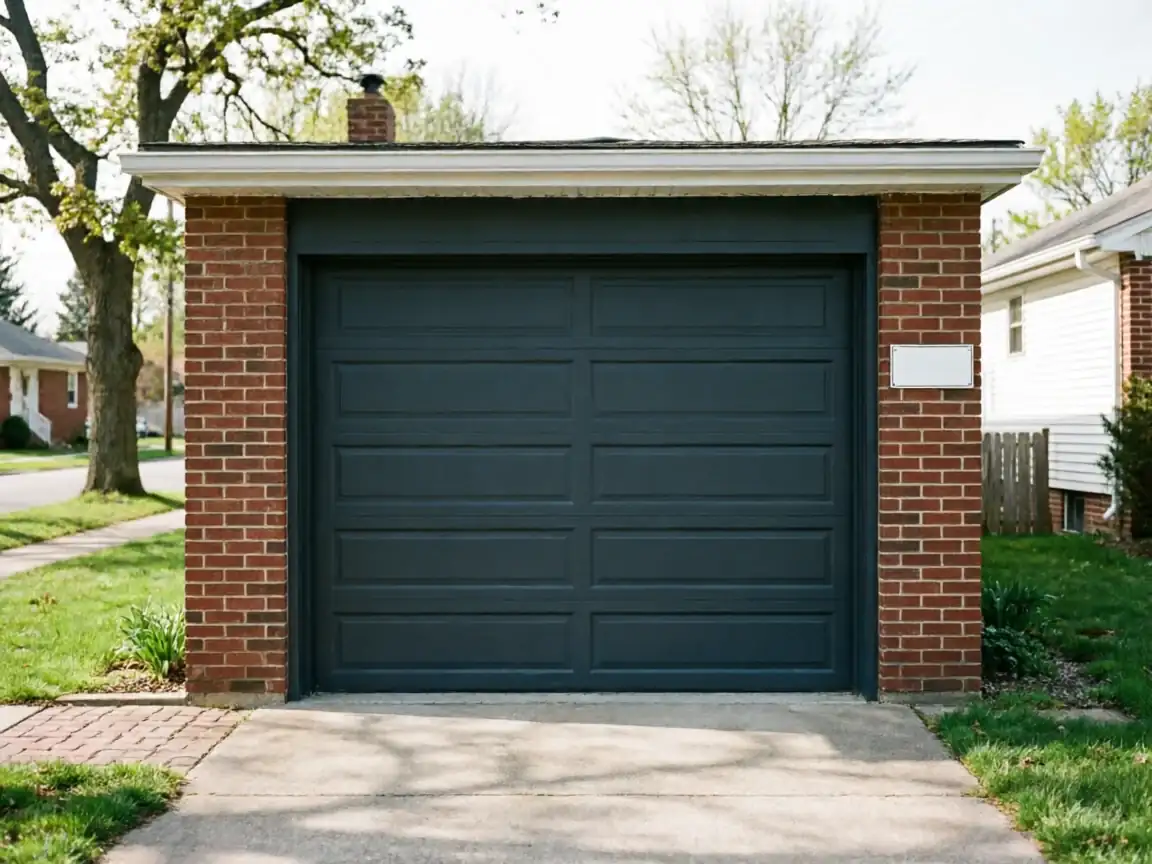
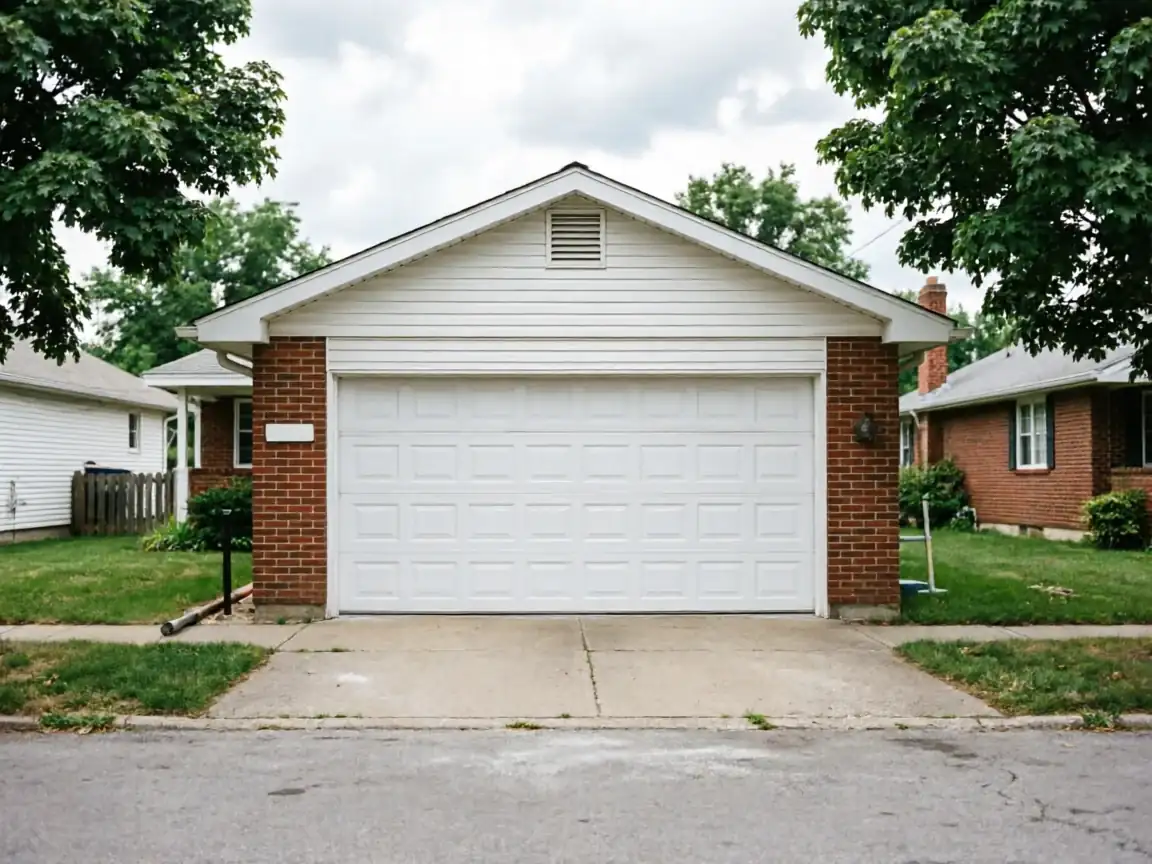
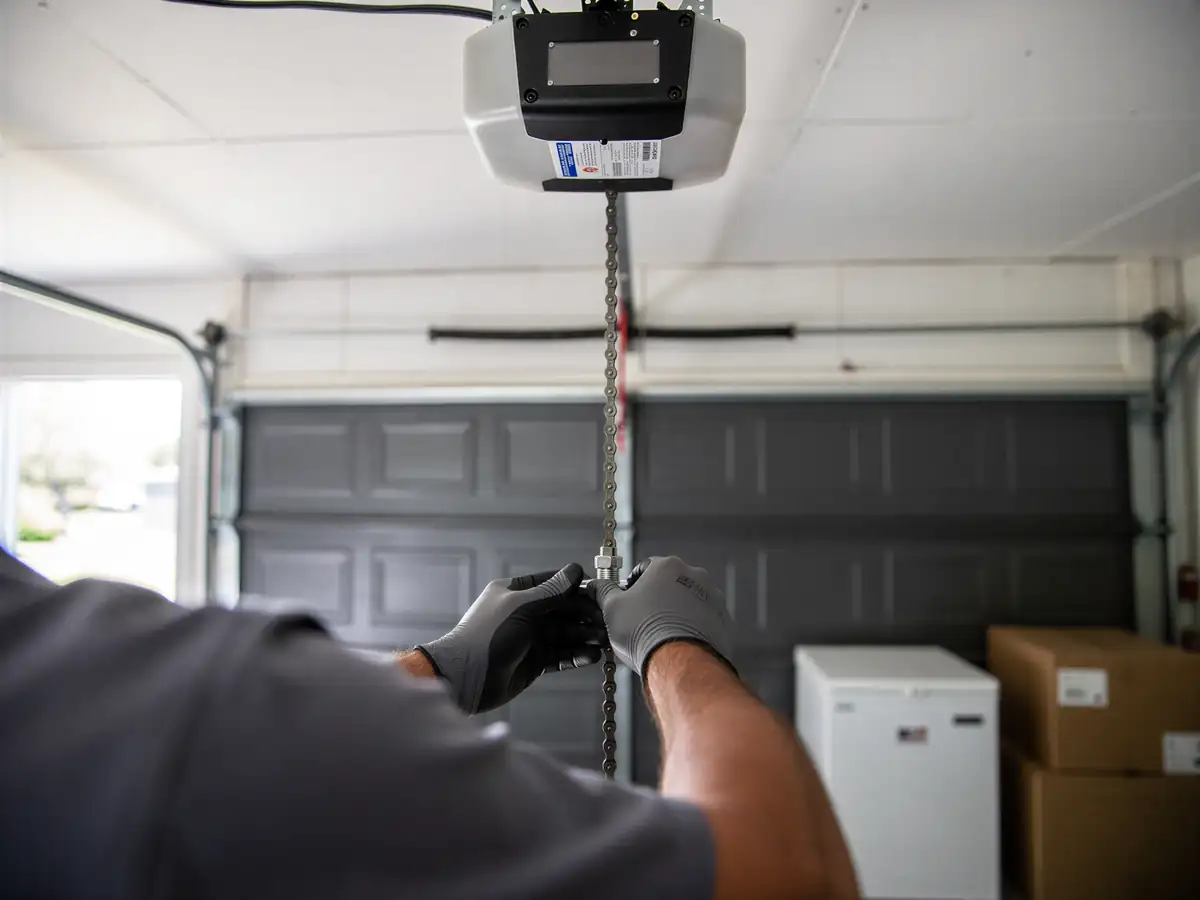
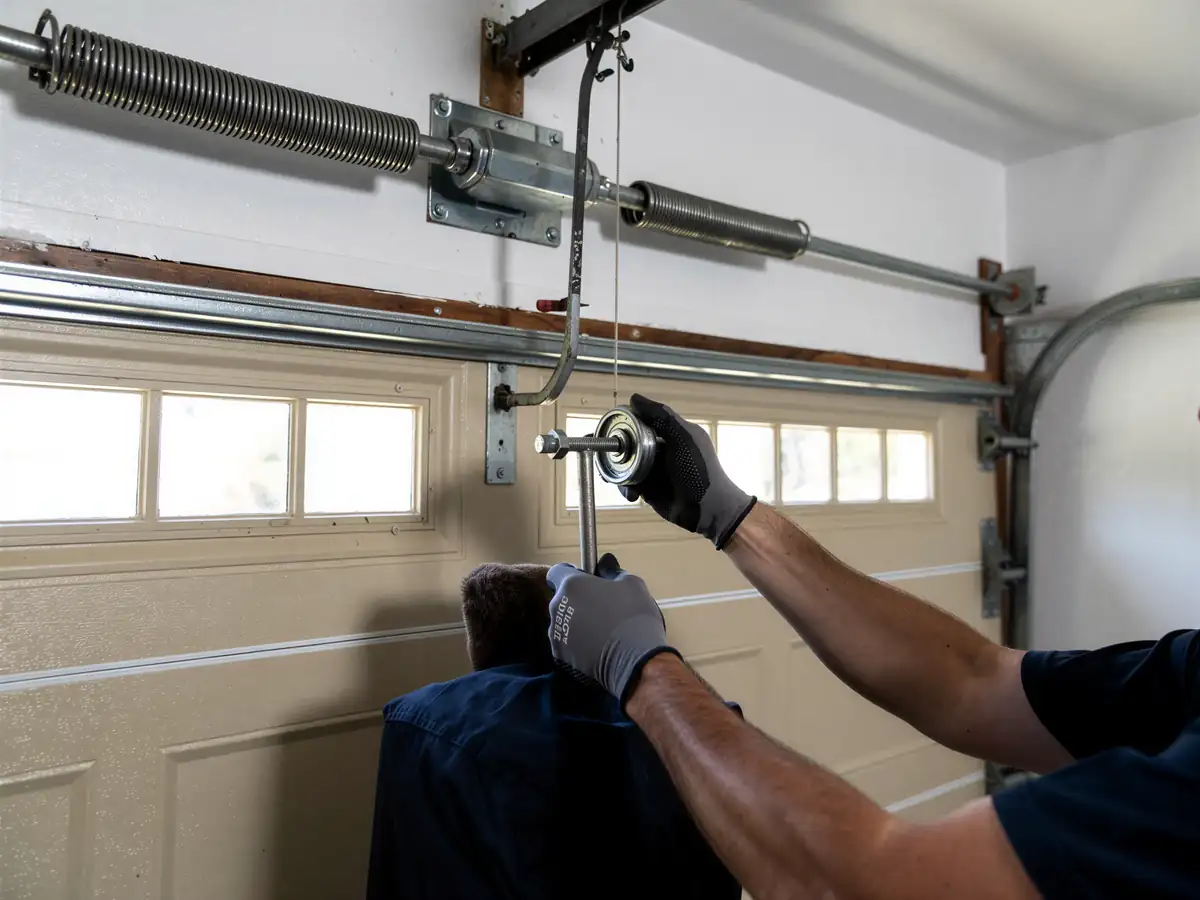
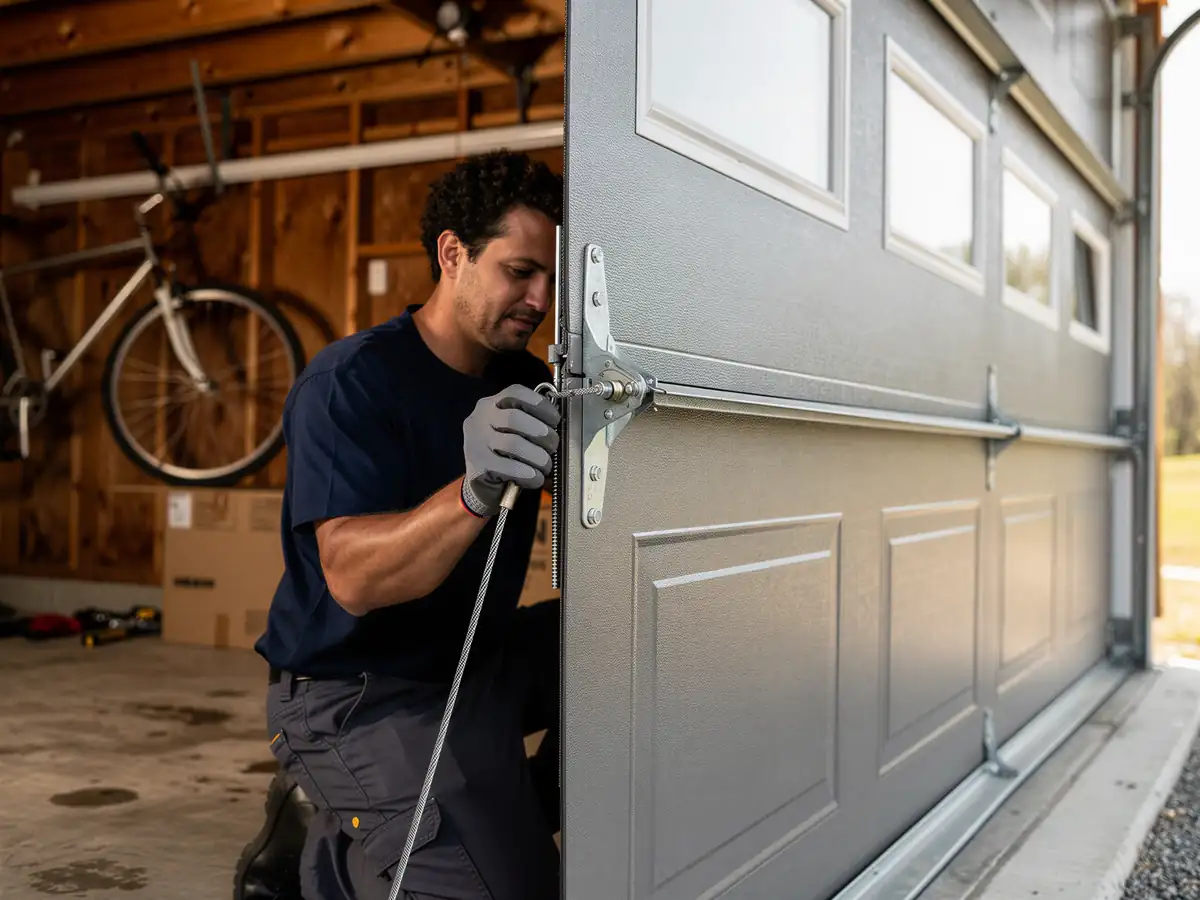
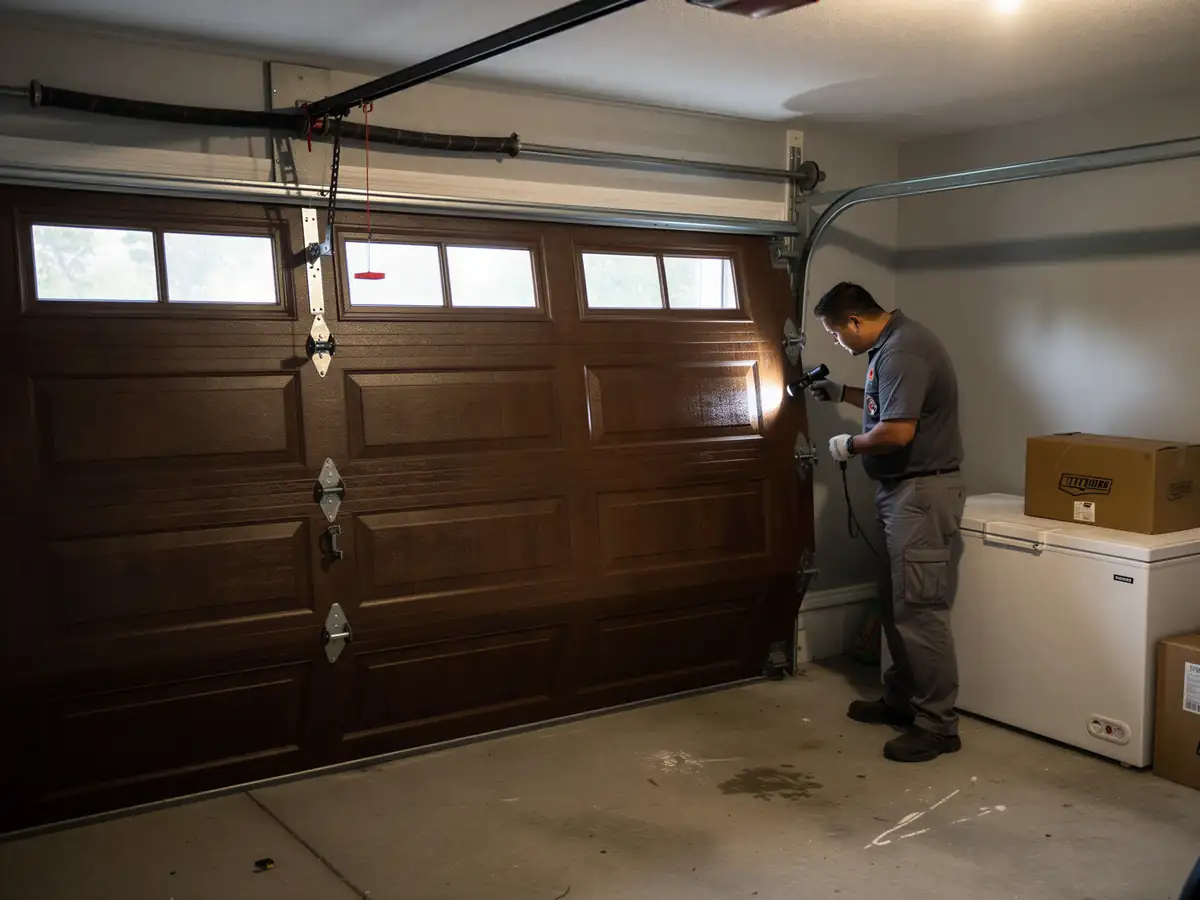
Most garages in Sugar Grove went up around 2002, which puts the neighborhood well past the older end of the territory's housing stock - the 1958 to 1981 builds closer to Aurora's core. That matters because it tells you what's actually hanging over your car. These are steel sectional doors, usually double-wide on the two-car openings that came standard with early-2000s construction, running on factory-set torsion springs mounted on a single shaft above the opening rather than the twin extension springs you'd find on an older single door. Torsion springs on a door this size carry real tension, and when one lets go, it goes loud and it goes all at once. The other common failure on hardware this age is the nylon roller and plastic idler bearing, both of which wear out quietly over fifteen-plus years of Illinois winters and then seize or crack without warning. Cables fray at the drum. Openers from the same build era start losing the ability to reverse properly when the travel limits drift. None of this is exotic - it's just what happens to steel-and-spring hardware two decades into a cold climate.
Doing It Yourself
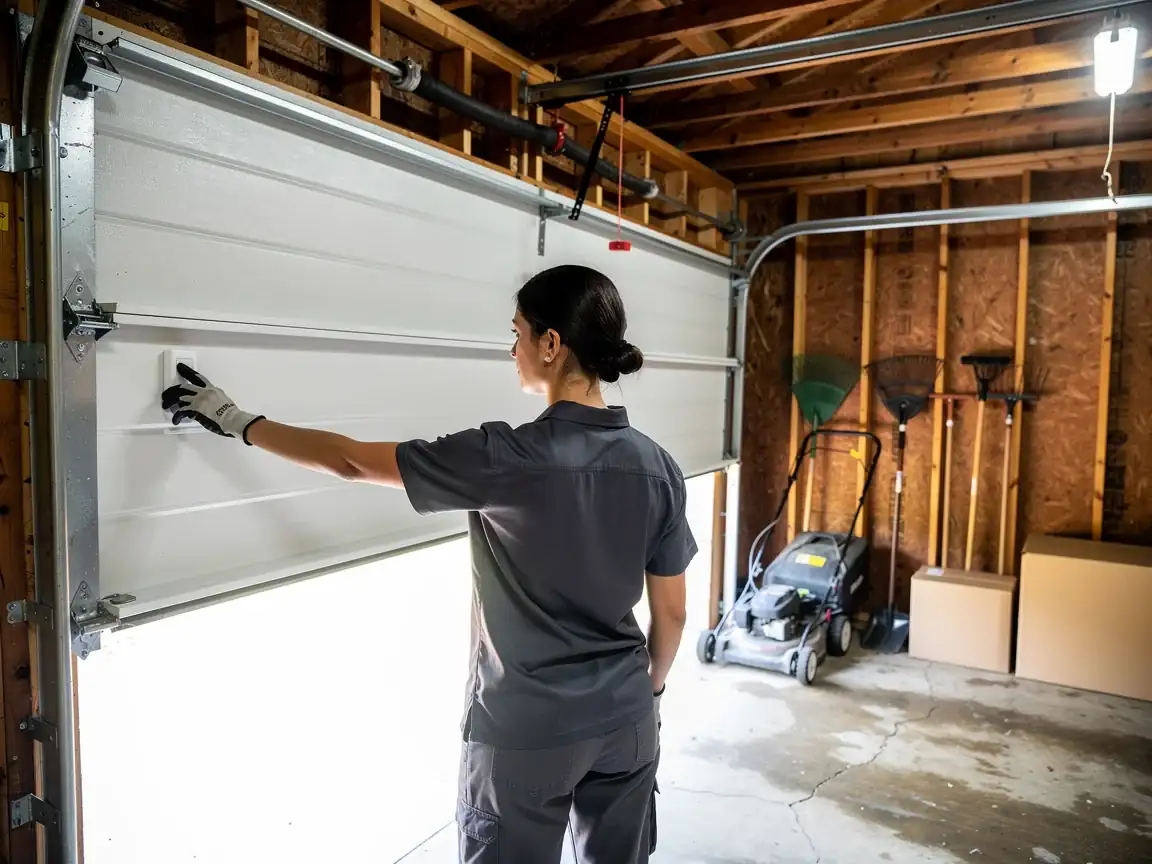
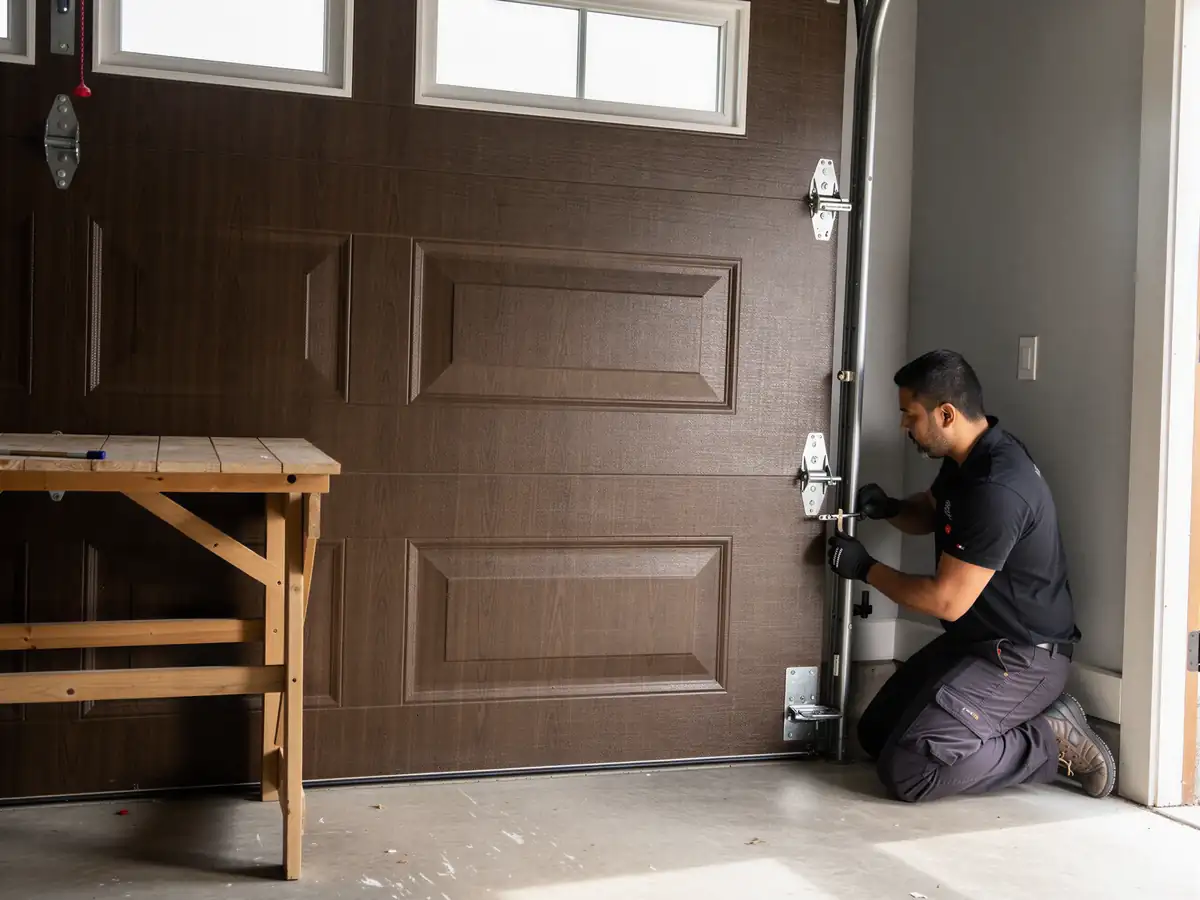
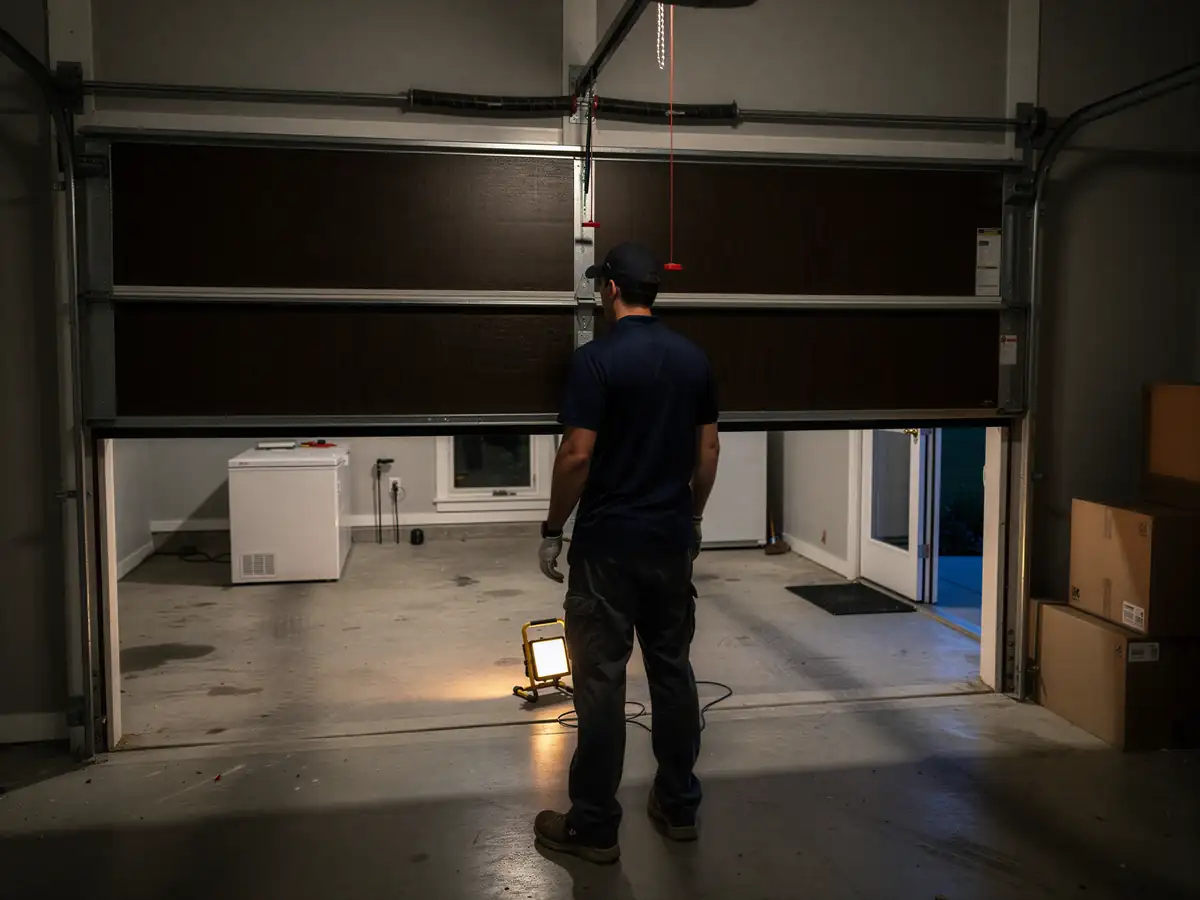
A torsion spring under tension is not a DIY repair, full stop - the shaft can whip hard enough to break a hand or worse, and we won't talk anyone through doing it themselves over the phone. What you can safely check first: look at the track for an obvious bend or a roller that's jumped out, check whether the opener's safety sensors have a blinking light (dirty or misaligned sensors are a common false alarm that looks like a bigger failure), and confirm the door isn't just stuck on a manual lock someone bumped. If the spring is visibly snapped - a gap in the coil above the door - stop there, don't try to lift the door manually without release of tension, and don't run the opener again. That's the one honest limit here: once a spring's gone or a cable's off the drum, it's a job for a tech, not a weekend project, and trying anyway usually turns a two-hour fix into a replacement door.
Stocked Parts
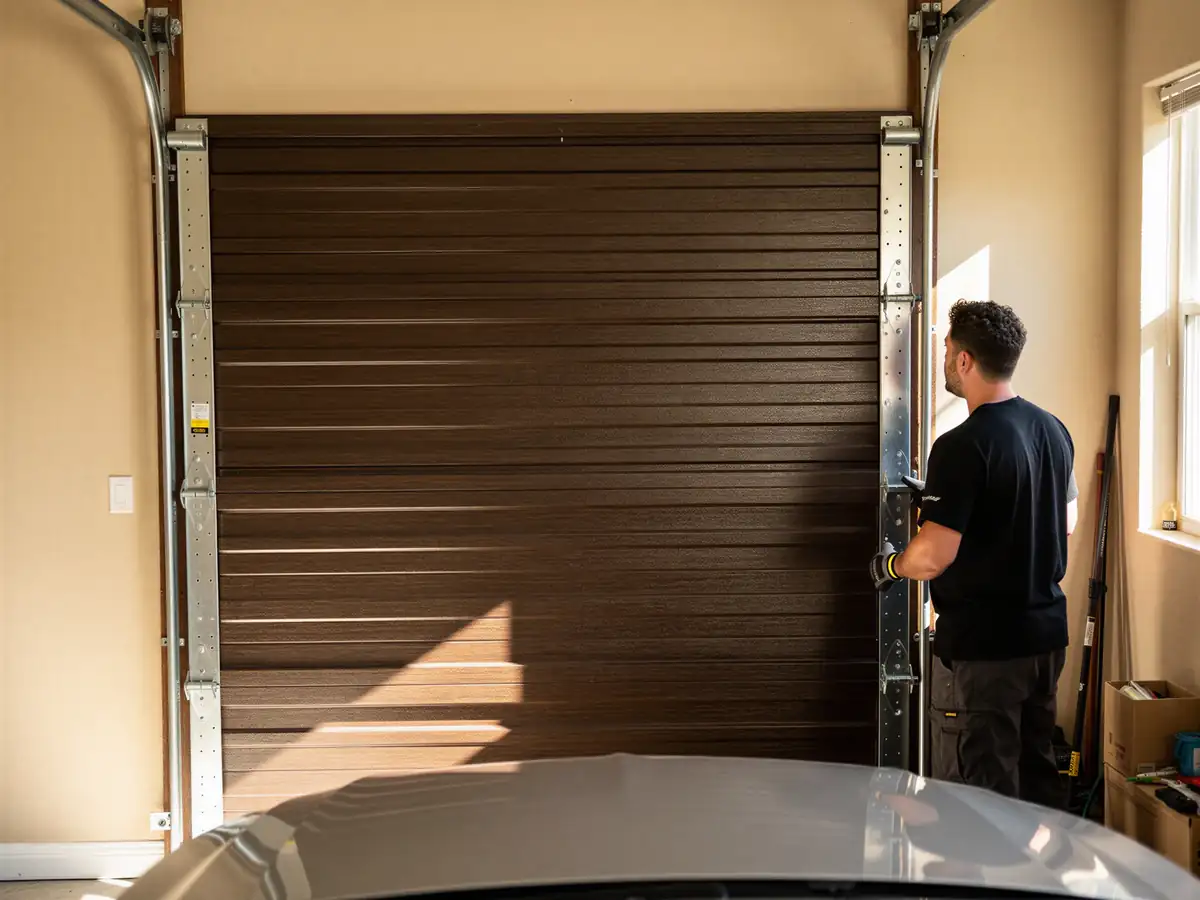
Because so much of Sugar Grove's housing stock sits in that same 2002-ish window, the truck carries the torsion springs, cables, and roller sizes that match double-wide steel sectional doors, not the narrower single-door hardware found on older stock elsewhere in the territory. Sugar Grove is a smaller town - a few thousand households, not the hundreds of thousands spread across the wider Aurora service area - so it doesn't support its own stocked depot or a dedicated crew; every emergency call here is dispatched from Aurora. That's the honest tradeoff: the tech isn't already next door, but the parts on the truck are chosen with this exact era of door in mind, which cuts down on a second trip for the wrong spring size or roller bracket.