How Local Conditions Play In
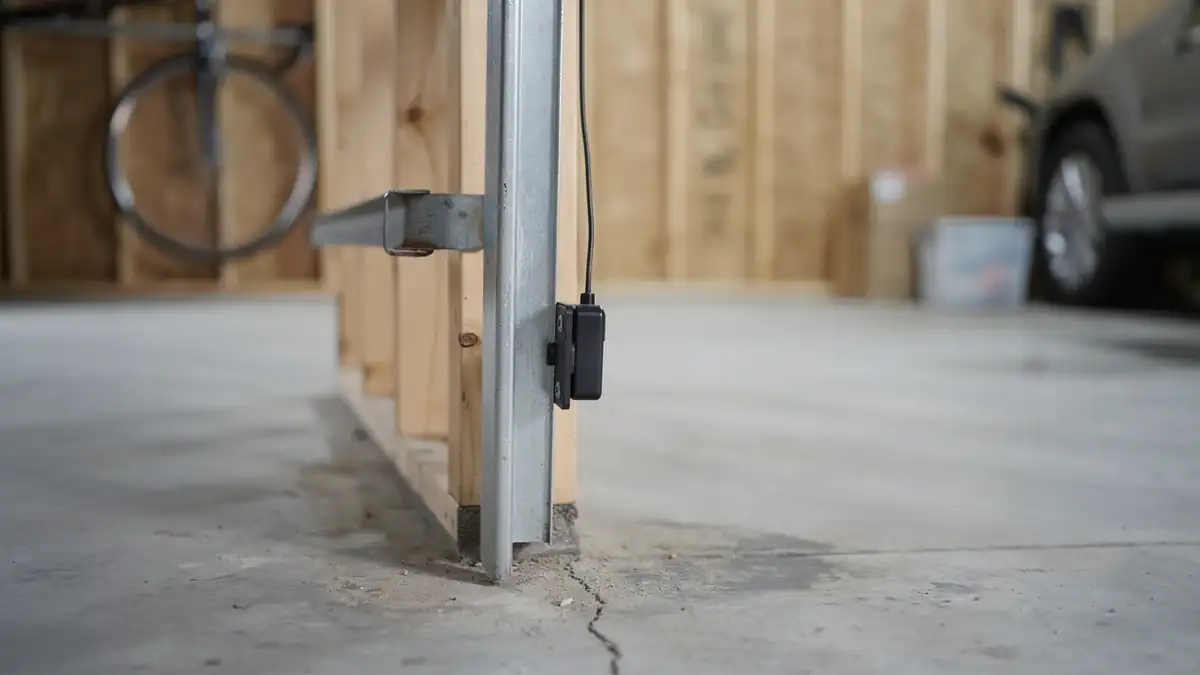
Most of the housing stock around Aurora went up between 1958 and 2003, with the bulk of it dating to the 1980s and 90s across the named subdivisions in this service area. That matters for sensor drift because those decades of construction used slab-on-grade or shallow footings that move with the ground, and Aurora sits in a cold moderate climate band where the frost line pushes down into that soil every winter and lets go every spring. Your door's safety sensors - the two eye-level units facing each other across the opening - get bolted to brackets that are, in turn, fastened to the track, which is fastened to the framing, which sits on that slab. When the slab heaves even a quarter inch over a winter, the bracket angle shifts with it. You don't see the slab move. You see a sensor light blink amber instead of solid green, or a door that reverses halfway down for no reason you can find. On a house built in the 1980s or 90s this isn't a one-time fix - it's a seasonal recheck, because the ground keeps doing what it does every year in this climate band.
When to Get Help
Call before you start swapping parts if the door reverses on the way down, the sensor LEDs won't both hold steady, or the door won't close at all unless someone holds the wall button. Those symptoms point at alignment or a bad eye, not a dying opener, and guessing wrong means buying parts you didn't need. If you're in one of the closer-in areas - North Aurora, Boulder Hill, or Montgomery, all within about five miles - a same-visit fix for a sensor knocked out of true is usually straightforward. Farther out toward Sugar Grove, Elburn, or Kaneville, eight to thirteen miles out, the diagnosis is the same but it's worth describing the symptom clearly on the call so the right parts are on the truck. Don't keep operating a door that reverses erratically with kids or pets around - that's exactly the failure the sensors exist to catch, and a sensor that's drifted out of alignment may not catch it reliably.
The Problem
Sensor drift isn't really a sensor problem on most of these houses - it's a foundation-and-climate problem showing up at the one place you can see it. A house built anywhere from 1958 through 2003 in a cold moderate climate band spends every winter with frozen ground pushing up on footings and every spring settling back down, and the garage slab moves right along with the rest of the structure. The sensors are rigid units on a structure that isn't rigid, so they're the first thing to show the strain. We can't stop the ground from moving - that's outside what any repair truck can fix. What we can do is set the bracket mounting so the sensors tolerate a normal seasonal shift without losing alignment, which is a different job than just re-pointing the eyes at each other.