How Local Conditions Play In
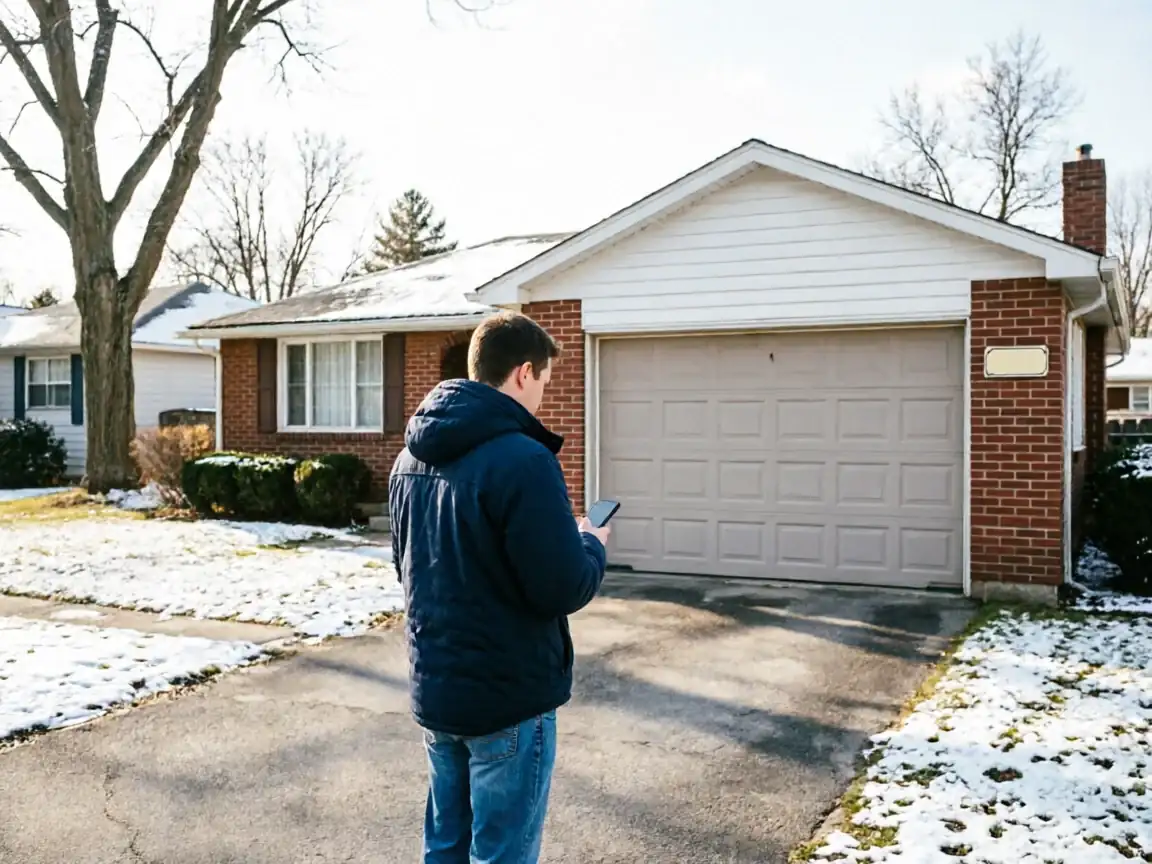
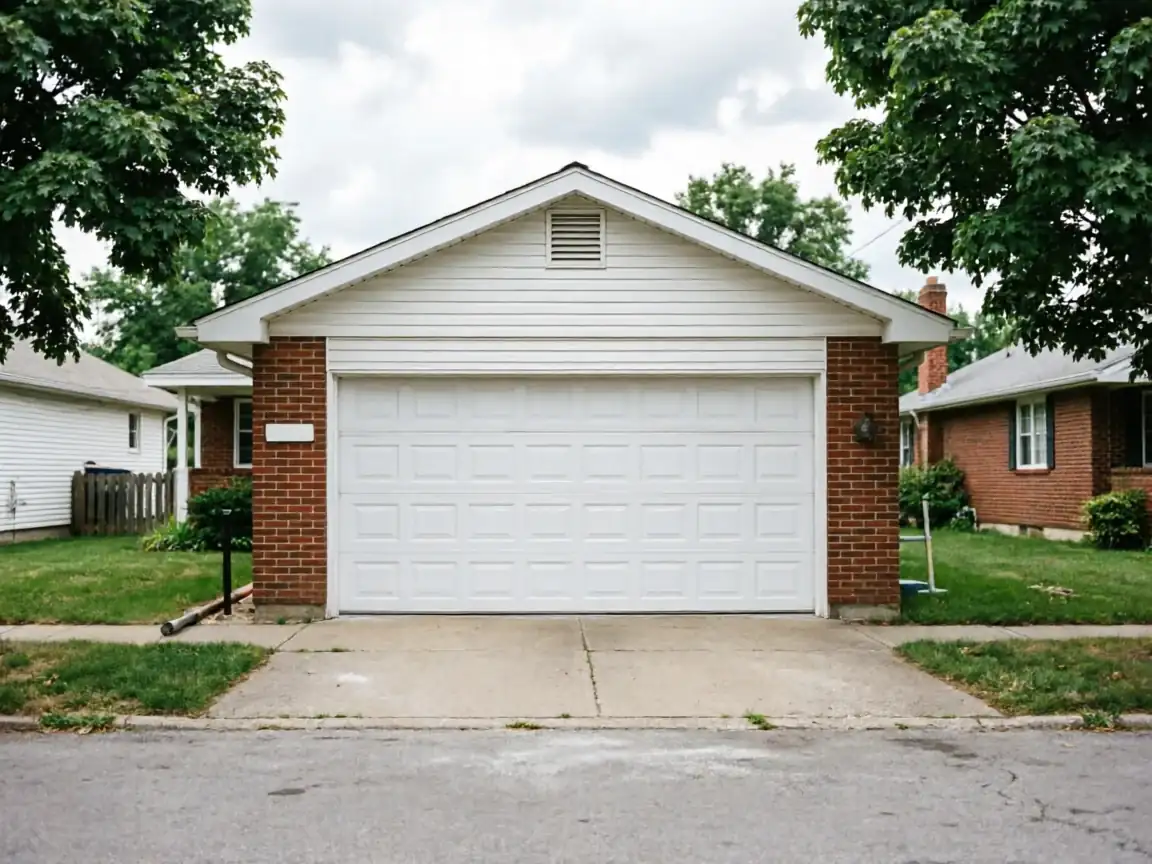
Most houses around Aurora went up between 1958 and 2003, with the bulk of that stock dating to the 1980s and 90s. That matters for openers because a huge share of units out there were installed or replaced during a window before battery backup was a standard feature, let alone standard equipment on the base models contractors used in new construction back then. If your opener is original to a house built in that span, or even a one-time replacement from 15-20 years ago, odds are good it has no battery at all - it runs on wall power, full stop.
Pair that with the cold moderate climate this area sits in. Winter storms here bring the kind of wind and ice loading that knocks out power to whole blocks, sometimes for hours. A furnace has a backup plan in most homes. A garage door opener usually doesn't. When the power drops at 9pm in January and the door was left up, or you need to get the car out for a hospital run, you find out fast whether your opener has a battery or not.
This isn't a problem unique to any one street - it's a function of when the opener went in and whether anyone's touched it since.
When to Get Help
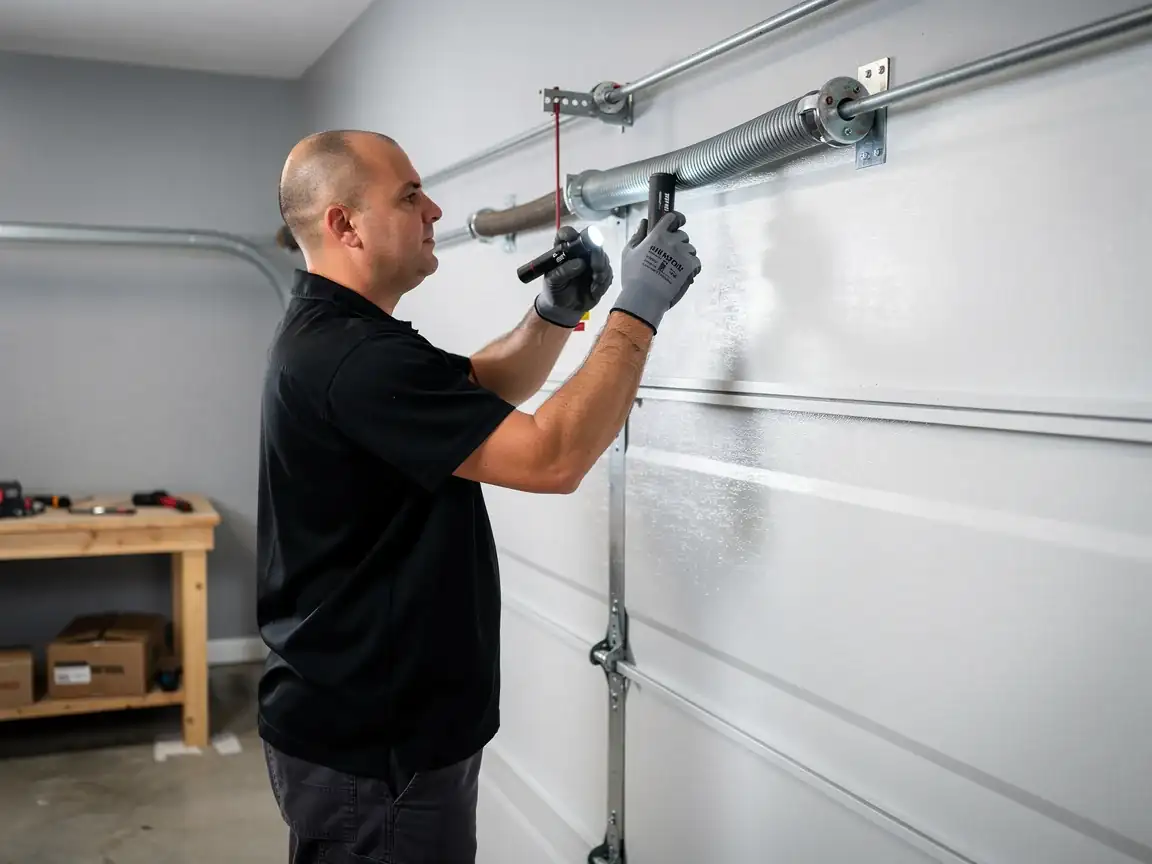
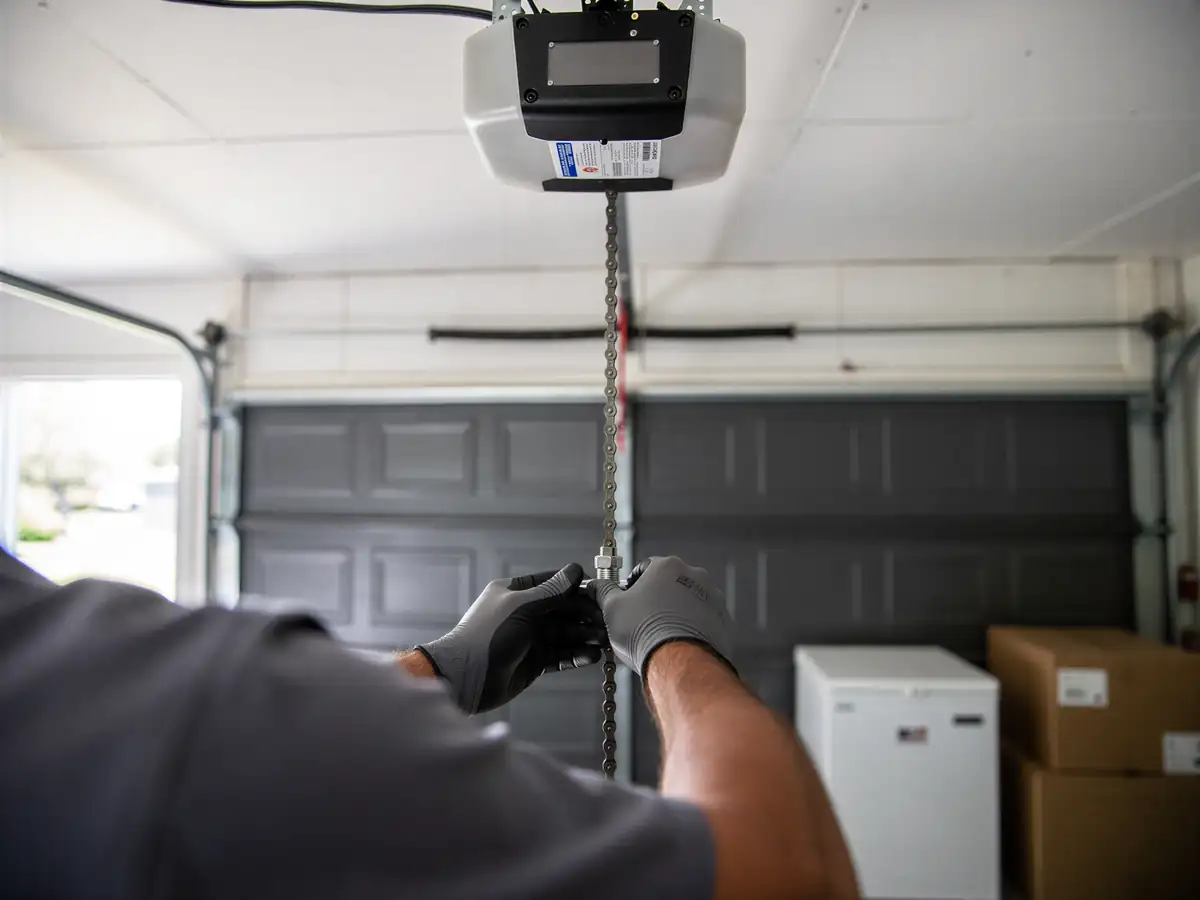
Call before the outage, not during it. If you don't know whether your opener has battery backup, that's a five-minute check we can do - look at the unit, tell you what you've got, and if it's bare-wall-power only, talk through whether adding backup makes sense for your situation.
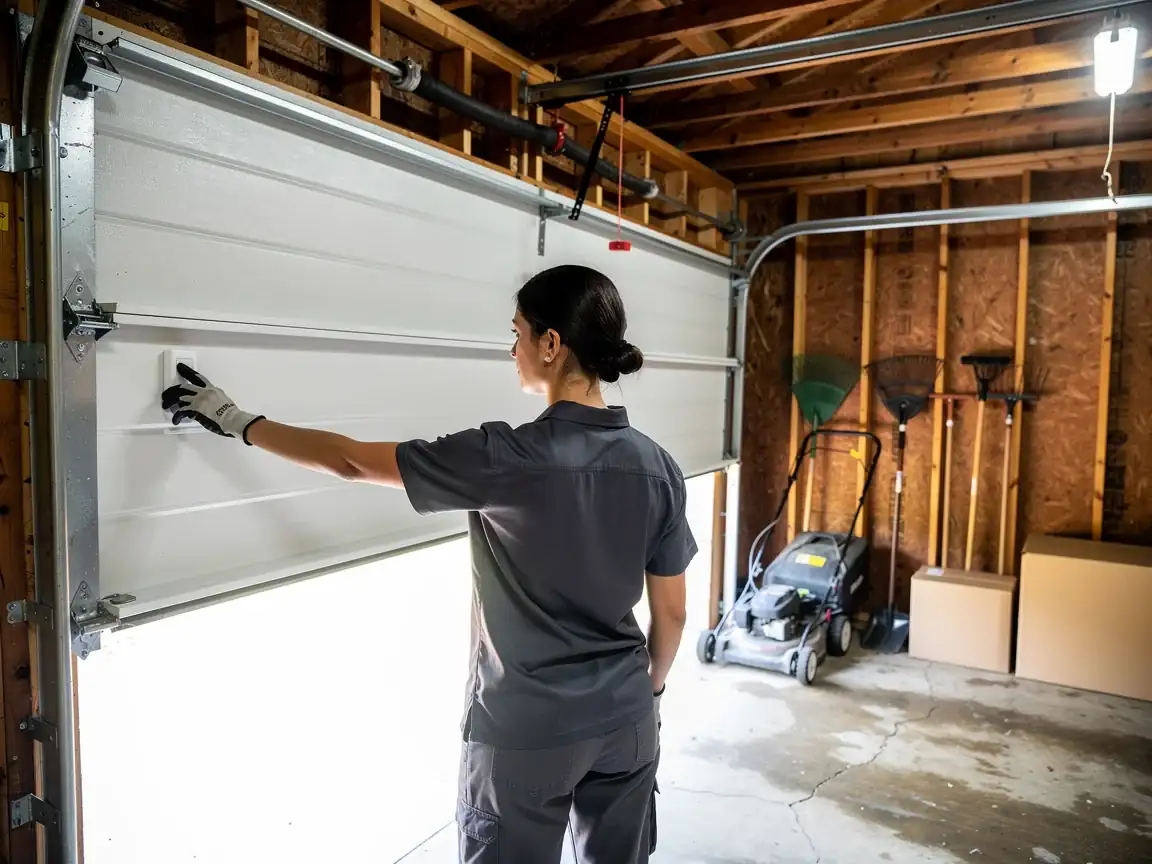
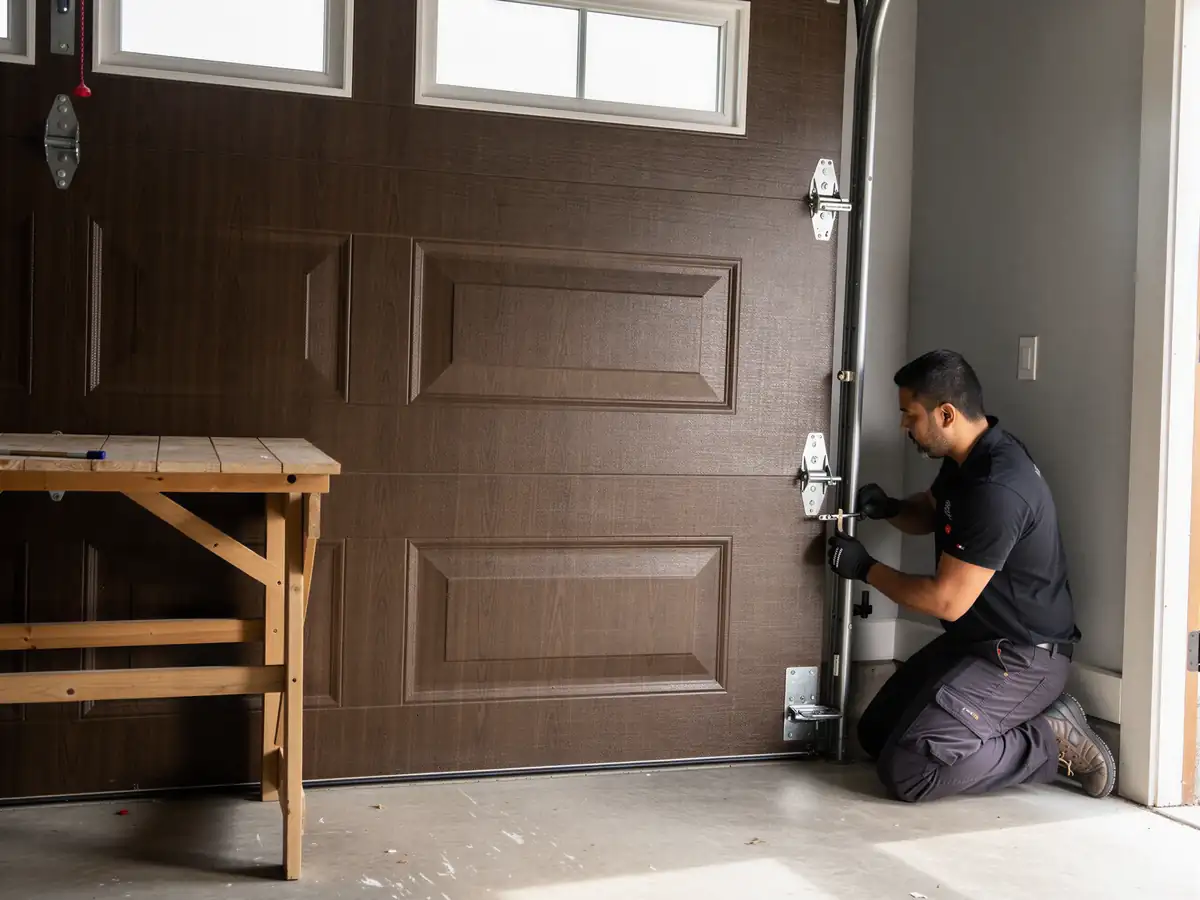
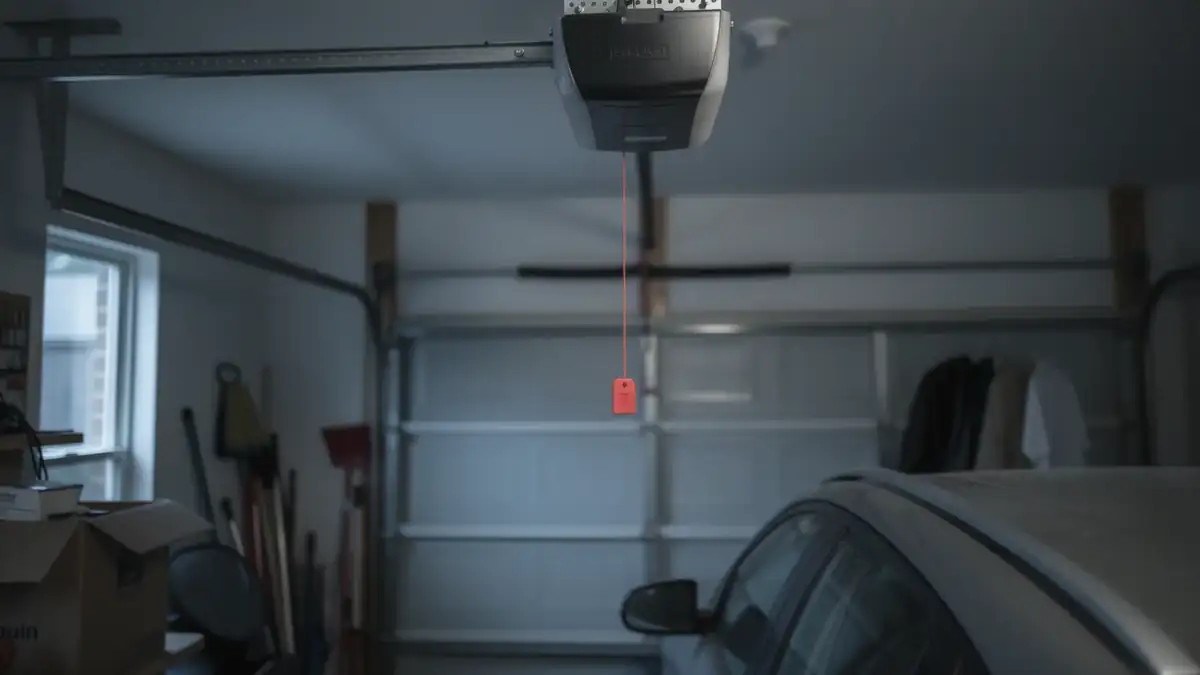
If you're already mid-outage and the door is stuck down with the car trapped inside, every opener sold in this country has a manual release cord - a red handle hanging from the trolley. Pull it, and you can lift the door by hand. That's not a repair call, that's just how the system is built to work when power fails. Save the call for when the release cord is stiff, frayed, or doesn't disengage the carriage cleanly, which happens more often on openers from the 80s and 90s that have been in service a long time without the rail ever being lubricated.
Also worth a call: if the door won't lift by hand even with the release pulled. That usually means a spring problem, not a power problem, and it's not something to force.
The Common Mistake
The mistake we see most in houses from that 1958-2003 build window is treating the opener like it's a permanent fixture instead of a machine with a service life
People replace the opener once, in the 80s or 90s when the house was new or near-new, and then don't think about it again until it fails outright. Battery backup units have been standard safety features for a while now, but a working opener that just runs on wall current gives no signal that it's behind - it opens the door fine every single day until the one day the power's out and it can't.
The other version of this mistake
People buy a battery backup unit, get it installed, and never test it. A backup battery that's five years old and has never been load-tested can be dead without anyone knowing, right up until the outage when you actually need it. It's not enough to have the hardware - someone has to confirm it still holds a charge.
The Problem
Here's the part we're honest about: we can't predict when your power will go out, and we don't carry batteries that fit every opener brand on the shelf of the truck at all times - some backup units are special order, and lead time on them varies. What we can do is tell you straight whether your specific opener supports a battery backup retrofit or whether it's old enough that replacement makes more sense than trying to add one on.
Given how much of the opener stock around here dates back to houses built in that 1958-2003 run, with the median landing around 1981, this isn't a rare question - it's one of the more common reasons people call once a winter storm has already made the point for them. Better to know your answer before the next one than during it.