Doing It Yourself
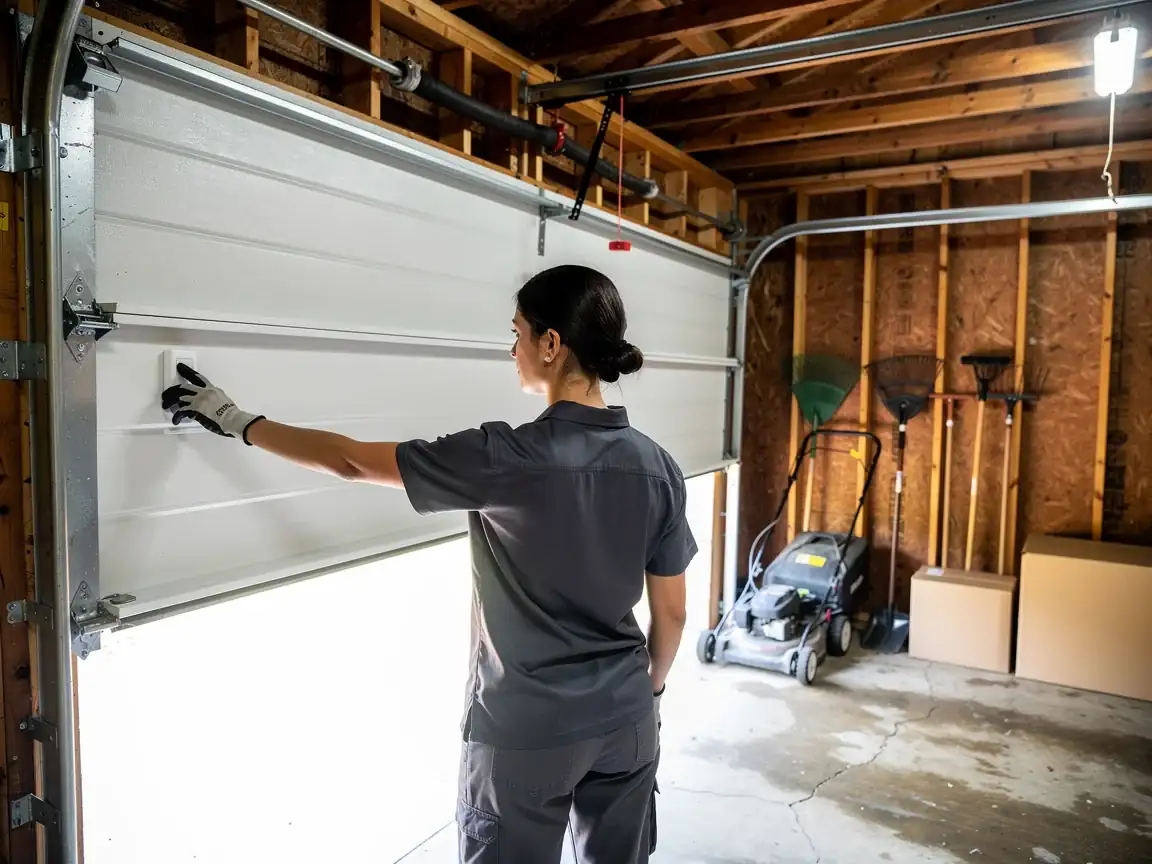
Some of this is fair to try before you call anyone. If the opener hums but the door doesn't move, check that the arm hasn't disconnected from the trolley, and look at the sensors at the bottom of the track for dust or a kicked-loose bracket. Reprogramming a remote or replacing a 9-volt backup battery is a five-minute job with the manual, if you still have it.
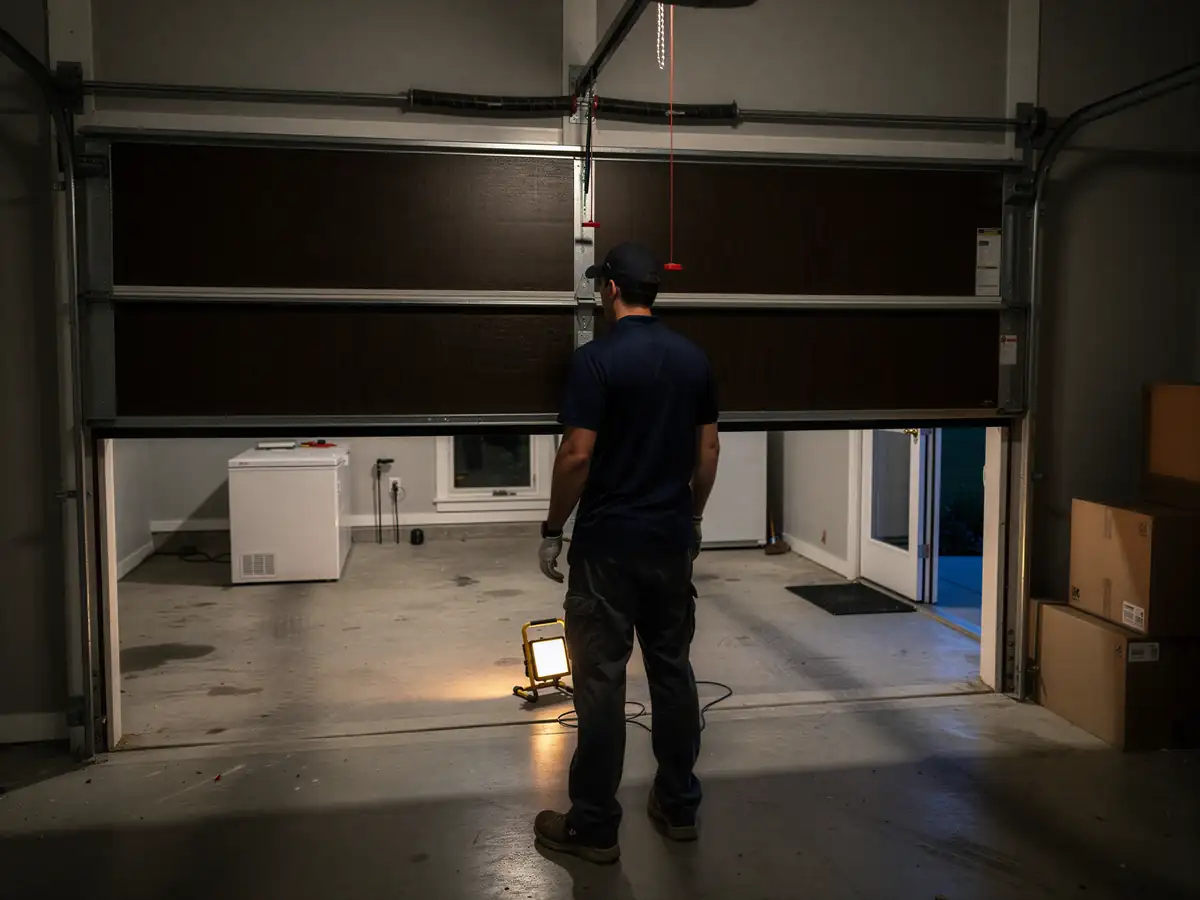
What isn't worth the risk: pulling the logic board cover on a unit built in the late 1990s, or loosening the gear housing to "see what's grinding." These openers run on torsion from a motor and a capacitor that can still hold a charge even unplugged, and the drive gear assemblies in that era used a thinner nylon tooth than later models - crack one trying to inspect it and you've turned a $40 part into a $200 one. If the door is heavy steel on a two-car bay and the opener strains on every cycle, that's a symptom to call on, not one to chase with a screwdriver.
The Symptom
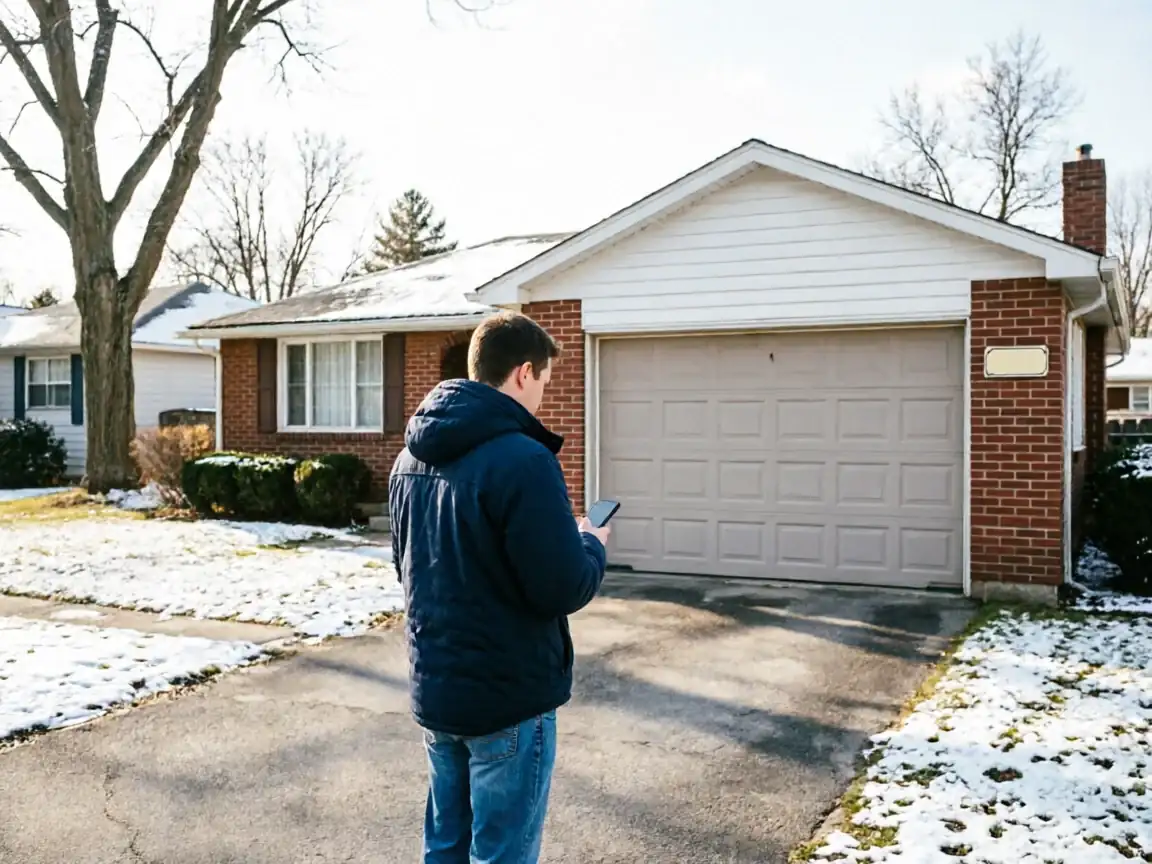
The complaint we hear most from this stretch of houses is the same one: the opener runs, the light comes on, the motor sounds normal, and the door either stalls halfway or reverses on its own partway up. On a steel sectional door from a house built around 1998, that's almost always the drive gear - a nylon part inside the motor housing that wears down after enough winters of cold grease and summer heat cycling.
A second common version: the opener clicks but nothing happens at all. That's usually the capacitor giving out, which is a known failure point once a chain-drive or screw-drive unit from that build generation crosses roughly two decades of use. Both symptoms point to the motor assembly itself, not the door, which is why swapping remotes or resetting the wall button rarely helps.
What the Fix Involves
We come from Aurora, about 14 miles out, carrying drive gear kits, capacitors, and logic boards sized for the generation of opener that matches Romeoville's housing stock
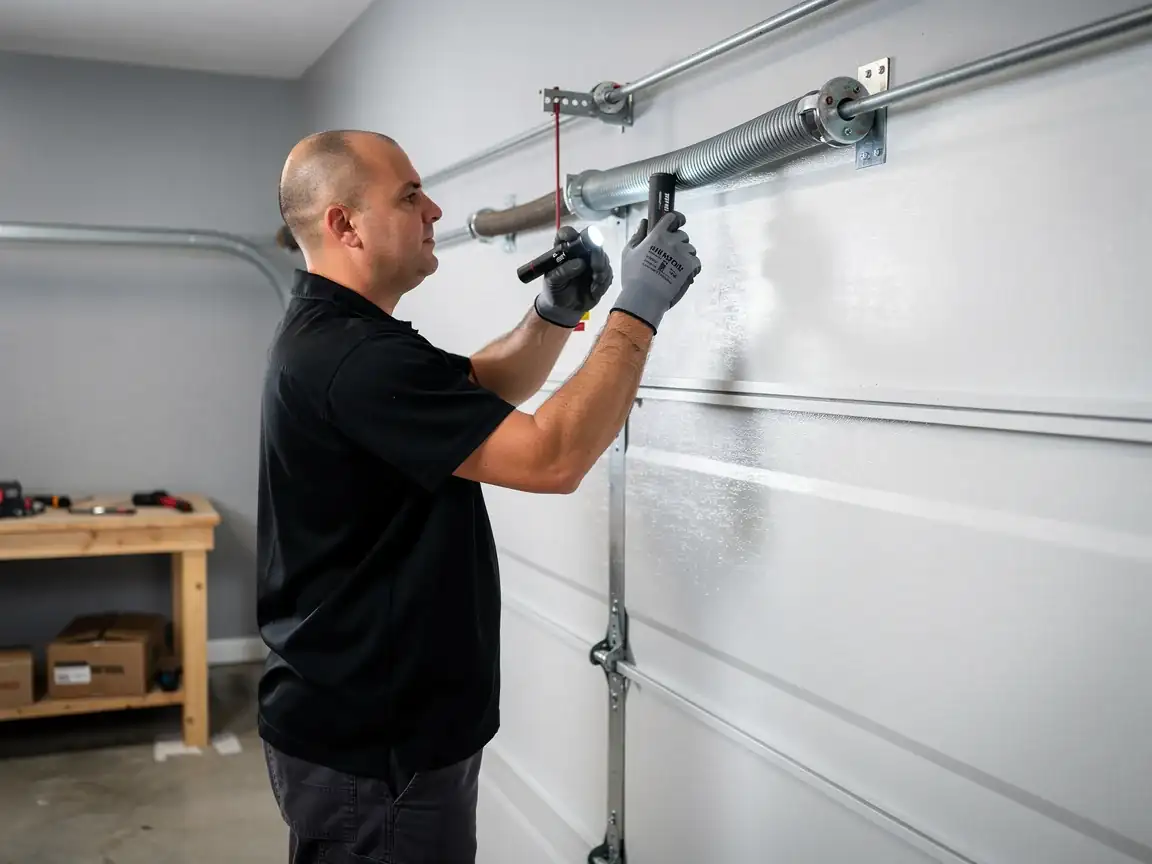
Not the newer belt-drive units going into houses built today. First step on site is isolating whether the fault is mechanical (gear, chain, or trolley) or electrical (capacitor, circuit board, or sensor wiring), because the door itself is usually fine; it's the motor housing doing the failing.
- 14 miles
If it's the gear, that's a straightforward swap
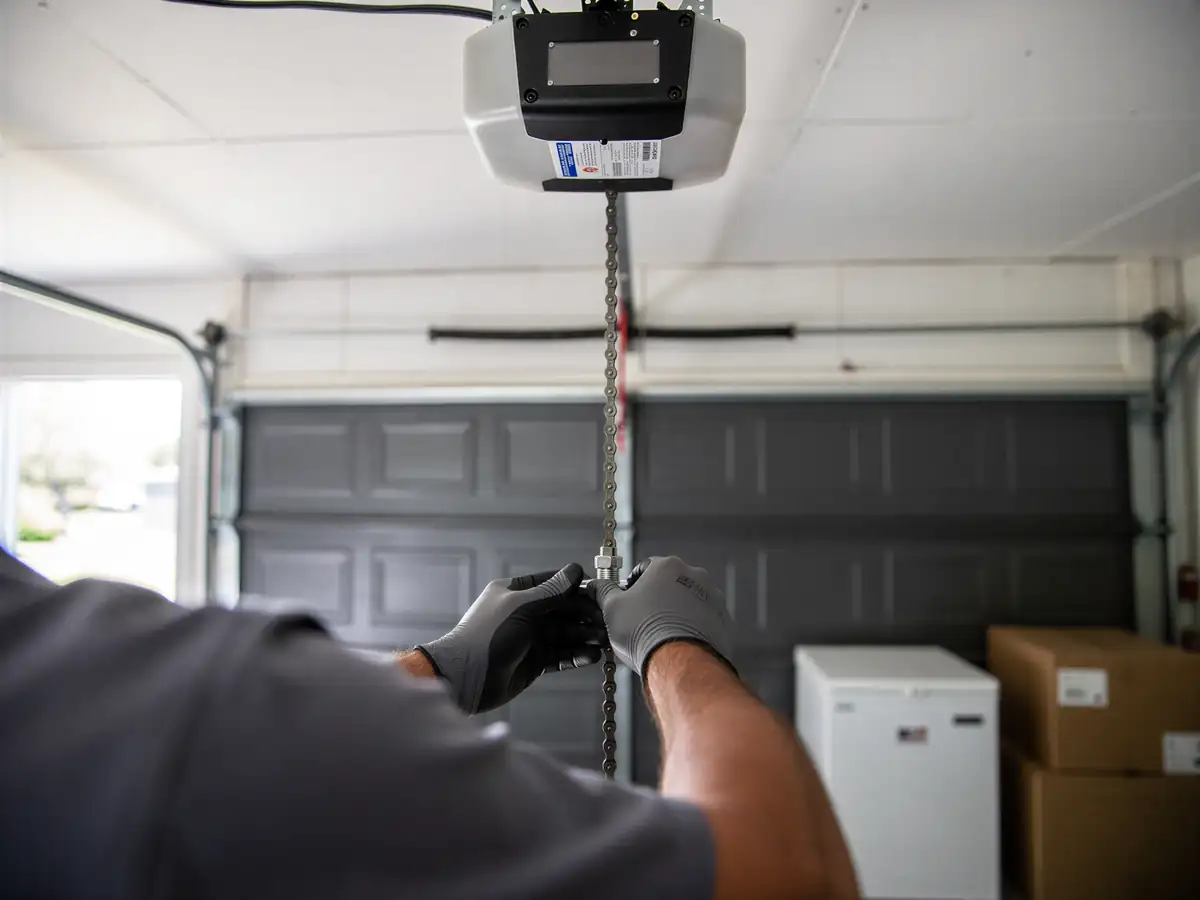
Motor comes down, housing opens, old gear out, new one in, lubricated and tested through a dozen full cycles before we call it done. If the capacitor or board has gone, that's a part swap too, though on a unit this old we'll tell you plainly if a full opener replacement is the better call rather than nursing a 25-year-old motor housing along. Sometimes it is.
What Causes It Around Here
Romeoville sits in the same cold-moderate climate band as the rest of the Aurora service area, and that swing between hard winter cold and summer heat is what finds a weak gear first - grease stiffens in the cold, the motor strains harder on the first cycle of the day, and a tooth that's already half-worn finally shears. Housing built across this wider service area runs from 1958 to 2003, and Romeoville's 1998 median puts it at the newer end of that span - new enough that most doors are original steel sectional, old enough that the first-generation opener is now due, sometimes overdue.
With roughly 13,064 households clustered mostly in that same late-1990s build window, the failure pattern repeats block to block: not a landmark or a street, just a generation of hardware aging out at the same time.