Doing It Yourself
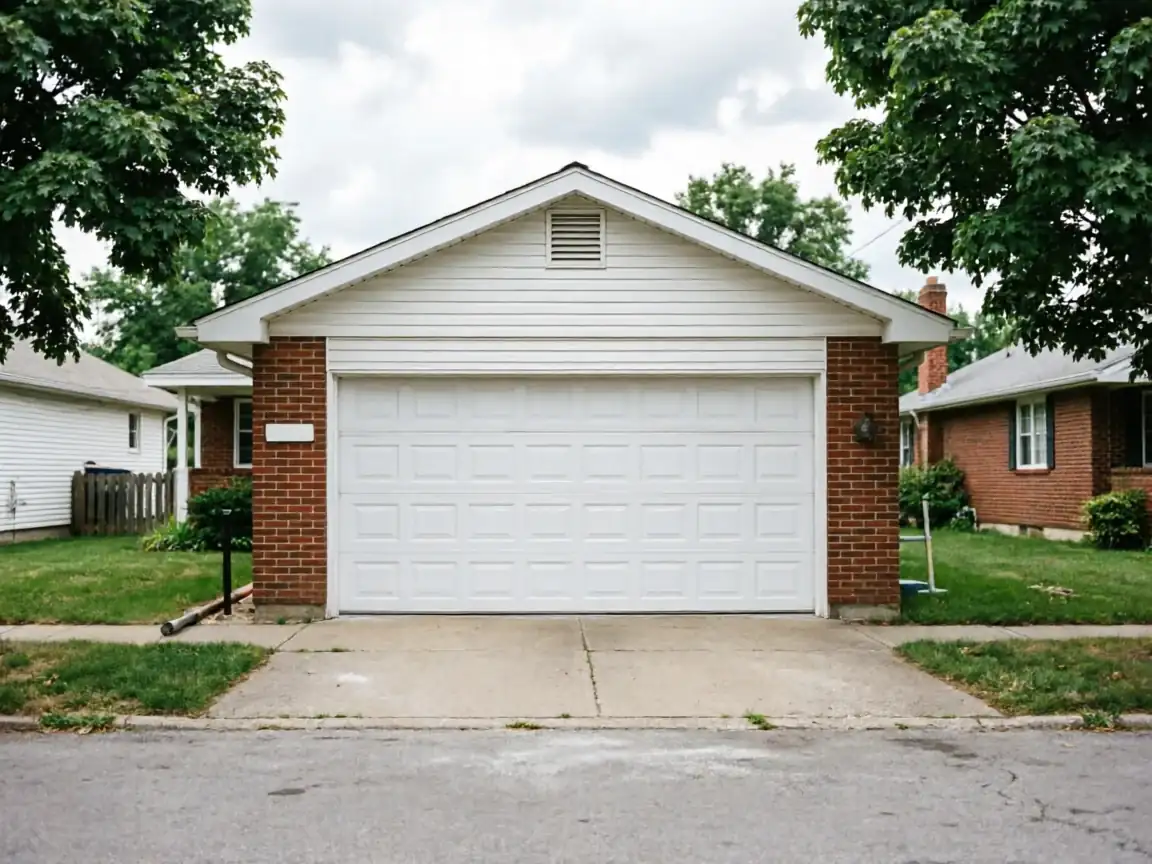
Romeoville runs about 13,064 households, which makes it one of the smaller towns on our route out of Aurora, not the dense, older blocks you find closer to the shop. Most of that housing went up around 1998, so the doors we see here are a fairly uniform generation - steel sectional doors on torsion springs, factory openers from the same era.
There's plenty a homeowner can do without calling anyone. Spray the rollers and hinges with a light lubricant twice a year, check that the photo-eye sensors near the floor are clean and aimed at each other, and tighten the bolts on the track brackets if the door rattles going up. Those jobs take ten minutes and cost nothing.
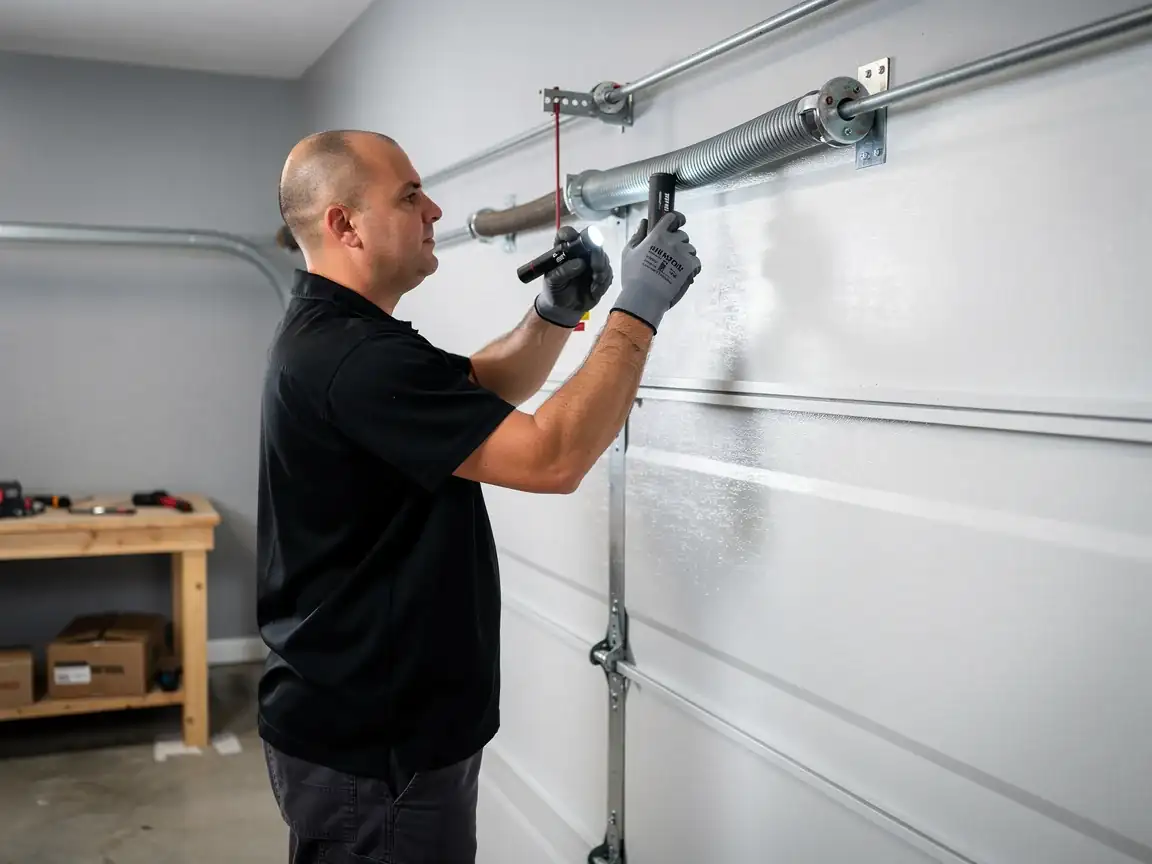
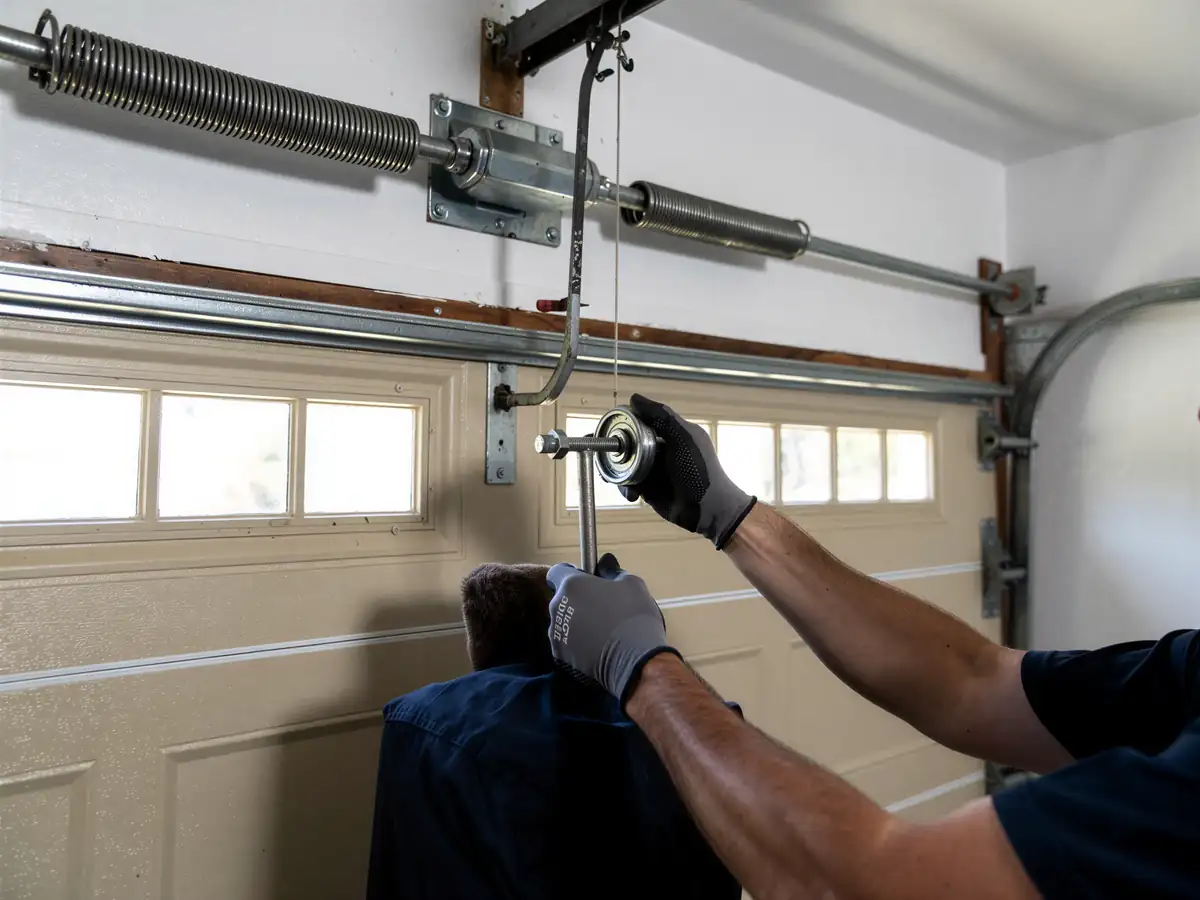
What you shouldn't touch is the torsion spring itself. It's wound under enough tension to break a bone if it lets go wrong, and on a door this size that's not a risk worth the money saved. We also won't talk anyone through a spring swap over the phone - that's the one job on this list we always send a truck for, even though the truck is coming from 14 miles away.
The Symptom
The call we get most from this town is a door that opens fine but shudders or bangs partway through the cycle, usually right around the point where the spring takes over from the opener motor. On a door installed in the late 1990s, that's often the torsion spring reaching the end of its wind count - galvanized springs from that build era were rated for a set number of cycles, and a door that's been used daily for over two decades has likely spent that budget.
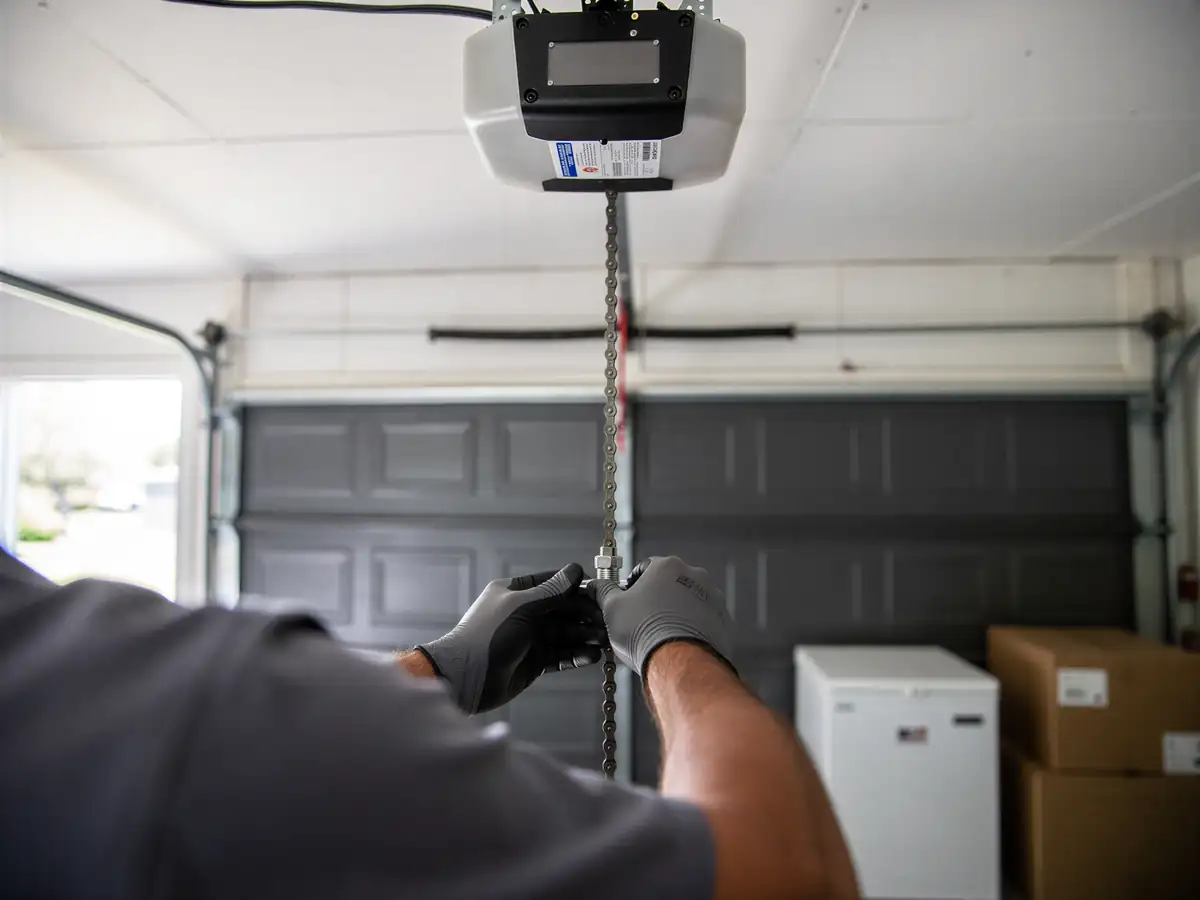
A second common complaint is an opener that runs but the door barely moves, or reverses before it's fully up. That's usually the same root cause from the other side: a spring that's lost tension is making the opener's motor do work it was never sized for, and the unit is tripping its safety limit rather than straining the gearing.
Less often, we hear about a door that won't stay down - it creeps back open a few inches after closing. On these mid-90s-to-2000s builds that's almost always the down-limit setting drifting on the opener, not the door itself, and it's a five-minute adjustment once someone's looking at it in person.
What the Fix Involves
For a torsion spring replacement on a standard double door
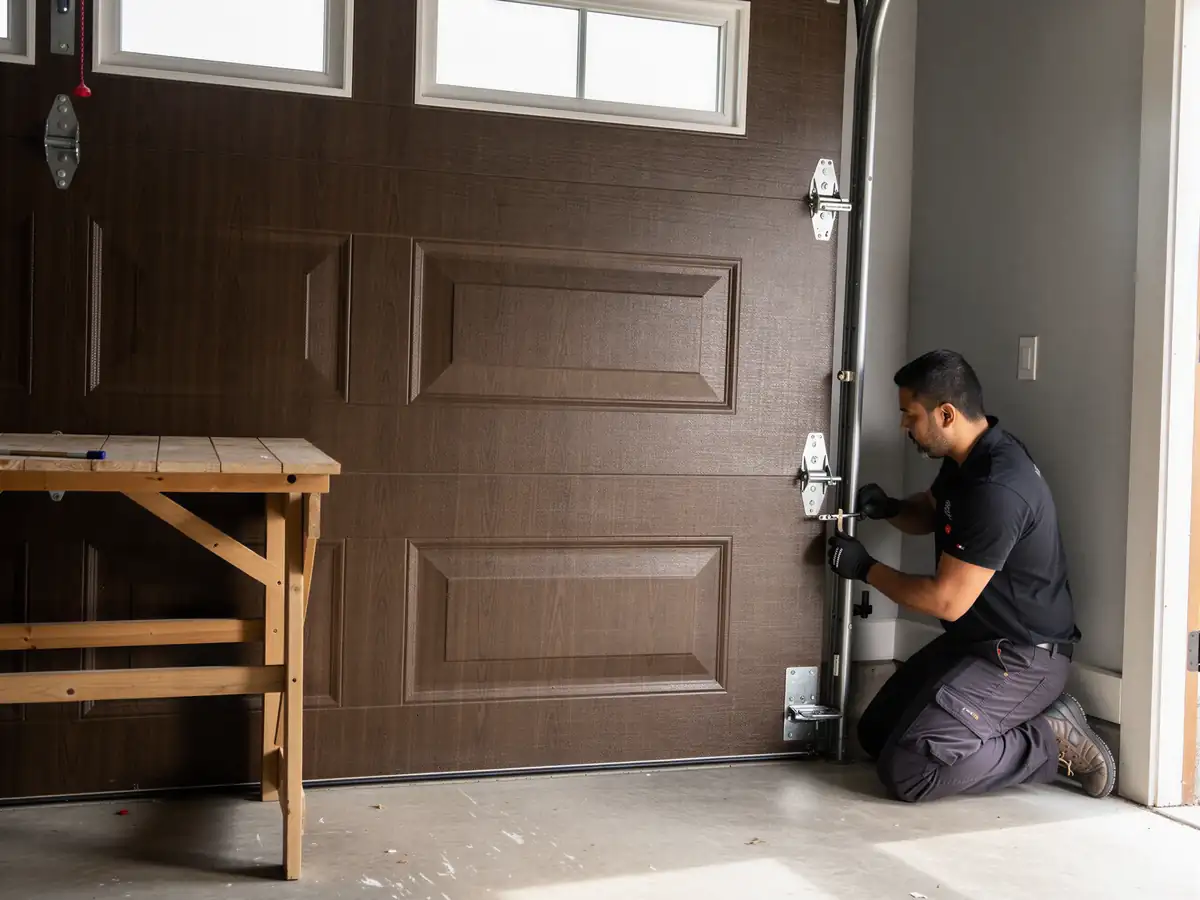
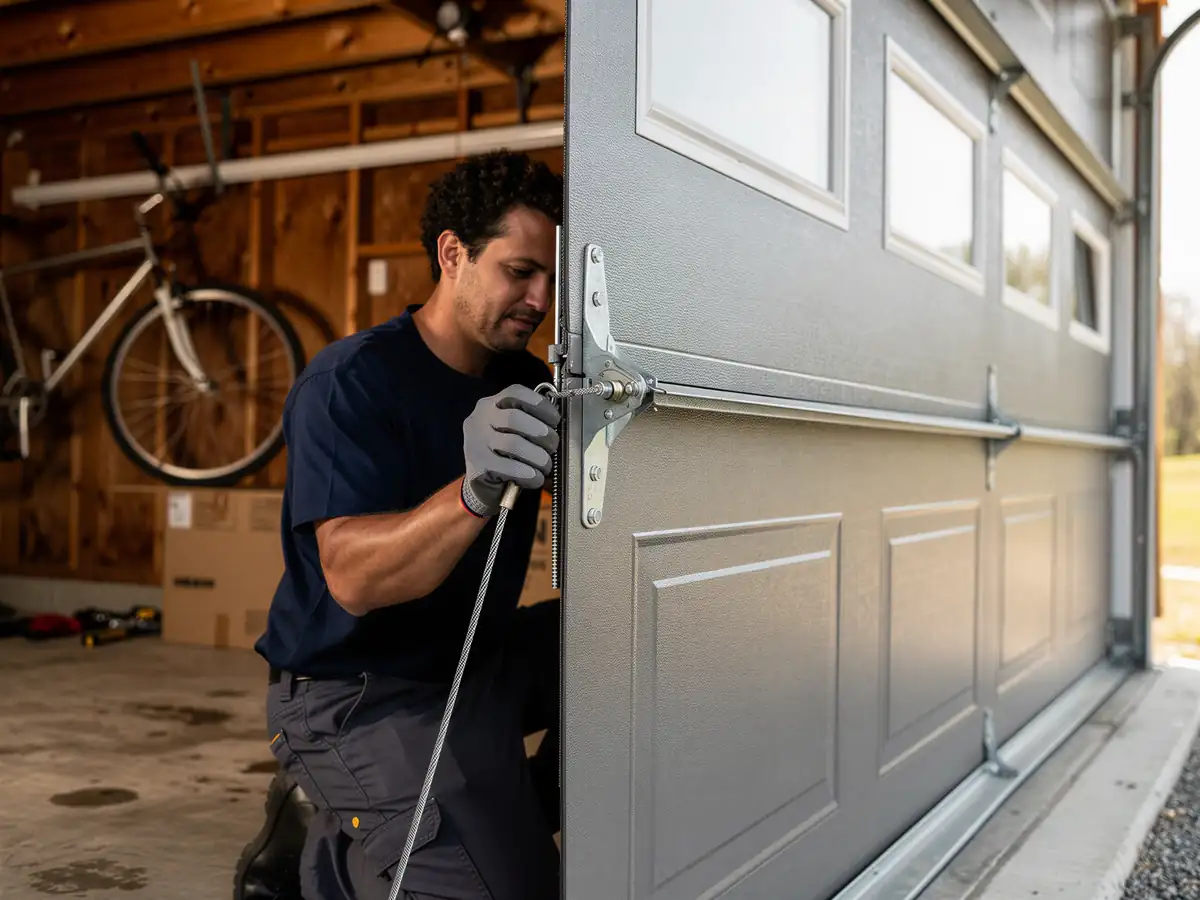
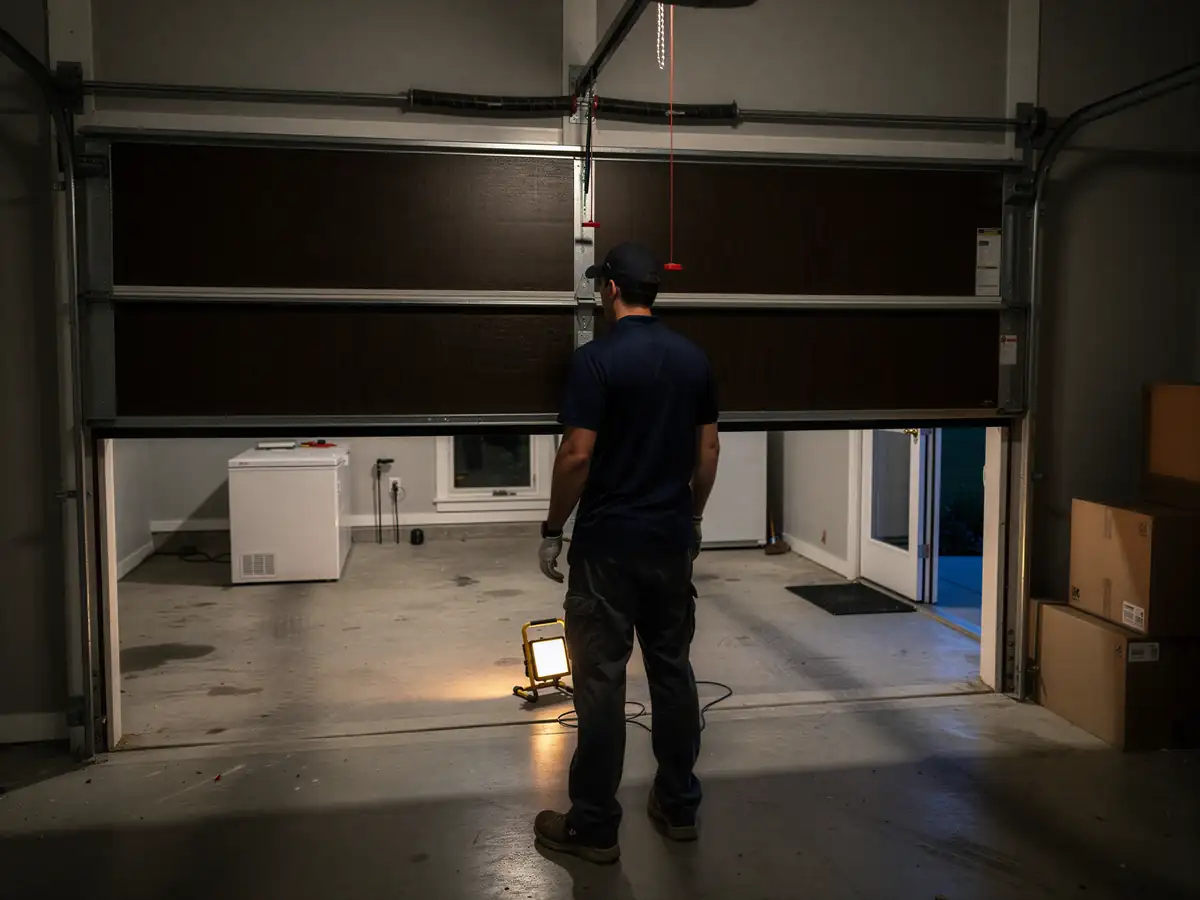
The job means clamping the door in the up position, releasing the old spring's wind safely, matching the new spring's wire size and length to the door's weight, and winding it back to the correct number of turns before testing the balance by hand. Get the wind count wrong and the door either won't lift cleanly or slams down - balance is the whole point of the repair, not an afterthought.
If the opener's limit or force settings are off, the fix is simpler
Reset the travel limits, check the force setting against the door's actual weight, and confirm the photo-eye alignment, since a drifted sensor can masquerade as a limit problem.
One honest limit here
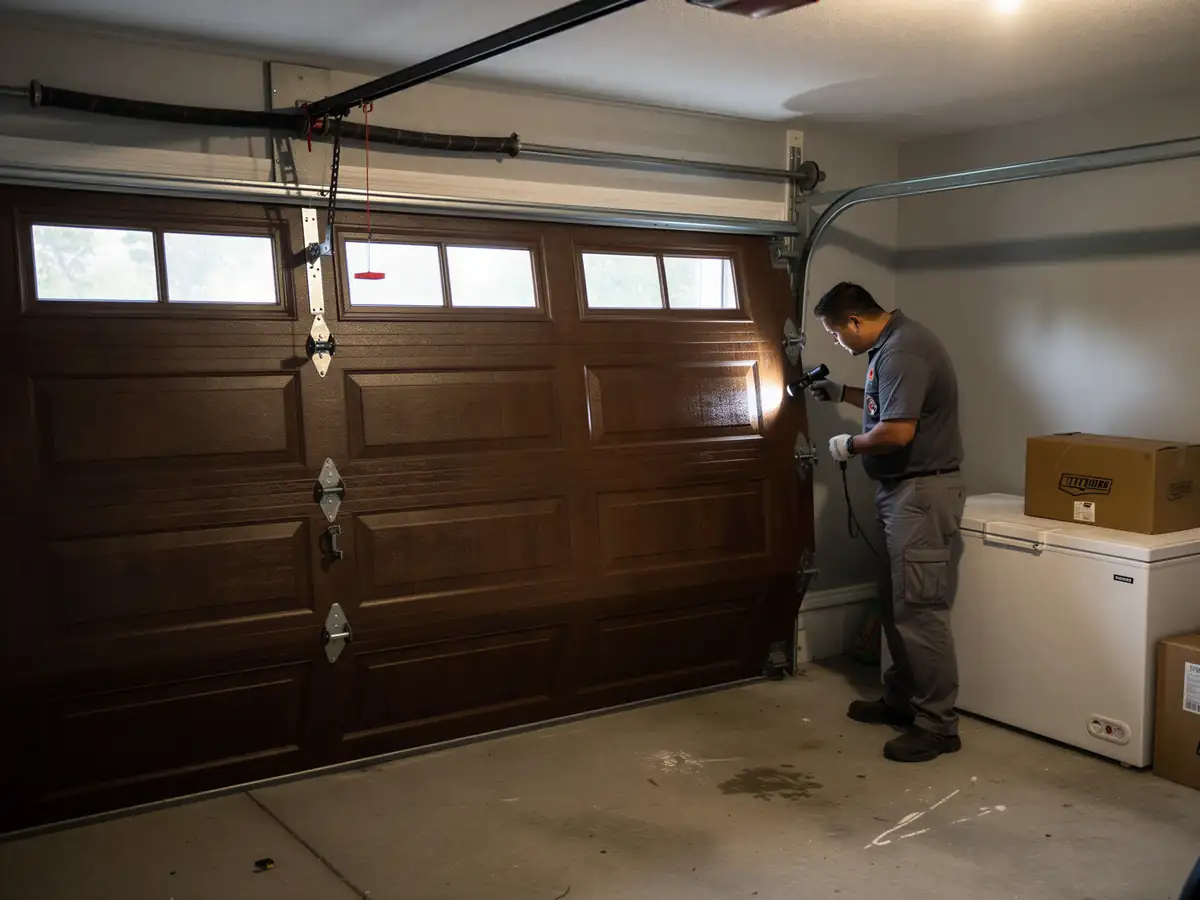
If a spring has already snapped and bent the bottom bracket or kinked a track on its way down, that's not a same-visit part. We carry common spring sizes on the truck, but bent track and bracket hardware sometimes has to be ordered, which can mean a short wait before the door's fully back to normal rather than a one-visit fix.
What Causes It Around Here
This area sits in a cold, moderate climate band, and that temperature swing matters more to garage door hardware than most people expect. Steel contracts in cold weather, which tightens tolerances in the track and stiffens the lubricant in the spring coils - both reasons a door that worked fine in October can start binding by January.
The bigger factor in Romeoville specifically is simply age lining up with use. With most houses here dating to around 1998, a large share of the original torsion springs installed when those homes were built are now twenty-plus years into service, well past where fatigue failure becomes common regardless of climate. That's different from the mix closer to Aurora, where the service area's housing spans 1958 through 2003 and the hardware ages are more scattered.
Median household income here runs about $100,022, a bit under the $106,211 figure across the wider service area, which tends to mean slightly more owners asking for a single spring replaced rather than a full door-and-opener swap - a repair, not a remodel.