Doing It Yourself
Romeoville's housing stock skews newer than a lot of what we see on this side of the Aurora service area - the area median build year across our 48 named towns is 1981, but Romeoville's own median is 1998. That matters here because a door built in the late 90s or 2000s almost never had anyone touch the track brackets or roller hardware. If the house has never had a door replacement, what's hanging on those tracks right now is probably the original run, original rollers, original bottom brackets.
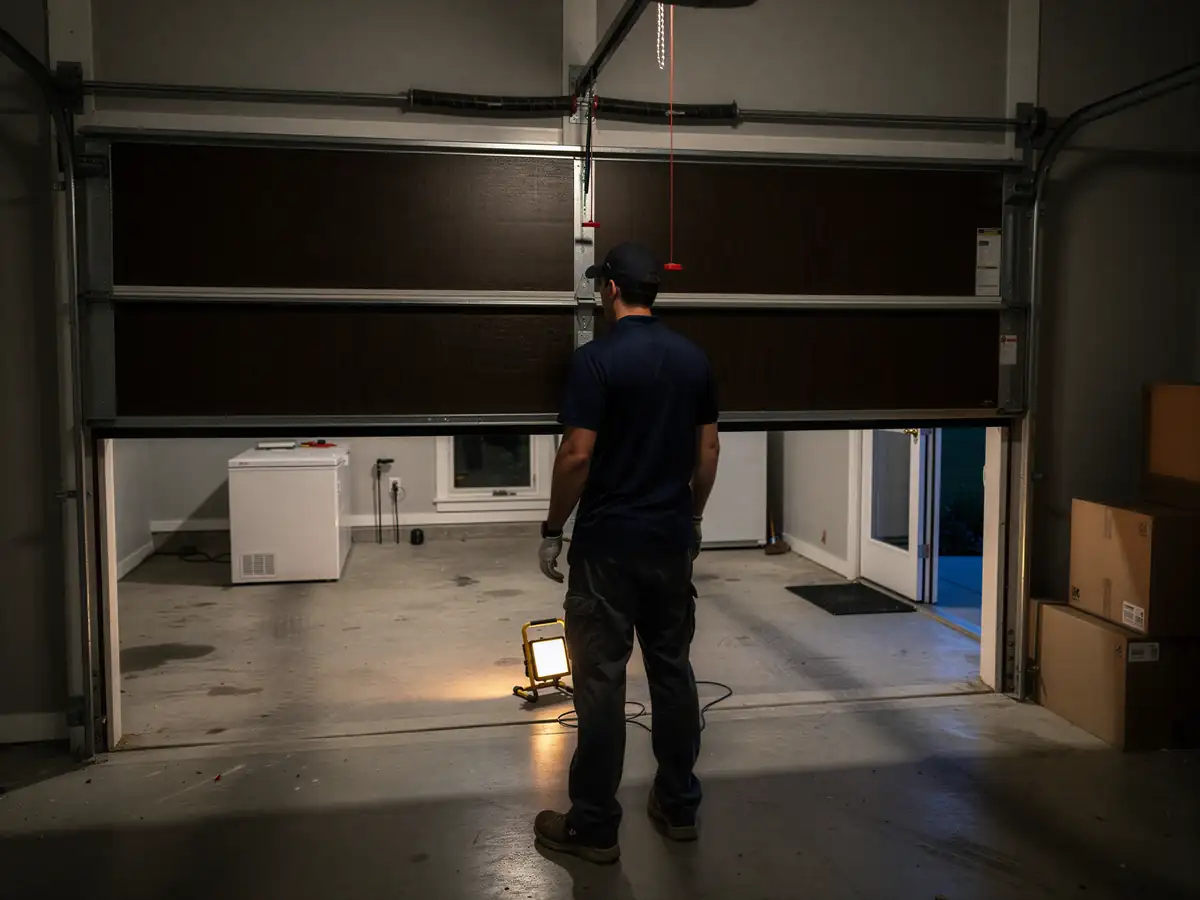
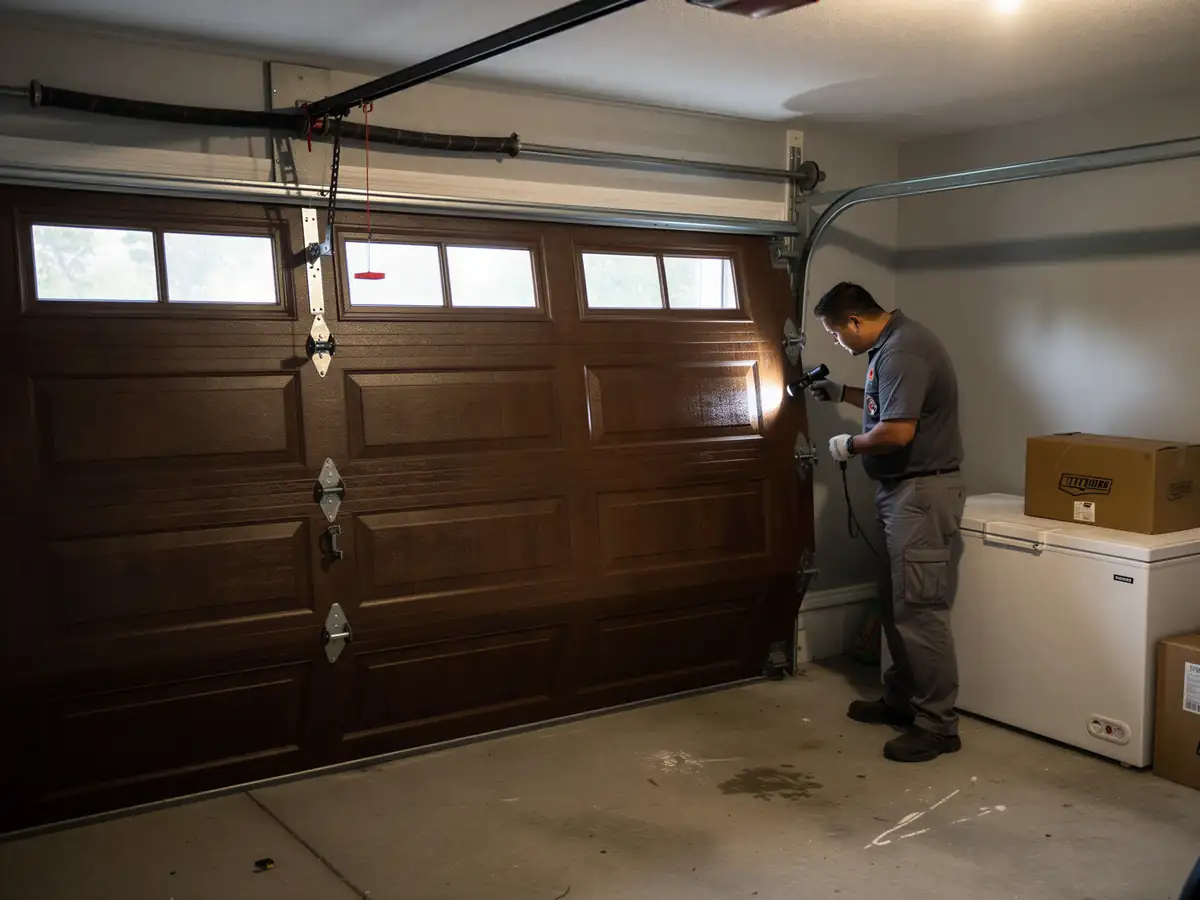
A door that's jumped the track looks dramatic - one side hanging low, the panel cocked, maybe a dent where it caught. Your instinct is to grab it and shove it back into the rail. Don't. If a cable's involved, or if the spring is still under tension, that panel can come down on your hands or your foot before you get a grip on it. We're not going to pretend every off-track call is an emergency, because most aren't - the door isn't going anywhere on its own - but we're also not going to tell you it's a five-minute DIY job with a rubber mallet. It usually isn't. If the track bracket itself has pulled away from the framing, you're past the point where re-seating the rollers fixes anything.
The Symptom
The giveaway is almost always a door that moves crooked before it stops moving at all - one corner rides ahead of the other, or the bottom panel kicks out toward you instead of sitting flush against the slab. Sometimes it's quieter: a roller that's worked its way out of the rail so the door binds and the opener strains against it, drawing more current than it should and eventually tripping its own safety reversal.
On newer construction like most of Romeoville's stock, we see this less from rust or age and more from a bracket that was never torqued quite right from the factory, or a roller bearing that's been dry for twenty-plus years and finally seized. Either way, the door doesn't come off the track out of nowhere - something pushed it there, and that something is usually still in the opening when we show up.
What the Fix Involves
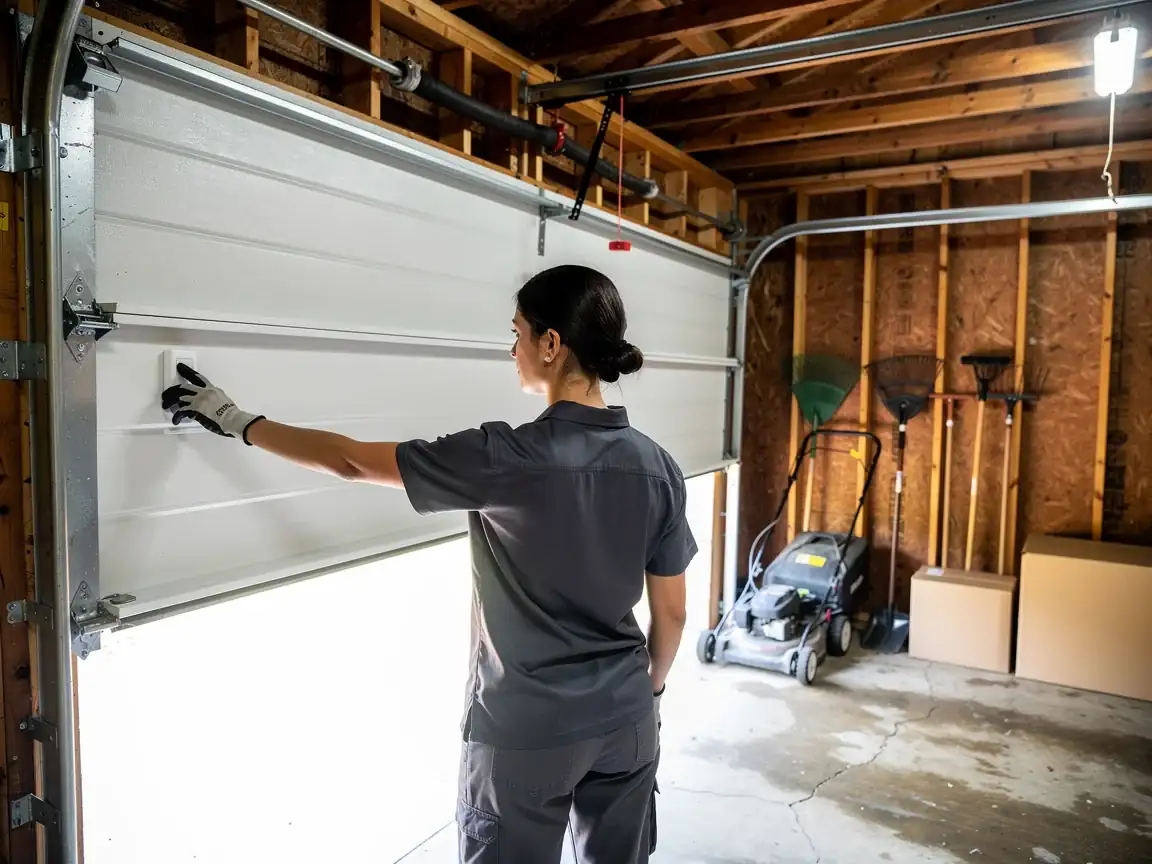
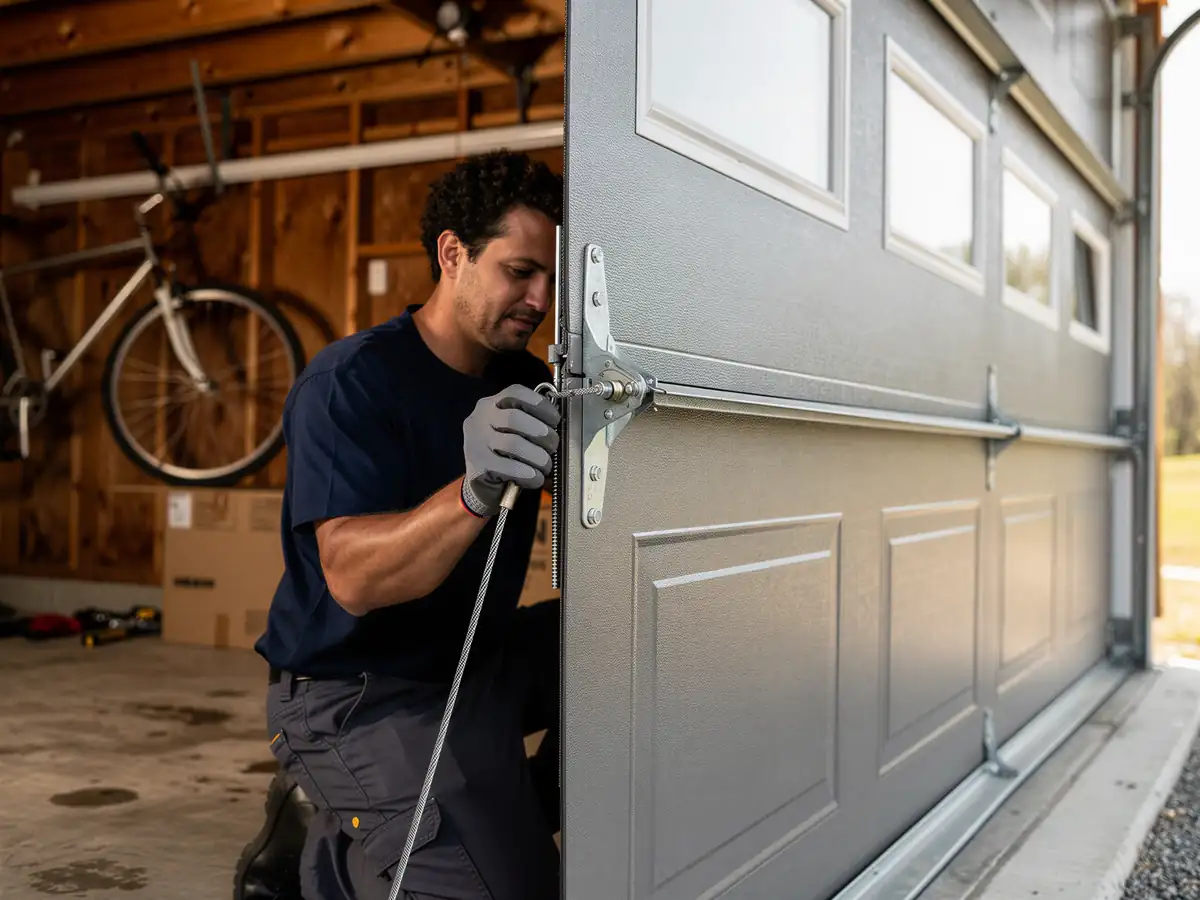
First we get the door secured so it can't drop while anyone's working near it
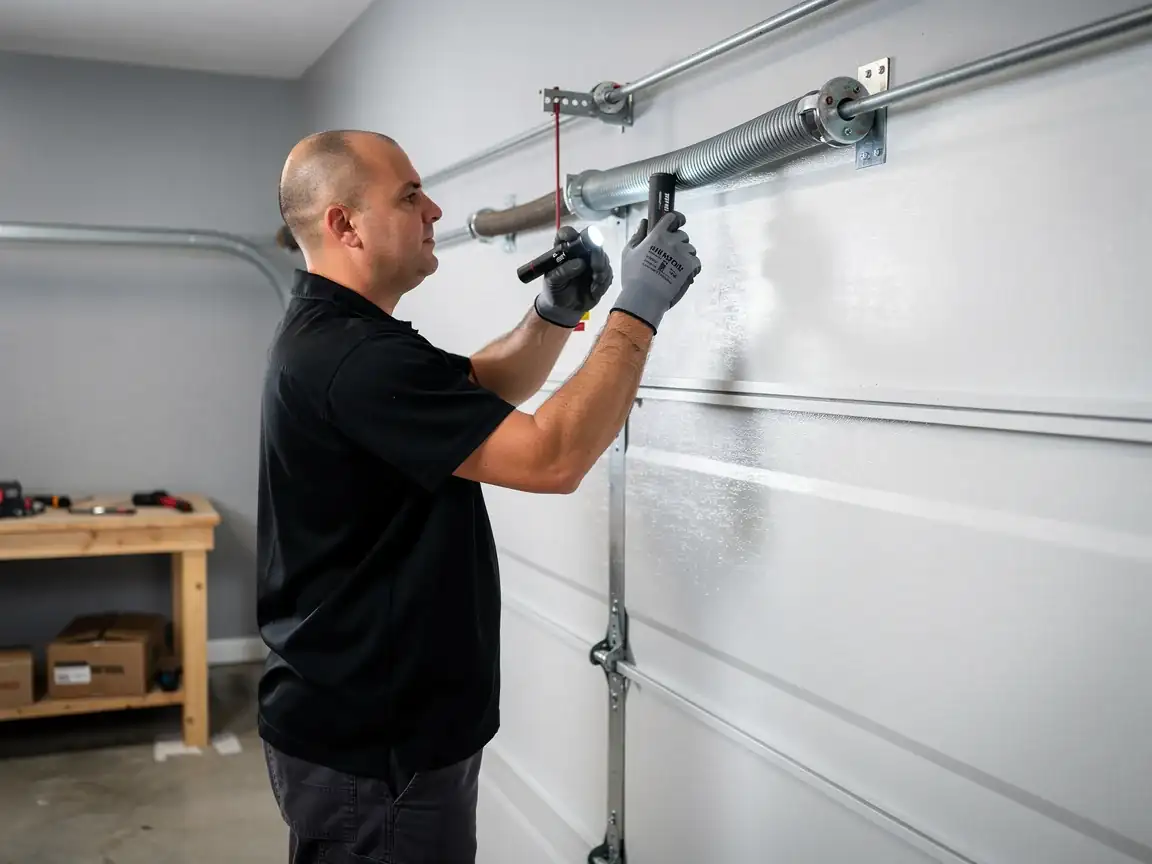
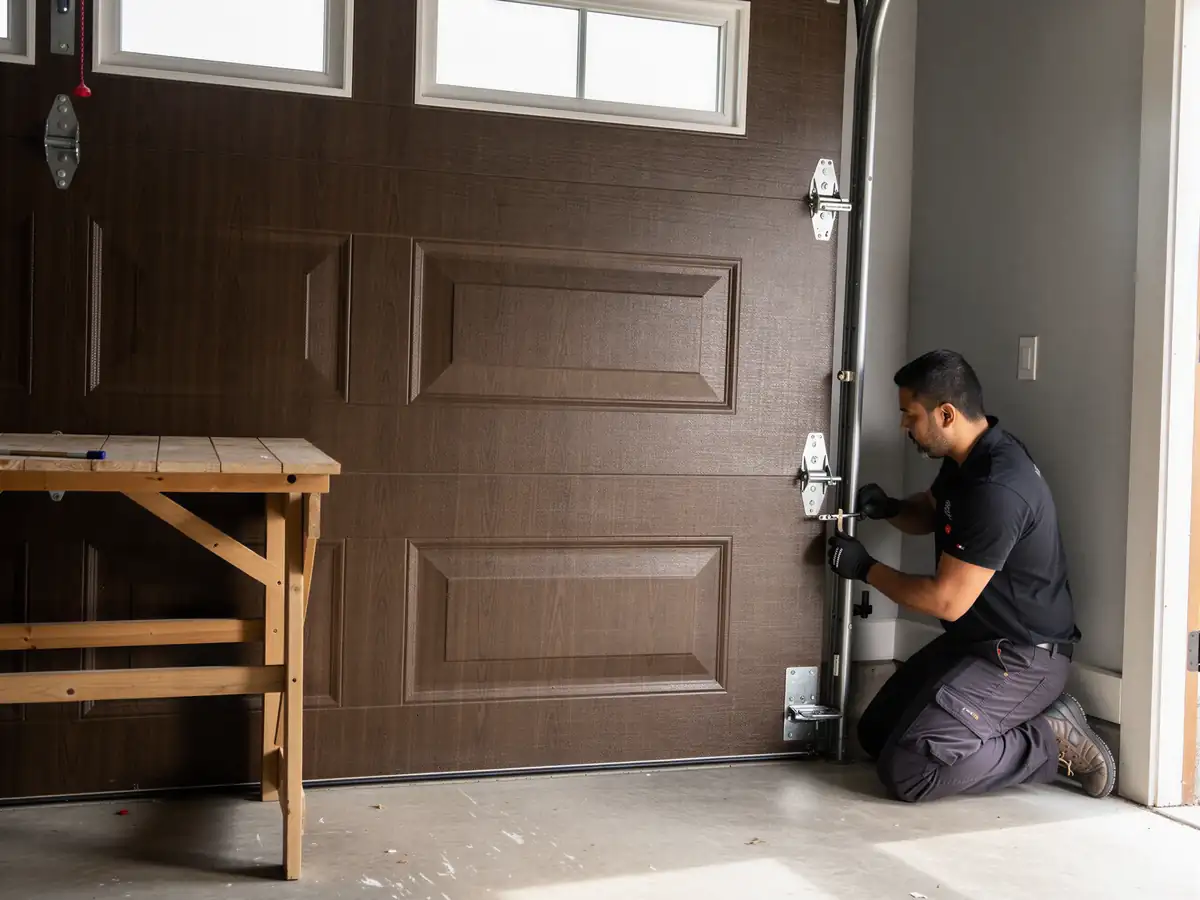
That's true whether the spring is involved or not. Then it's a matter of finding where the track separated from the roller: a bent rail section, a stripped bracket, a roller that's cracked or worn down to the stem. On a door that's original to a late-90s or early-2000s build, we're often replacing rollers that have simply outlived their bearings, not fixing something that failed from abuse.
If the track itself is bent, straightening it rarely holds
We replace the damaged section rather than hammer it back into shape, because a track that's been bent once is weaker at that spot even after it looks straight again. That's the honest limitation here: a track replacement sometimes means we don't have the exact matching rail length on the truck for an older or oddball door, and the job becomes a next-day return trip rather than a same-visit fix. We'd rather tell you that up front than rush a mismatched part into place.
What Causes It Around Here
Climate plays a role even in a county that doesn't see the brutal swings of farther north - our area sits in a cold-moderate band, and the freeze-thaw cycle each winter works on anything with play in it: a loose bracket bolt, a roller bearing with dried-out lubricant, a track alignment that's drifted a fraction of an inch over twenty-plus years of seasonal expansion and contraction. None of that announces itself until the door finally jumps.
We drive out to Romeoville from our Aurora base, about 14 miles down, so we're not a local walk-up shop - we're a crew that comes to you. What we see consistently on these newer-build homes is wear showing up earlier than you'd expect on hardware that's never been swapped, simply because original rollers and tracks weren't built to run maintenance-free for a quarter century. A full inspection usually turns up two or three small things that, left alone, would have taken the whole track down eventually.