What Causes It Around Here
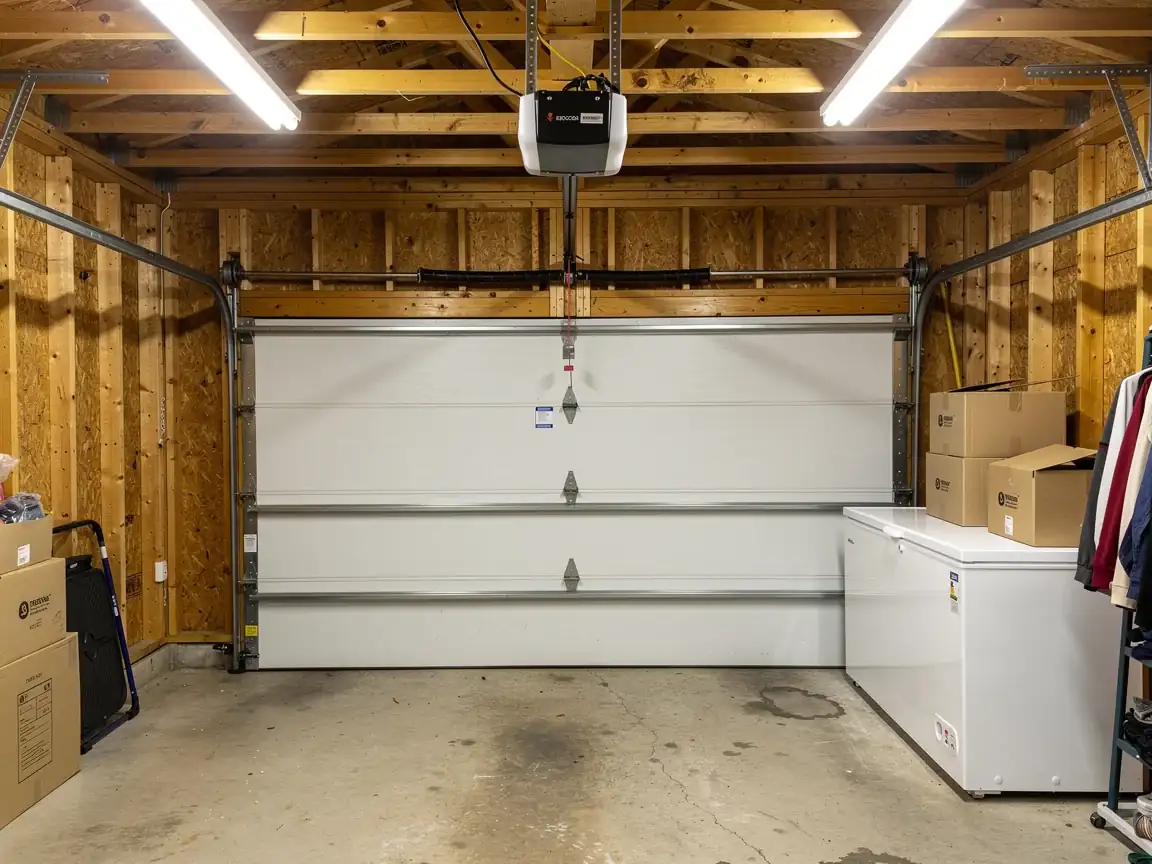
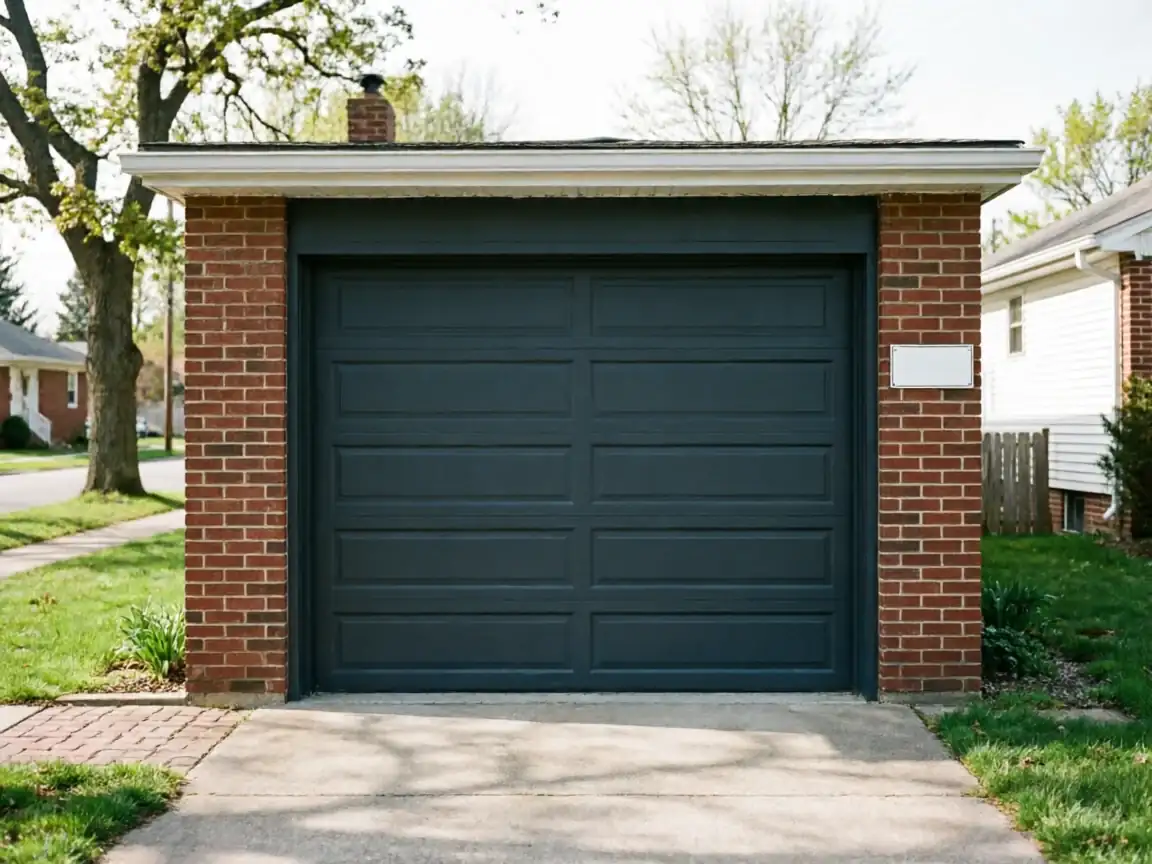
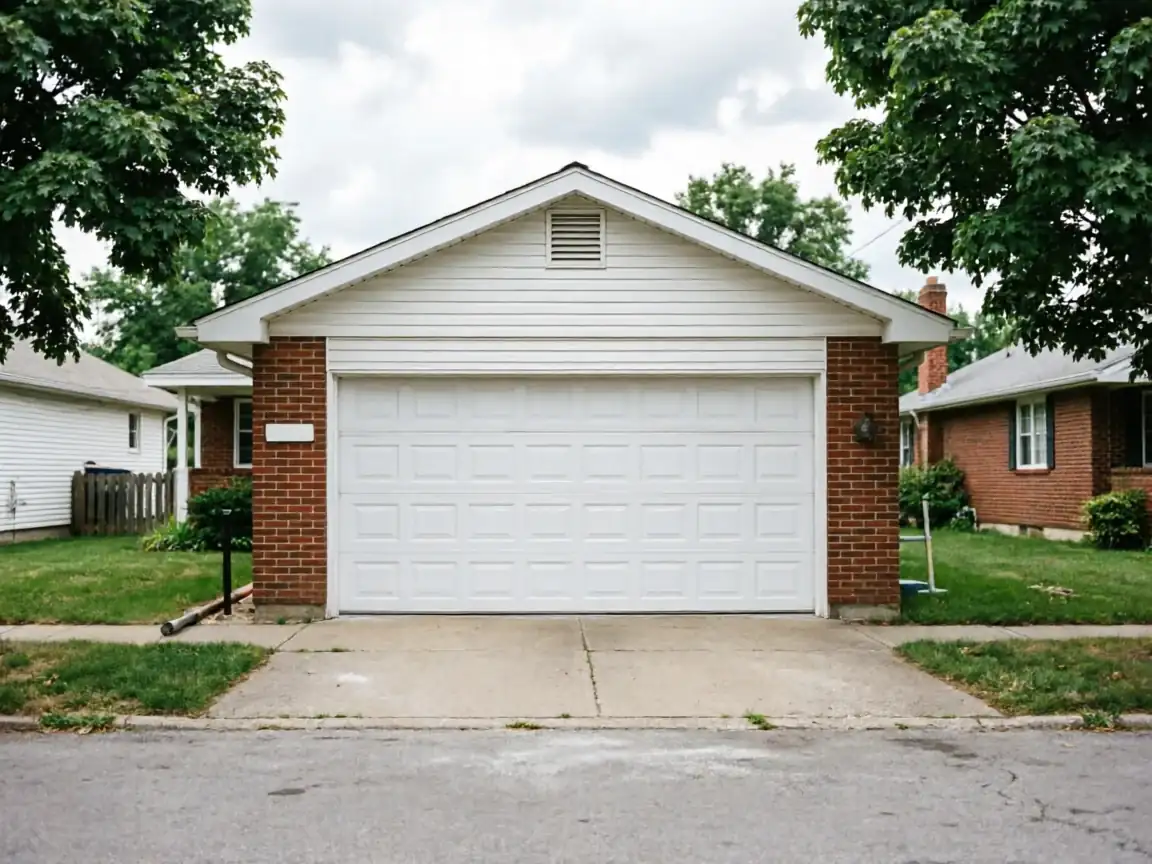
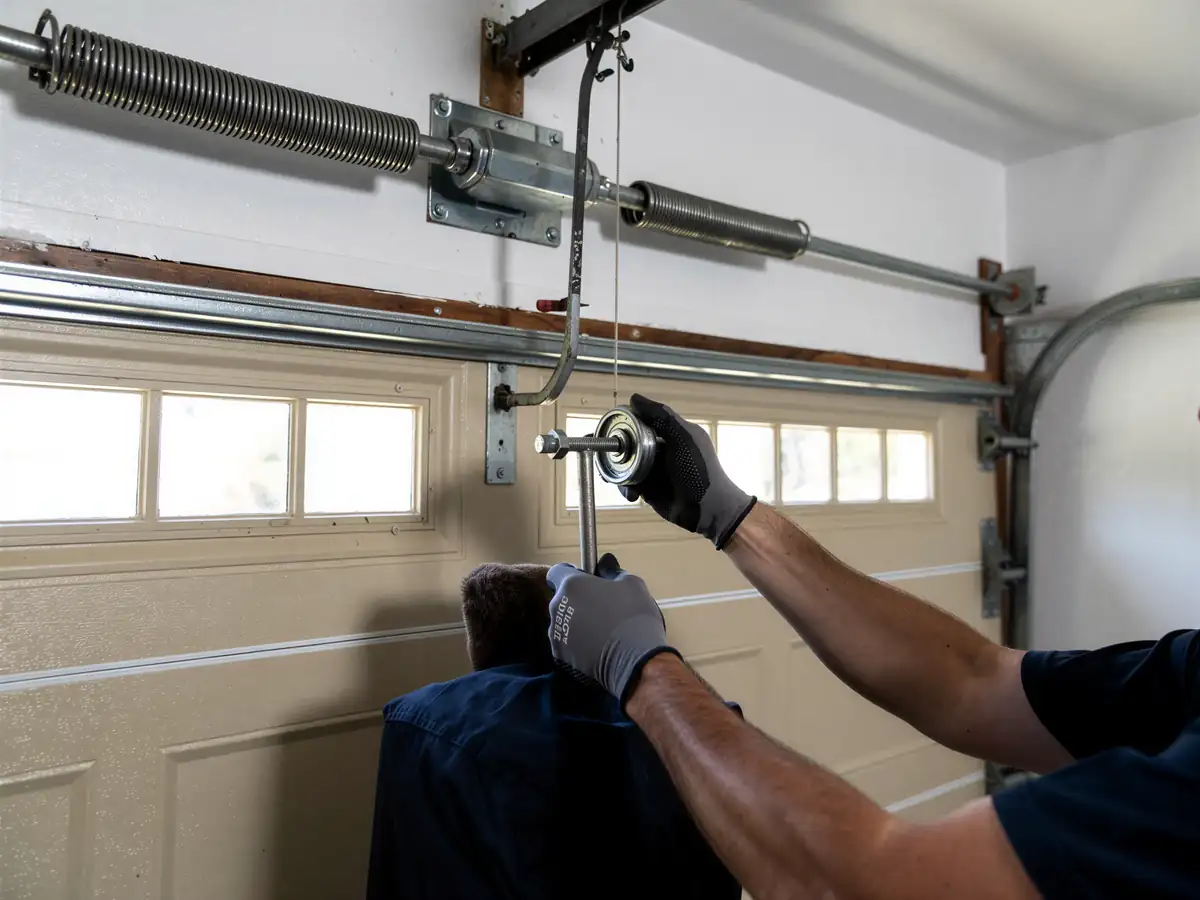
Most garage doors in North Aurora sit on houses built around 1998, which puts them squarely in the era when builders standardized on torsion springs mounted on a shaft above the door instead of the older side-mounted extension springs. That's a better system, but it has a shelf life measured in cycles, not years, and a typical torsion spring is rated for somewhere around 10,000 open-and-close cycles. For a household that opens the door twice a day, that clock runs out right around now - roughly 20 to 25 years in, which lines up with when these North Aurora builds start calling.
The cold-moderate climate here doesn't help. Steel springs lose a little temper every time they cycle through a hard freeze, and the coil can develop small rust pitting at the ends where moisture collects, even in a garage that's technically heated. That pitting is where the coil usually gives first. It's not dramatic - no bang, no fire - just a sudden dead weight on the door the next time someone hits the opener.
The Symptom
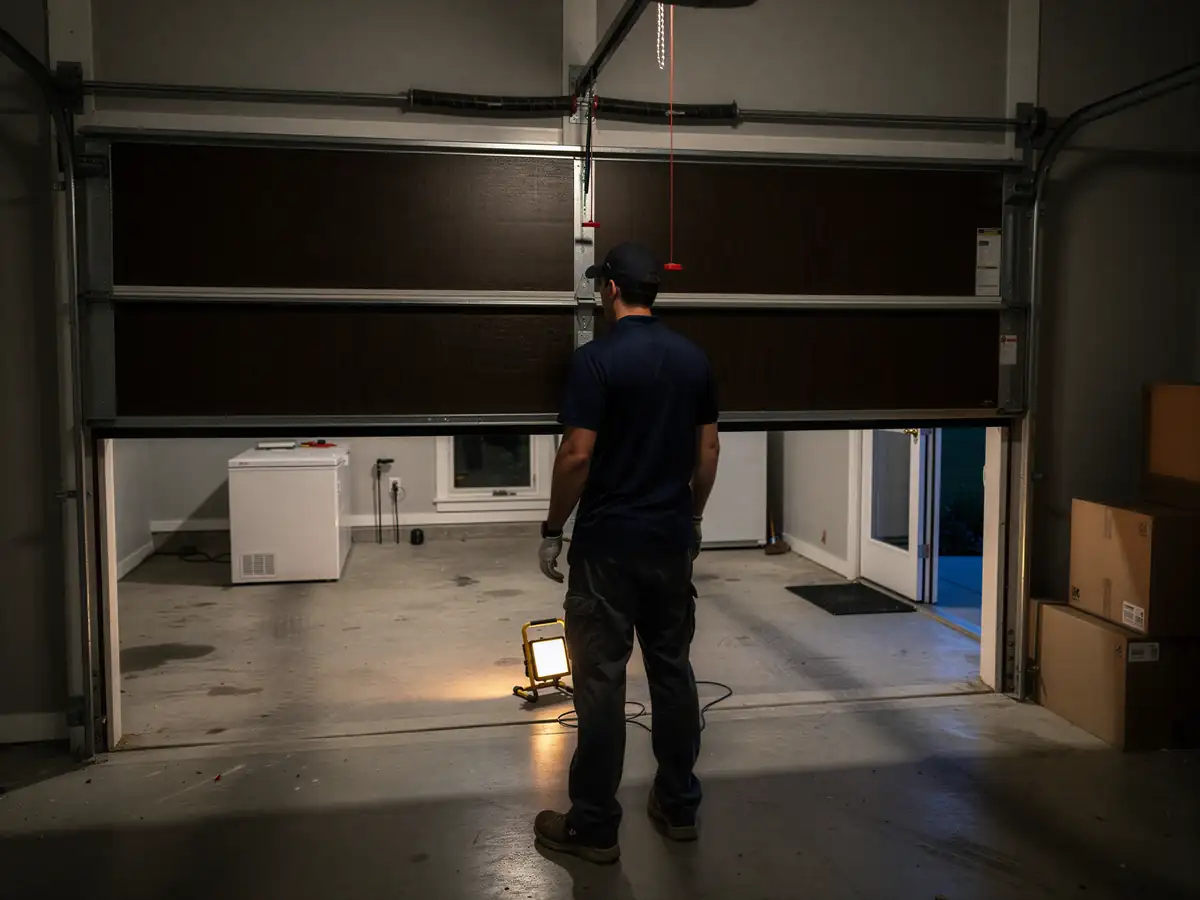
The door won't lift, or it lifts about six inches and the opener strains and stops. Sometimes you'll see the spring itself with a visible gap in the coil - that's the giveaway, not something to debate. Other times it looks fine from a glance but the door feels twice as heavy when you try to lift it by hand with the opener disengaged, which is the real test.
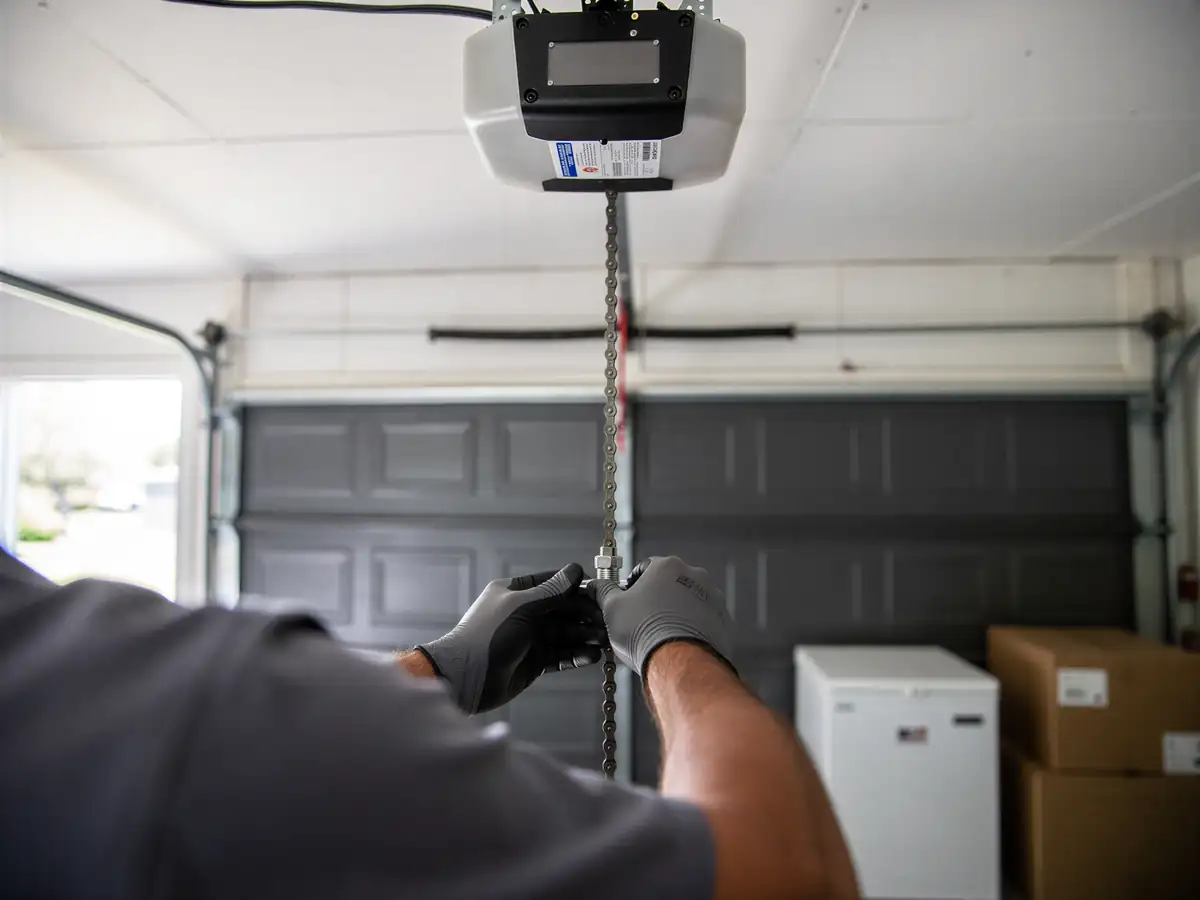
A double garage door on a 1998-built North Aurora house usually runs two torsion springs working together. If only one breaks, the door may still move but it'll bind, lean to one side as it travels, or make the opener's gears whine on every cycle. Left alone, that uneven load wears the opener's drive gear and the remaining spring faster than normal, turning a one-spring job into a two-spring job plus an opener repair.
What the Fix Involves
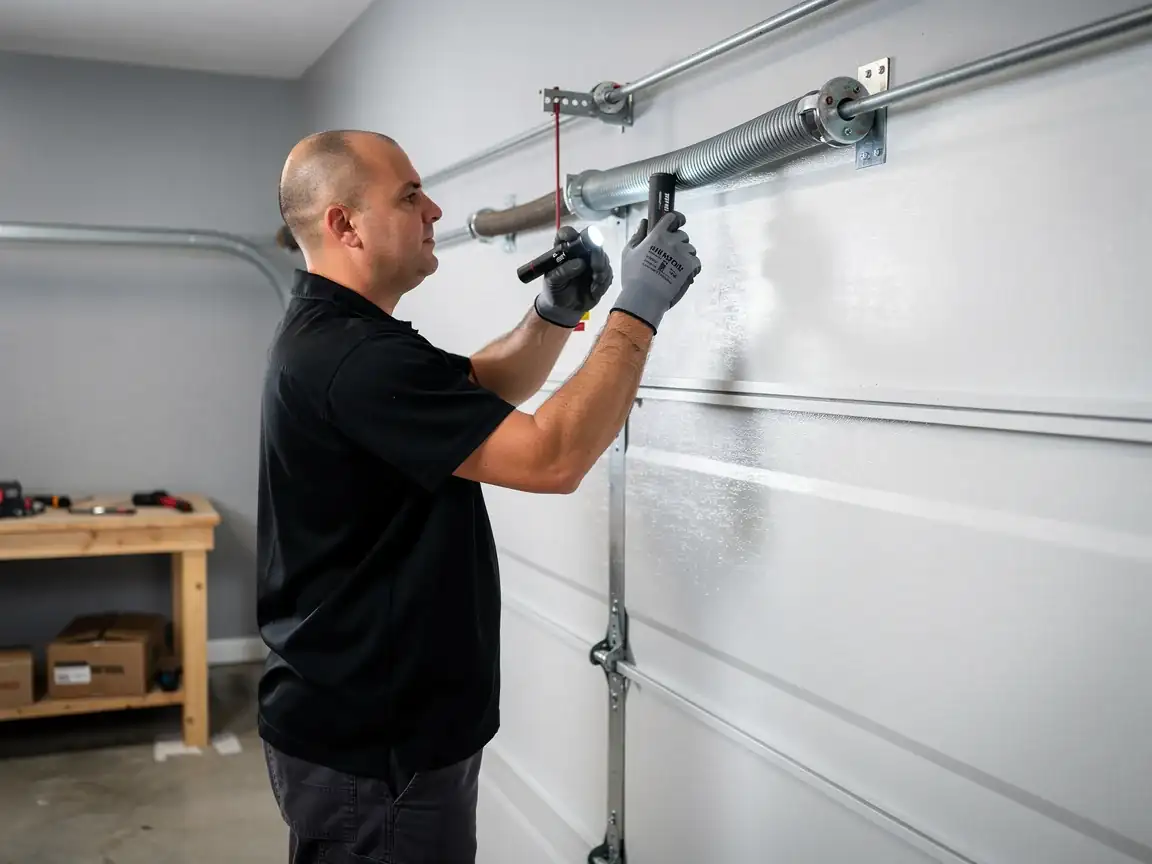
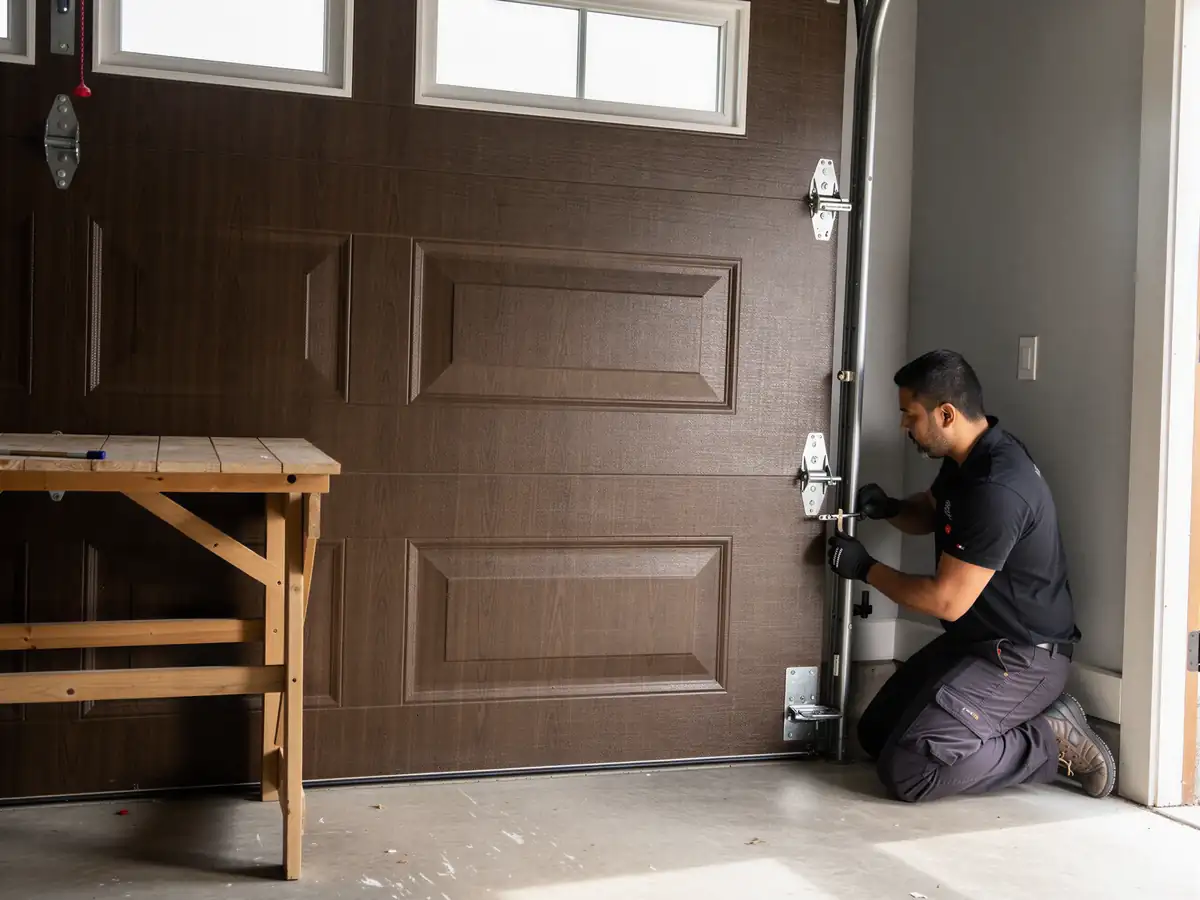
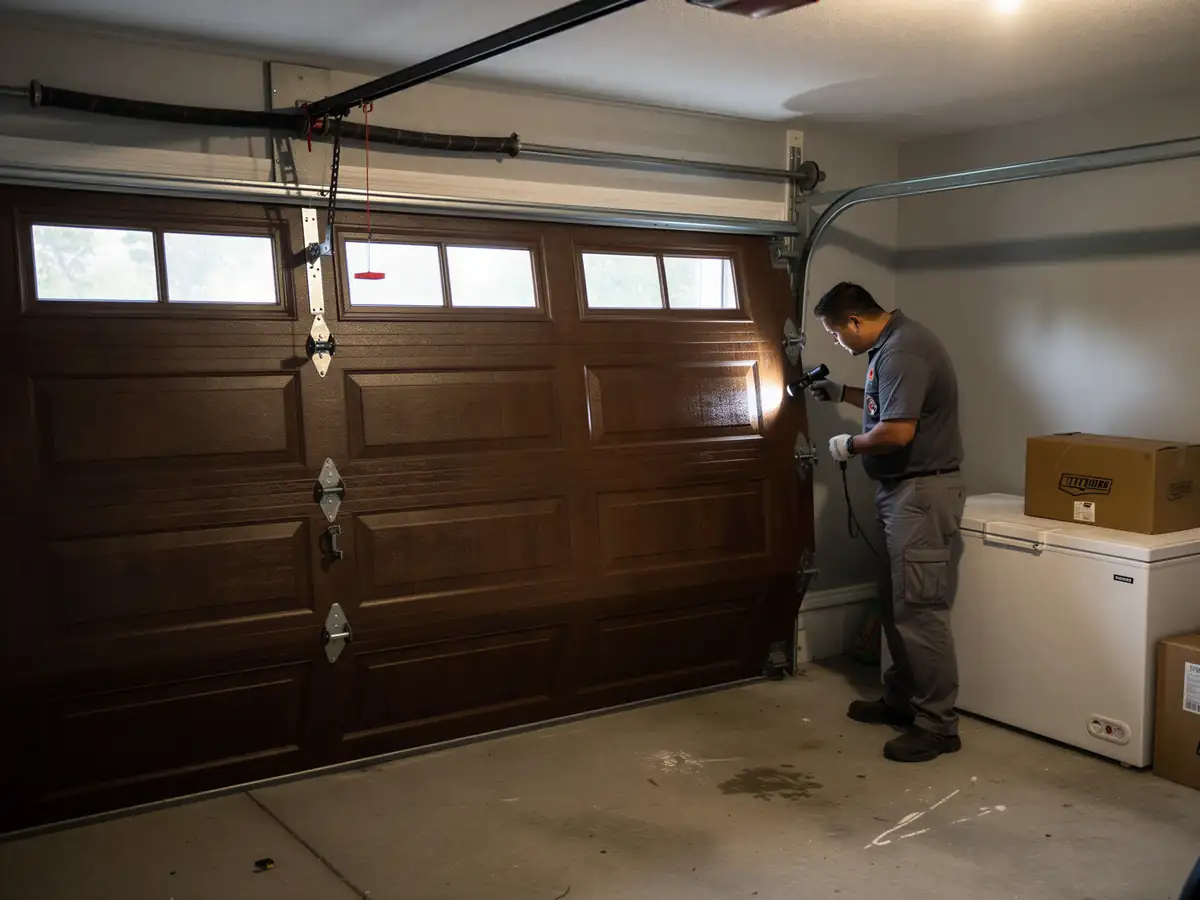
We measure the shaft, the wire diameter, and the wind direction on the existing springs rather than guessing off the door size
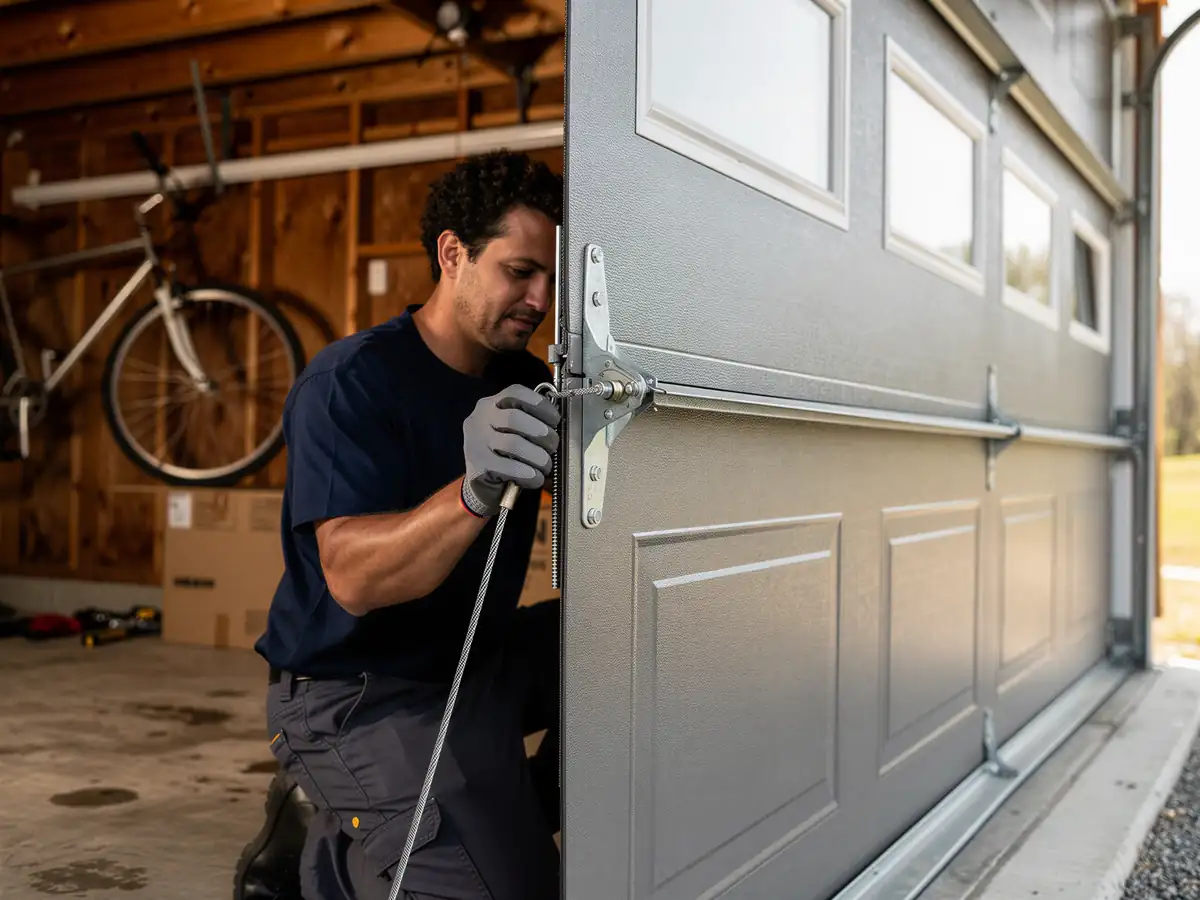
Because two doors built the same year on the same street can carry different spring calibrations depending on door weight and insulation. We replace both springs on a double-spring setup even if only one failed - the surviving spring is on the same clock and it's not worth a second trip four miles out for the same fix.
We also check the cables, the drums at each end of the shaft
And the center bearing plate while the shaft is unloaded, since a spring failure is often the first visible sign that a cable or bearing was already wearing down. On a 1998-era door, these parts are usually original, so if the bearing's dry or the cable's frayed we'll flag it rather than put a new spring on a shaft that's going to need the same visit again in a year.
What Can Go Wrong
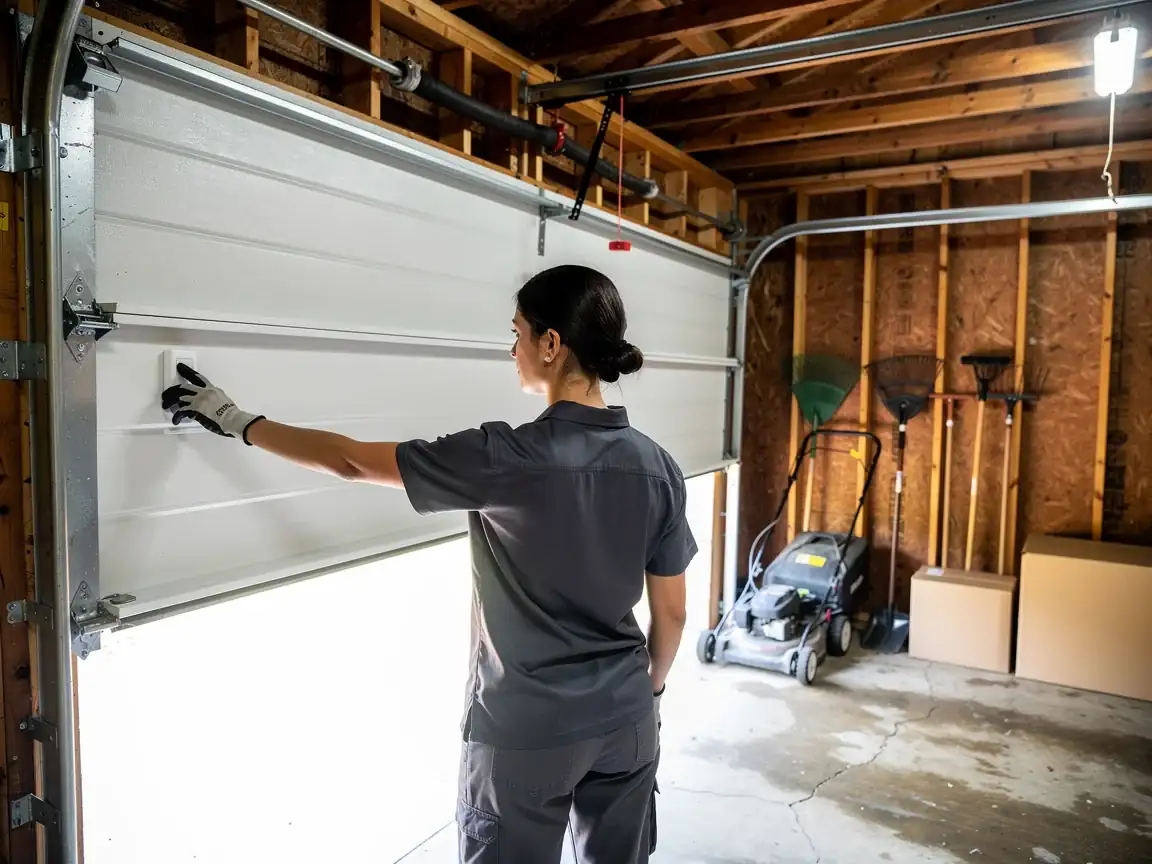
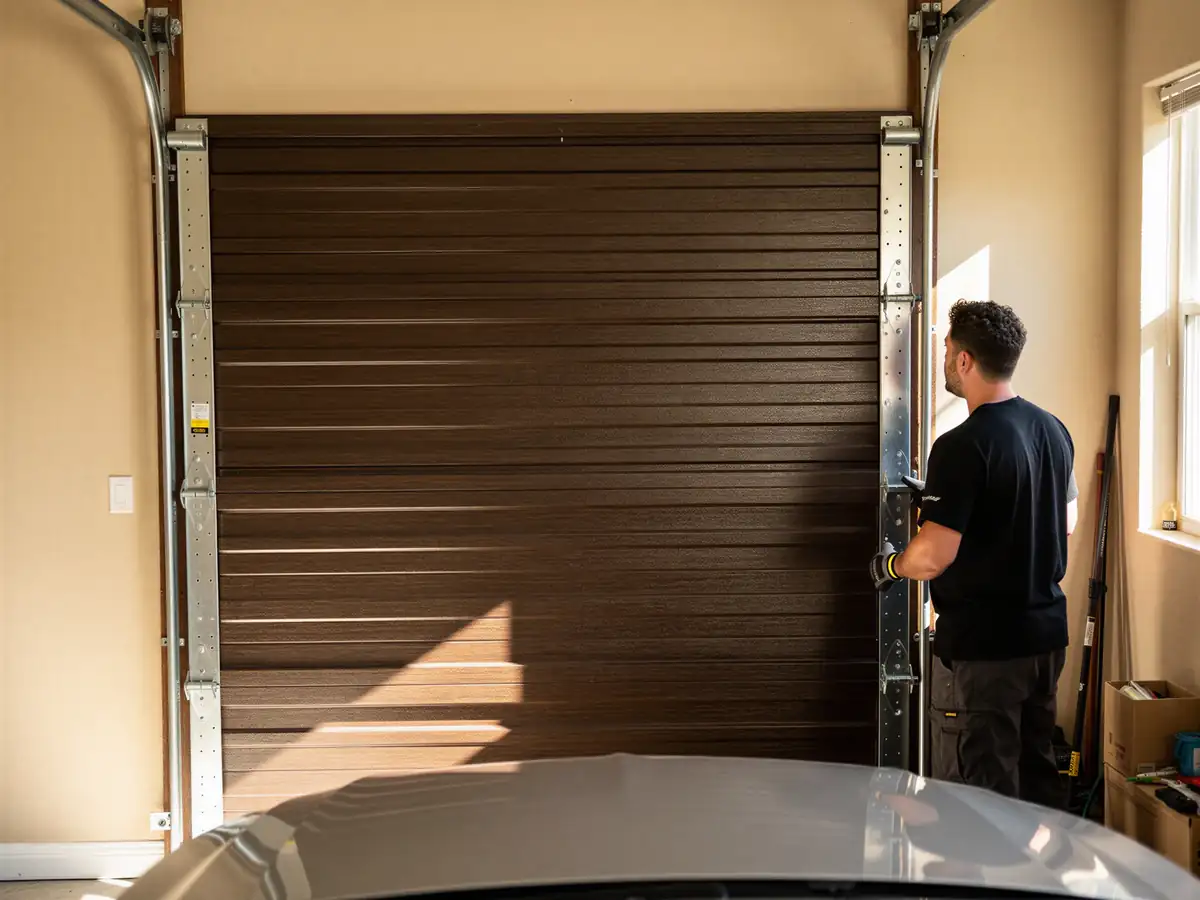
A torsion spring under tension can do real damage if it's unwound with the wrong tools or without the shaft locked down - that's not a DIY corner worth cutting. We've also seen springs replaced with the wrong wire gauge by a previous repair, which looks fine for a few months and then fails early because the door was never balanced to the new spring. We check balance - how the door holds position halfway open with the opener disconnected - before we call the job done.
One honest limitation: if the drums or shaft are worn from years of an undersized spring working too hard, a spring swap alone won't fix it, and we'll tell you that instead of selling you a spring that'll fail again in six months.
Doing It Yourself
We won't talk you through winding a torsion spring yourself. The tension stored in a wound spring is enough to break fingers or worse, and the winding bars and shaft clamps needed to do it safely aren't something most garages have lying around. What you can safely check yourself is whether the door is balanced - disconnect the opener, lift the door halfway by hand, and see if it holds. If it drops or shoots up, the spring is the issue and it's time to call rather than keep opening it with the opener and burning out the motor.