What Causes It Around Here
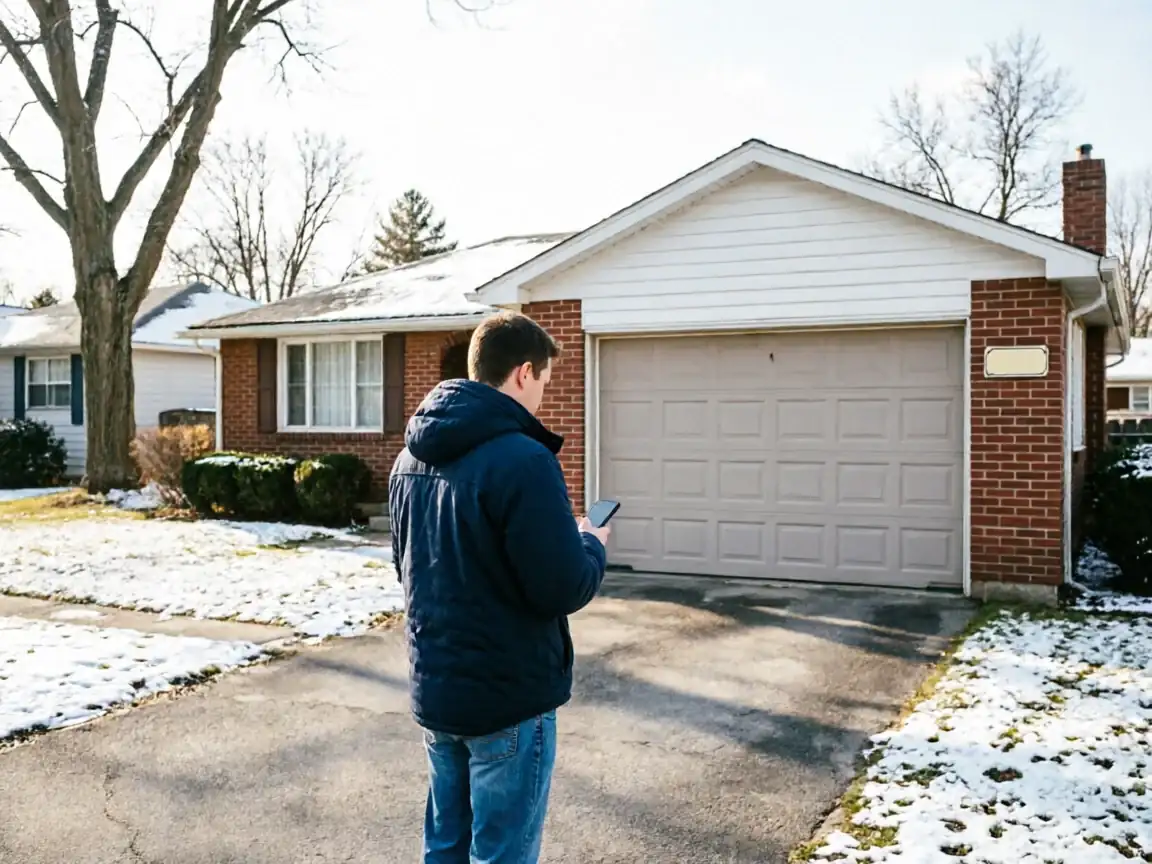
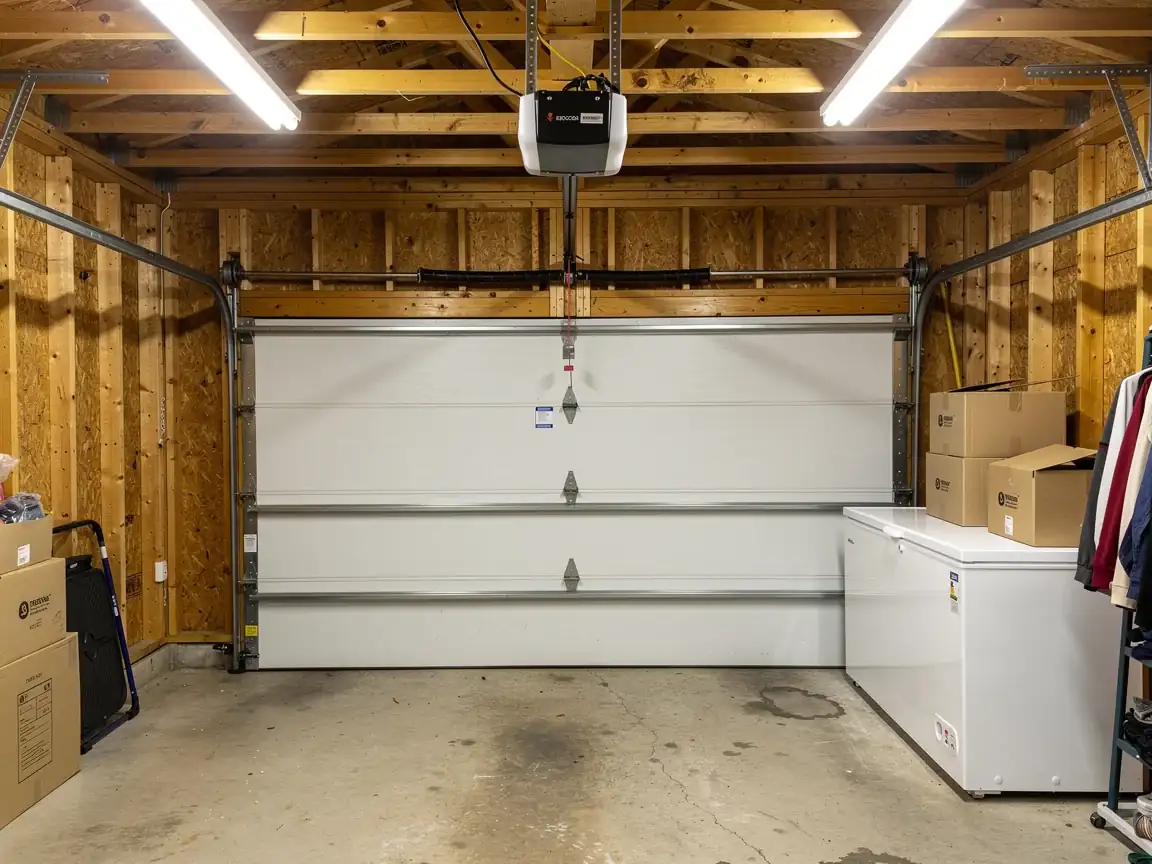
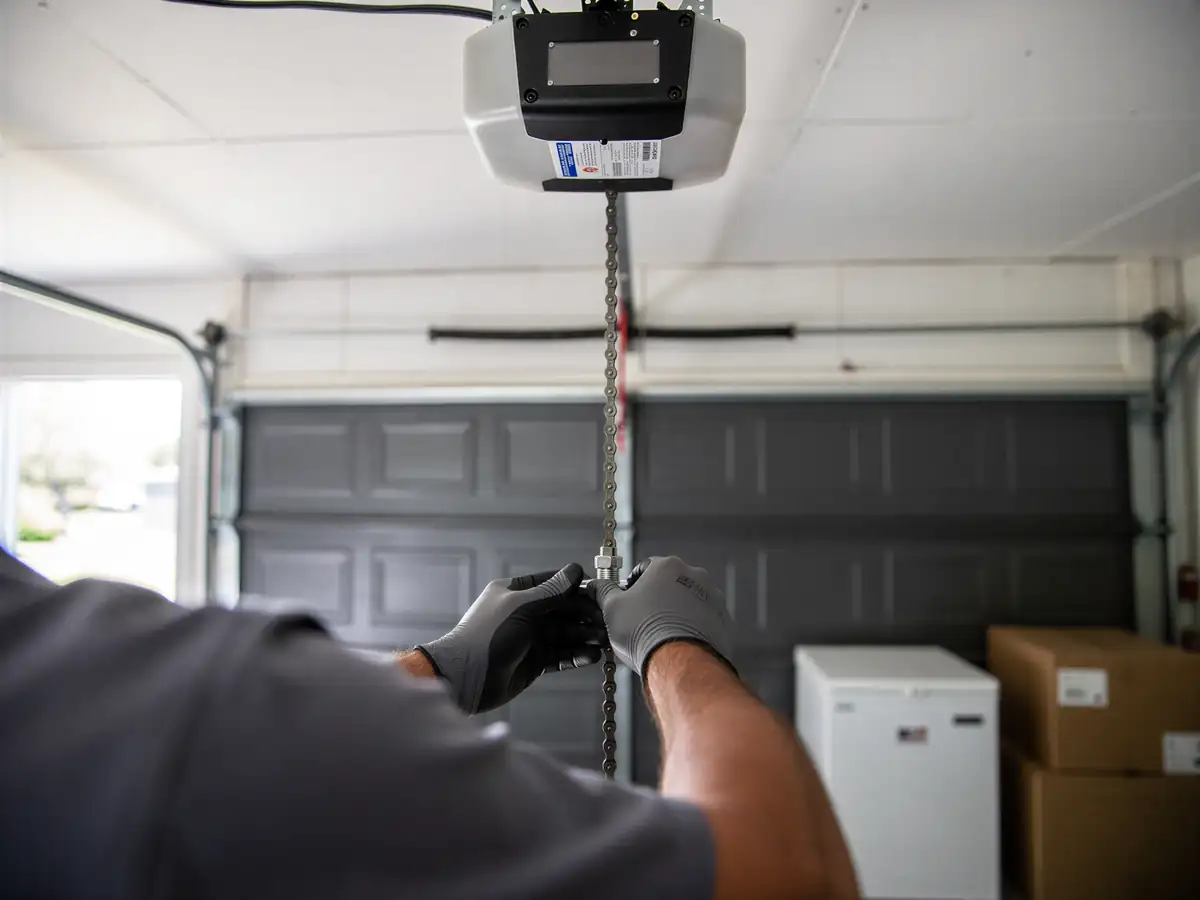
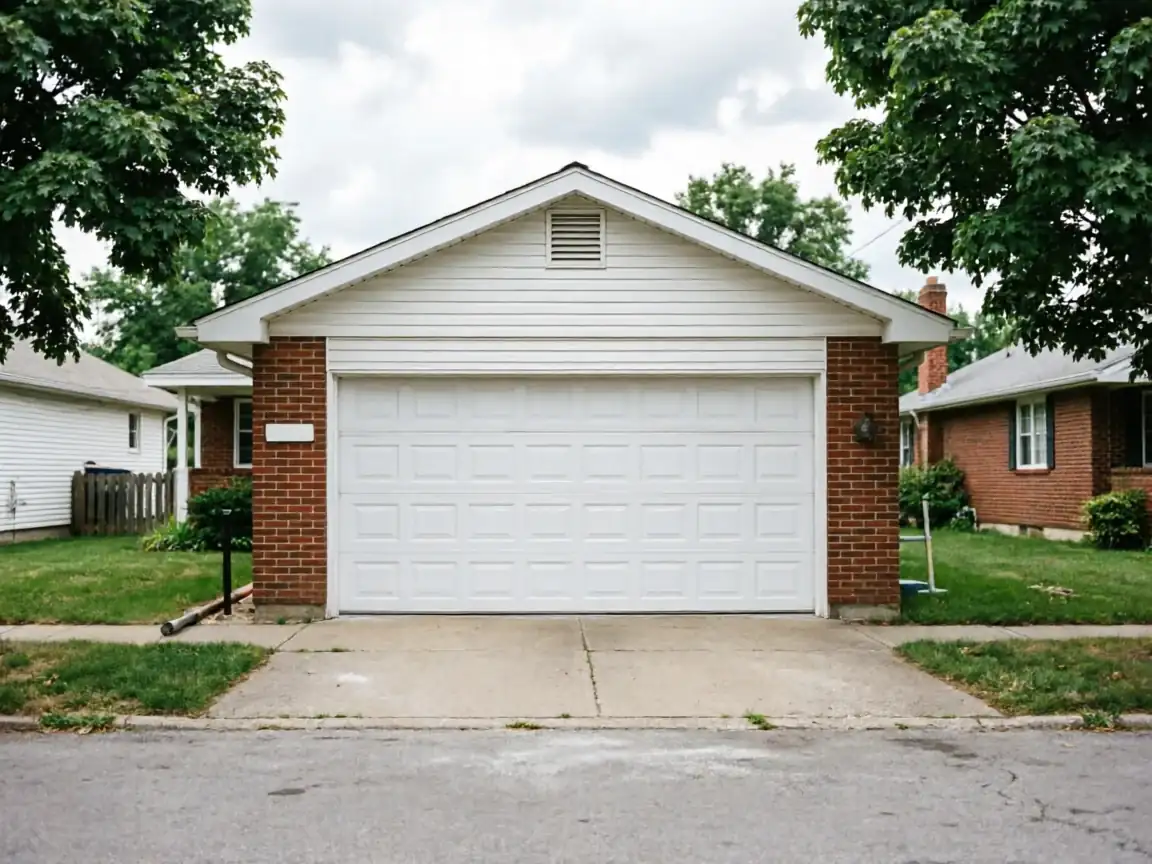
Most of North Aurora went up around 1998, which puts it well past the 1981 median build year you see across the wider Aurora service area. That matters because the doors here are a different generation of hardware than what you find in the older pockets nearby. Builder-grade steel sectional doors from that stretch of the late 1990s are almost always 16x7 double or 9x7 single, non-insulated or single-layer polystyrene, with a torsion spring sized to the builder's minimum spec rather than the door's actual weight. Those springs are now pushing 25-plus years old. In a cold-moderate climate, steel fatigues faster through repeated freeze-thaw cycles on the coil, and a spring that's been doing the job since the house was framed is near the end of its rated cycle count regardless of how it looks. The second common cause is the opener itself - chain-drive units from that era are mechanically simple but the logic boards and sensors weren't built for a 25-year service life, so failures show up as intermittent rather than total.
The Symptom
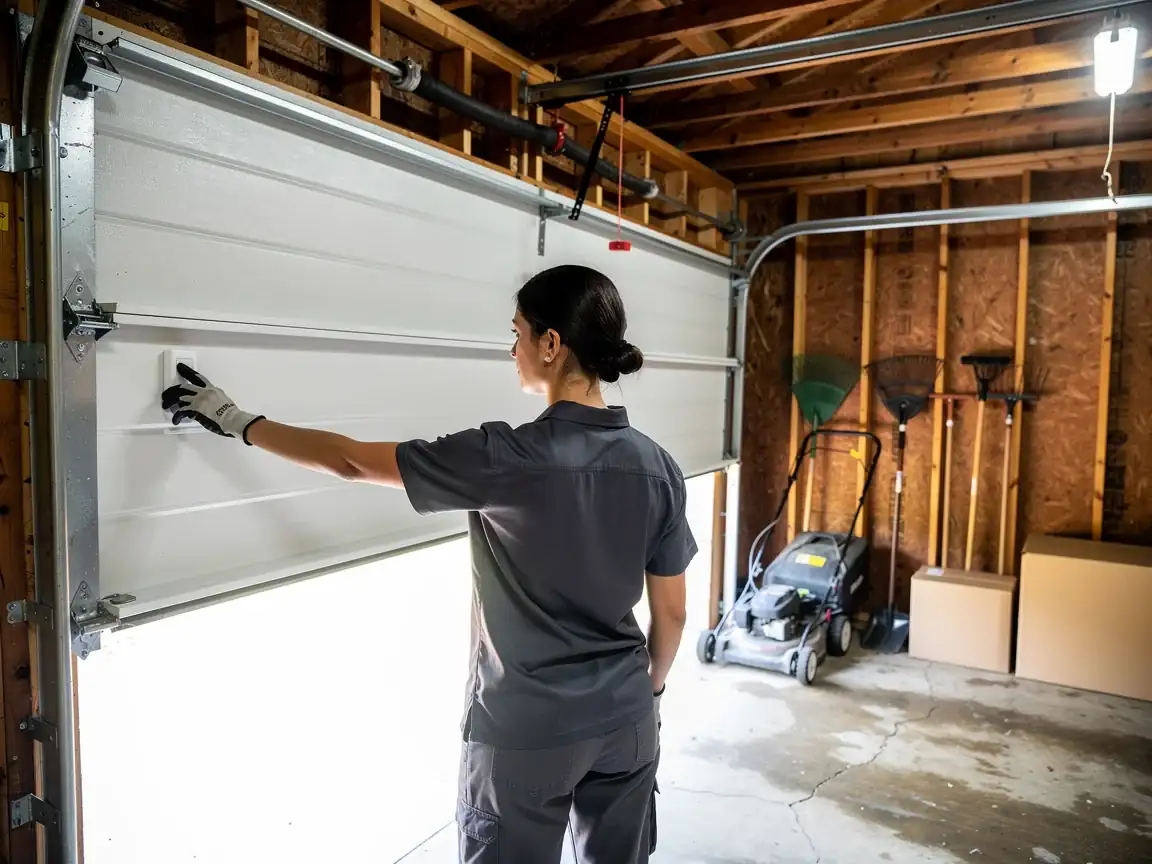
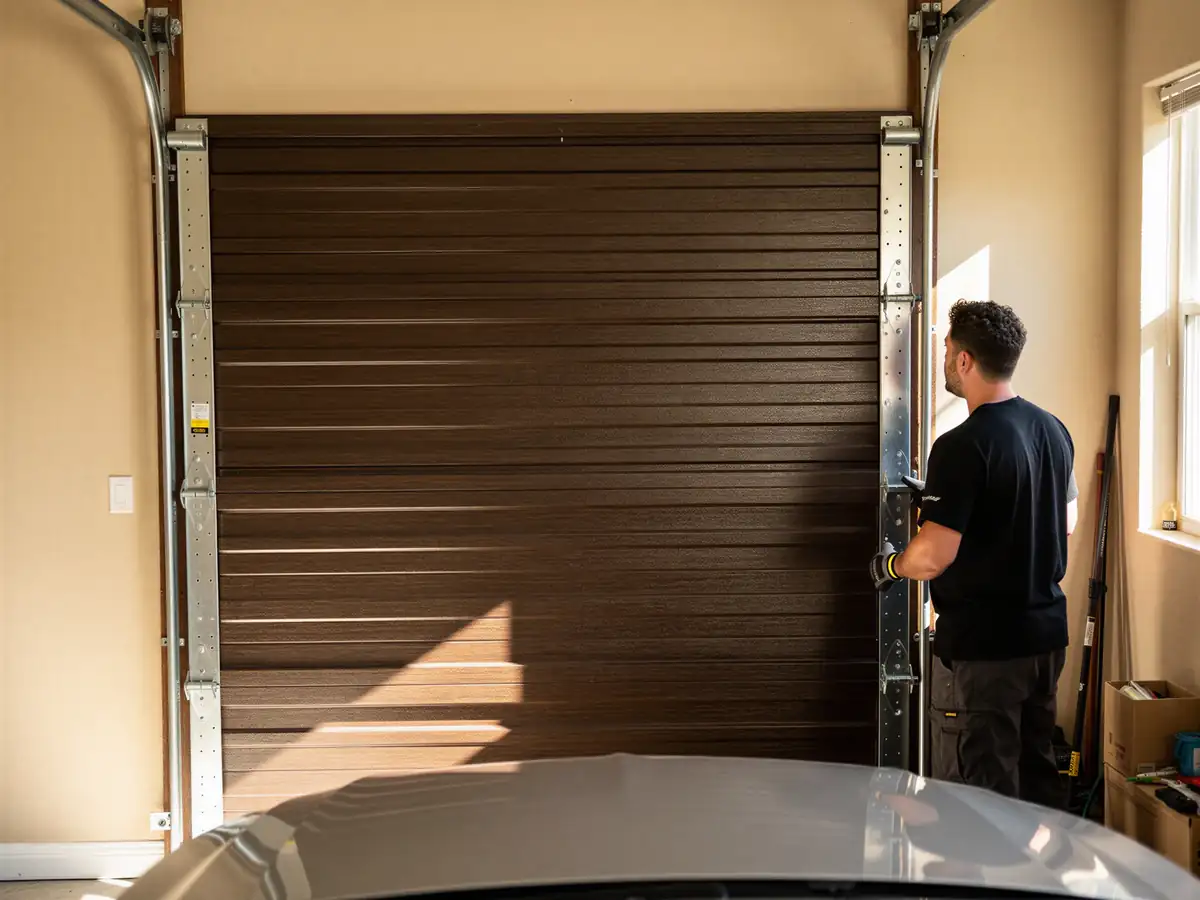
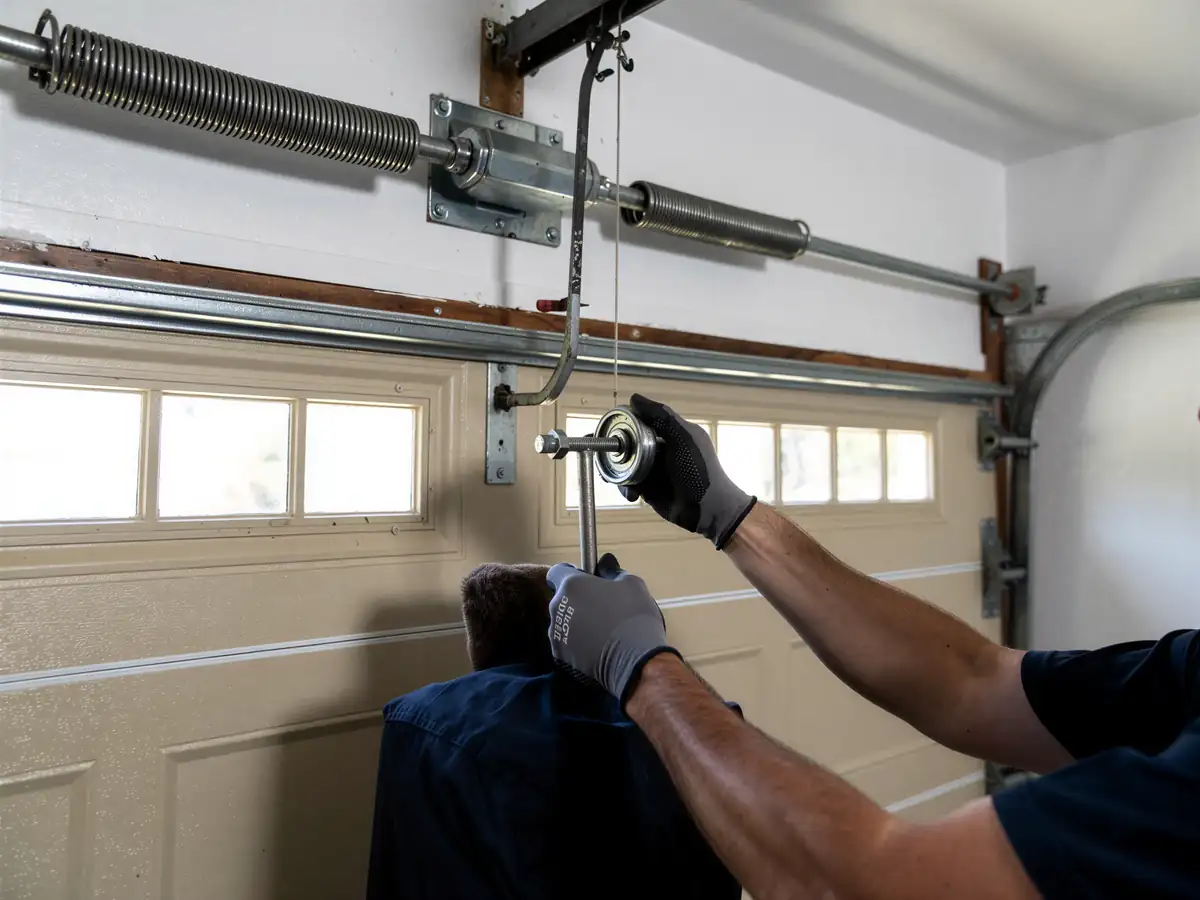
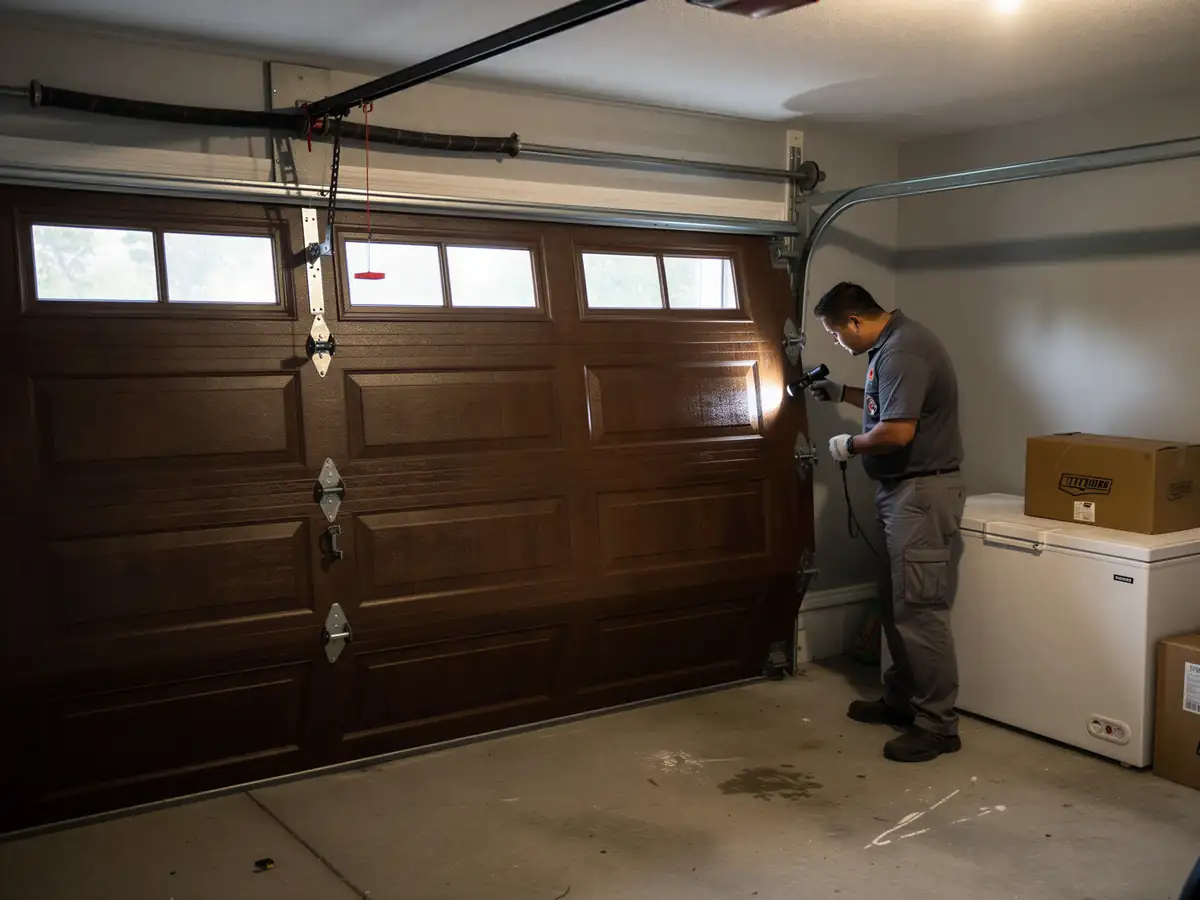
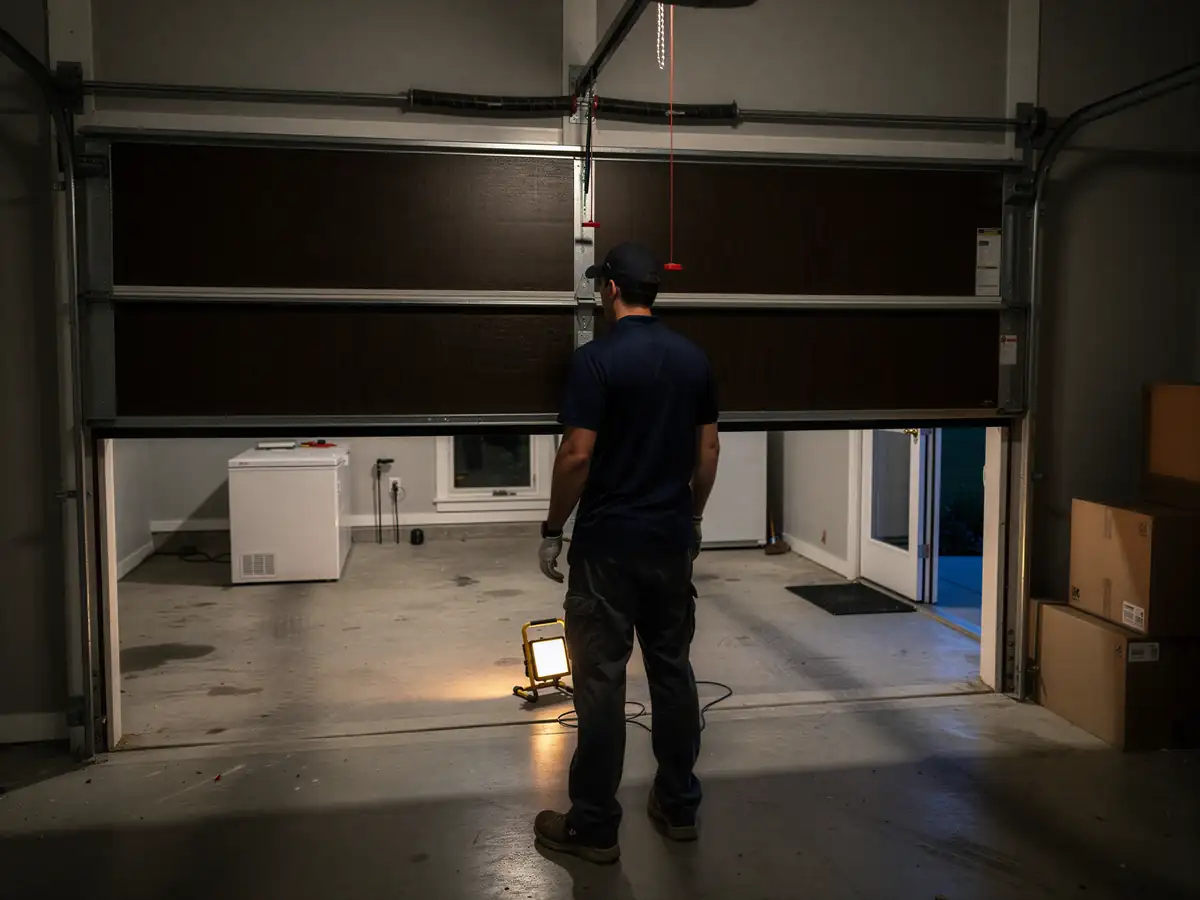
The door feels heavy to lift by hand, or the opener strains and reverses partway up. Sometimes you hear a loud bang from the garage - that's the torsion spring letting go, not the opener. A door that slams down the last foot instead of settling is usually a spring that's lost tension gradually rather than snapped outright. On the 16x7 doubles especially, uneven lift - one side rising faster than the other - points to a spring or cable problem rather than the opener, since a single center-mounted torsion spring on an older builder setup has to pull evenly across the whole width of the door.
What Can Go Wrong
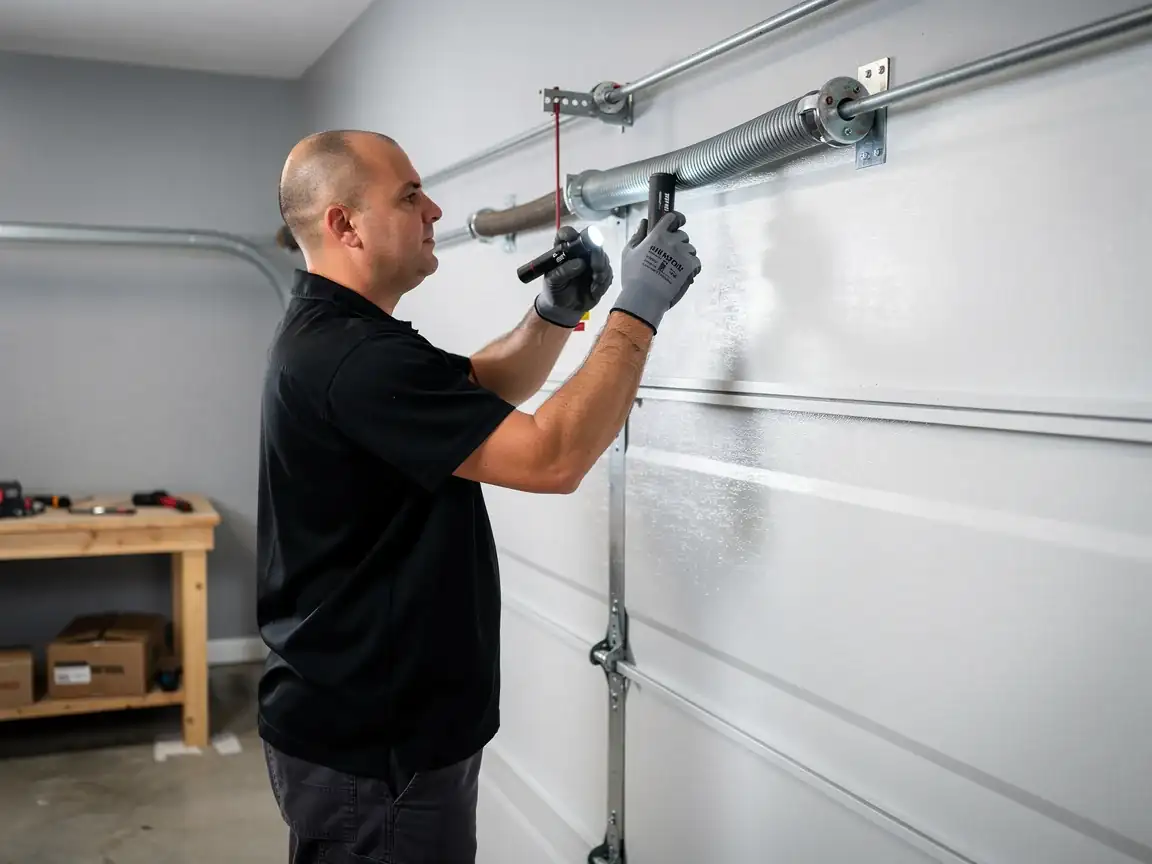
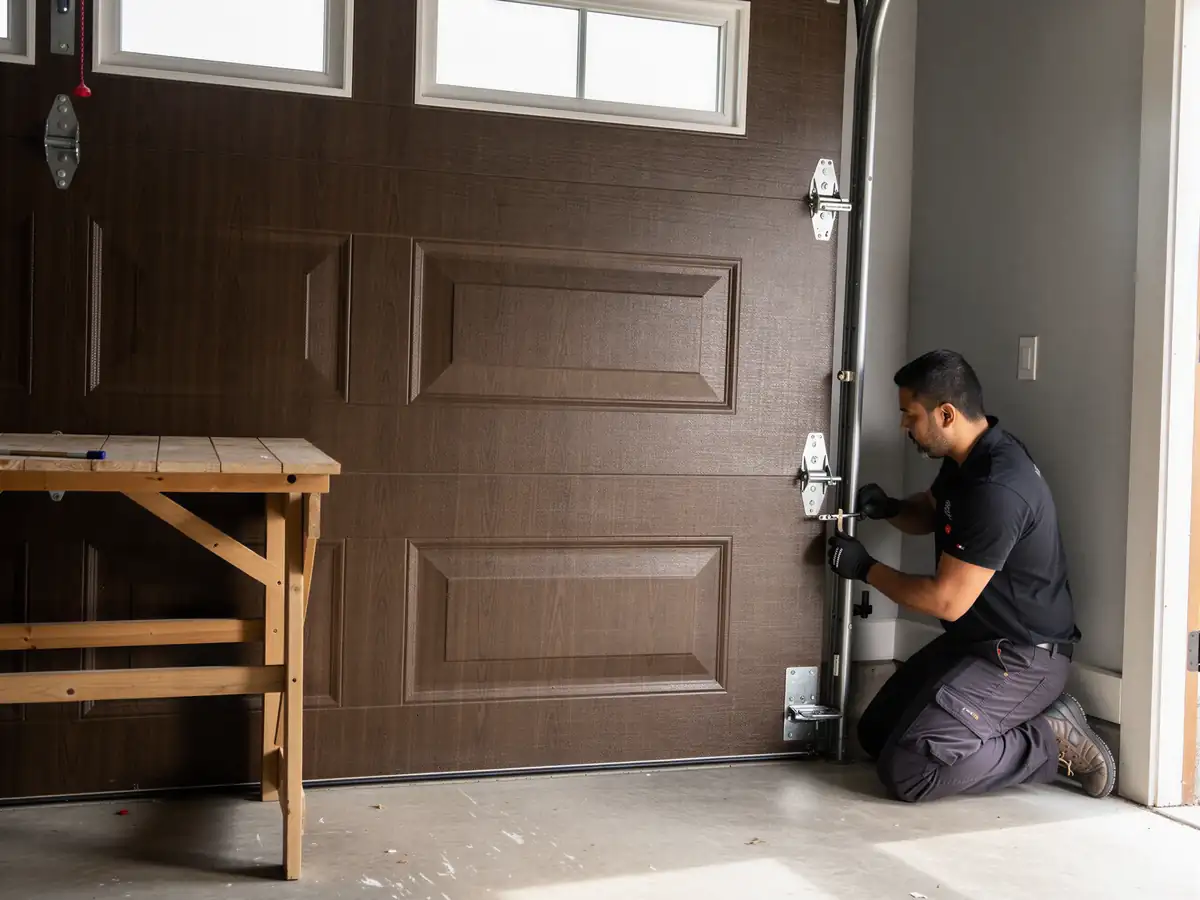
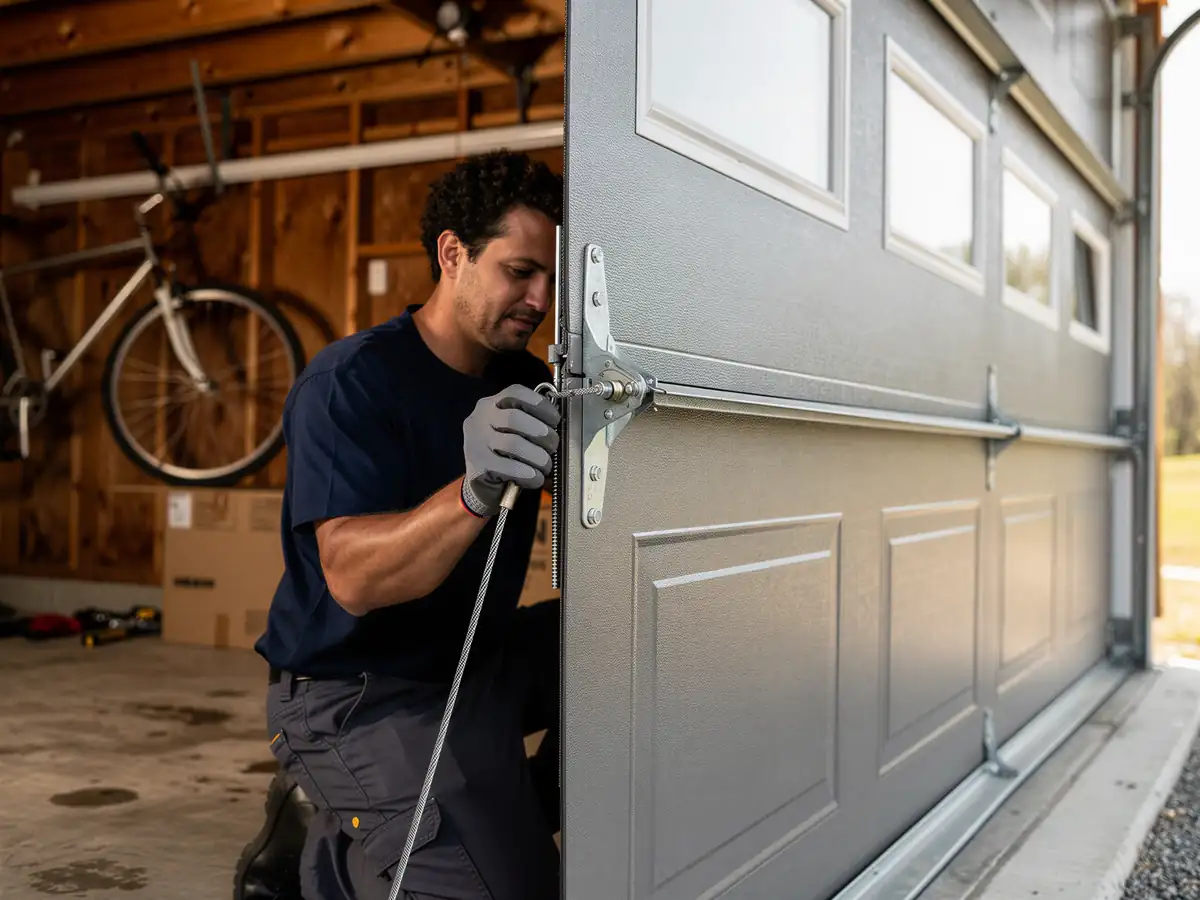
Torsion springs are under enough tension to break a bone or worse if the winding bars slip, and that risk doesn't go down because the door looks ordinary. The other failure we see on these builder-grade doors is a spring sized by eye instead of by weight - too light and it burns out the opener motor within a year, too heavy and the door won't stay down. On doors from this build era specifically, the drums are sometimes an older style that doesn't match newer off-the-shelf cable, so we check that before quoting a cable-only repair.
Doing It Yourself
Rollers, weatherstripping, and tightening loose hardware are reasonable DIY jobs. Torsion spring replacement is not - we won't talk you through that one over the phone, and we'd rather lose the job than have you attempt it. If your opener is original to the 1998 build and the logic board is failing, replacing the whole unit is usually cheaper than chasing intermittent electrical faults on a board that old, and we'll tell you that straight rather than billing for diagnostics on something not worth saving.