What Causes It Around Here
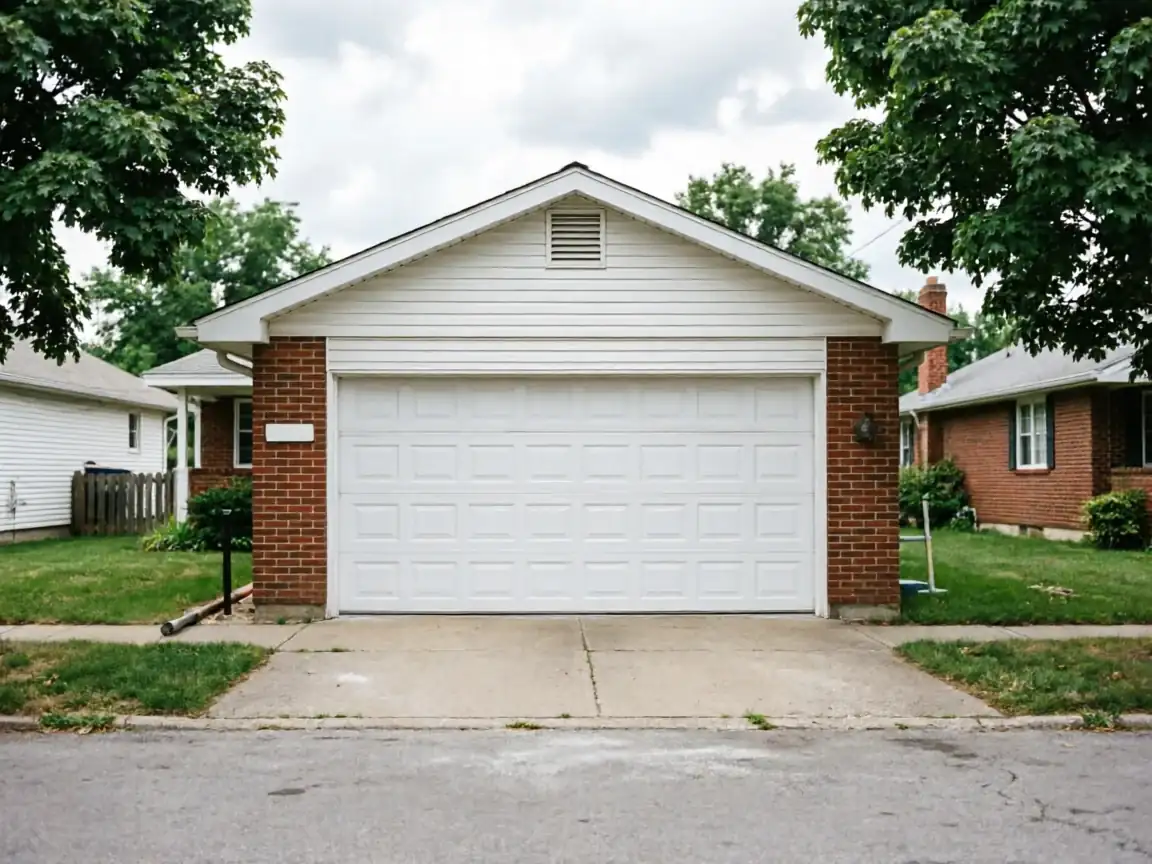
North Aurora's housing stock centers on a median build year of 1998, a good two decades newer than the 1981 median across the wider service area we cover out of Aurora. That matters for off-track failures because doors from this era mostly run on roll-formed steel track with nylon rollers instead of the older steel-roller setups you'd find in a 1960s subdivision. The track itself is lighter gauge than what went into older construction, and the bracket screws that hold it to the jamb strip out sooner, especially after a bottom roller walks off its edge and starts dragging the track sideways. Add the cold-moderate winter swings this region gets and you get metal that contracts just enough to loosen a bracket that was already marginal. We also see a fair number of off-track calls that trace back to a car bumper or a kid's bike clipping the bottom section, which bends the track enough that the rollers can't track it anymore - this never changes by town, but it shows up often enough here to mention. The short version: newer doesn't mean sturdier hardware, it means different failure points than what a 1980s-era door would show.
The Symptom
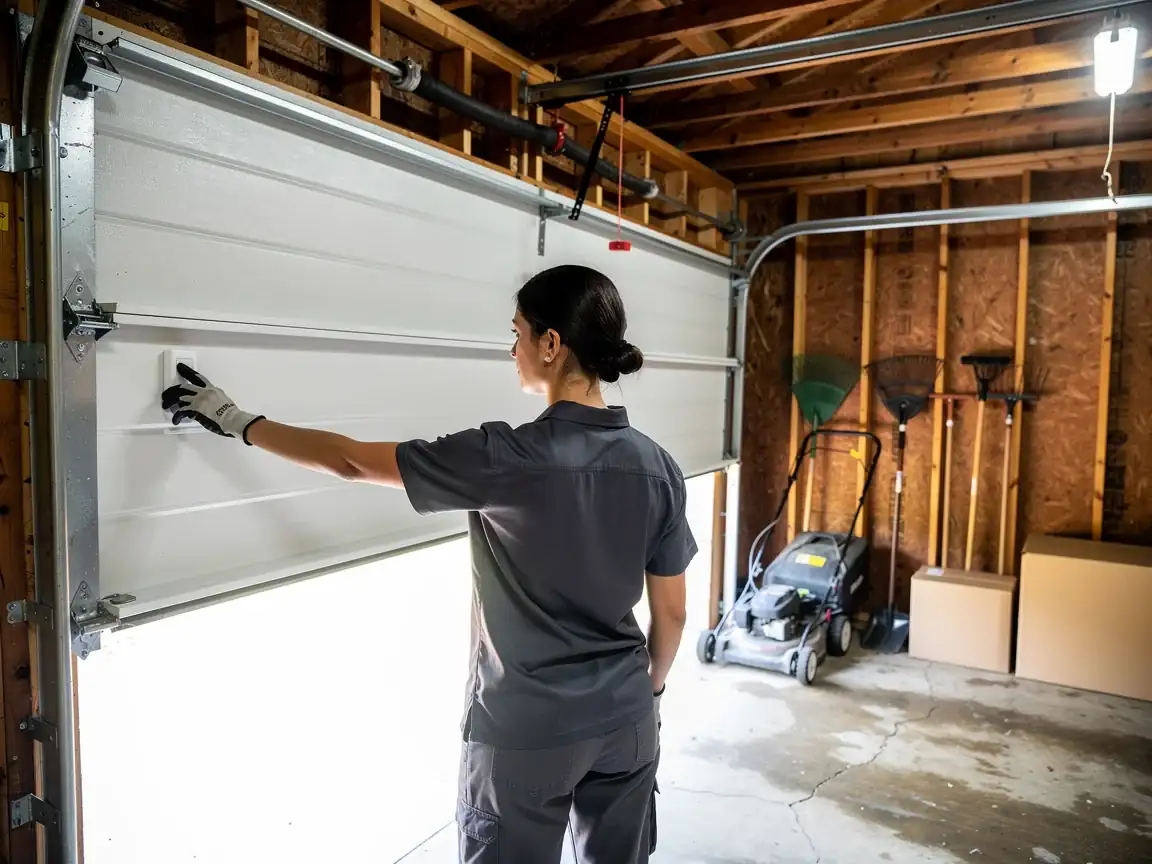
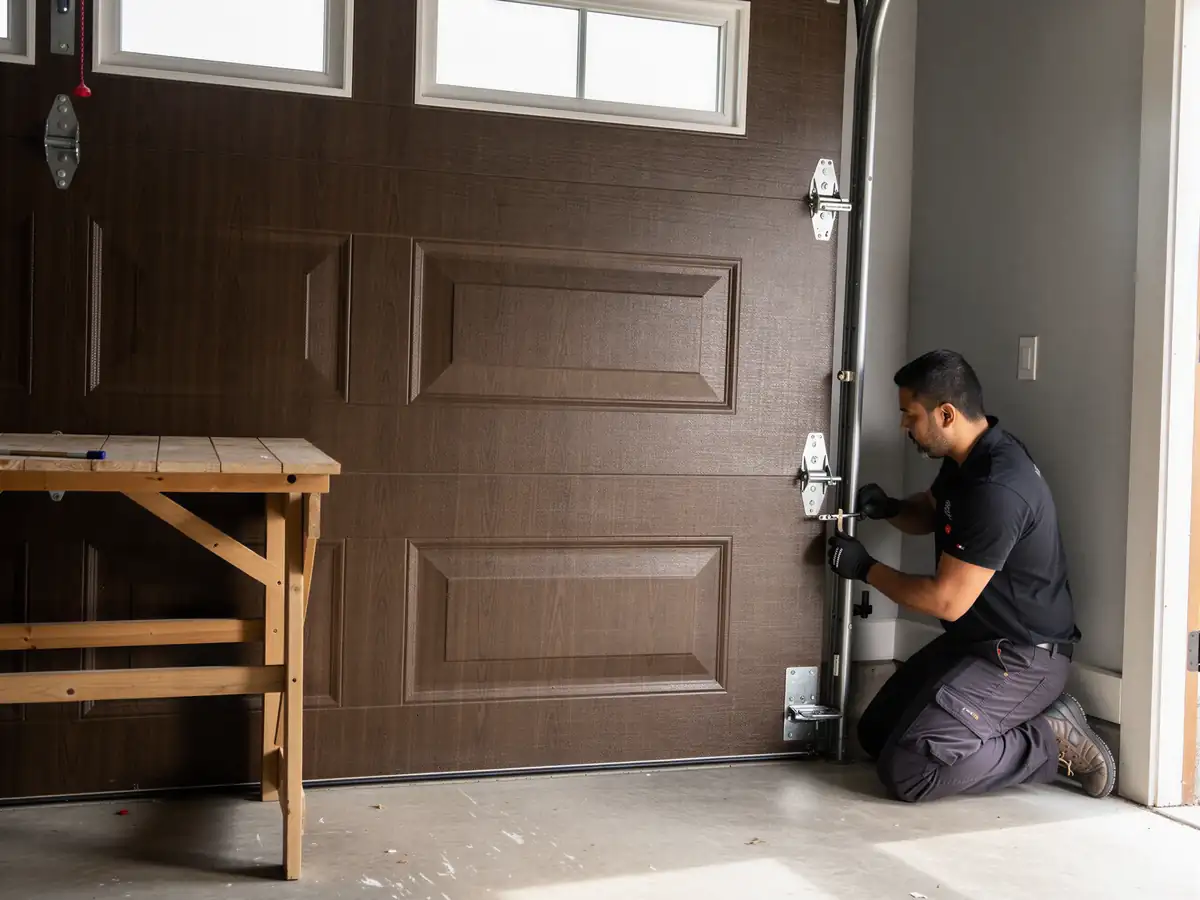
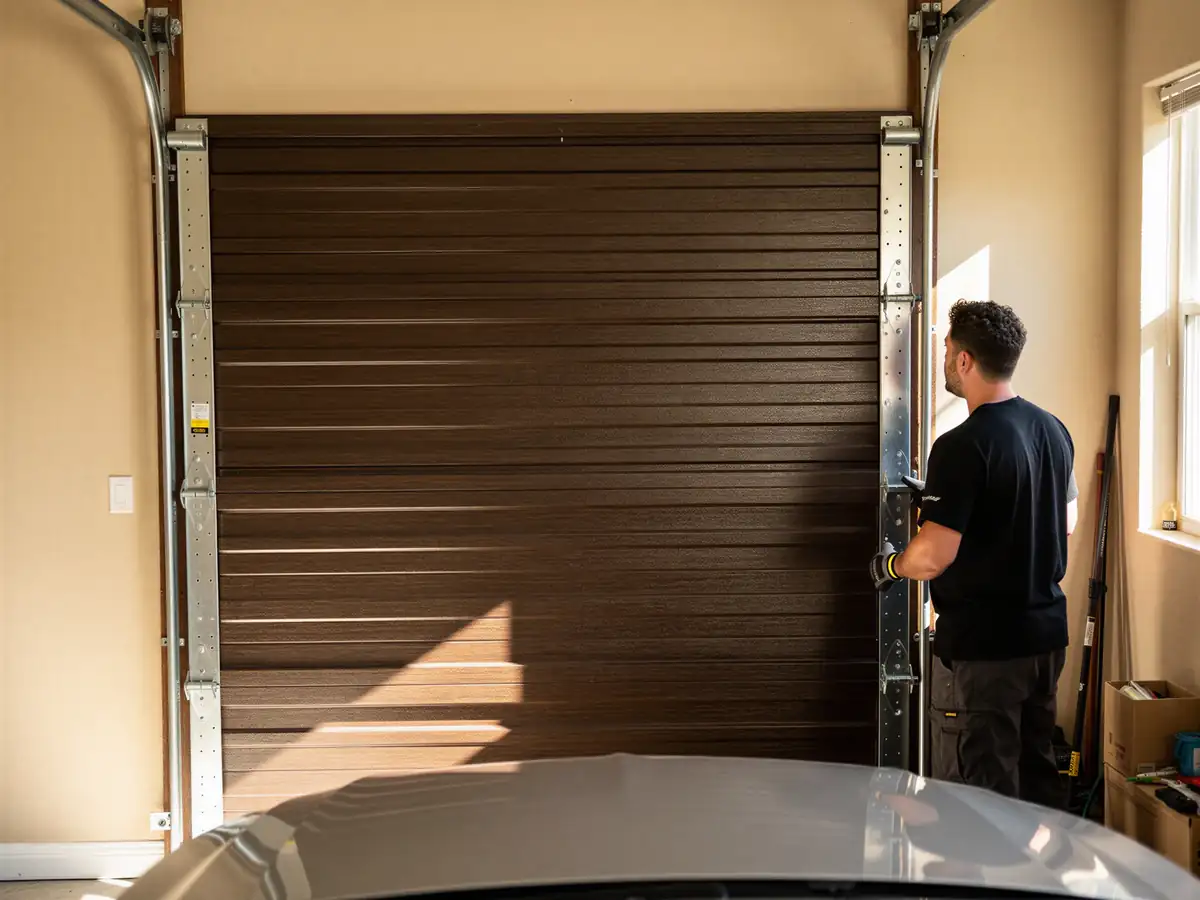
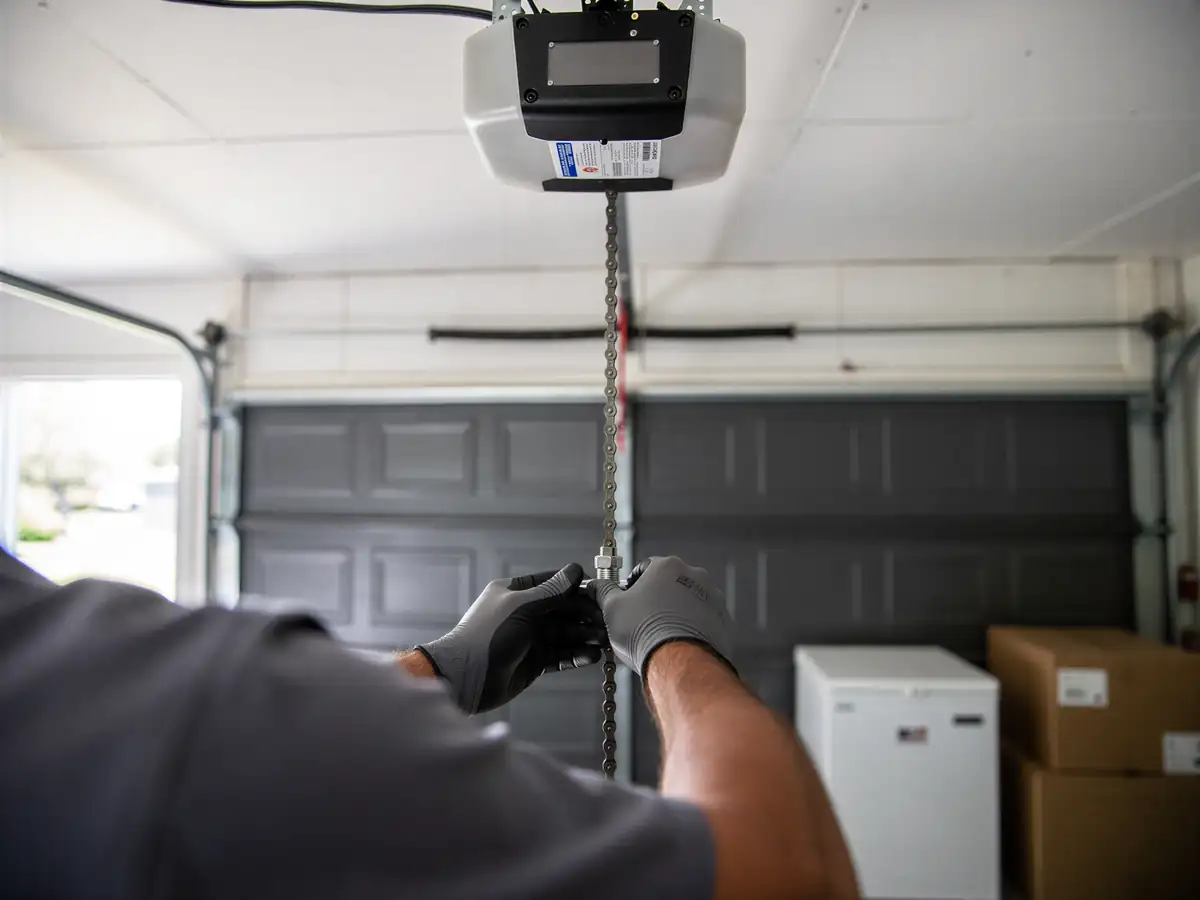
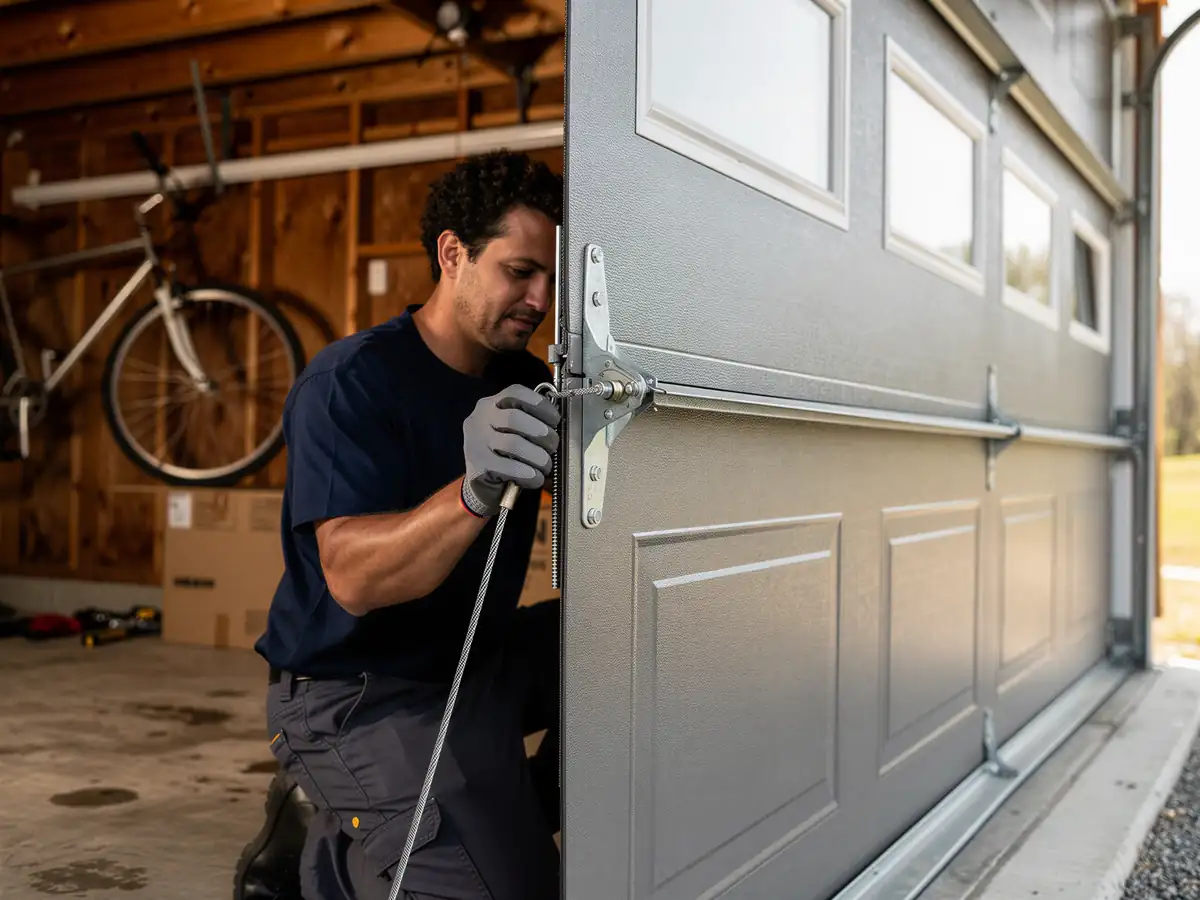
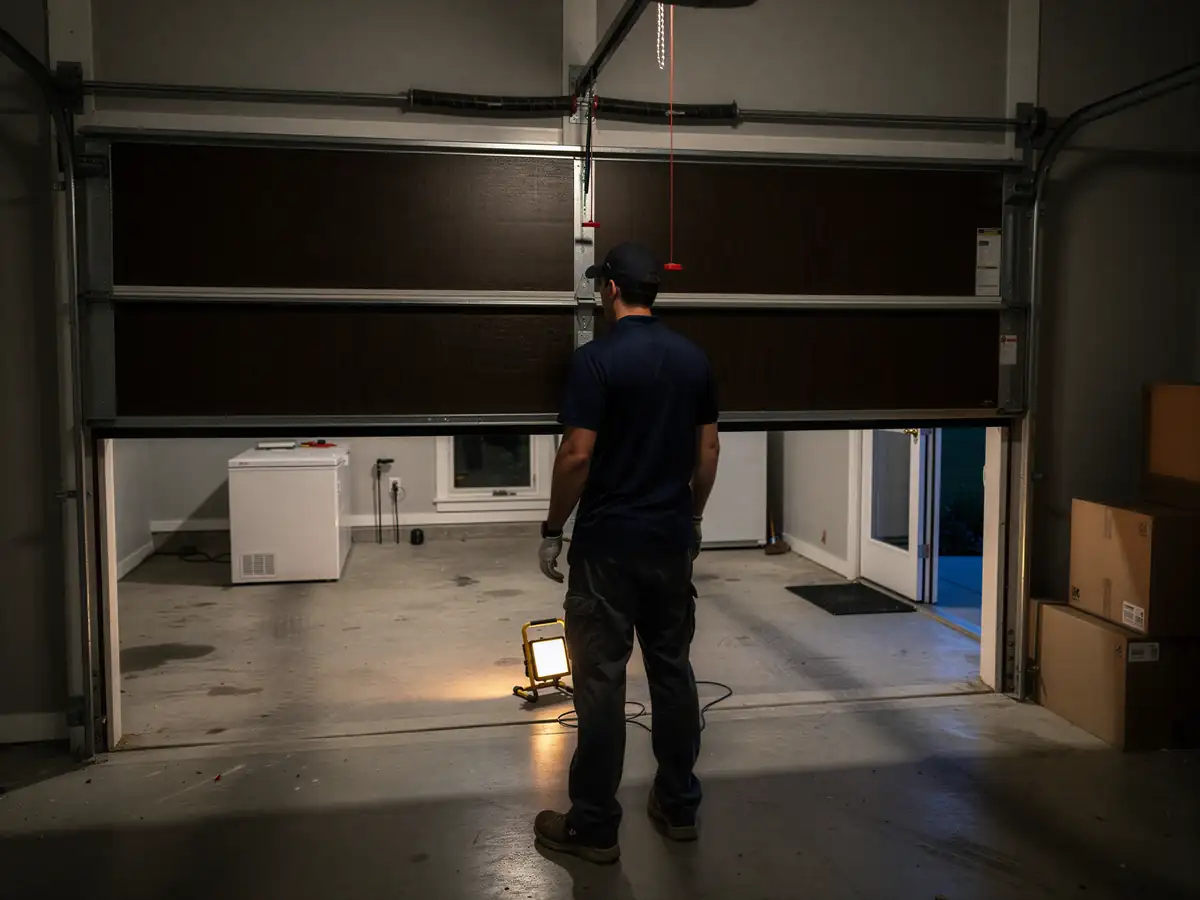
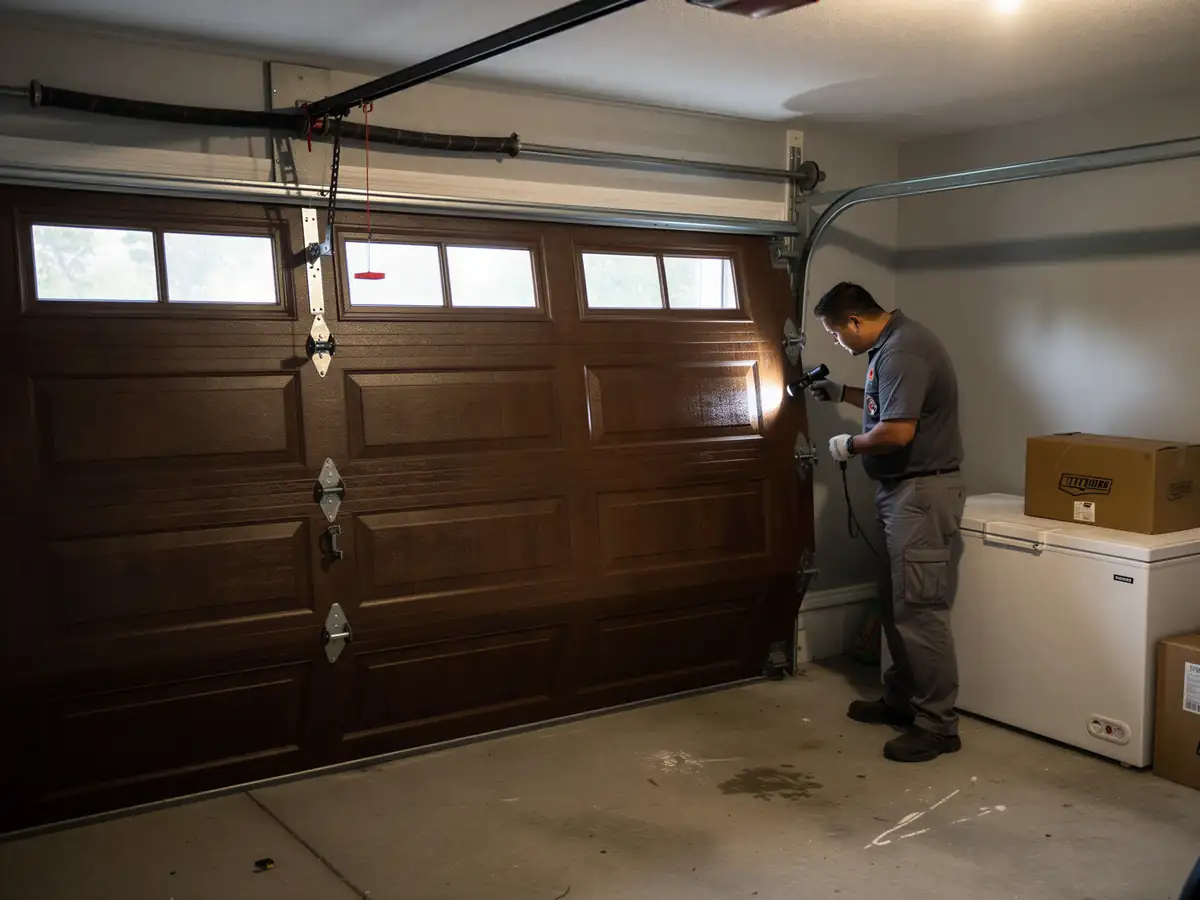
A door that's come off its track usually doesn't look subtle. One side sits lower than the other, the panel is visibly tilted or buckled where it meets the track, and the door either won't move at all or grinds partway and stops. Sometimes it's quieter than that - a single roller has popped out of the track channel but the door still looks mostly square, and the only clue is a scraping noise on the last foot of travel before the opener reverses itself. On the newer track sections common in this area's 1998-median housing, you'll often hear a metallic pop at the moment it happens, since the lighter track flexes and snaps back rather than bending slowly. If the door was moving when it jumped track, do not run the opener again - repeated attempts can bend the track further or pull the bracket out of the jamb, turning a roller adjustment into a track replacement.
What Can Go Wrong
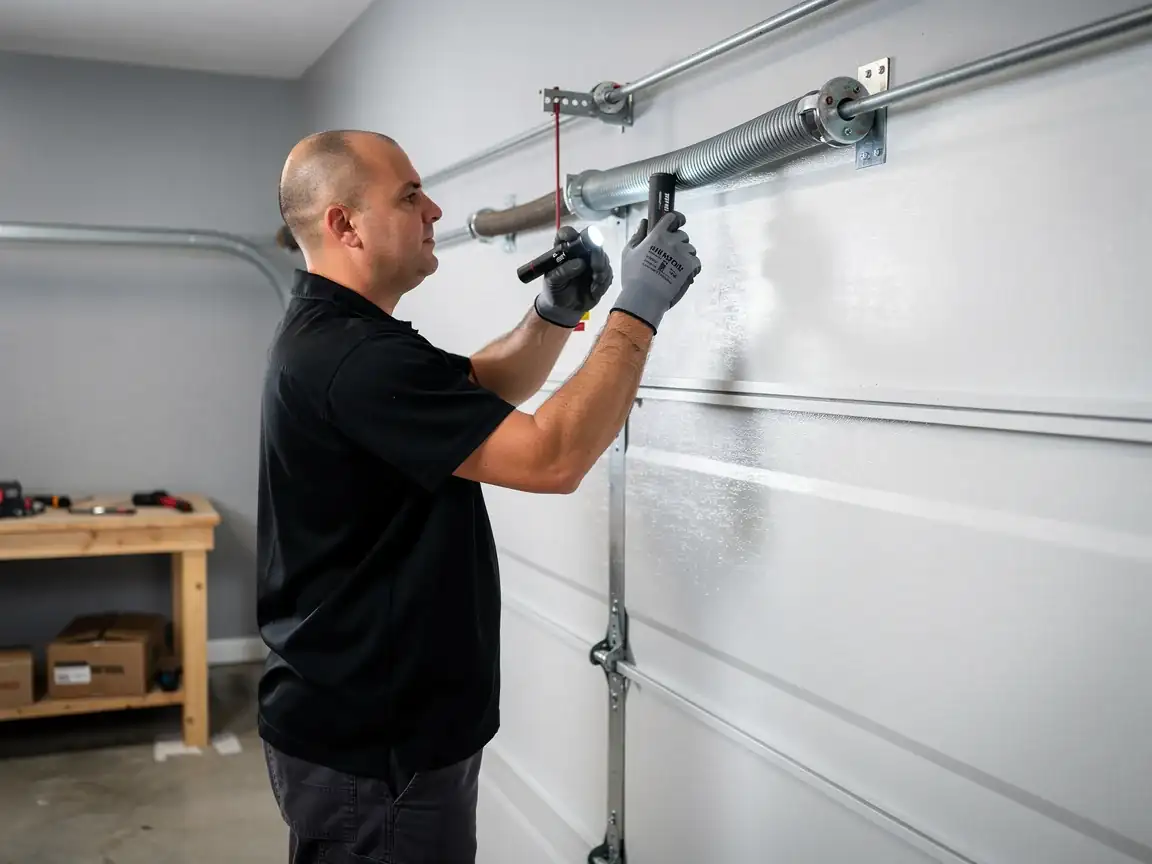
The part people underestimate is how close an off-track door runs to a spring job. If the door jumped track because a cable frayed or a spring lost tension unevenly, re-hanging the door without addressing that root cause just sets up the next failure, and sometimes a worse one - a door under uneven spring tension can jump track again within the first few open-close cycles. We also see owners try to force the door back manually before checking whether the opener's travel limits got thrown off in the process; running the opener against a misaligned track can crack a panel or snap a roller stem. At a median household income of $111,781 in North Aurora (well above the $106,211 median across the broader service area, per F7), the honest math usually favors repair over replacement for off-track calls specifically - this is a bracket-and-track fix, not a structural failure of the door panel, and replacing the whole door over a dislodged roller is money spent on the wrong problem.
Doing It Yourself
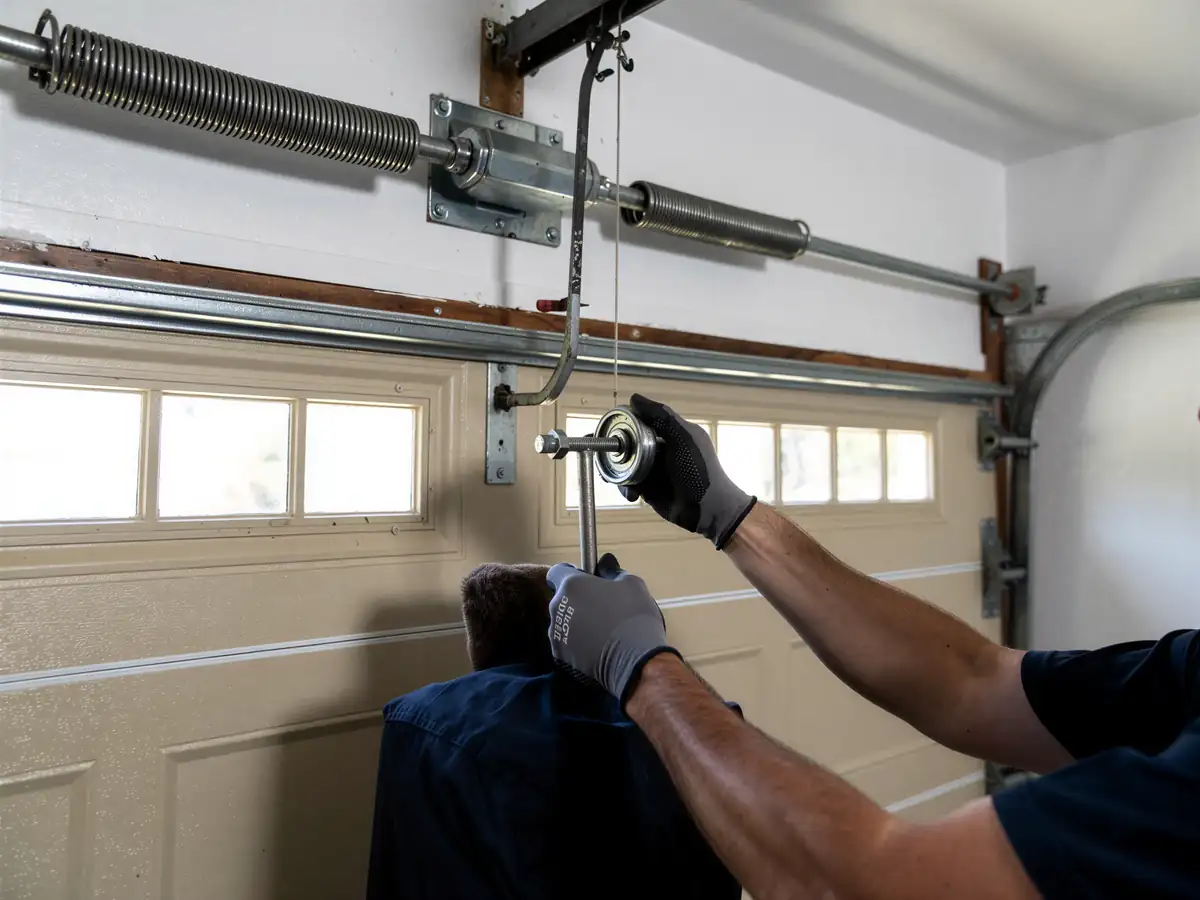
If the door is only off by a roller or two and the panels aren't bent, some owners manage to walk it back onto the track themselves with the opener disconnected and the door manually supported. Where this goes wrong is springs: a door that's heavy enough to need real force to move is a door with a spring doing its job, and a spring that lets go while someone's hands are on the panel is a serious injury, not a minor setback. We won't talk anyone through re-tensioning a torsion spring over the phone, full stop - that's one job we tell people to leave alone regardless of how straightforward it looks once the cover plate is off. Track alignment and bracket tightening on a door that's already resting flat and isn't under spring load is reasonable to check yourself; anything involving the spring or cable assembly isn't.