How Long You Are Without the Door
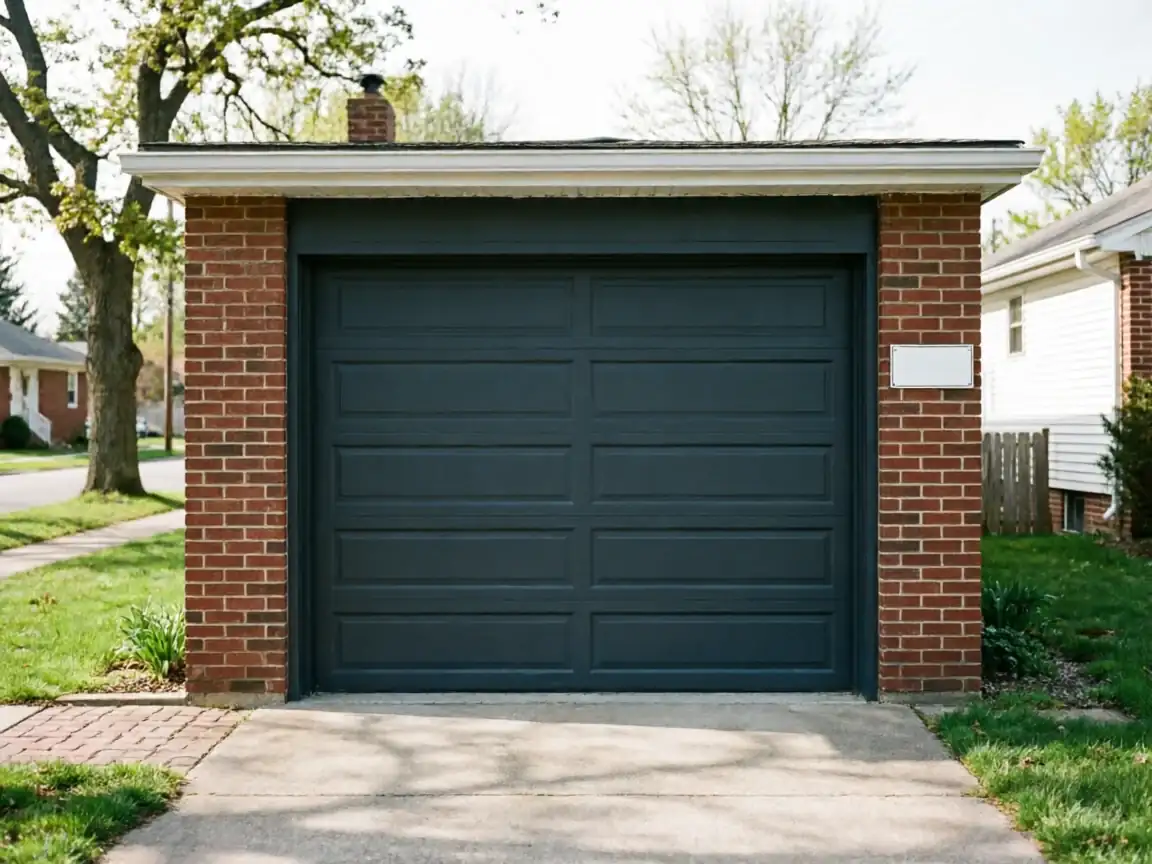
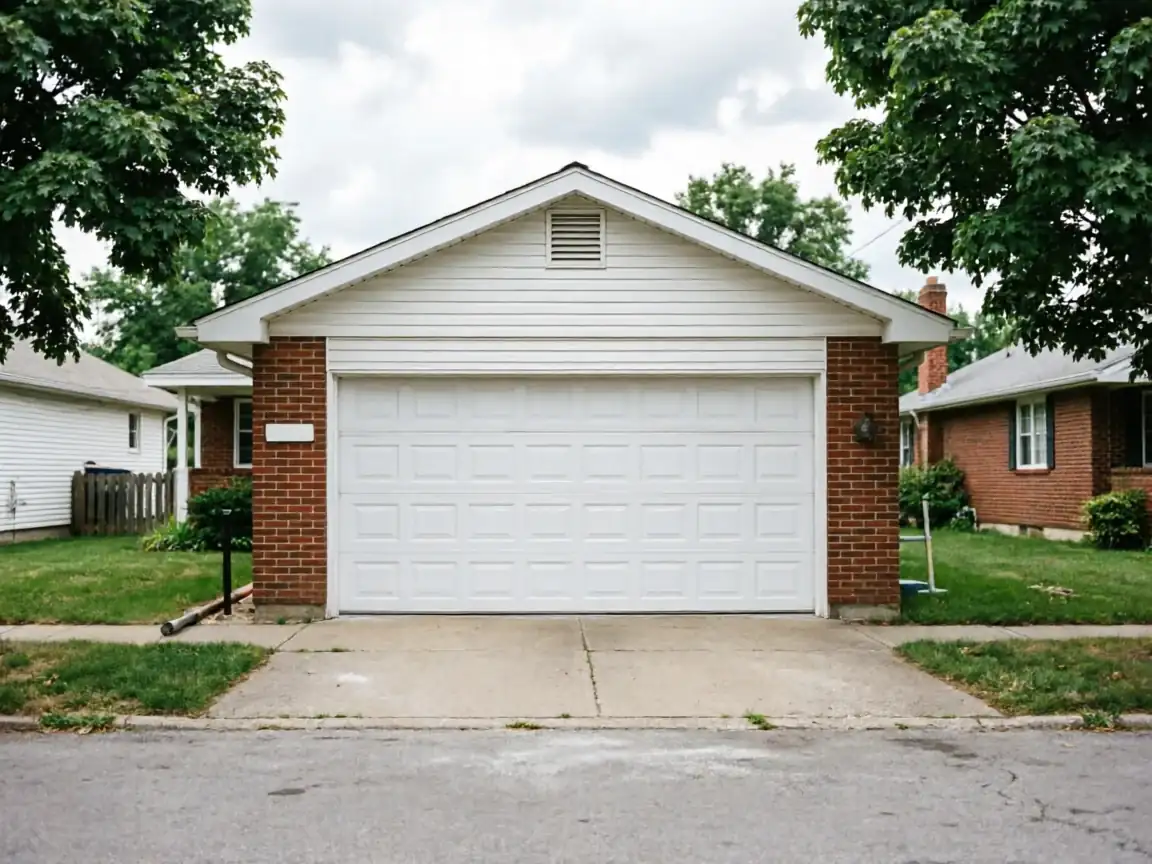
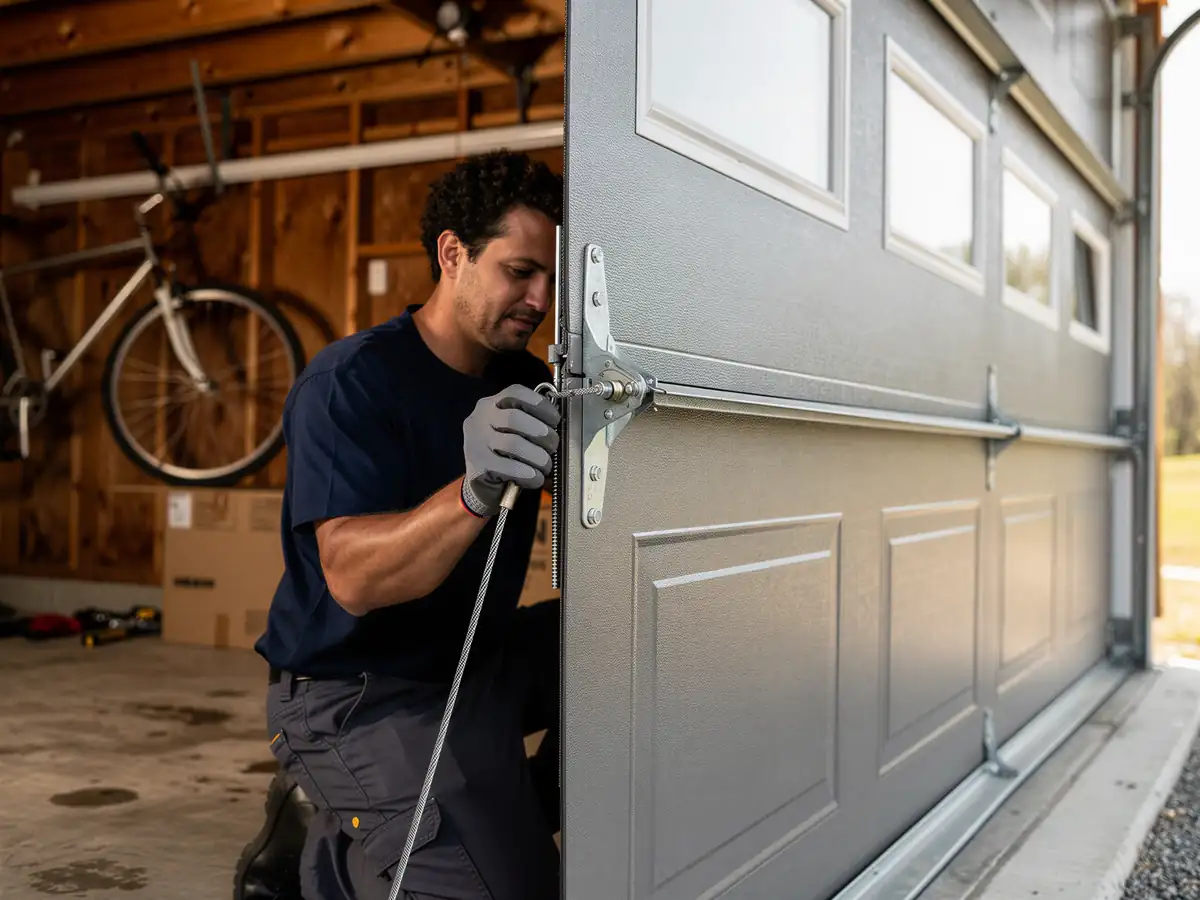
Montgomery sits at the newer end of the area's housing range. Across the wider Aurora service territory homes went up anywhere from 1958 to 2003, but Montgomery's median build year lands right at that top edge: 2003. That matters for an install because builder-grade doors from the early 2000s were sized to a narrower set of standard openings than the older stock closer to Aurora's center, which means we're usually not fighting an odd-size jamb or a hand-framed opening from the 1960s. We travel from Aurora, about 5 miles out, so we're not sitting on a Montgomery job site waiting on parts we don't carry. A straightforward single or double door swap on a 2000s-era opening is usually a one-visit job once the door and track are on the truck. Where it runs longer is custom widths, insulated steel upgrades on a track built for a lighter original door, or anything needing a header reinforced beyond what the builder put in. We'll tell you up front, before the truck rolls, whether yours is a same-visit job or a two-trip one.
What Can Go Wrong
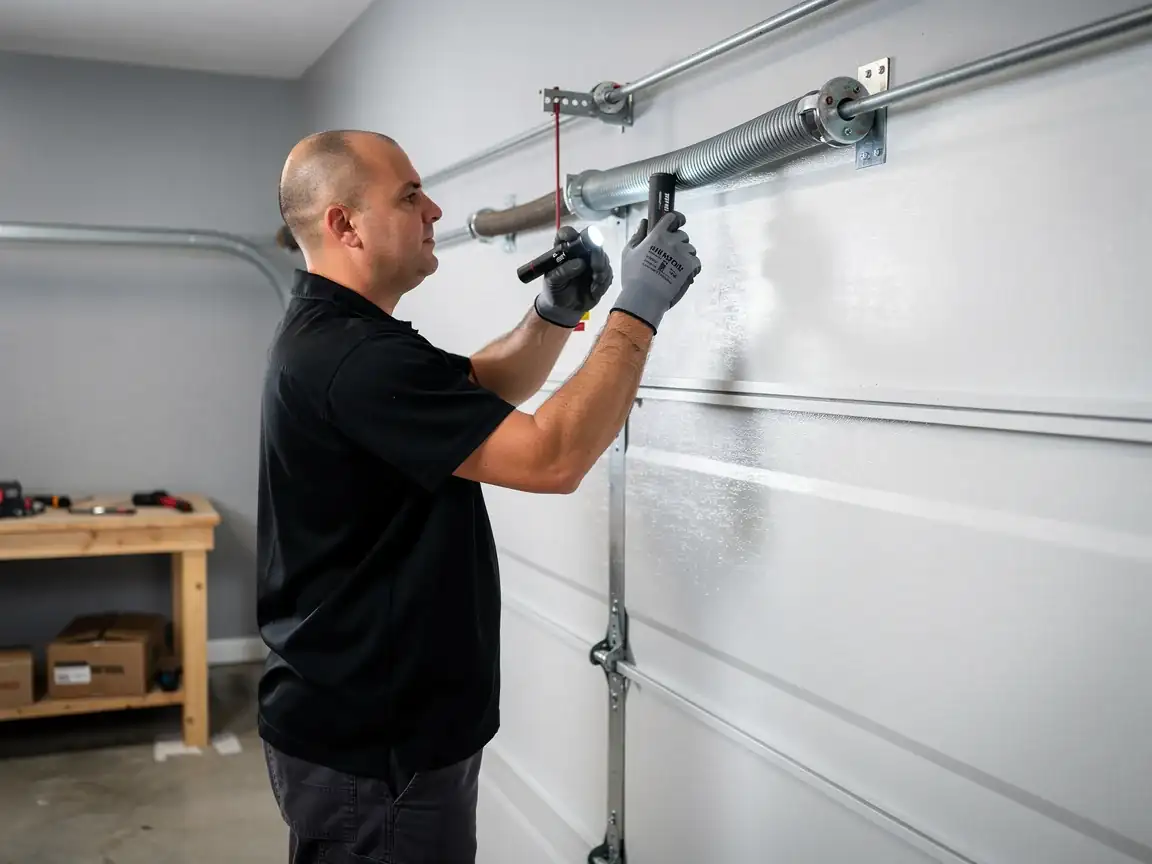
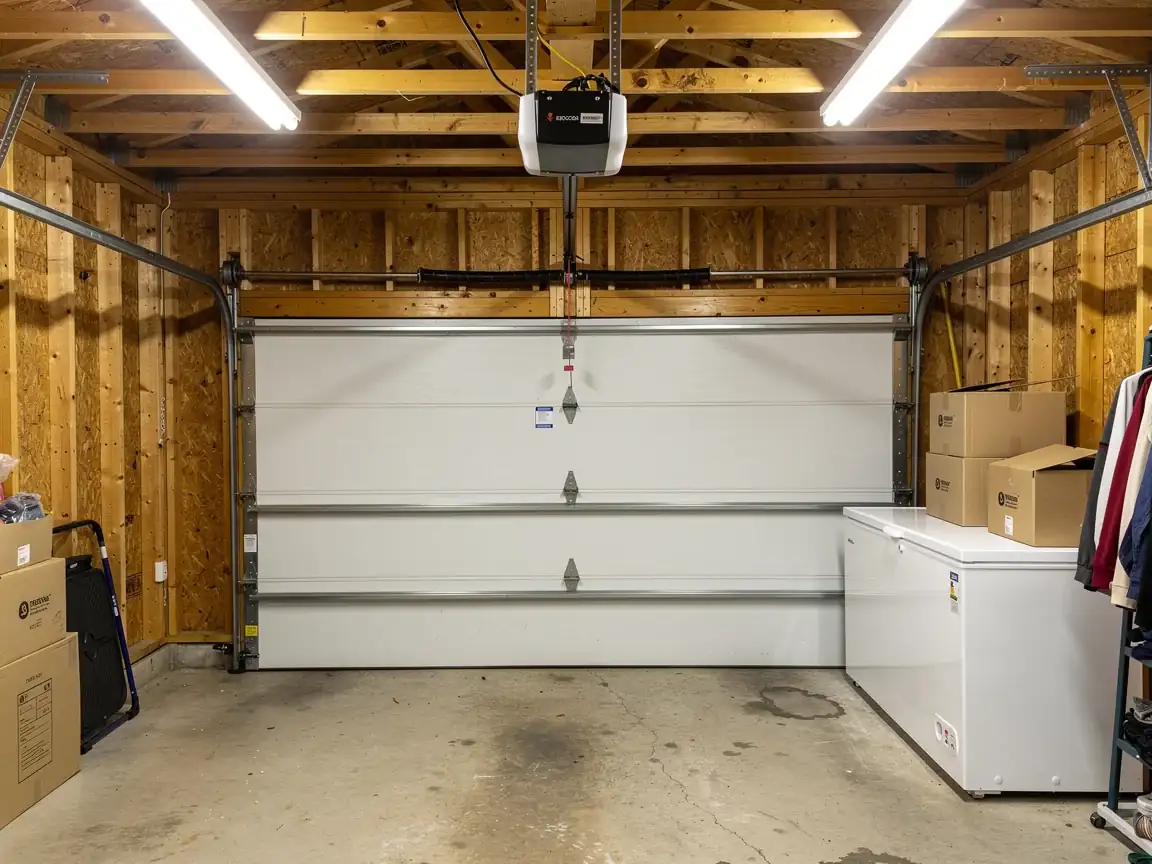
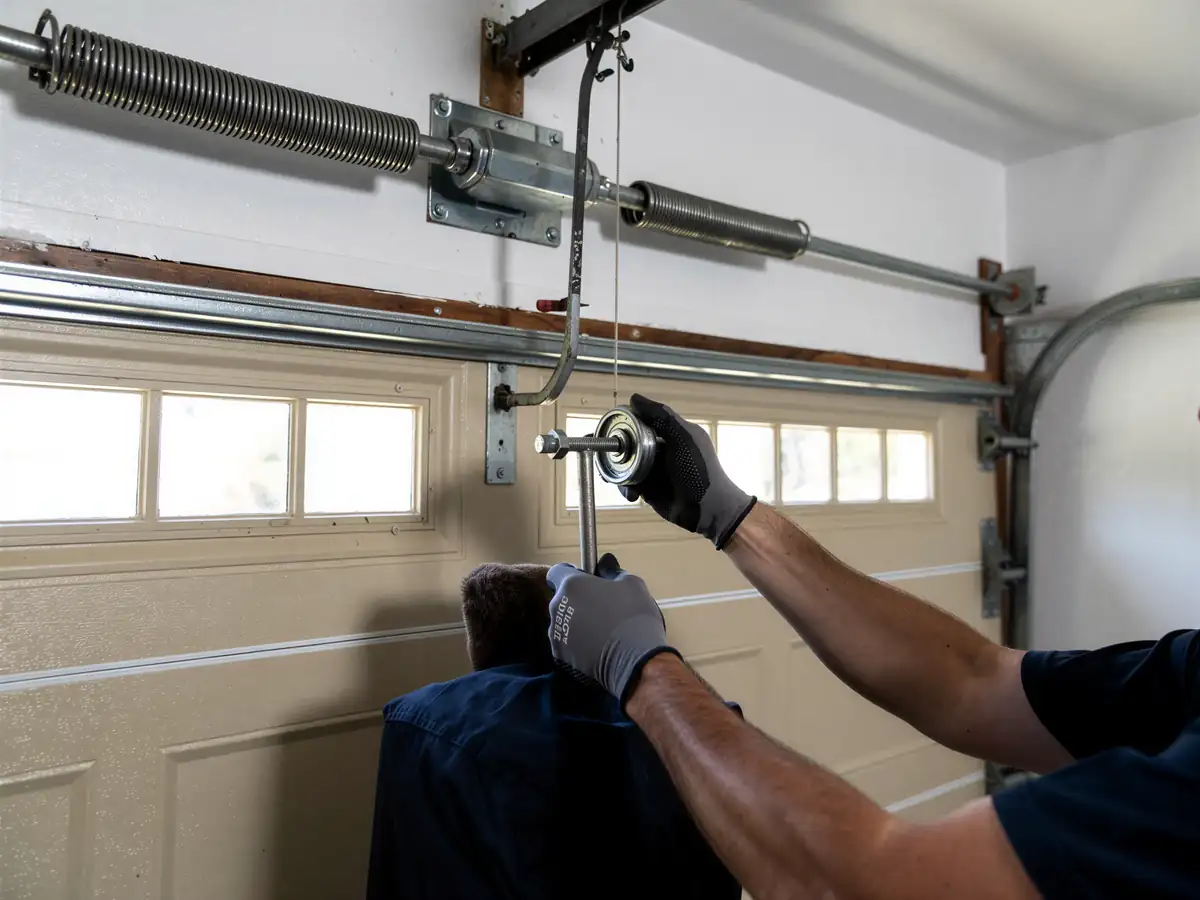
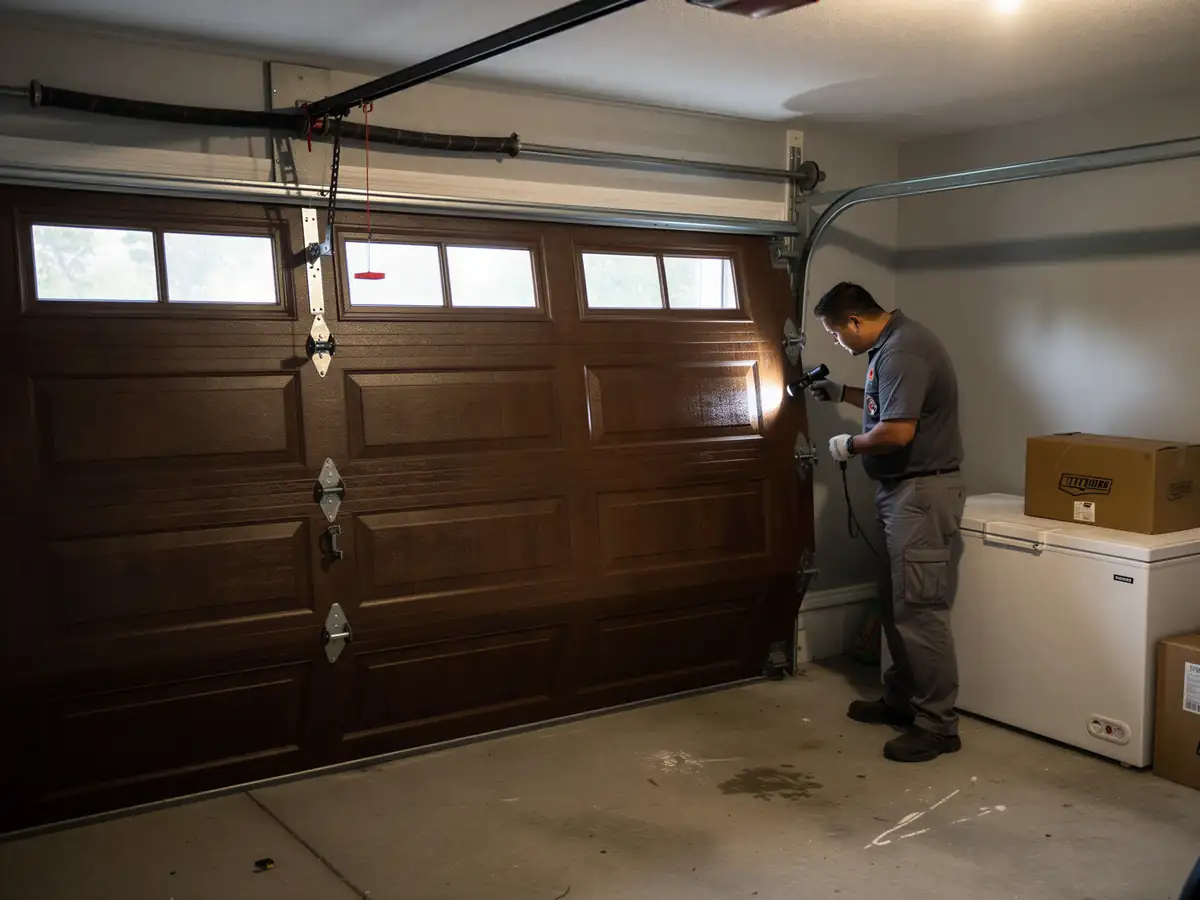
Doors from the early 2000s building wave in Montgomery tend to fail in a specific way: the rollers and hinges are original, the torsion spring is rated for the original door weight, and then a homeowner upgrades to a heavier insulated steel door without upgrading the spring. Within a winter or two the opener is straining and the spring is cycling faster than it was built for. In the area's cold-moderate climate band, that strain shows up worse in January and February, when steel contracts and lubricant thickens, so a spring that was already marginal gives out on the coldest morning of the year. We also see openers that were fine for a lighter original panel now lifting a heavier replacement door with the travel limits never reset, which chews up the gears over time. None of that is a mystery once we're looking at the door, but it does mean a straight install quote can turn into a spring and opener conversation on-site. We'll flag it before we start, not after.
Doing It Yourself
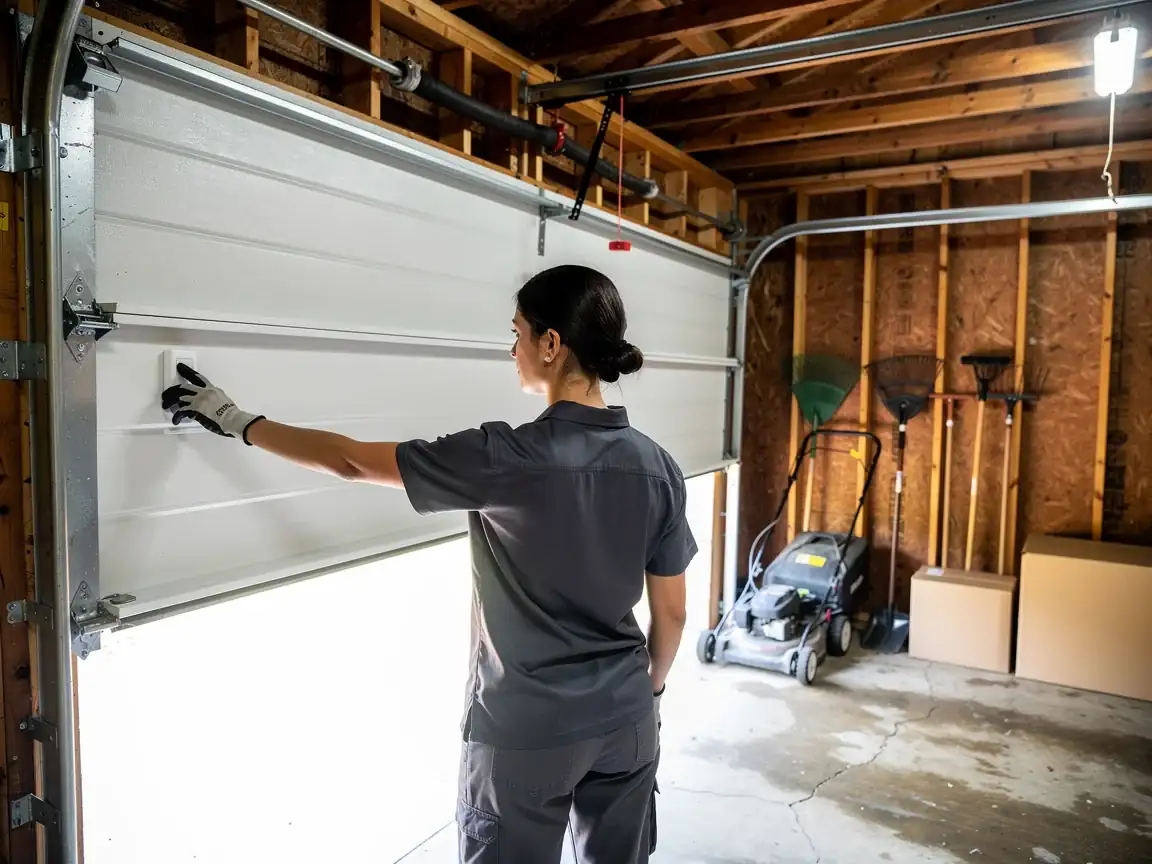
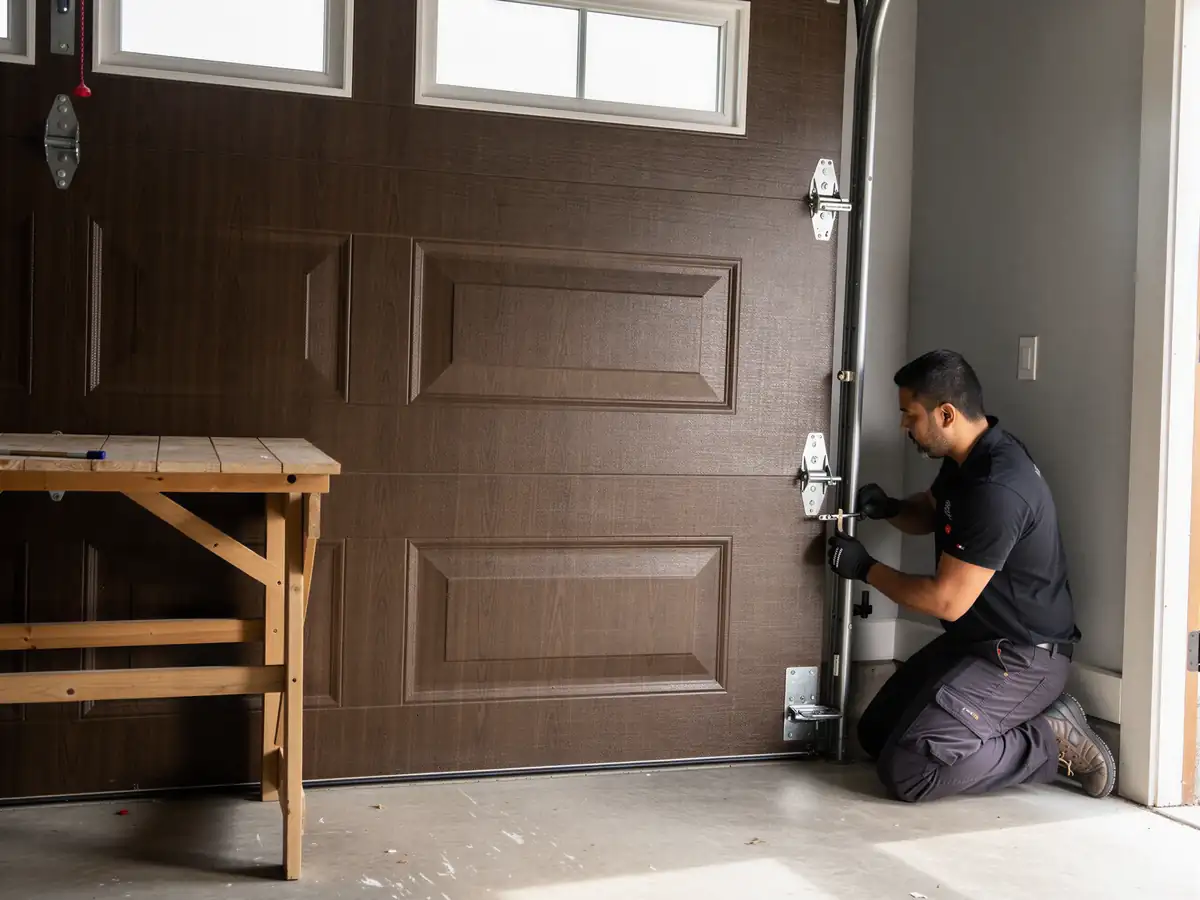
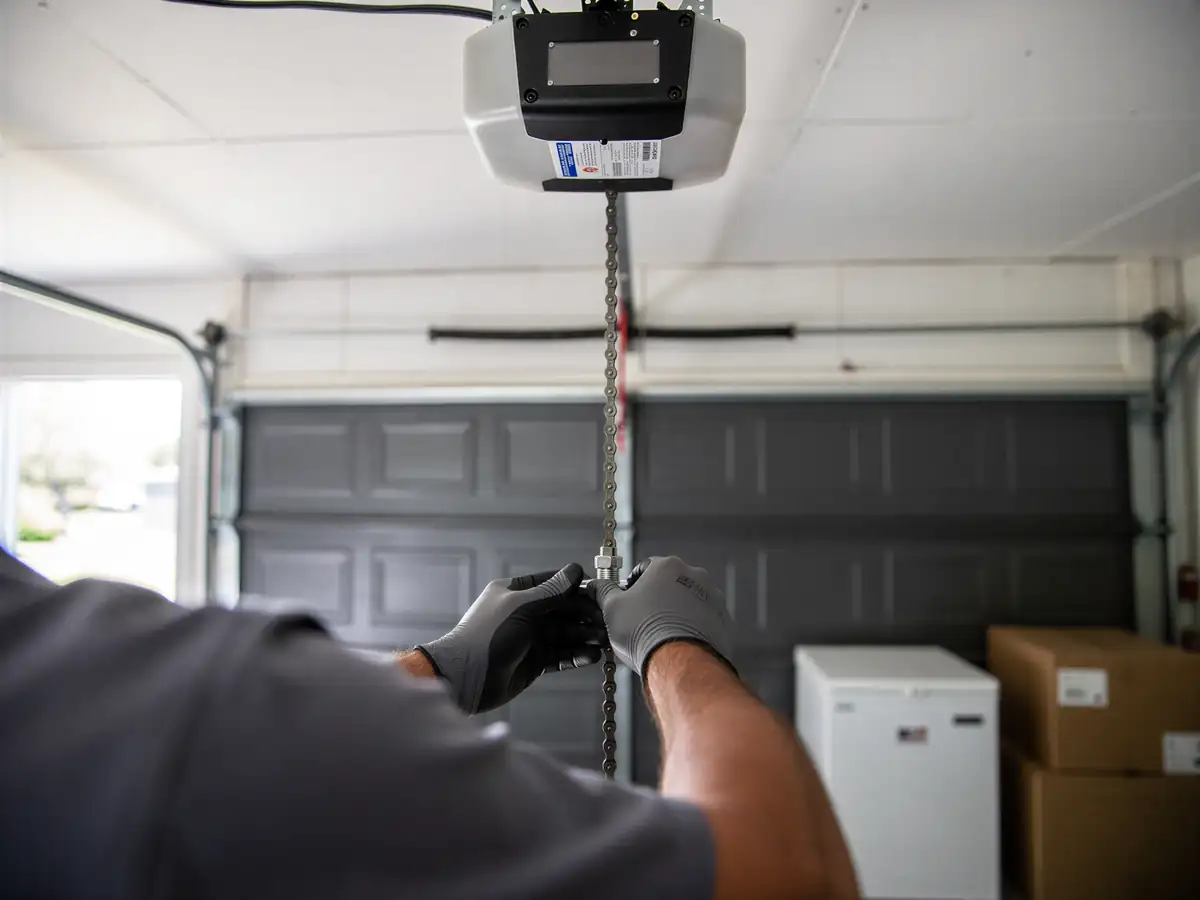
Swapping a torsion spring or an opener yourself on a 2000s-era Montgomery door isn't unreasonable if you've done it before - the hardware is standard and parts are easy to find for that era. What isn't a DIY job is resetting opener travel limits after installing a heavier door, or re-tensioning a torsion spring system, both of which have hurt people who treated them like a weekend project. If your current door is original to a 2003-era build and you're just replacing panels, not the full track and spring assembly, that's a smaller job than a full install and sometimes not worth paying a crew for. We'll say so if that's your situation instead of selling you a bigger job than you need.
Stocked Parts
Because a large share of the homes we cover, including Montgomery, were built in that same 1980s-to-2000s window, we keep the hardware sized for that era on the truck: standard torsion springs, common steel panel widths, and the roller and track hardware that matches builder-grade installs from that period. What we don't stock is anything custom-width or a specialty insulated panel outside standard sizing - those get ordered, and depending on the manufacturer that can add time to the job. We'll tell you at quote time if your door falls into that category so you're not waiting on a delivery you didn't expect.