How Long You Are Without the Door
A broken cable on a double door usually means the door won't move at all, or it moves a few inches and binds hard on one side. We travel the 5 miles from our Aurora shop to reach Montgomery, which keeps it one of the shorter runs on our board. We don't quote a fixed window here because that depends on what's ahead of your call that day, but it's not a cross-county trip.
Montgomery's housing stock is newer than a lot of what we see elsewhere on the route - much of it went up between the 1990s and 2003. That matters for cable work because builder-grade installs from that era used lighter factory cables and stamped bottom brackets, not the heavier aftermarket hardware you'd find on an older retrofit. When one of those cables lets go, it tends to go at the bottom bracket crimp rather than fraying gradually along the drum, so the door can drop suddenly instead of slowly working loose.
What Can Go Wrong
The most common failure on these newer Montgomery builds is a cable that jumps the drum groove after the bottom bracket crimp wears thin, usually on the side that takes more daily traffic if you've got a single opener mounted off-center. Once a cable jumps the drum, it can wind unevenly and bind the whole track, which stresses the opposite cable too - so a one-sided break often turns into a two-cable job if it sits too long.
Cold is the other factor worth naming. This region sits in a moderate-cold climate band, and factory-grade galvanized cable from builder-spec installs gets stiffer and more prone to fraying at the drum in winter than it does in July. We see more cable calls here in the cold months for that reason, not because the cable itself is older - a lot of these doors are barely 20 years old.
How to Book
Call and describe what the door is doing
Stuck partway, hanging crooked, one side lower than the other, or completely jammed. That tells us whether it's a single snapped cable or something that's already pulled a cable off the drum, which changes what we load on the truck before we leave Aurora.
We don't run a branch in Montgomery
So every job here is dispatched from our Aurora location about 5 miles out. That's worth knowing if you're comparing us to a shop that's physically closer - we're not claiming to be the nearest option, just that the drive isn't a long one. You can see the full Montgomery service page for what else we cover in town, or check our general cable repair writeup for Aurora if you want the broader rundown on how the repair itself works.
- 5 miles
Doing It Yourself
Cable work is not a reasonable DIY project, and we'll say that plainly. A garage door cable sits under torsion spring tension, and releasing or re-tensioning it wrong can snap back hard enough to break fingers or worse. If your door is a standard double with torsion springs - the setup on most of the newer builds in Montgomery - the spring has to be safely unwound before anyone touches the cable, and that's not a job to learn on your own door.
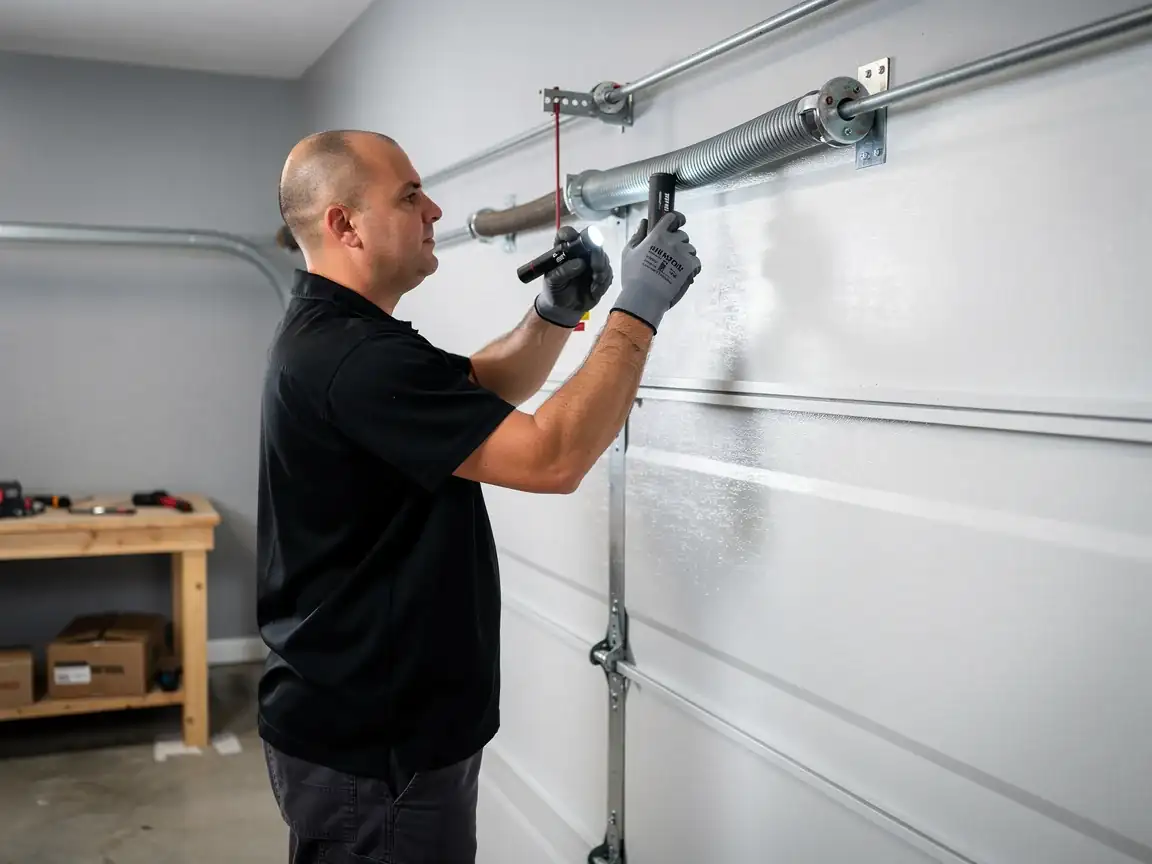
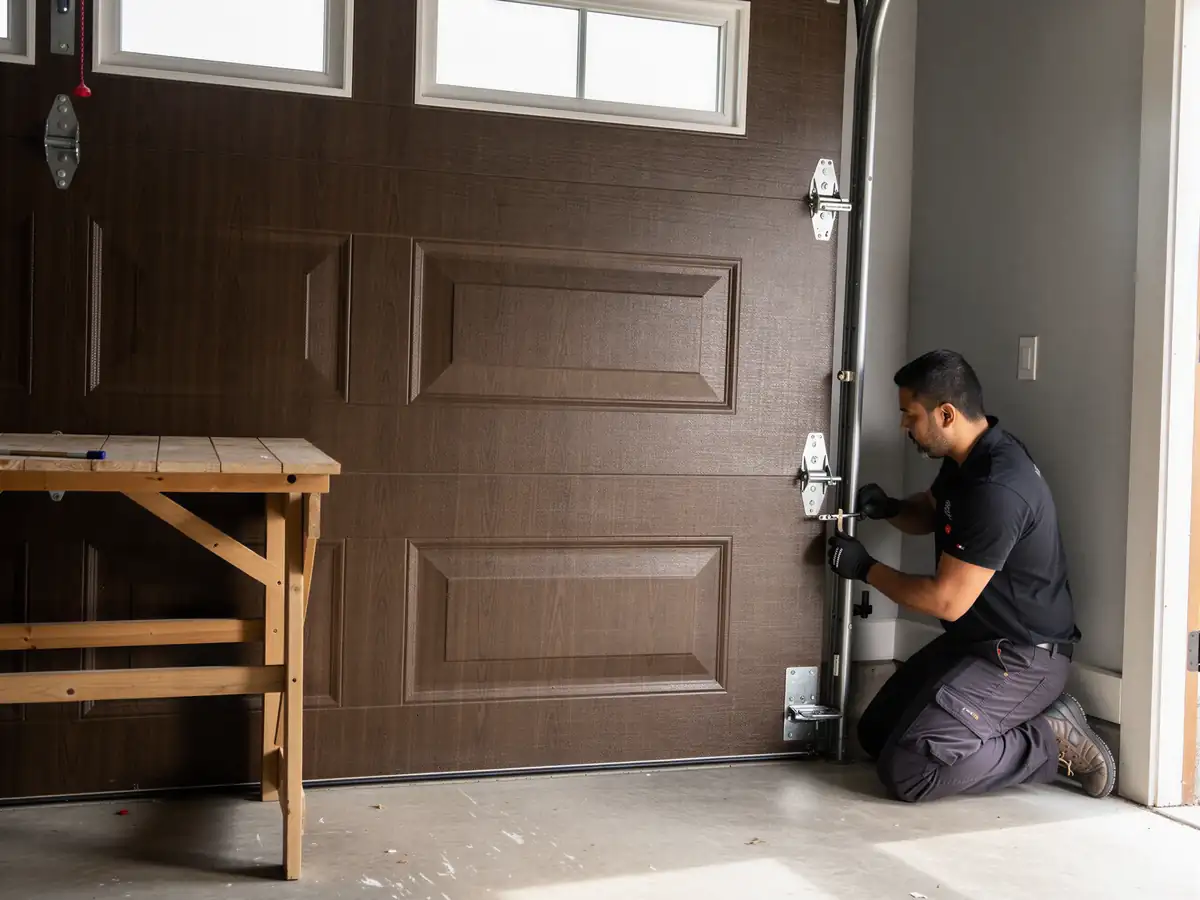
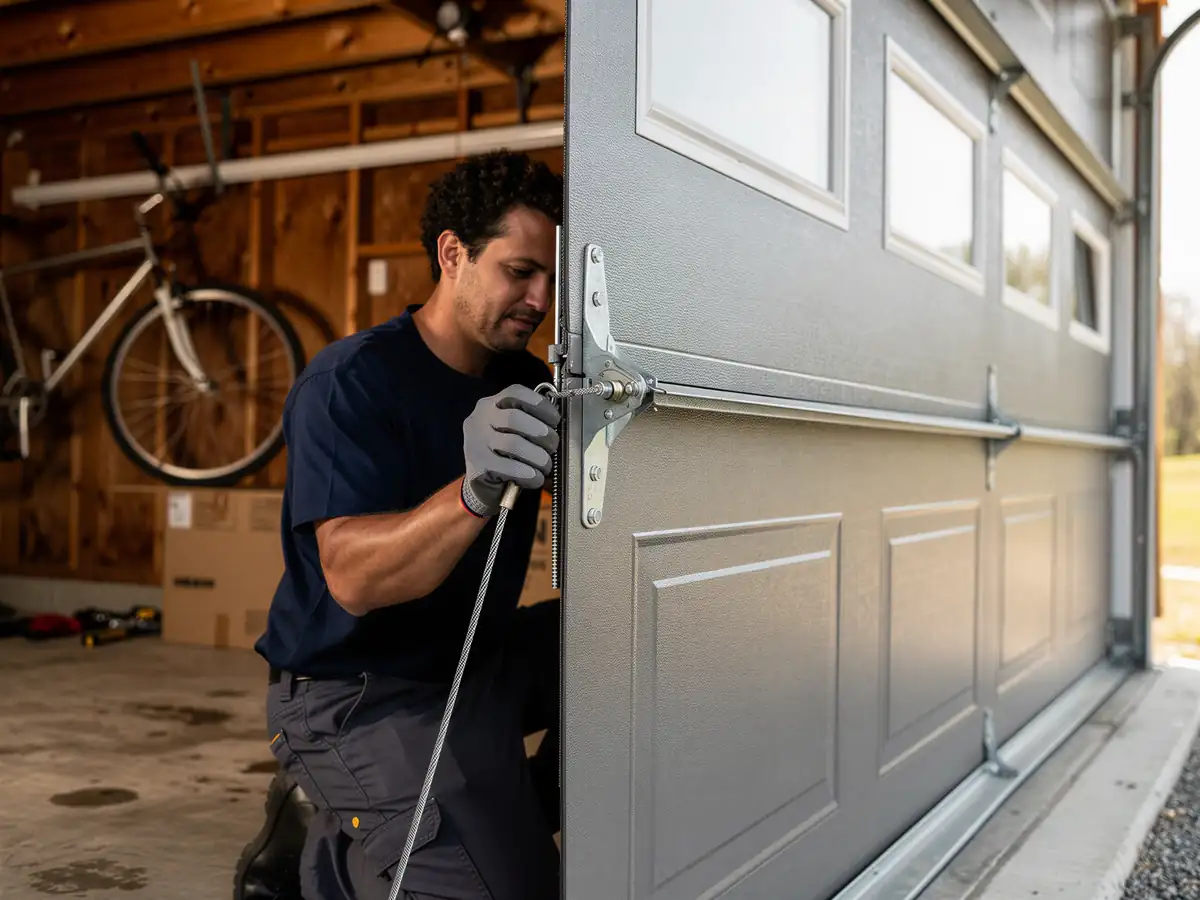
What you can safely do: look at the bottom brackets on both sides with the door down and the opener disconnected, and check whether the cable looks frayed, loose, or off the drum. That tells you whether you're dealing with a quick swap or a job where the drum itself needs replacing. Past that, leave the spring and cable alone and make the call.
Stocked Parts
We carry standard-gauge cables and bottom brackets sized for the torsion setups common on 1990s-and-later construction, which covers most of what's on Montgomery garage doors. Cable drums are a mixed bag - some are a straight swap off the truck, others are sized to a specific opener or track brand and need to be ordered, so we won't promise a same-visit fix on every drum replacement.
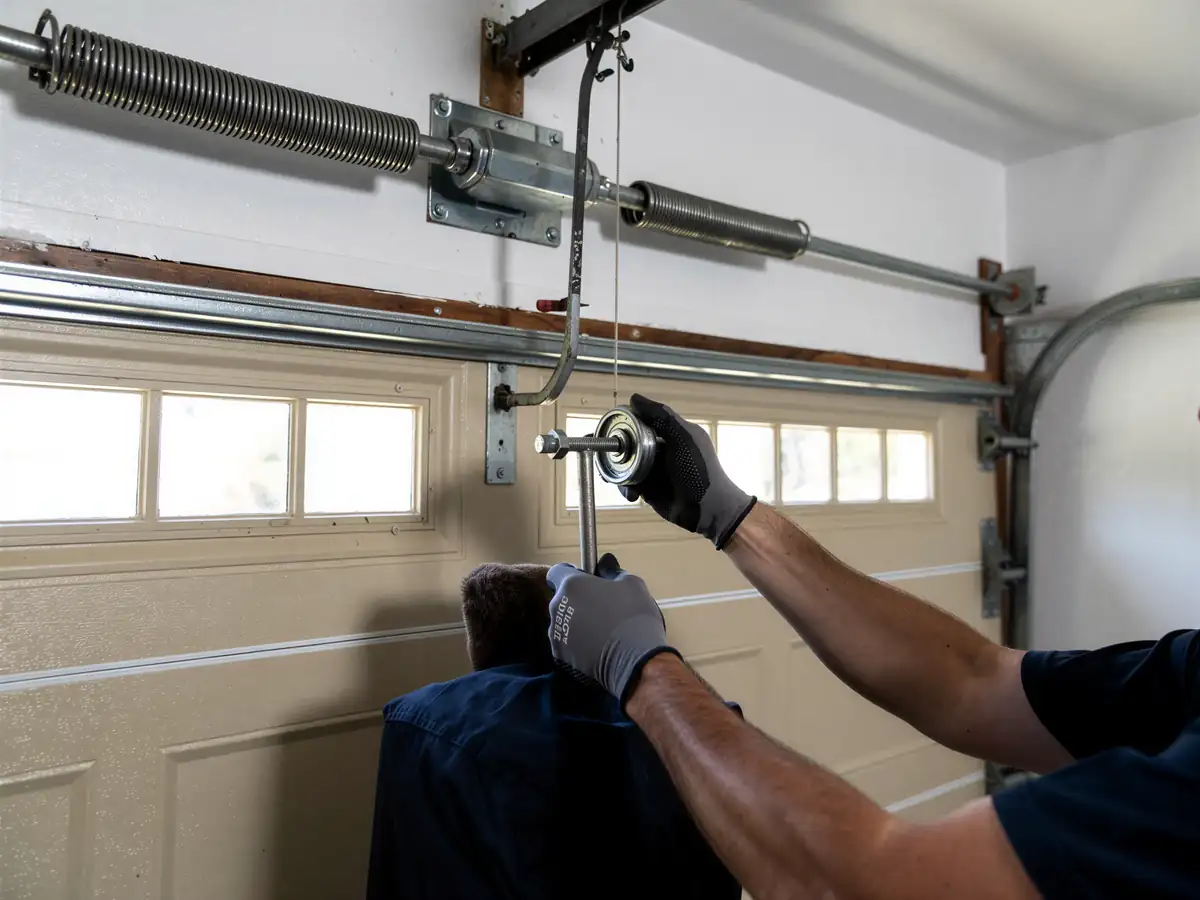
If your door is one of the older holdouts with an extension-spring setup instead of torsion, tell us that on the call. Extension cables and pulleys are a different stock item than torsion cable and drums, and knowing which one we're walking into saves a second trip.