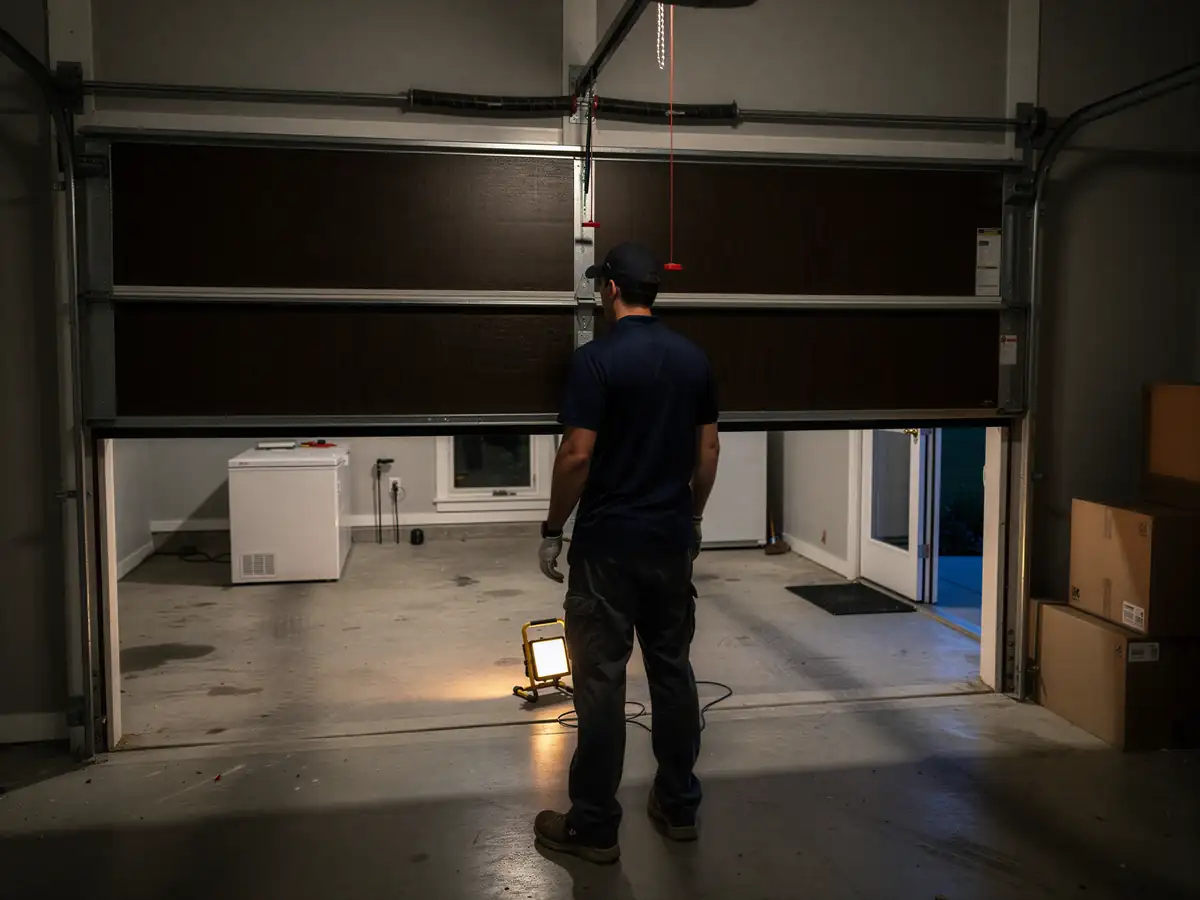
How Long You Are Without the Door
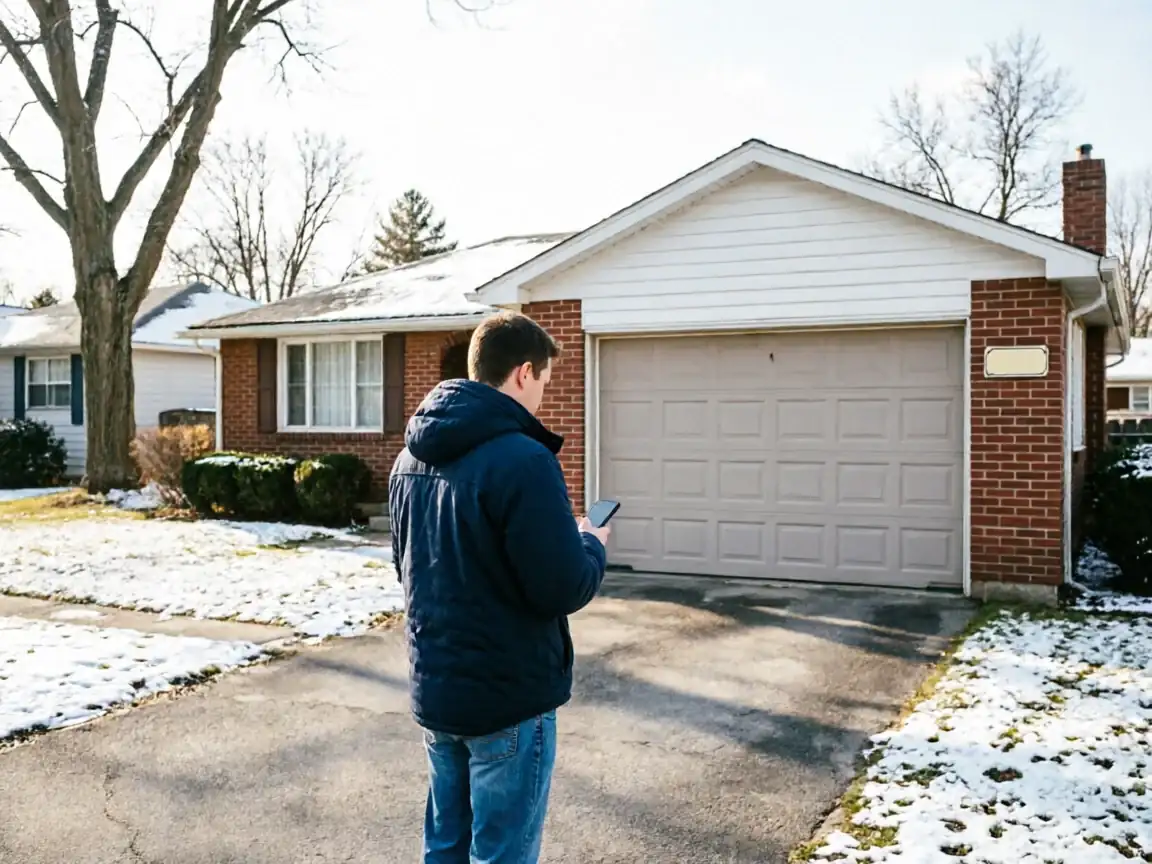
Montgomery is a small slice of the territory, about 7,088 households, which is a fraction of the 311,217 households Aurora Garage Door Pros covers overall. That size matters for how a repair here plays out: there's no branch sitting inside Montgomery itself, just a 5-mile run from the Aurora shop. That's close as these jobs go, but it still means the truck is coming from Aurora, not parked around the corner, so we won't promise a same-hour arrival we can't back up.
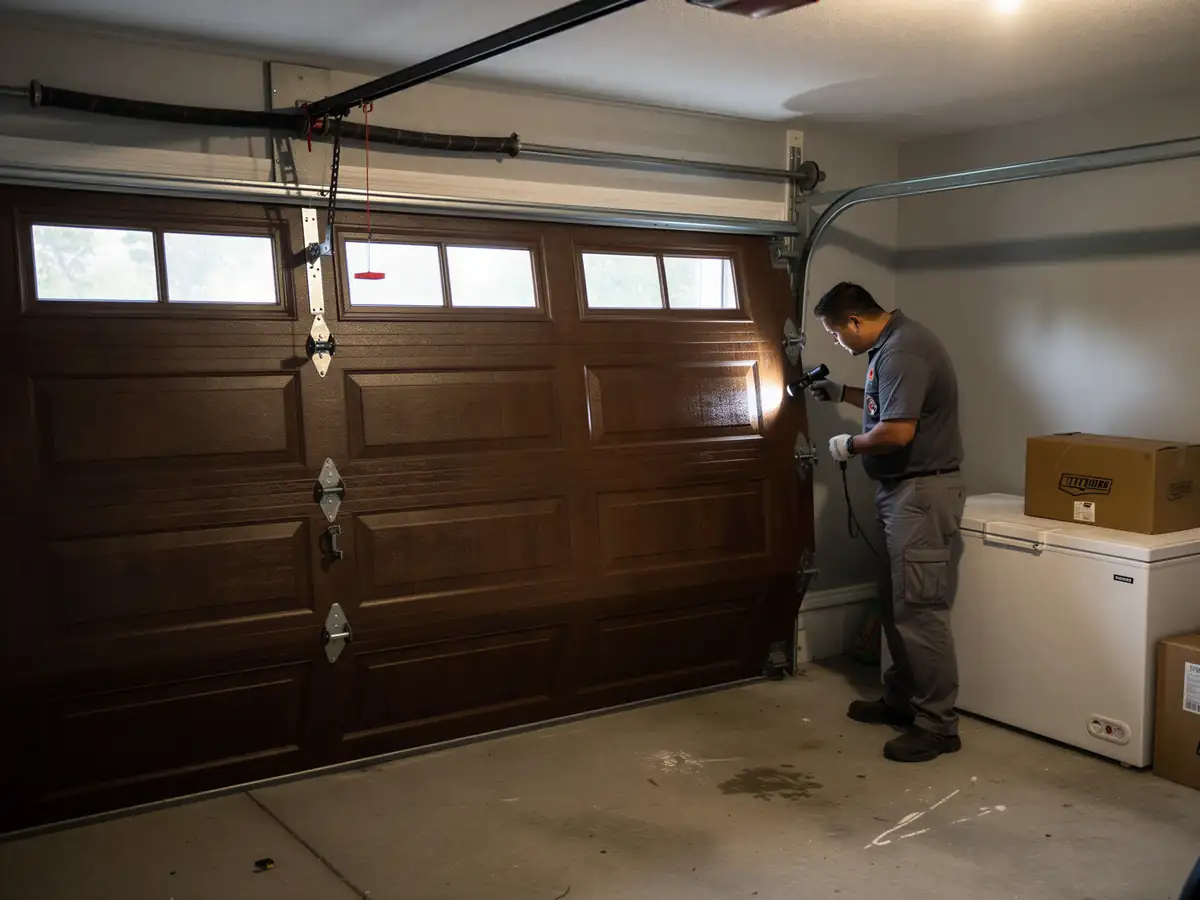
What the small household count does mean is that call volume out of Montgomery doesn't swing wildly day to day, so a tech heading your way isn't usually working through a long backlog of other Montgomery jobs first. A stuck door on a cold morning, a spring that let go overnight, a cable that jumped the drum - these get scheduled against the day's route out of Aurora, with Montgomery folded in alongside the rest of that run rather than handled out of a separate dispatch.
What Can Go Wrong
Housing in Montgomery itself runs newer than a lot of the surrounding territory, with a median build year around 2003, compared to the wider span of 1958 through 2003 across the 48 named areas this company covers. That matters because the doors on most Montgomery garages are steel sectional units on torsion springs and openers with rolling-code boards - not the older one-piece or wood-panel doors still common in the oldest parts of the territory.
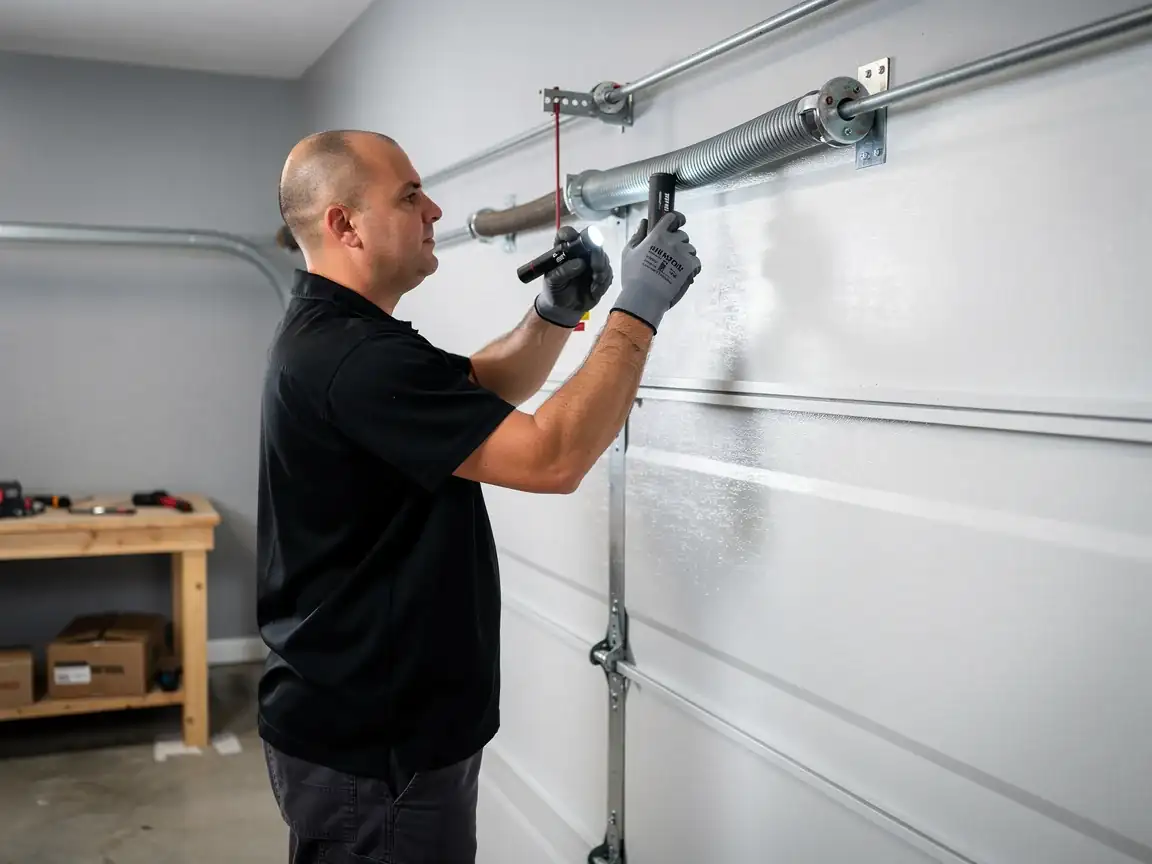
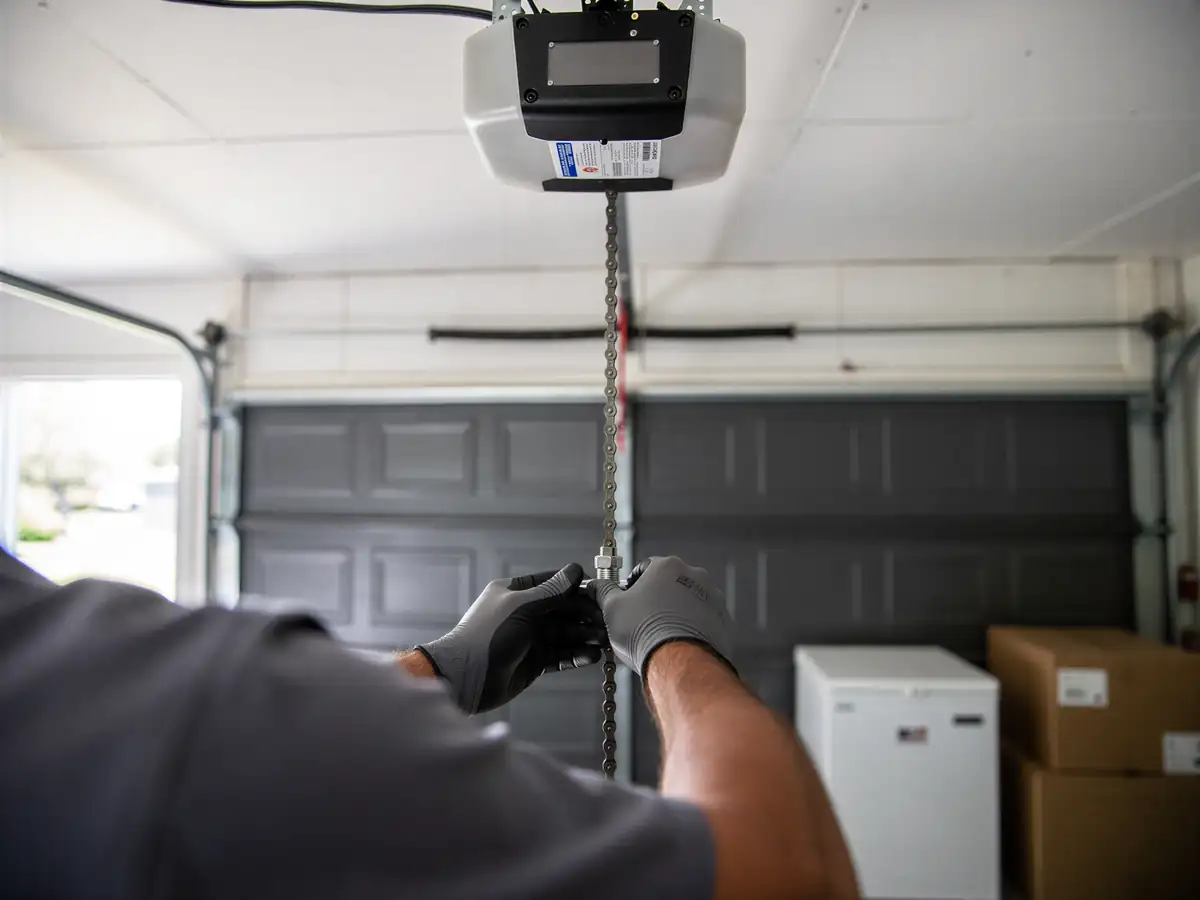
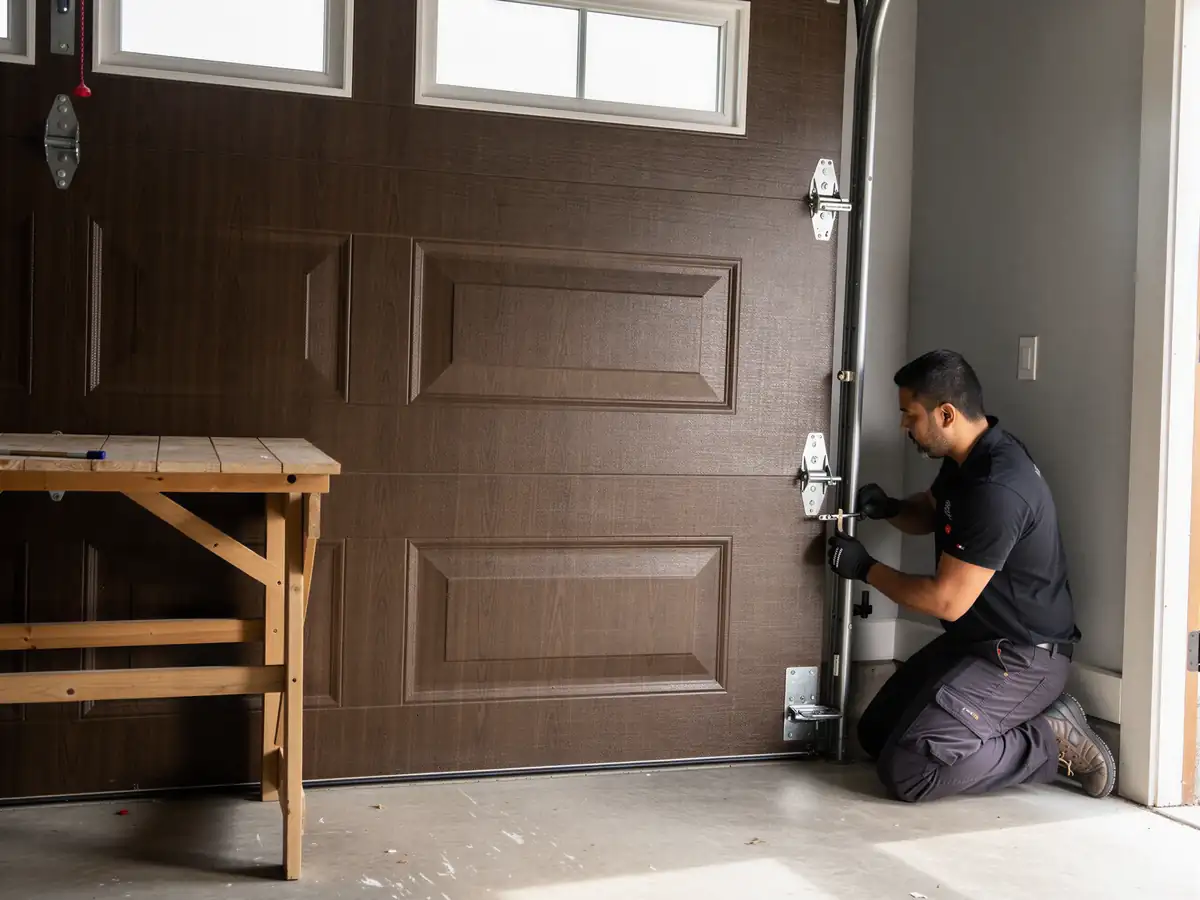
The faults that show up are the ones that come with that generation of hardware: torsion springs reaching the end of their cycle count, worn nylon rollers rattling in the track, photo-eye sensors knocked out of alignment, or a logic board on an opener that's stopped responding to the remote. The climate band here is cold but moderate, which still means winter does real work on rubber weatherstripping and on spring tension - steel contracts in the cold, and a spring that was fine in August can bind or snap in January. None of that is unique to any one house, but it's the pattern you see across a town built mostly in the 1990s and early 2000s rather than the 1960s.
How to Book
Start at the Montgomery page for the specifics on what this company handles in your area
Or go straight to the main Aurora garage door repair page if you want the full rundown of how dispatch and scheduling works out of the home base.
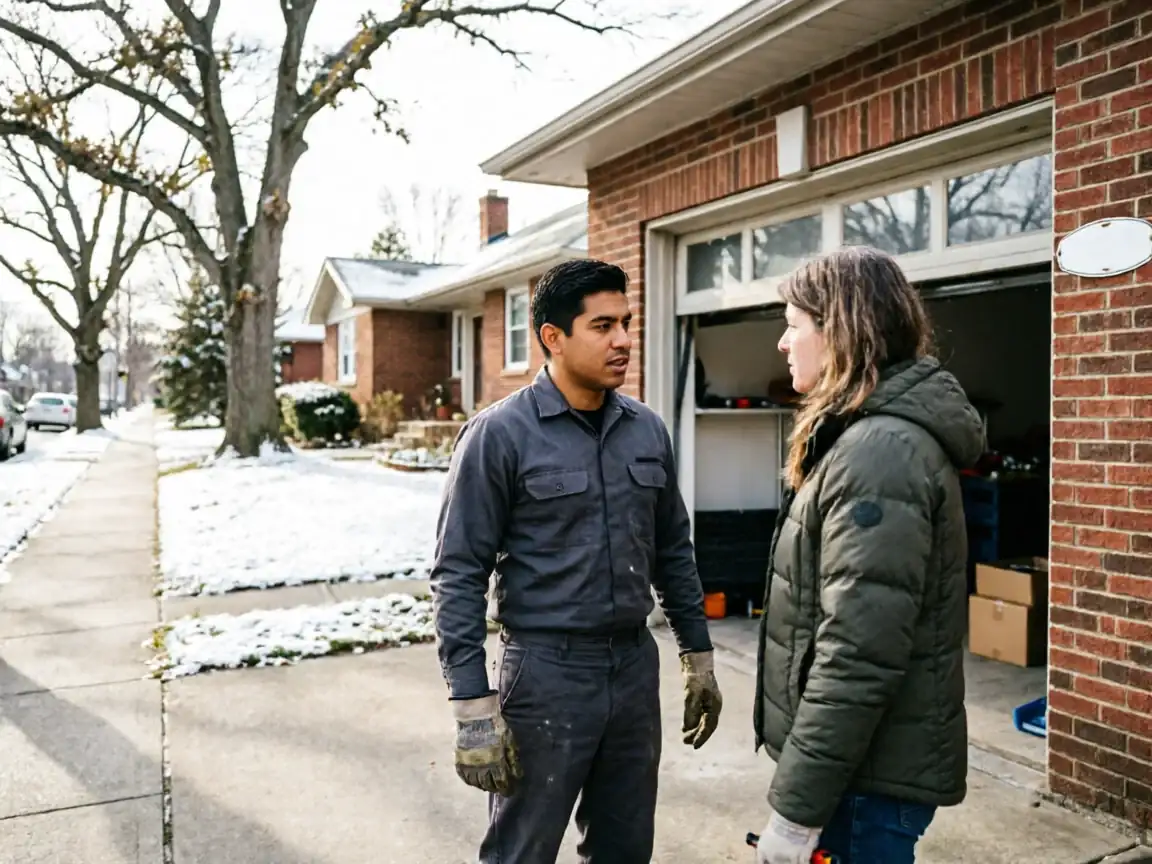
When you call, have the basics ready
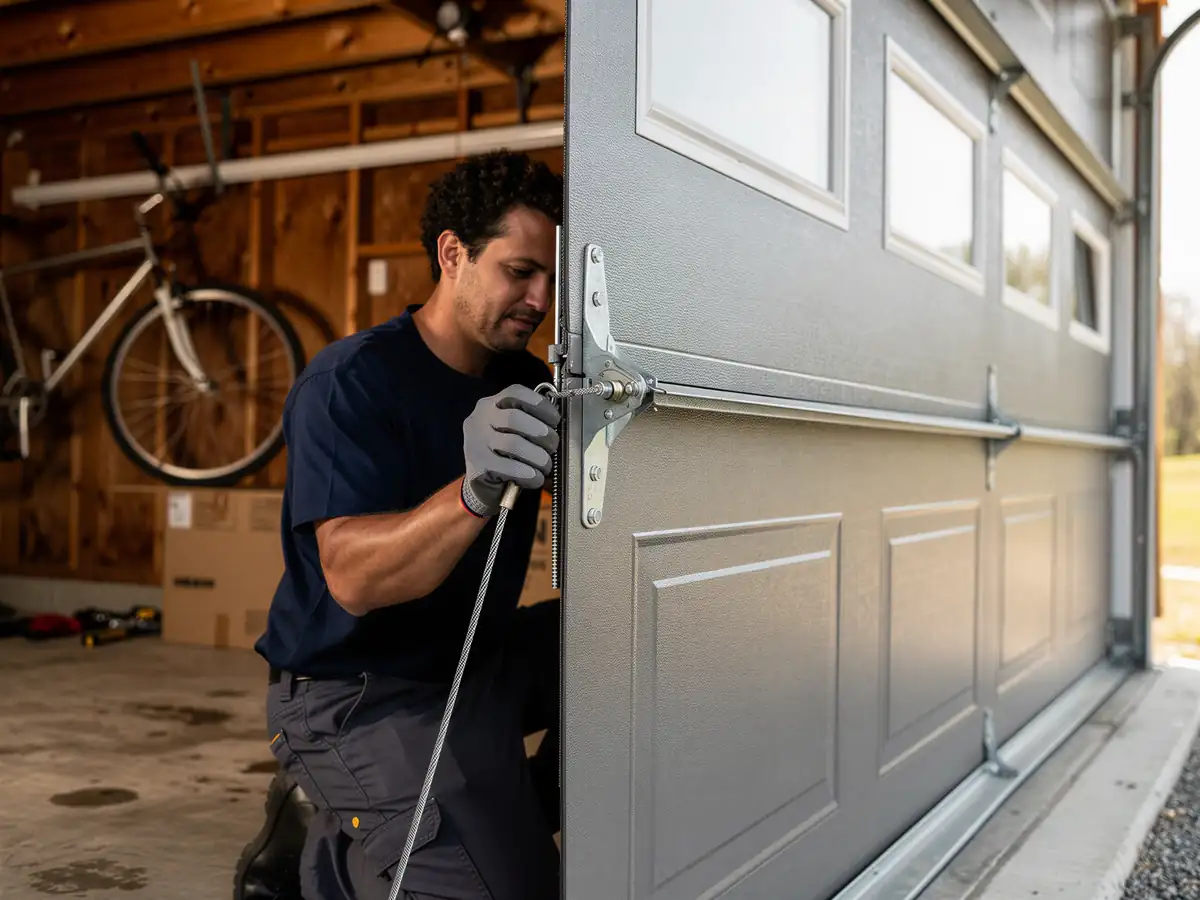
Whether the door is stuck open or stuck shut, whether you hear a spring noise before it quit working, and roughly how old the door and opener are. Since Montgomery's housing mostly dates after 1990, most jobs here involve torsion spring setups rather than the older extension-spring or side-mount hardware you'd find in an older build, and knowing that up front helps the tech bring the right spring size on the first trip instead of a second one.
Doing It Yourself
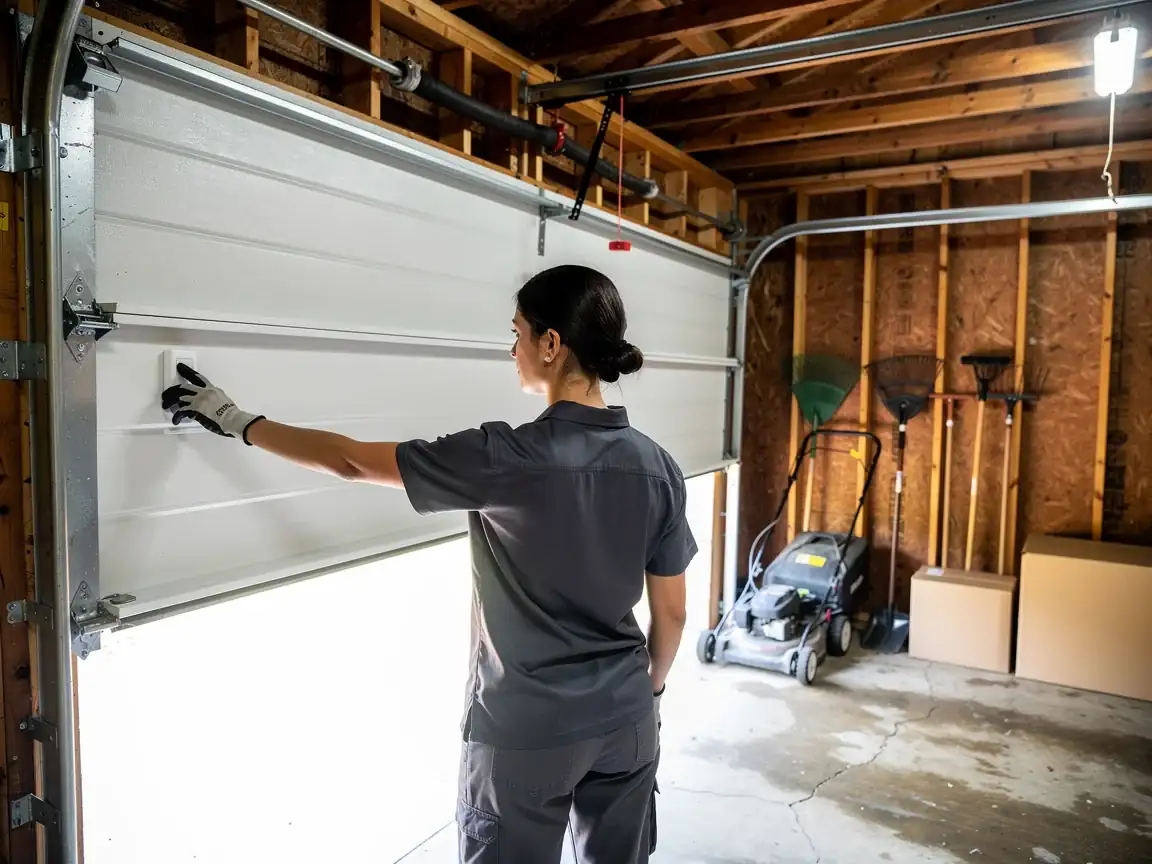
There's real work a homeowner can do safely before calling anyone. Wipe down and lubricate the rollers and hinges, check that the track is bolted tight and not pulling away from the frame, and test the auto-reverse by setting a 2x4 flat under the door and watching it kick back up. Clean the photo-eye lenses on either side of the track opening - a smear of dirt on one of those is a common reason a door won't close at all, and it costs nothing to check.
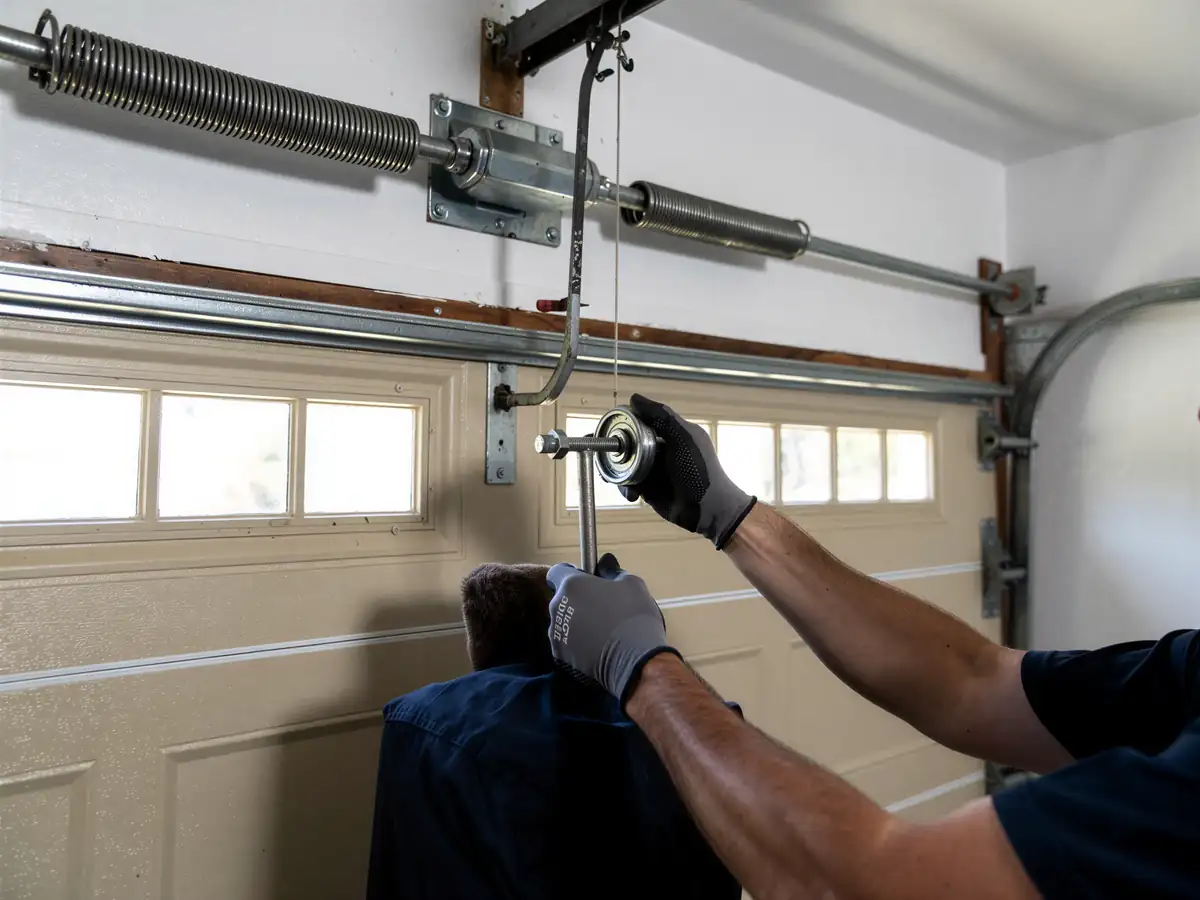
What you shouldn't touch is the torsion spring itself. A spring under tension on a steel sectional door, the kind common across Montgomery's newer housing stock, stores enough force to break a bone or worse if it lets go while you're working on it. That's the honest limit here: the cleaning and adjustment work is yours to do if you want, the spring and cable work isn't a DIY job, full stop, regardless of how simple the fix looks on a video.
Stocked Parts
Because Montgomery's stock skews newer than the territory as a whole, with a median build year around 2003, the parts that see the most use here are the ones that fit that generation: standard torsion spring sizes for steel sectional doors, modern opener circuit boards, photo-eye sensor pairs, and nylon rollers. Those are the parts that stay on the truck for a Montgomery run.
What's less commonly needed is the older hardware - extension springs on older low-headroom tracks, or parts for the one-piece doors that show up more in the parts of the territory built well before 1980. That's not a hard rule, since any given house could have had an older door retrofitted, but the odds in a town where most of the stock dates after 1990 point toward the newer parts being the ones that get used. If a job does turn up something unusual, that's the one case where a part might need to be ordered rather than pulled off the truck that day.