What Causes It Around Here
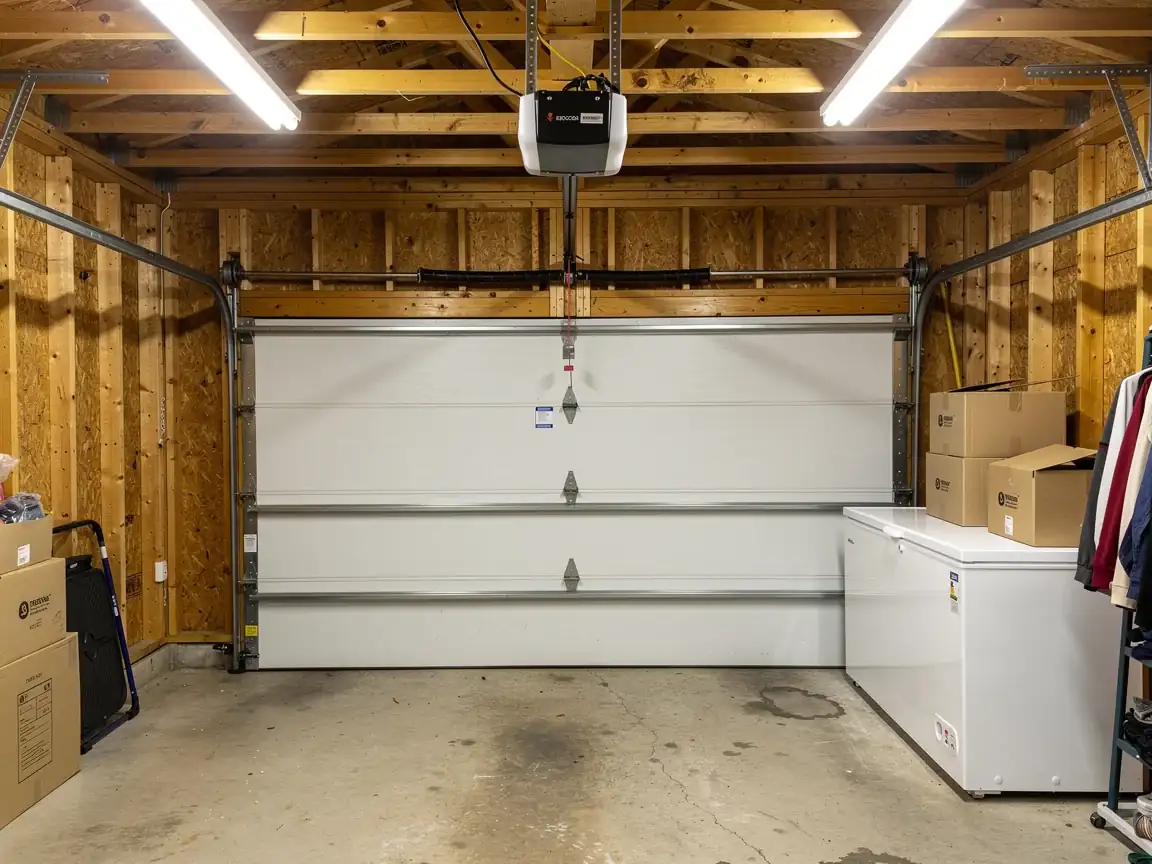
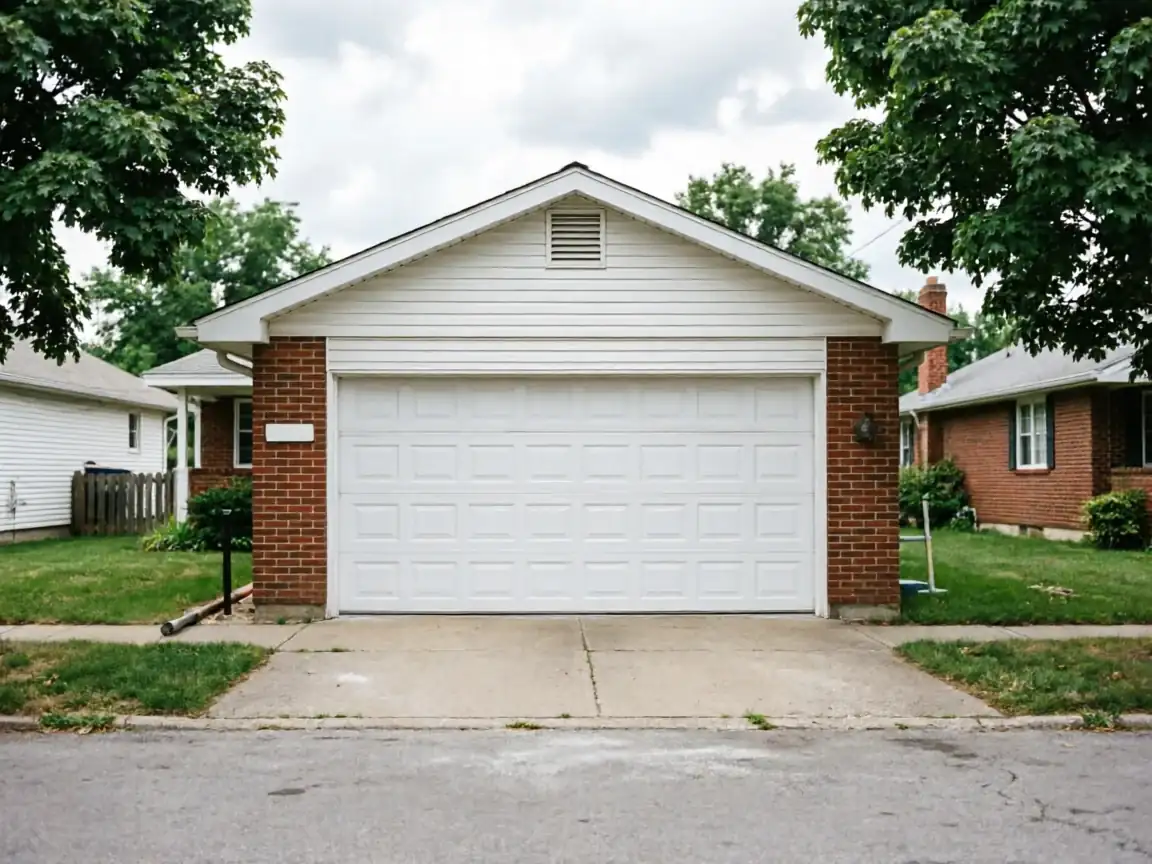
Most houses in Bartlett went up around 1992, which puts the garage doors themselves squarely in the steel sectional era - 16x7 double doors or 9x7 singles, usually with a half-horsepower chain-drive opener bolted to the same header it's had since the house was framed. That generation of opener used a relay-based logic board instead of the digital boards you'd see in anything built after the early 2000s, and those relays wear out the same way regardless of how well the door was maintained. The other failure we see tied to that build era is the travel limit switch - a mechanical setup that drifts out of adjustment as the rail sags slightly over thirty-plus years, which shows up as a door that reverses before it closes or stops short of fully opening. None of this is damage from a storm or a one-time event. It's just what happens to a chain-drive unit that's been running two or three times a day since 1992. A smaller share of Bartlett's opener calls come from newer installs on remodeled or rebuilt garages, where the complaint is usually a dead circuit board or a safety sensor knocked out of alignment rather than worn mechanical parts.
Stocked Parts
We carry logic boards, drive gears, and chain-drive sprockets sized for the half-horsepower units common in houses from Bartlett's 1992 median build year, plus the photo-eye safety sensors that fail from age or from getting bumped out of alignment. Belt-drive parts for newer installs are also on the truck. What we don't keep on hand is obsolete circuit boards for openers no longer made by their manufacturer - if your unit is one of those, we'll tell you straight that replacement is the faster and often cheaper path rather than waiting on a special-order board. We travel to Bartlett from Aurora, about 15 miles out, so having the right part already loaded matters more here than it would for a job down the street from the shop.
The Symptom
The most common call from Bartlett is a door that moves partway and reverses, or an opener that hums but goes nowhere. Both point to the chain-drive and limit-switch wear typical of a unit installed when these houses were built - the mechanism is trying to do its job but the travel settings or the drive gear have drifted past what adjustment can fix. A dead remote with a working wall button usually means a simple sensor or receiver issue, not a motor problem, and that's a cheaper fix than homeowners expect. A door that won't move at all, wall button included, is more often the logic board, especially on an opener old enough to match the neighborhood's 1992 median build year.
Doing It Yourself
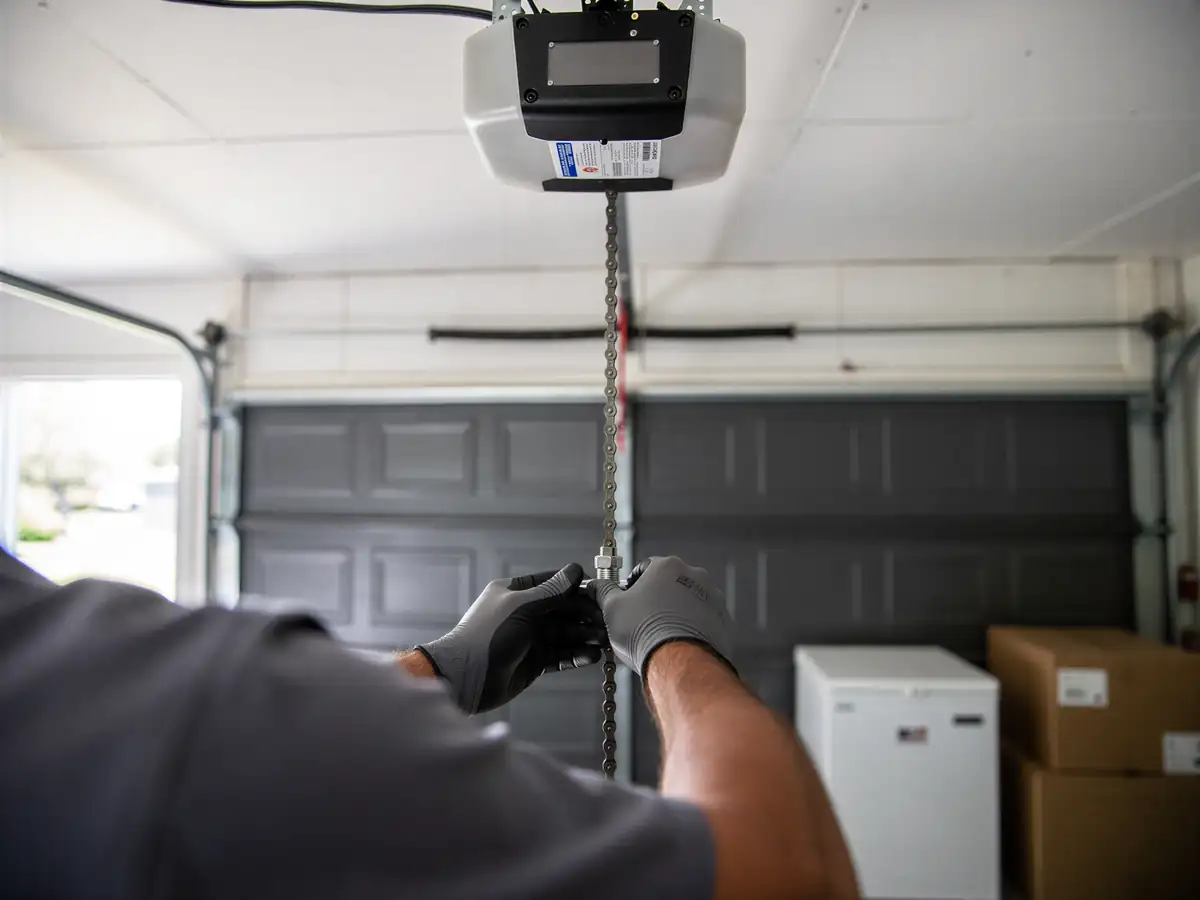
Checking and cleaning the photo-eye sensors at the base of the track is worth doing before you call anyone - a spiderweb or a knock-out-of-alignment lens causes more reversal complaints than any mechanical fault. Tightening the chain if it's visibly slack is also fair game with the opener unplugged. Past that, we'd rather you not open the motor housing or touch the logic board yourself; those parts are cheap to replace but easy to damage further if you're guessing at wiring. And if the opener is original to a 1992-era build, weigh the repair cost against a new unit before sinking money into parts for a thirty-plus-year-old motor - sometimes the math doesn't favor the old one.