What Causes It Around Here
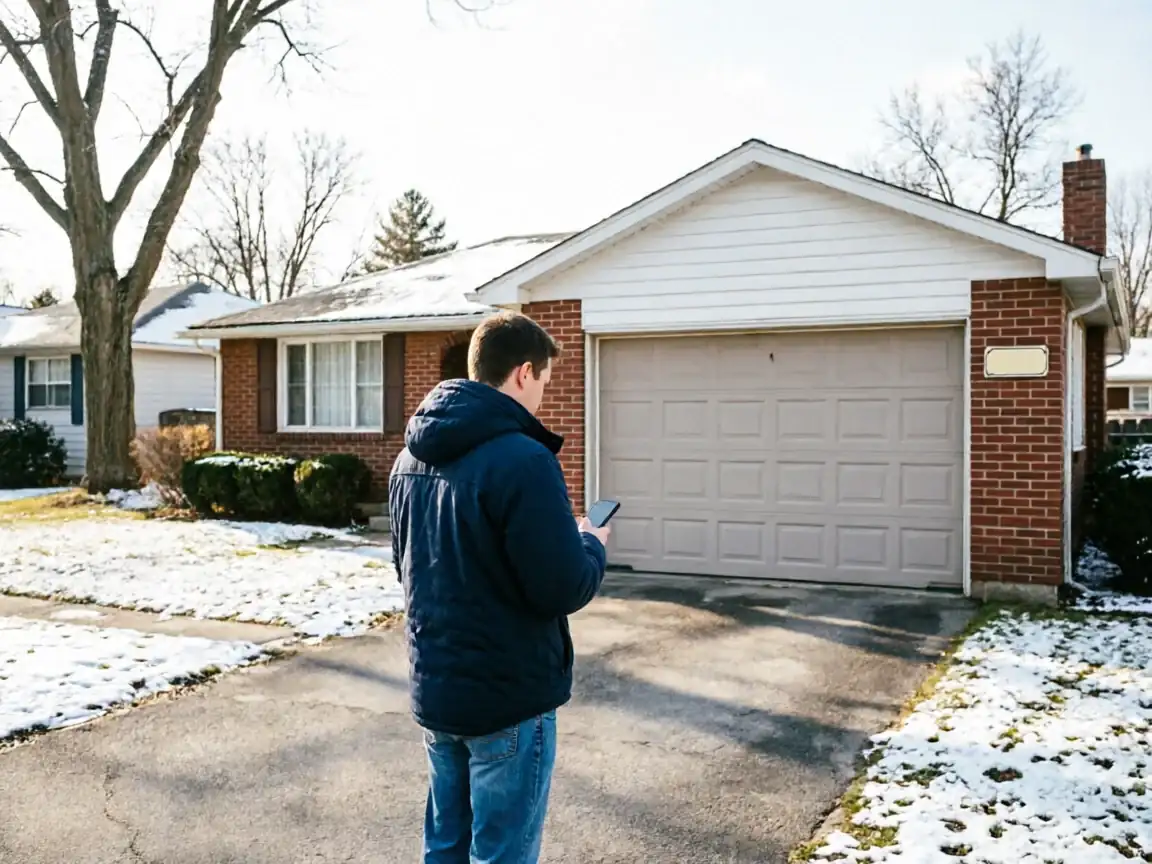
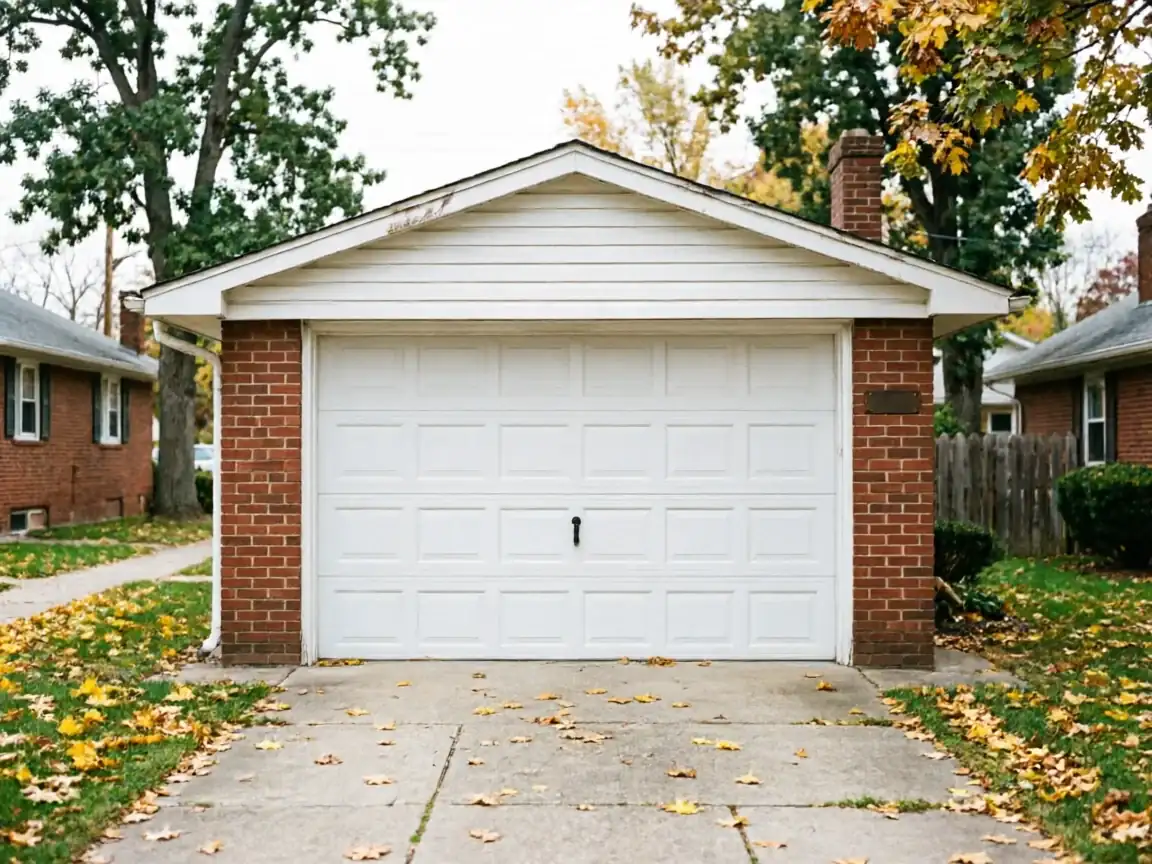
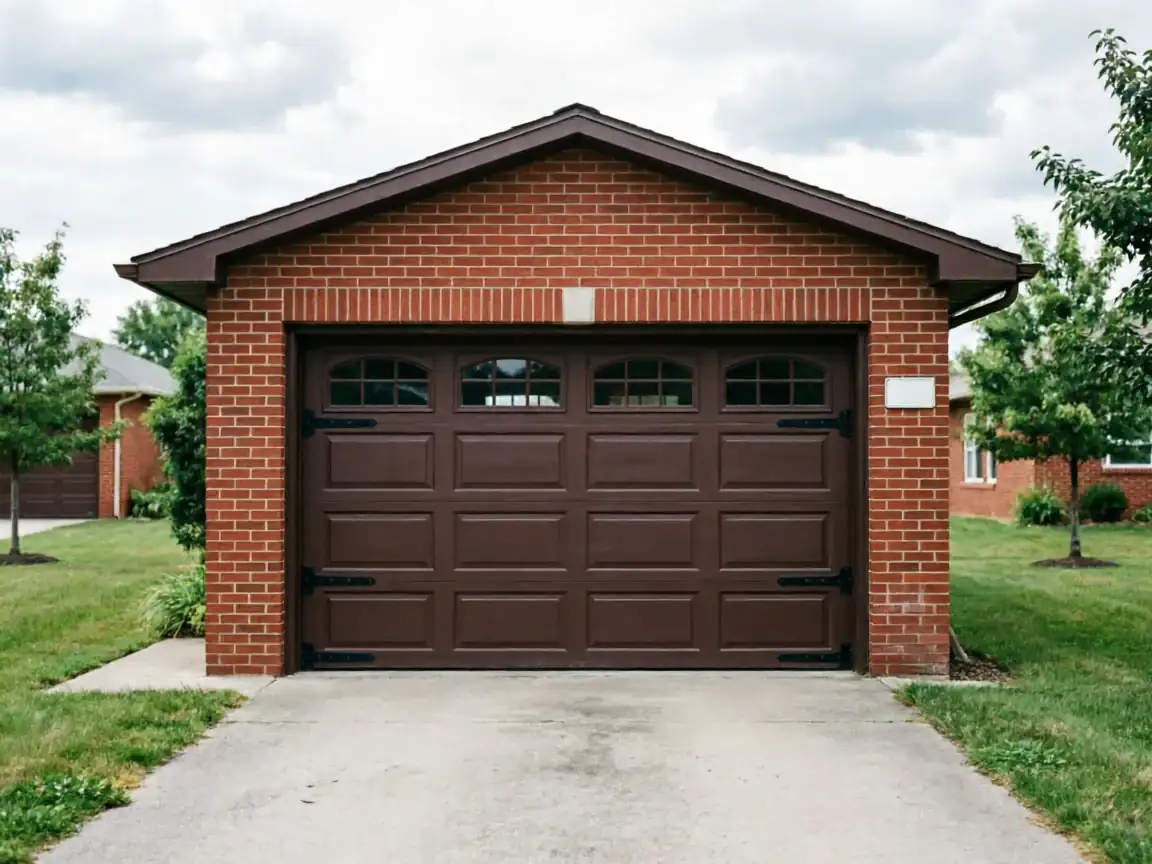
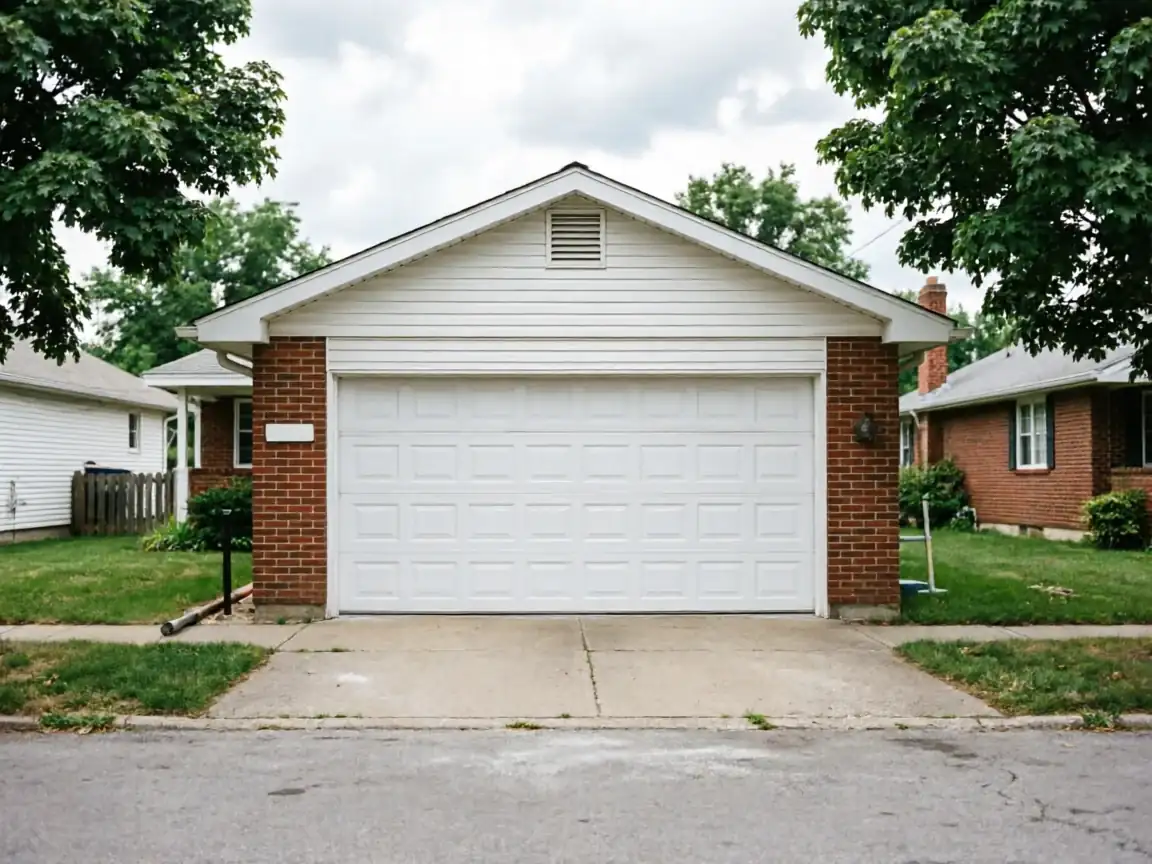
Bartlett's housing stock centers on 1992, squarely in the 1980s-90s band that covers most of this service area. That matters more than people think. A torsion spring is rated for somewhere around 10,000 cycles, and a chain-drive opener from that era is running on a circuit board and a worn drive gear that nobody refreshed. Houses built around 1992 are now old enough that a lot of the original hardware has already been swapped once, and what's in the garage now is often a second-generation opener nearing its own end, paired with the original torsion spring nobody ever touched because it never made noise - until it snaps.
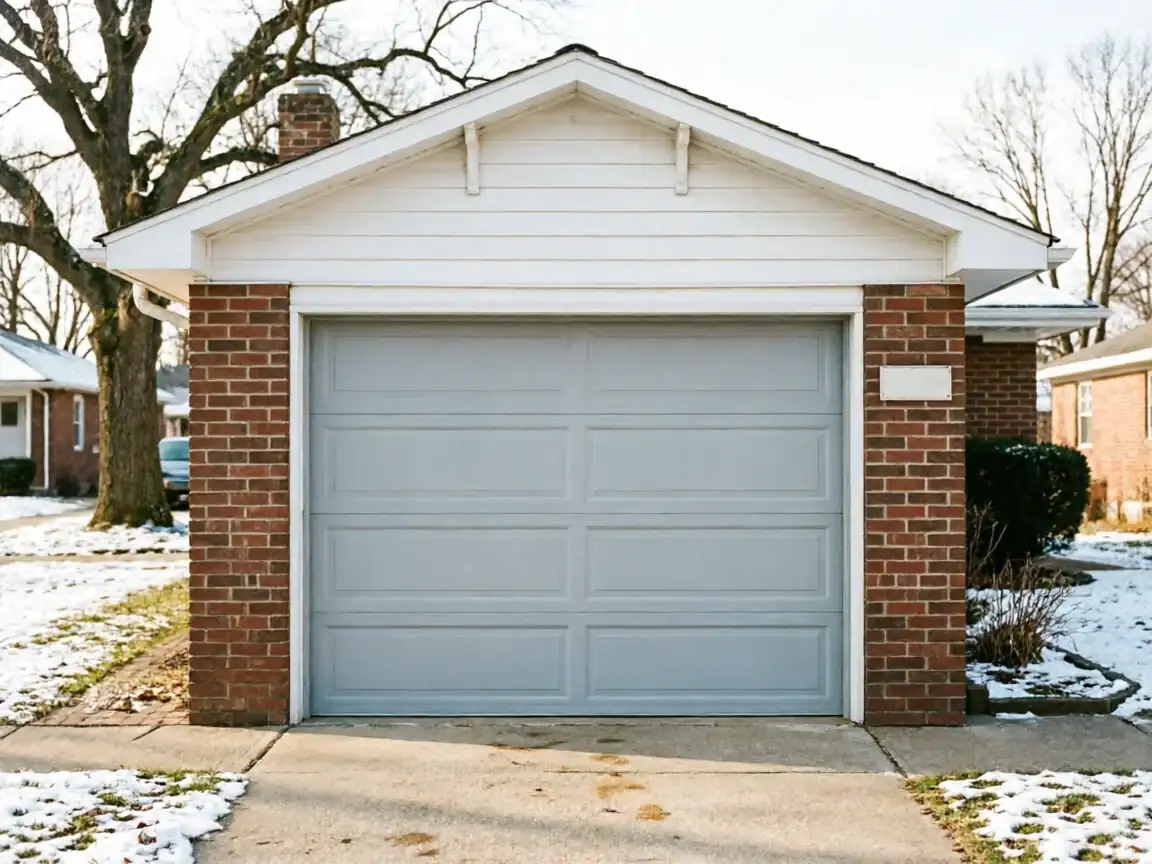
The other thing specific to this stretch of the suburbs: the climate here sits in a cold-moderate band, and temperature swings are hard on steel springs and nylon rollers that have already done fifteen-plus winters. Cold makes brittle metal fail suddenly instead of gradually. That combination - 1990s hardware plus a real winter - is the most common reason a Bartlett garage door goes from fine to immovable overnight.
Stocked Parts
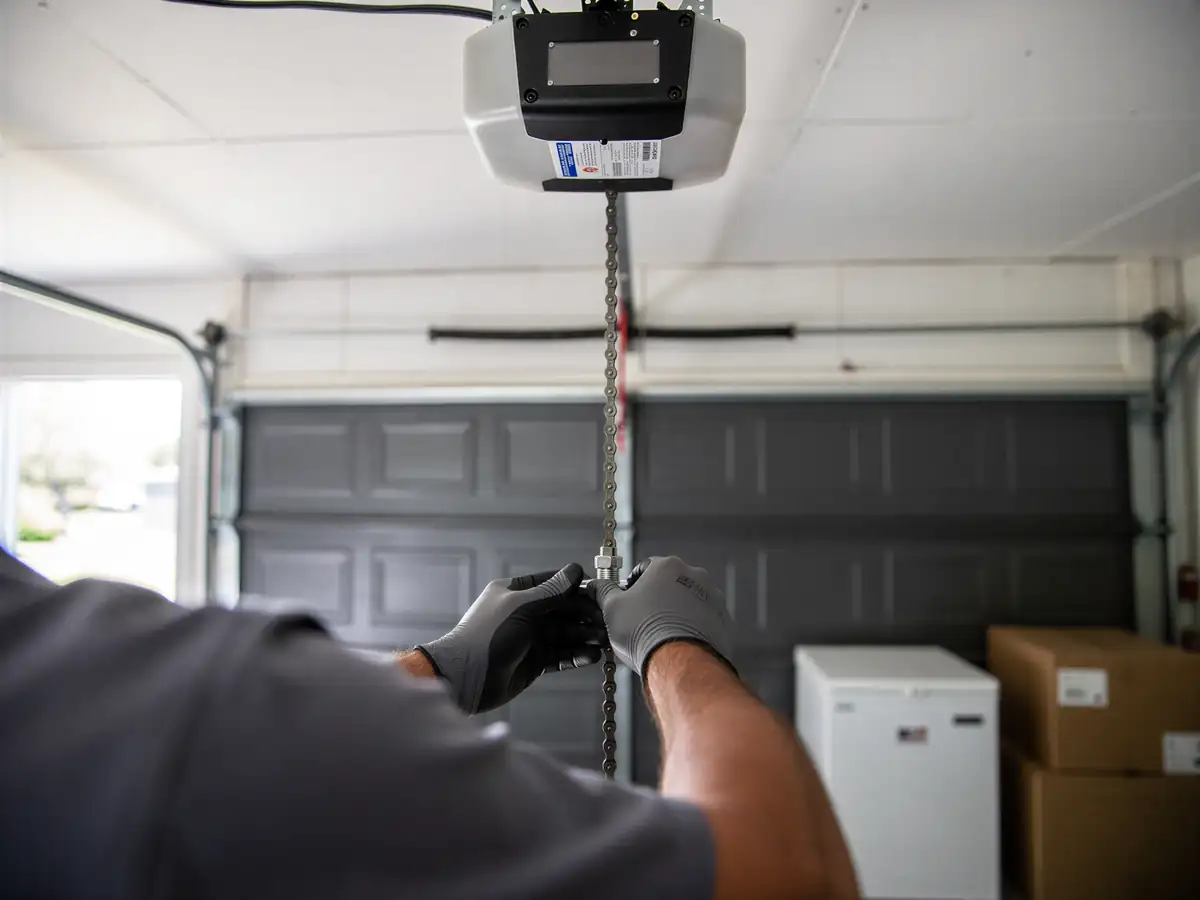
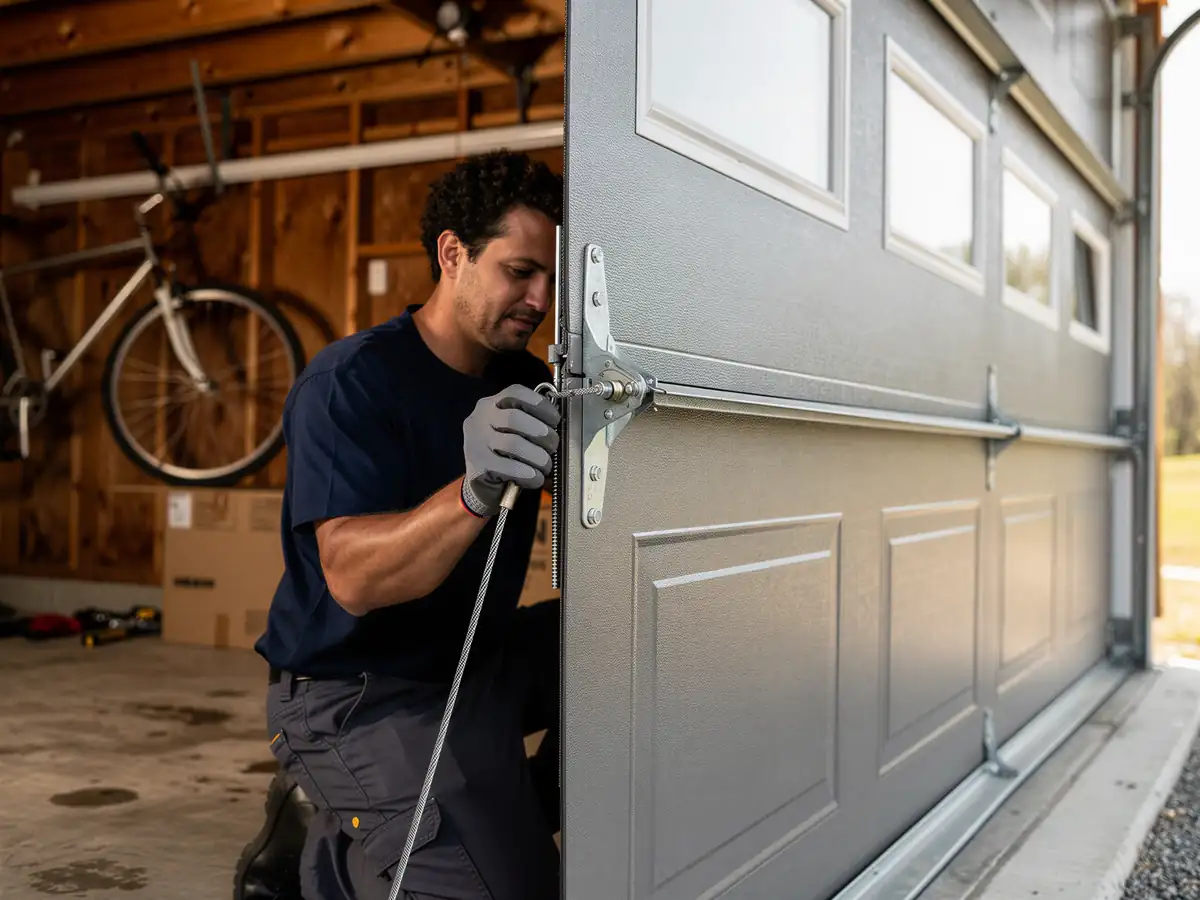
We carry torsion springs, extension springs, and the cables, rollers, and hinges that fail alongside them, because those are the parts that match what's actually installed in a house built in the early 90s. We also carry common chain-drive opener parts and logic boards for the models that were standard through that build era.
We don't stock every opener board ever made. If your door has a specialty opener or a wall console from a brand that stopped making parts years ago, that part may need to be ordered, and we'll tell you that on the spot rather than make you wait at the house for a part we don't have. That's the one honest limit here: same-visit fix depends on what's actually broken, not on how fast we can get there.
The Symptom
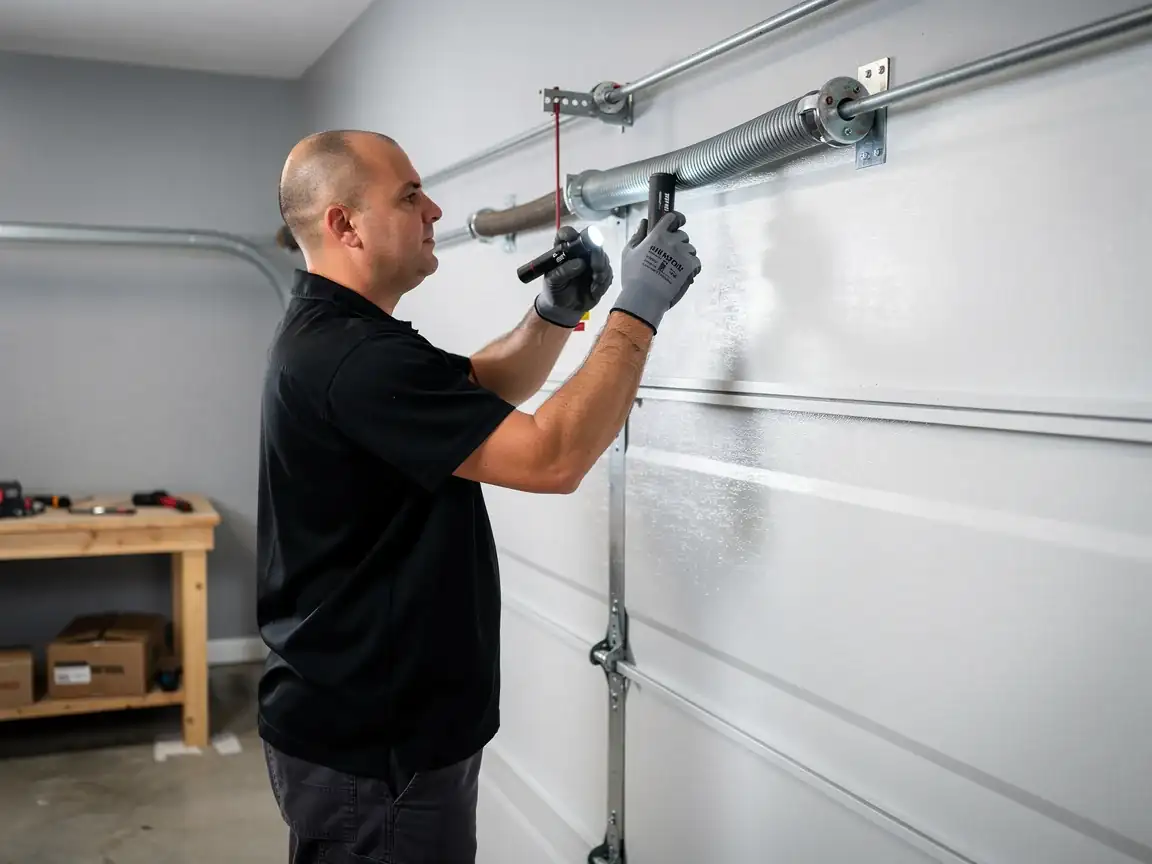
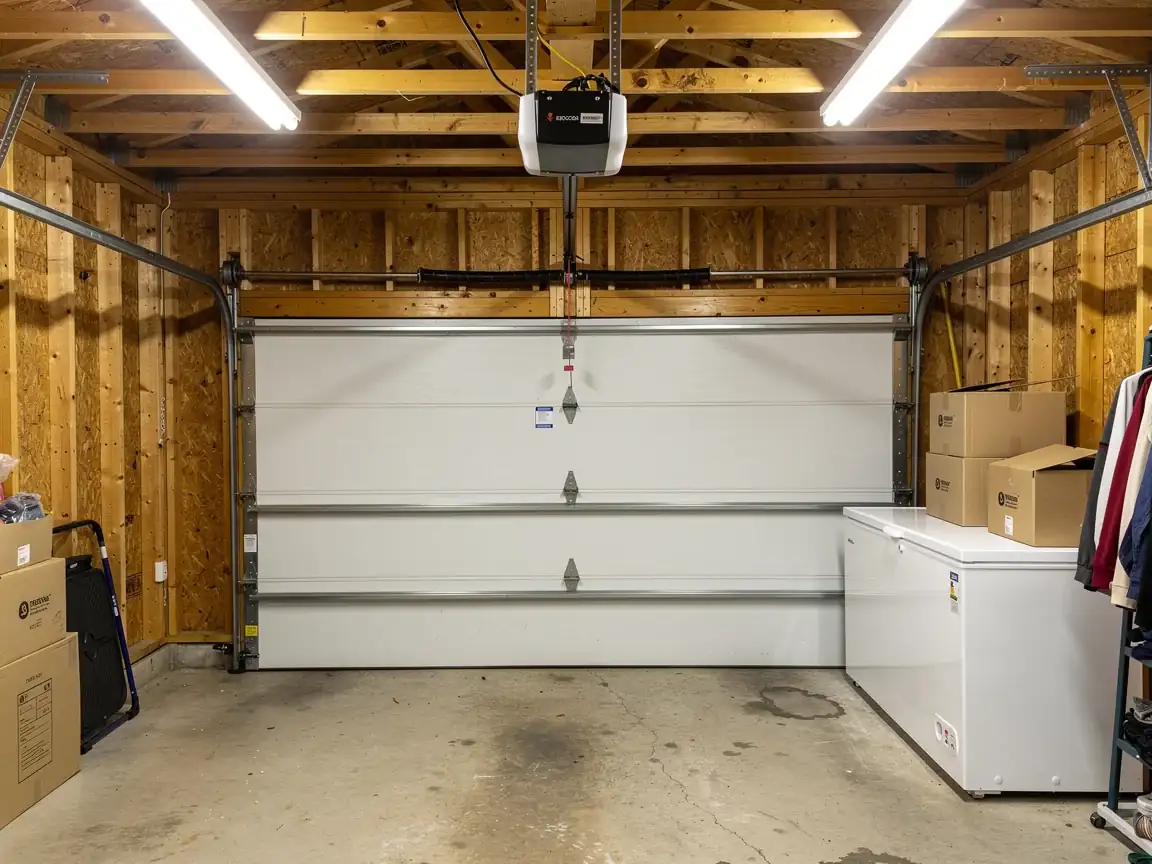
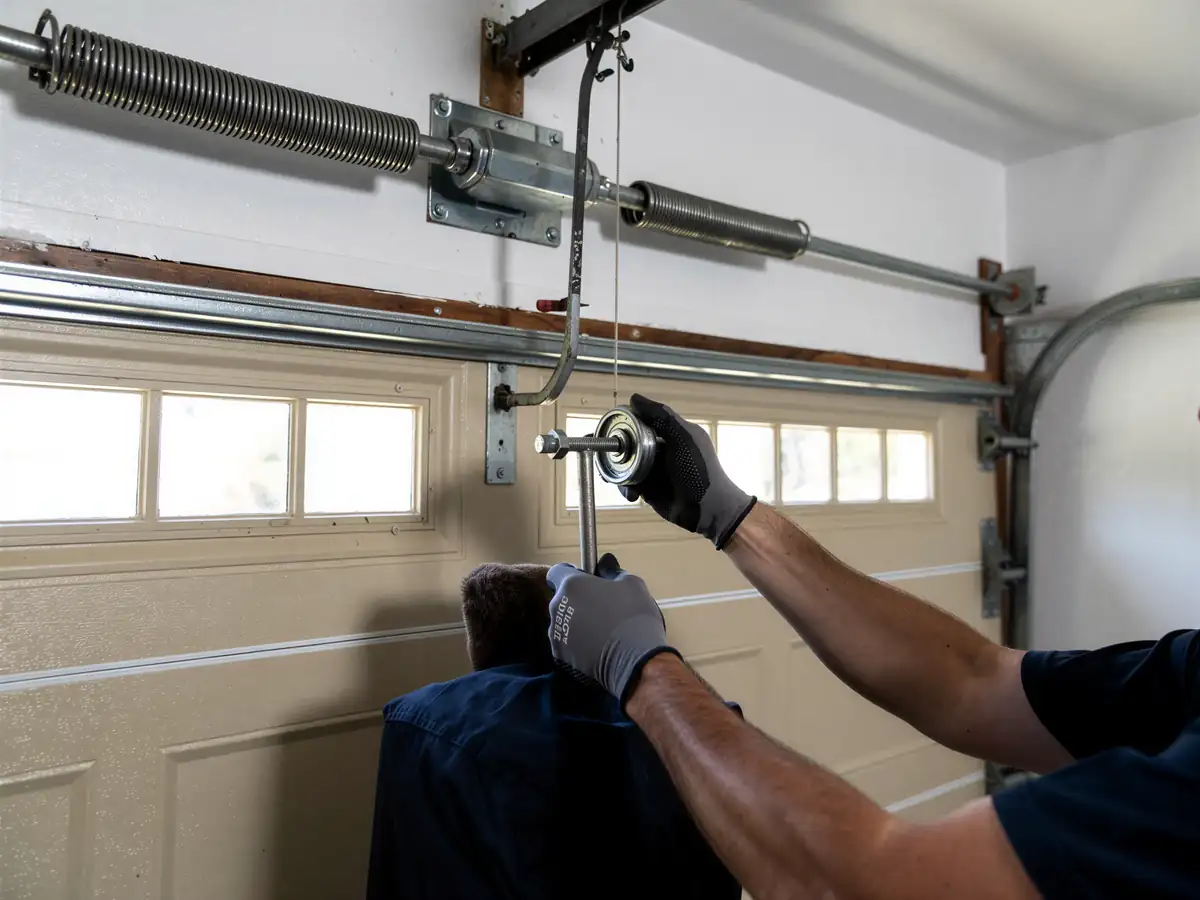
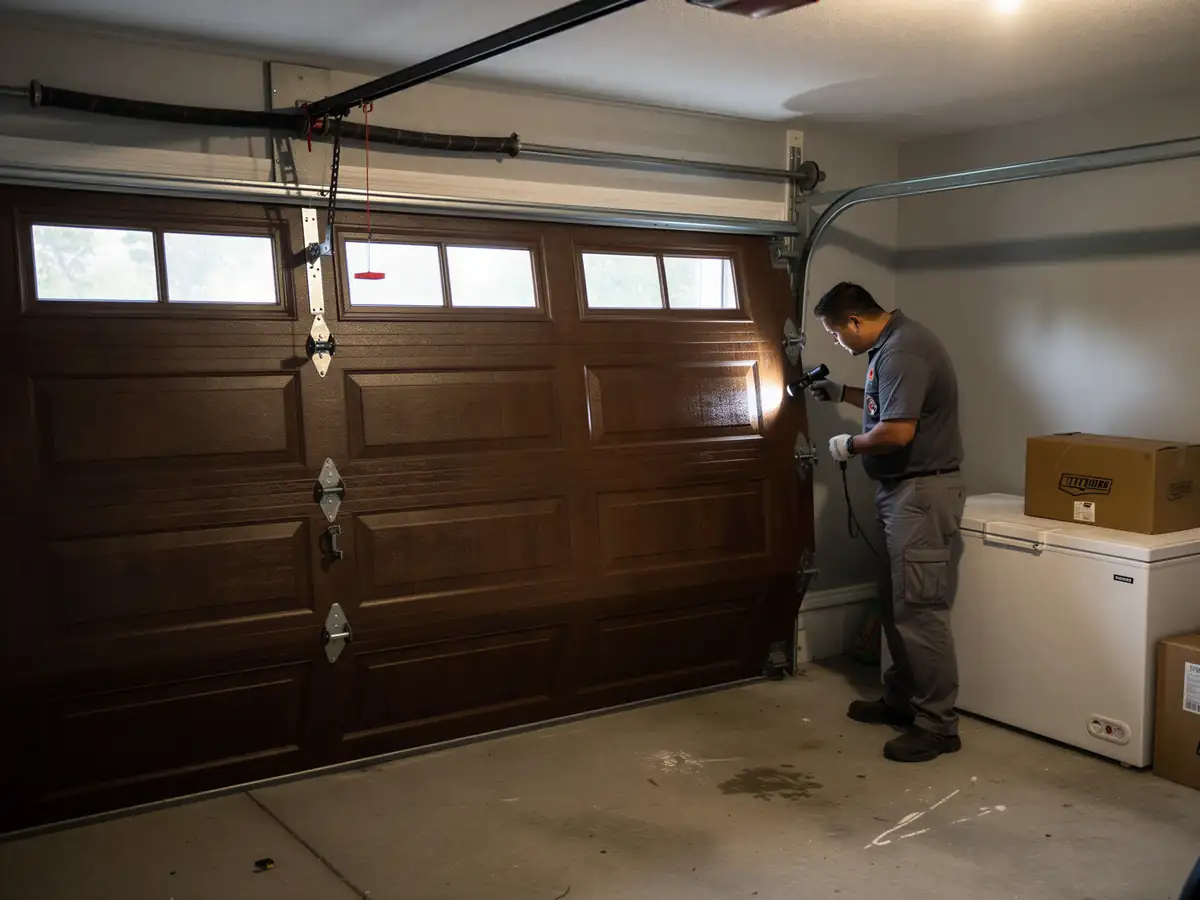
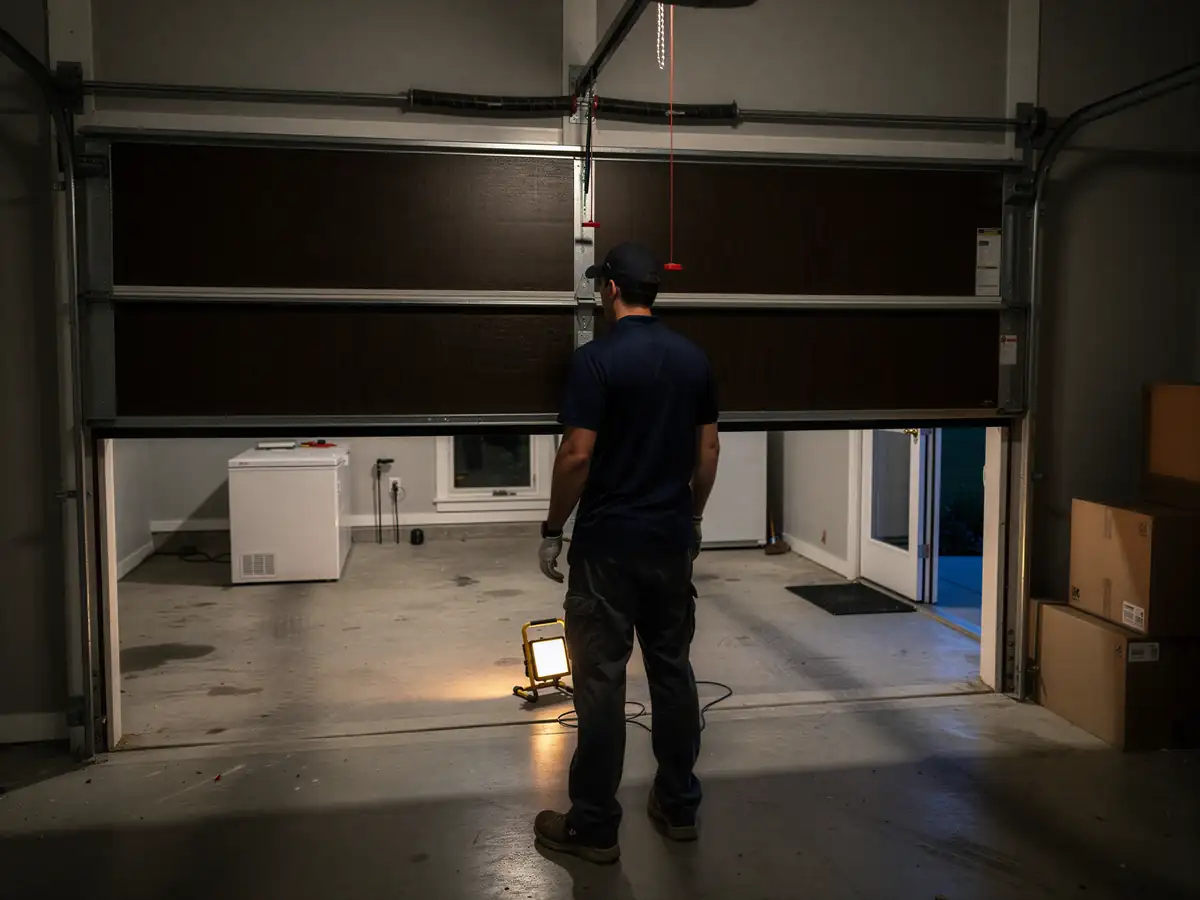
The call we get most from this part of the suburbs is the door that won't move at all - opener runs, light comes on, nothing happens at the drive gear, or the door moves two inches and stops hard. On a house from the early 90s, that's almost always one of two things: a snapped torsion spring, which you can sometimes see as a visible gap in the coil above the door, or a stripped plastic drive gear inside an opener that's been running on the original motor for three decades.
A door that lurches, drops fast on the way down, or won't stay up on its own is a spring problem, full stop, and it's dangerous to force. A door that hums but doesn't lift is almost always the opener, not the door itself. Knowing which one you've got before we arrive saves time, but either way, don't keep hitting the button hoping it clears itself - that's how a bad spring takes a cable with it.
Doing It Yourself
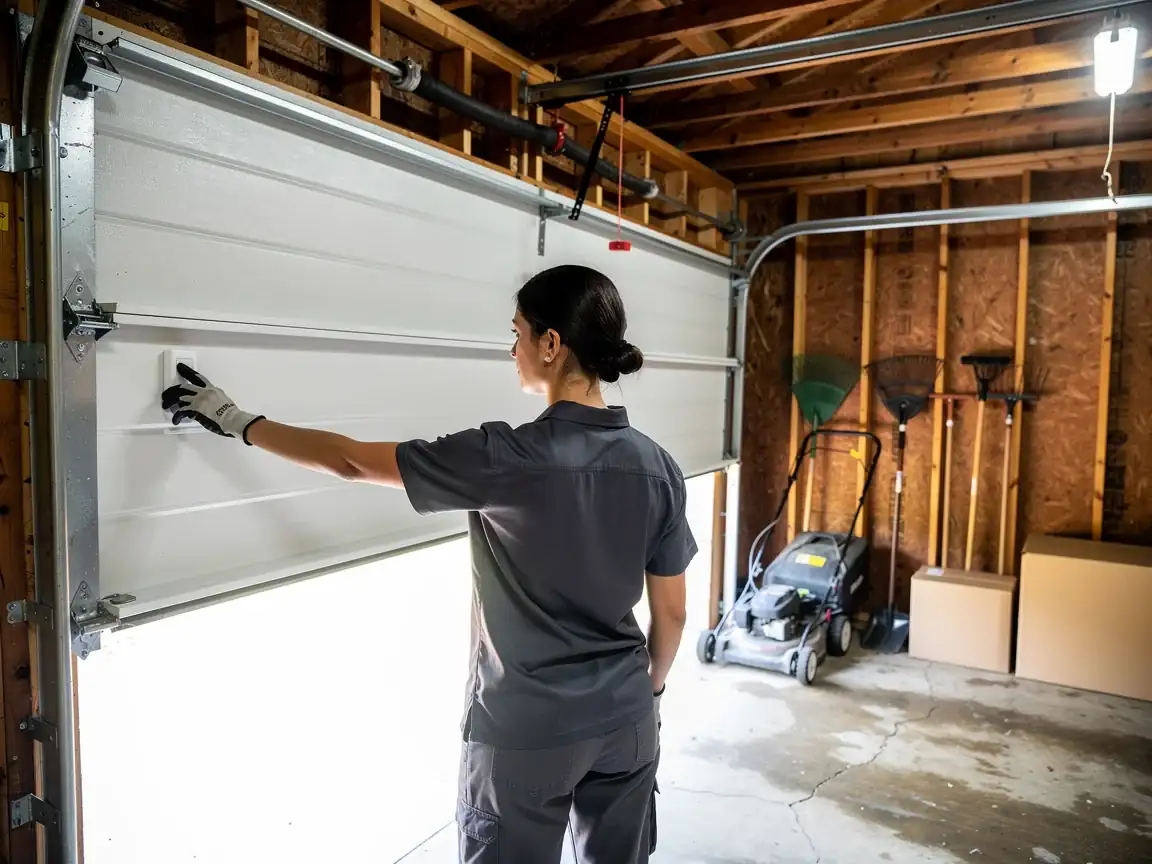
There's a short list of things worth checking before you call. Look at the torsion spring above the door for a visible gap or separation - if you see one, stop, don't touch it, and don't try to open the door manually. Check the photo-eye sensors near the floor on each track; a knocked-out-of-alignment sensor is a common, harmless cause of a door that won't close, and straightening it yourself is free and safe.
What's not a DIY job on a house this age: the torsion spring itself, the cables, and anything involving the opener's internal gears. These carry real tension and a mis-handled spring has put people in the hospital. If your door is original to the house or close to it, the smart move with an opener that's failing intermittently is often replacement rather than repair - chasing parts for a thirty-year-old logic board usually costs more in time than a new unit costs in dollars.