What Causes It Around Here
Start with the money, because it changes the decision. Bartlett's median household income runs $130,479, well above the $106,211 median across the rest of the territory we cover out of Aurora. At that income level, the math on a tired door tips toward replacement sooner than it would elsewhere - a $300 spring job on a door that's already fighting a warped panel or a dead opener motor isn't a bargain, it's a delay.
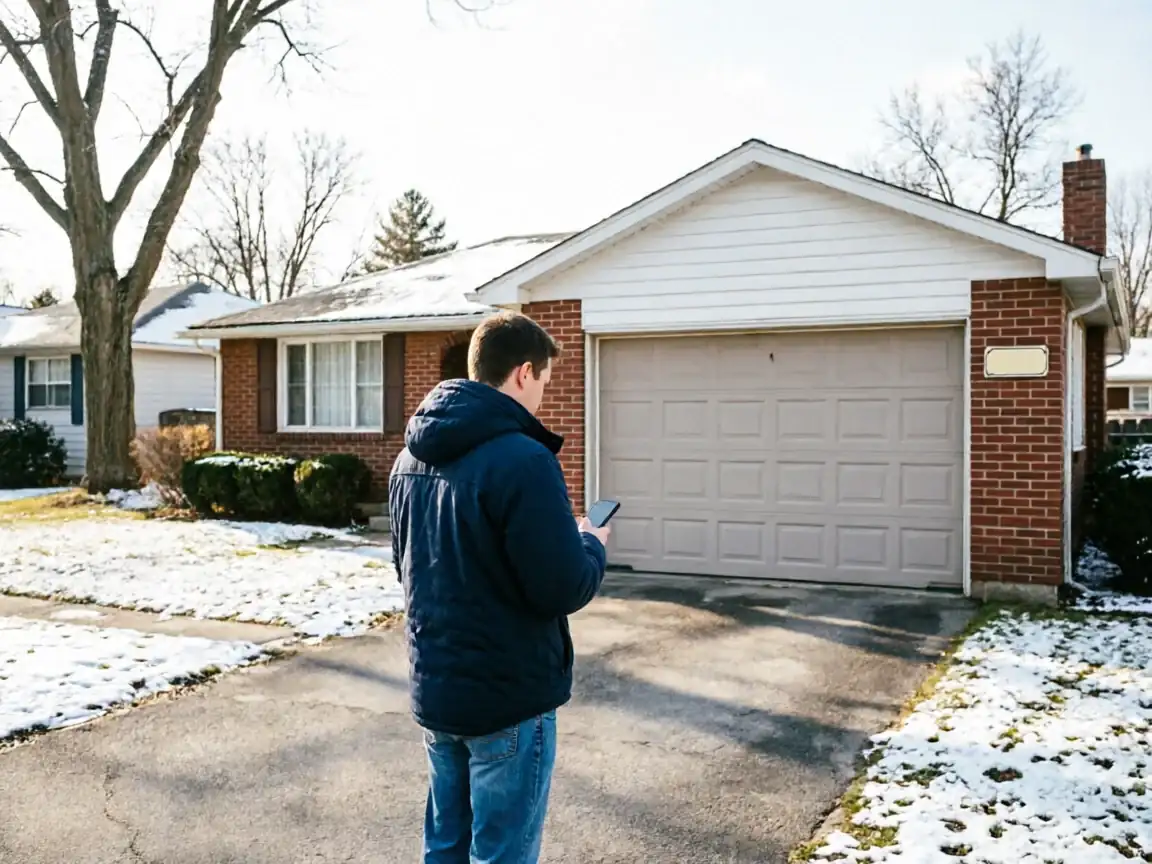
The housing stock backs this up. Across our whole service area the median build year is 1981, but Bartlett's homes cluster closer to 1992. That decade matters. Doors from the early-to-mid 90s were usually builder-grade steel, single-layer, no thermal break, hung on hardware that was fine for its time but never meant to run an opener for thirty-plus years. By now a lot of those original doors are sagging at the bottom panel, the track has shifted on the jamb, or the door is just heavy and loud in a way it wasn't at year five. That's less a repair conversation and more a replace conversation, especially once a homeowner is already weighing R-value and noise against what a new door actually costs.
Stocked Parts
We run standard-width residential sections, torsion springs sized for the common 7-foot and 8-foot openings, and galvanized track in the lengths that cover most garages built in the 1980s and 90s - which, given Bartlett's build-year cluster, is most of what we see out there. Insulated steel panels and standard-lift opener brackets are in regular rotation too, since this area sits in a cold-moderate climate band and a non-insulated door shows that gap in January, not July.
What we don't carry on the truck: custom wood doors, oversized carriage-style doors outside standard dimensions, and anything requiring a special-order color or glass-insert pattern. Those get quoted and ordered in, and the lead time depends on the manufacturer, not on us. If your install needs one of those, we'll tell you upfront rather than let you assume it's a same-visit job.
How to Book
Jobs in Bartlett get scheduled off the Aurora shop, about 15 miles out
So we batch visits rather than promise a same-day slot for every call - that's the honest limitation here, not a dodge. Once you reach out through the Bartlett page, we'll ask for the door's rough age, the opening width, and whether you're replacing like-for-like or changing the lift type (torsion vs. extension), since that changes what goes on the truck.
- 15 miles
Given that 14,332 households sit in Bartlett alone
Within a service area of 311,217 households total, we're not guessing at what this town needs - we just don't stage a second depot here, so travel time is built into the quote, not hidden in it. If you want the broader rundown of what we install and service across the area, that lives on the main installation page, but booking for your address starts on the Bartlett page.
The Symptom
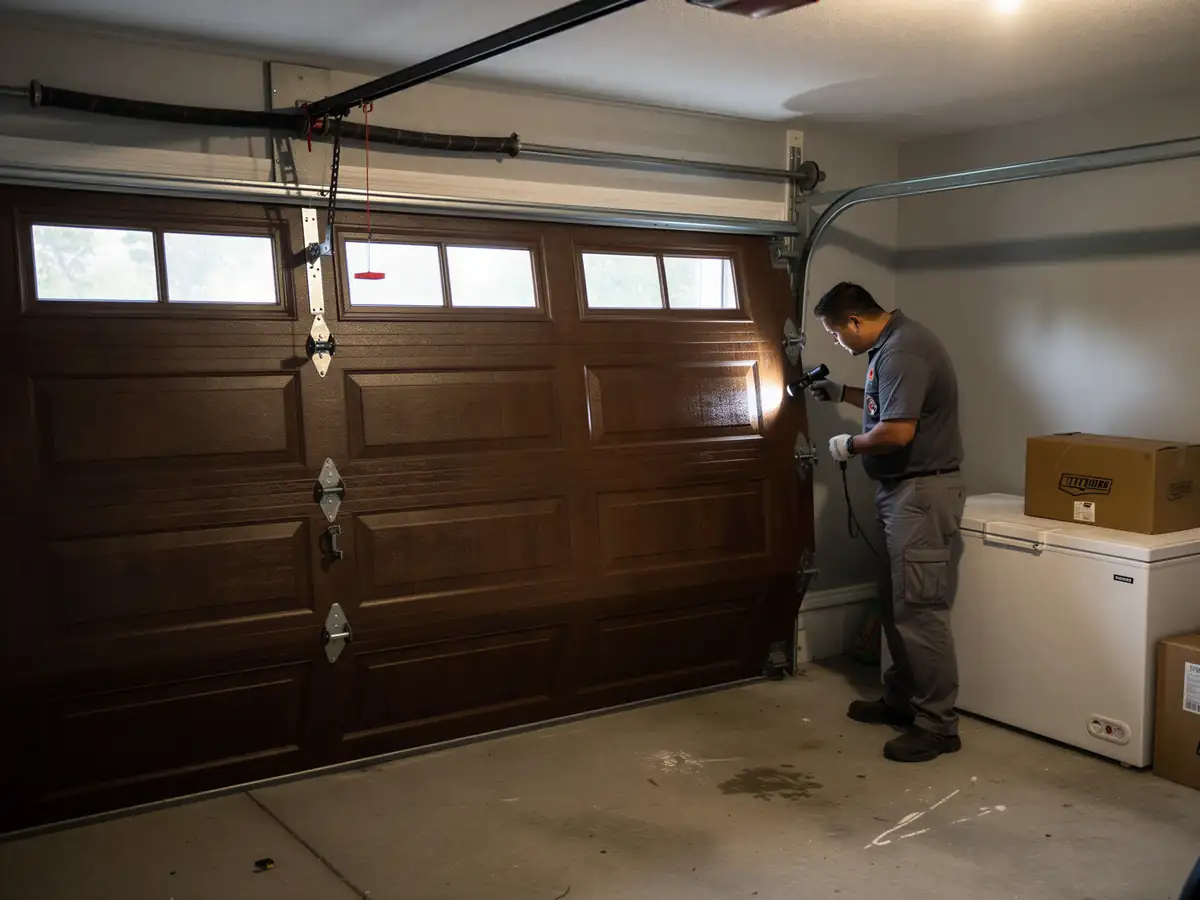
The call we get most from this area isn't a dead opener - it's a door that still runs but sounds wrong and looks tired. Builder-grade doors from the early 90s often show their age as cosmetic sag before they show it mechanically: a bottom panel that's bowed enough to let daylight show at the corners, a finish that's chalked out from thirty winters, or a window insert that's fogged solid.
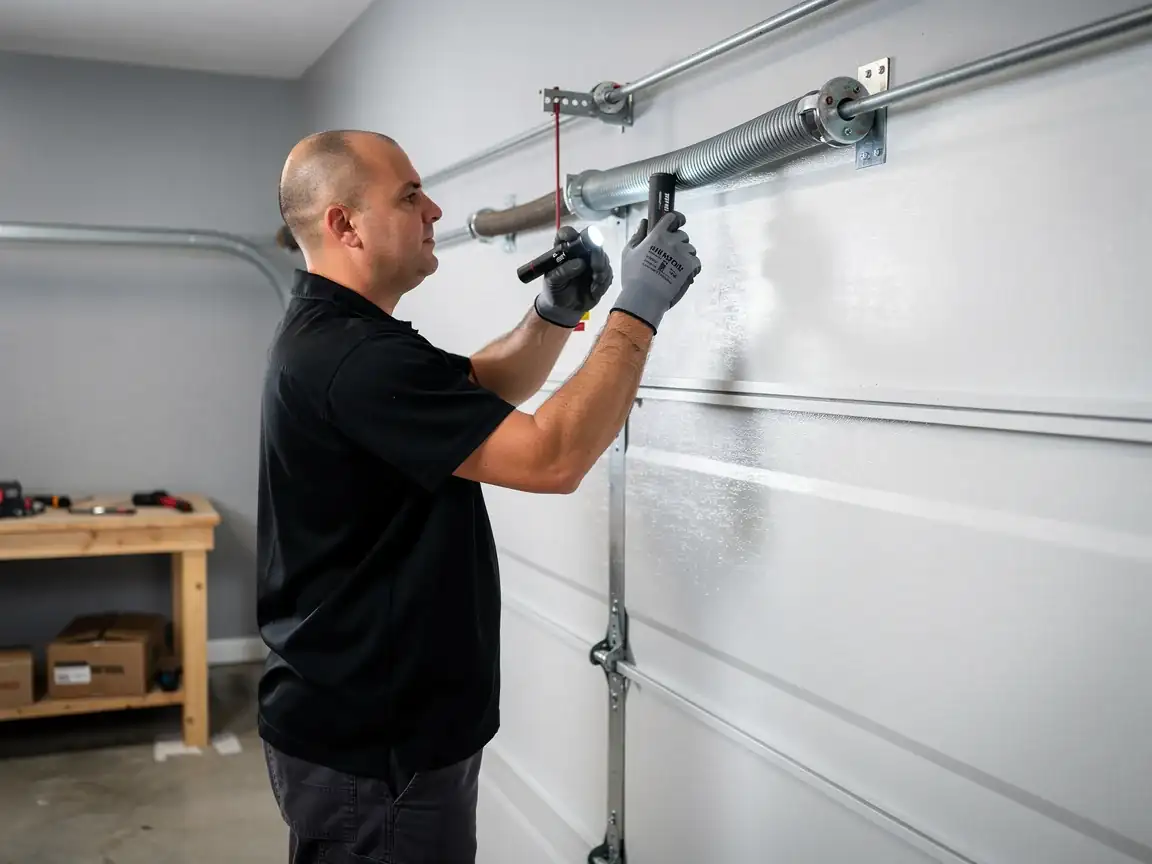
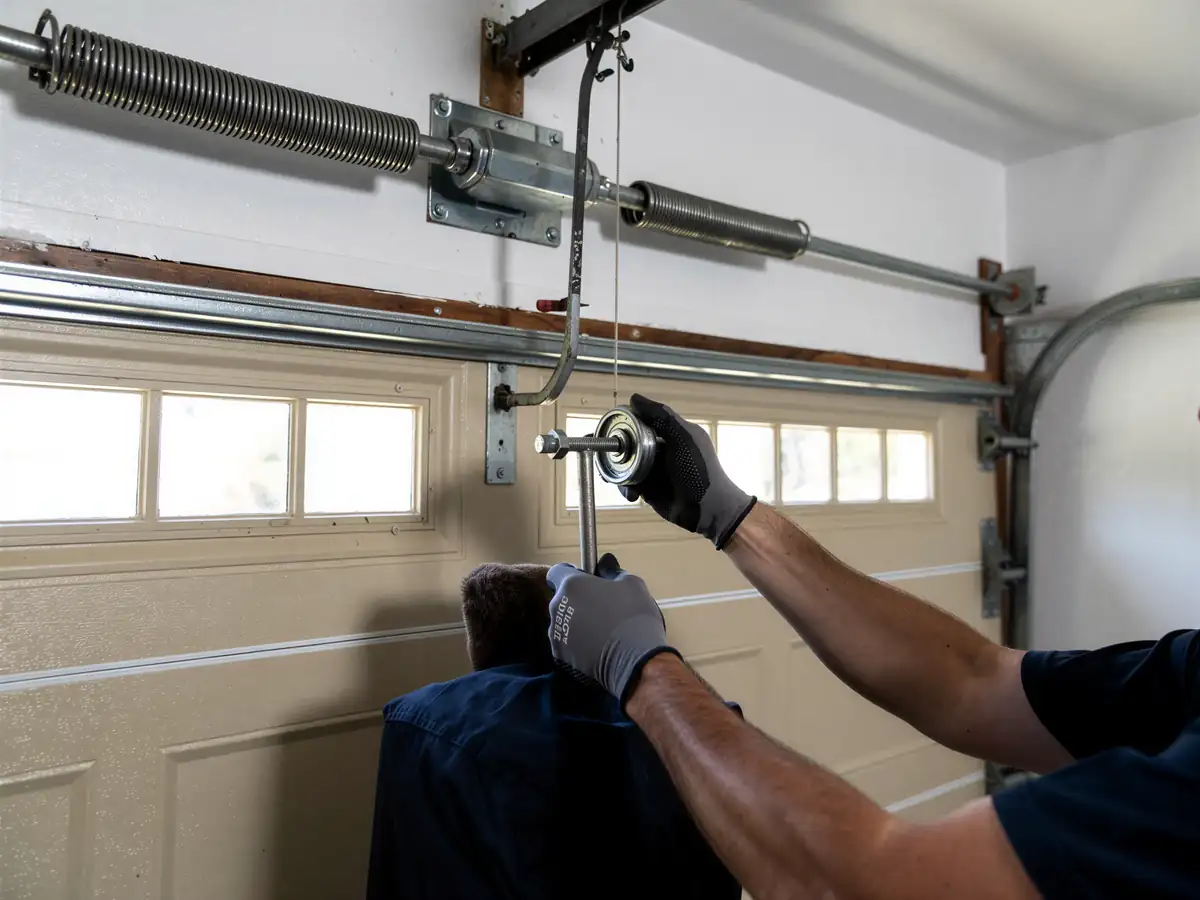
Mechanically, the giveaway is a door that shudders or hangs for a second at the two-thirds point of travel - that's usually a spring sized for a lighter original door now straining to lift a panel that's picked up moisture weight over the decades. None of that is an emergency. It's a door telling you it's closer to the end of its run than the middle, which, on a home built around 1992, checks out.
Doing It Yourself
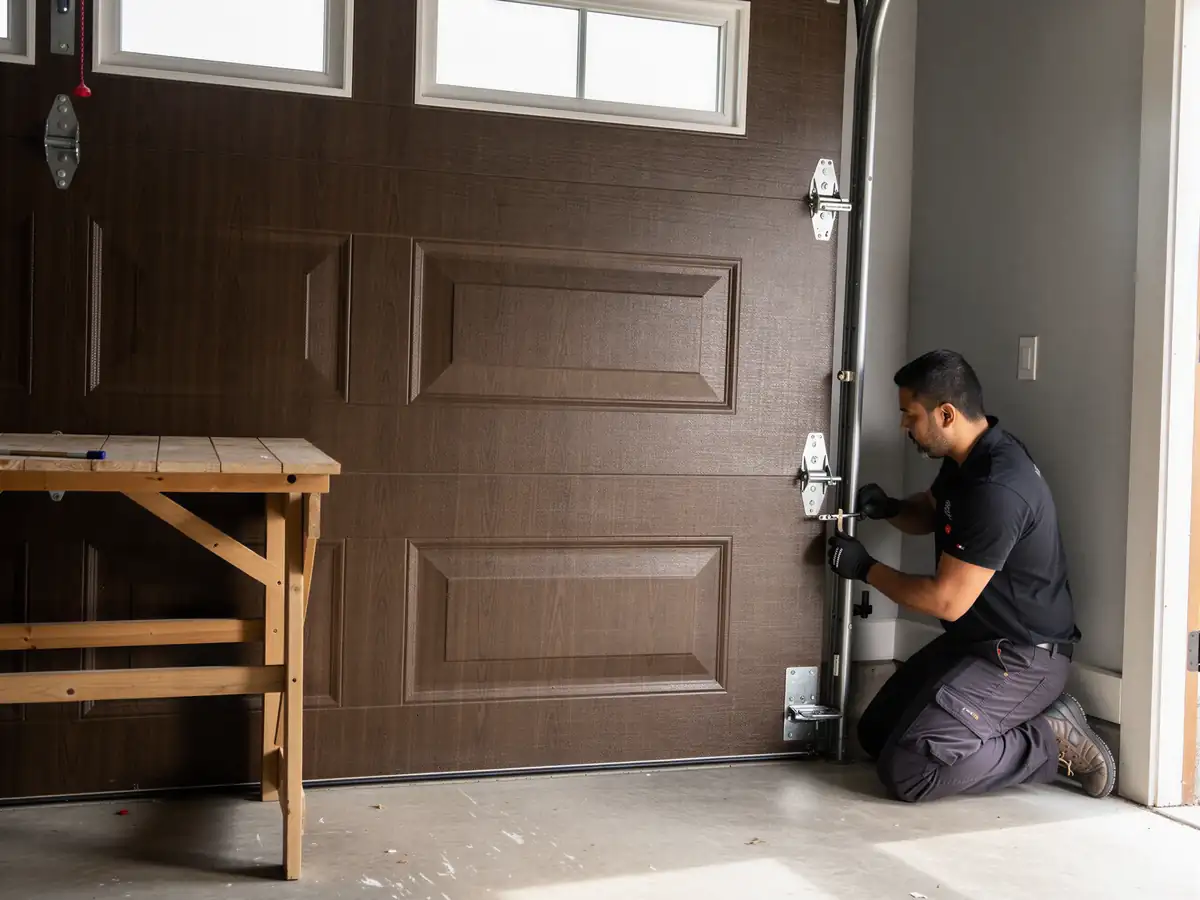
Swapping a damaged bottom panel section on an otherwise sound door is a real option if the rest of the door and track are square - it's cheaper than a full replacement and keeps you off a ladder with a torsion spring, which is the one repair we don't recommend attempting solo regardless of the tool advice online. Measuring and ordering a matching panel yourself is realistic if your door is a common size, which most of the 1980s-and-90s stock in this area is.
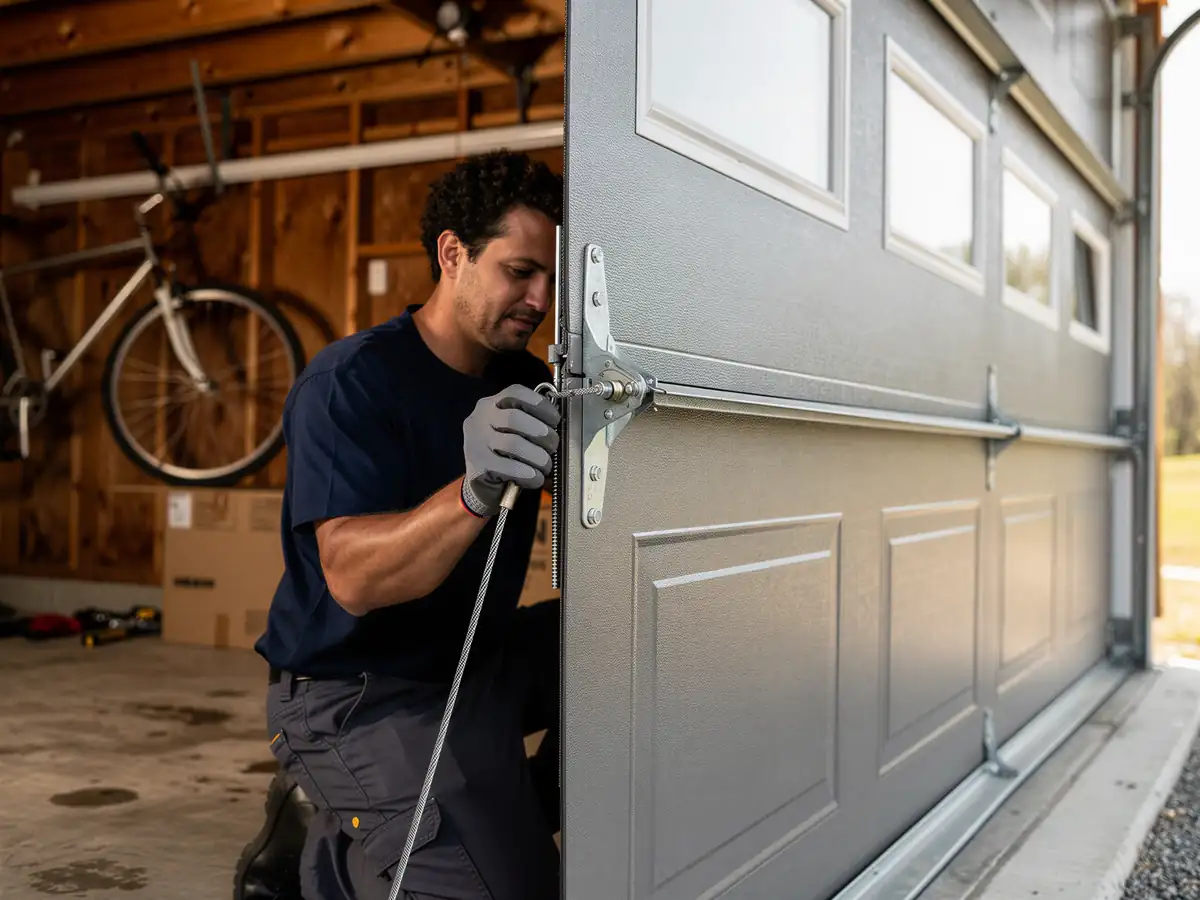
Where DIY stops making sense is full-unit replacement. New doors need the opening checked for square, the track reset to match, and the opener re-tuned to the new door's weight - get any one of those wrong and you've got a door that binds or an opener straining against resistance it wasn't set for. That's the point where it's worth a call rather than a Saturday project.
How Long You Are Without the Door
A straight swap - same opening, new door, same opener reused
Is typically a one-visit job once the door and hardware are on the truck or in stock. Where it stretches is custom sizing or a special-order panel style, which we flagged above under Stocked Parts; those jobs wait on the manufacturer's timeline, not ours, and we'll give you that window before you commit rather than after.
If you're also replacing the opener because the old one's motor is original to a 1992 install
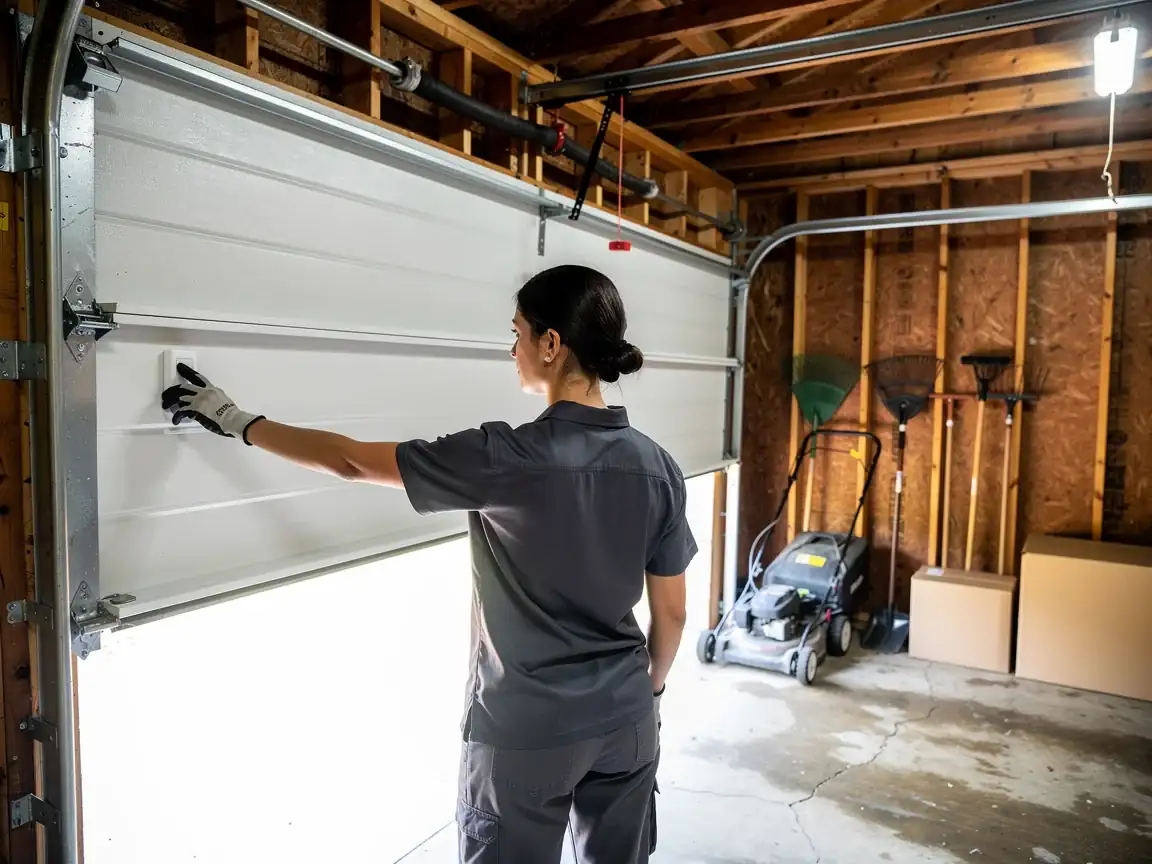
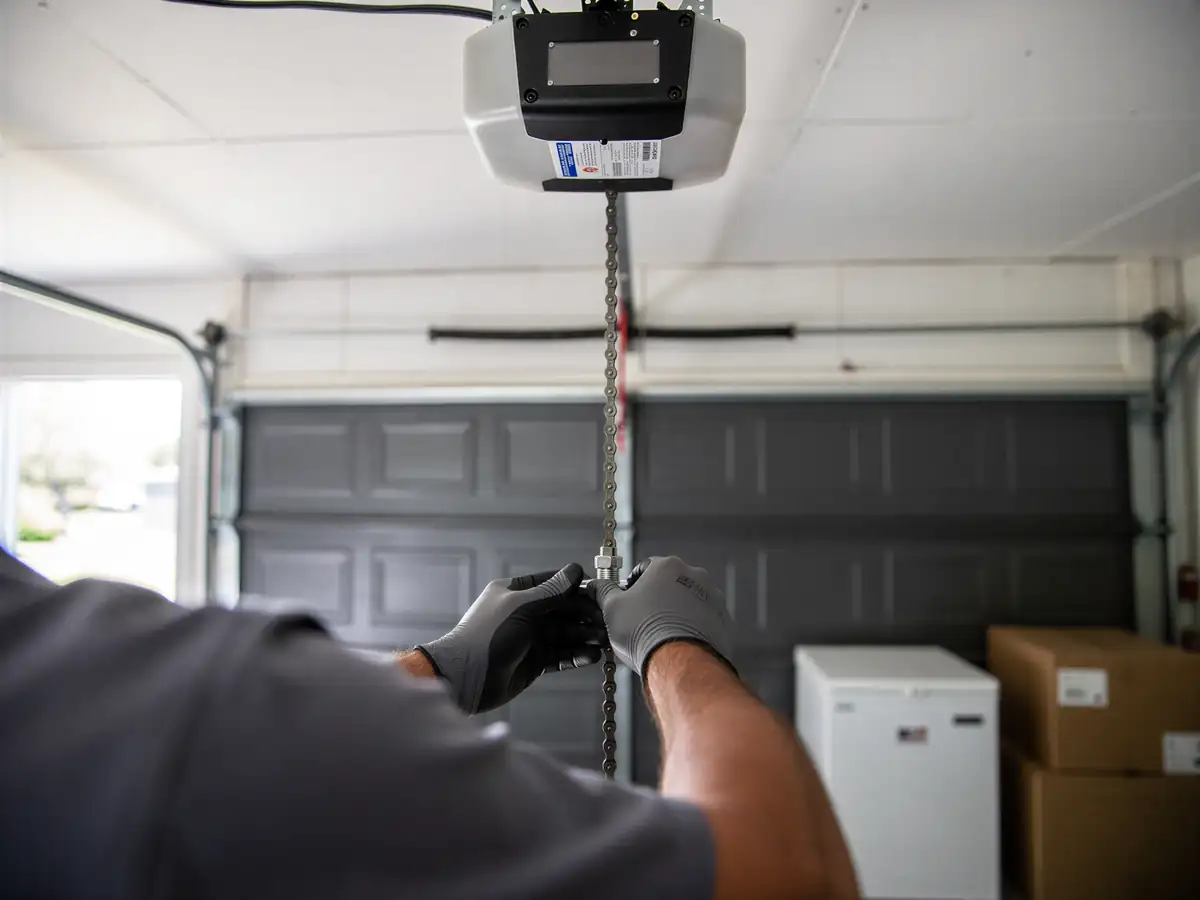
Plan on a bit more time at the appointment for mounting and programming, but it's still same-day. The garage isn't usable mid-install either way - there's no partial-open state while the old door comes down and the new one goes up - so plan around that block of time rather than around a specific hour.