What Causes It Around Here
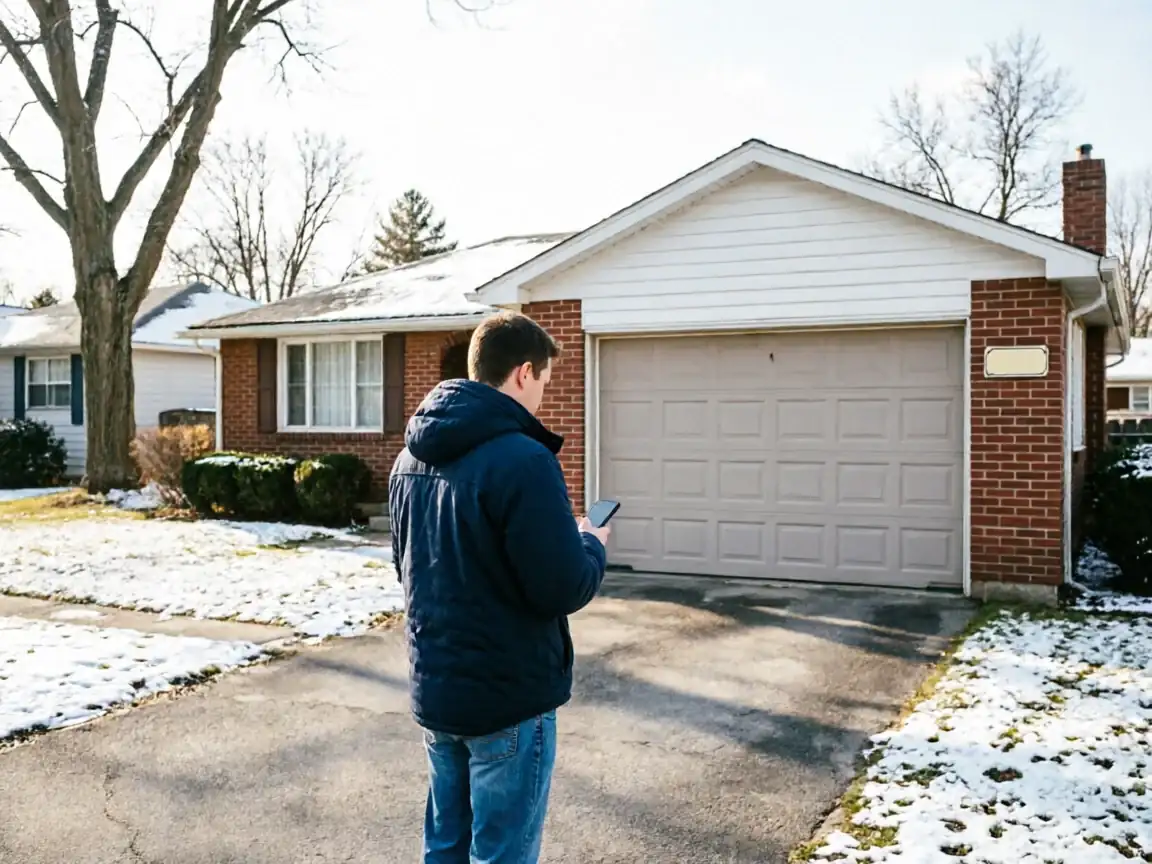
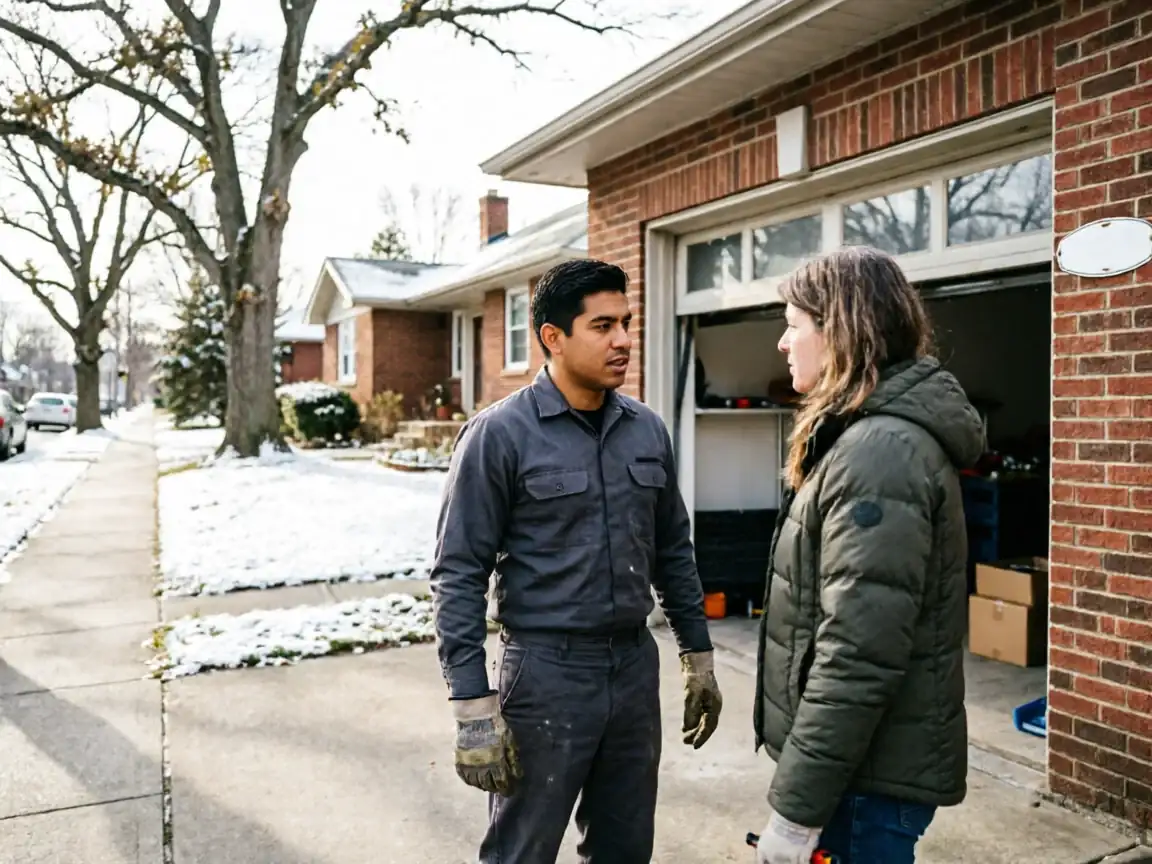
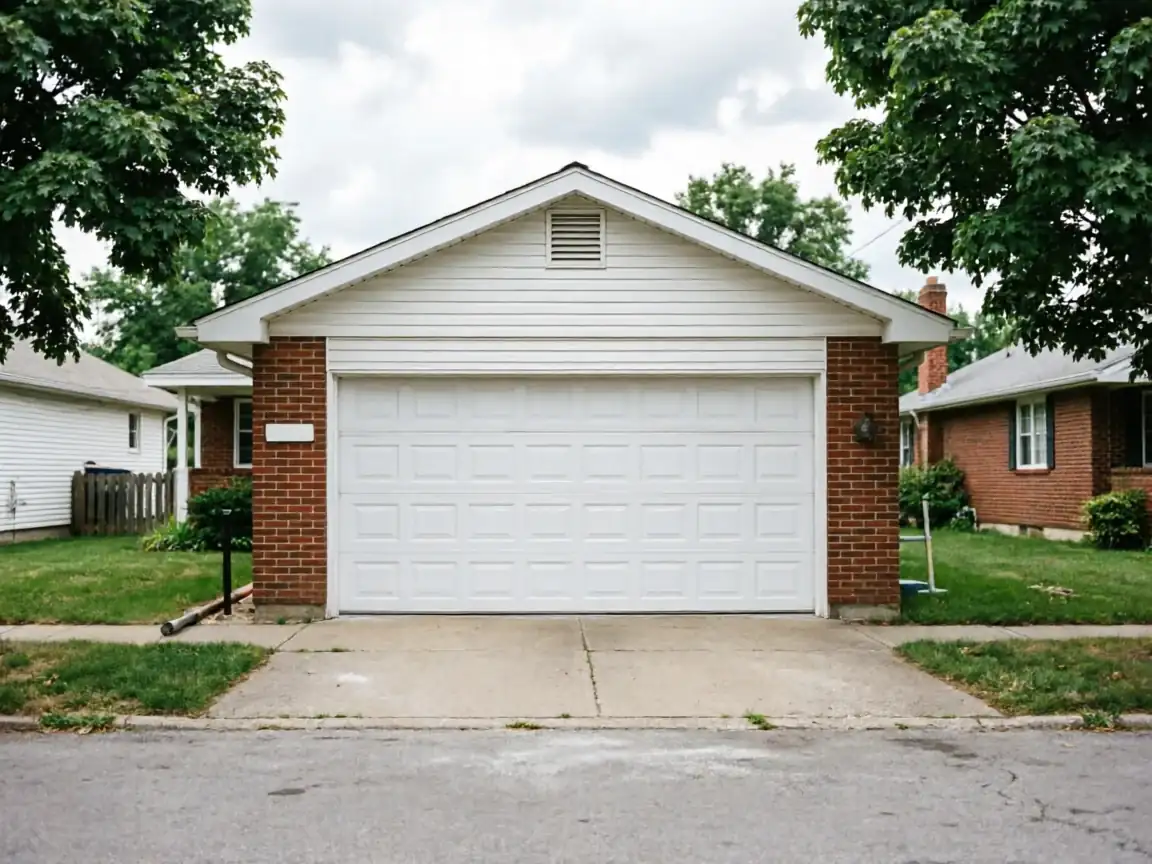
Bartlett sits about 15 miles from our shop in Aurora, and the drive matters more here than in the towns right next to us. We're not swinging by on the way to another job - a call to Bartlett is a dedicated trip, so when you book we're scheduling a window, not a drop-in. That's worth knowing up front, because it shapes how the whole visit runs, from the parts we bring to the quote we give you before the truck leaves.
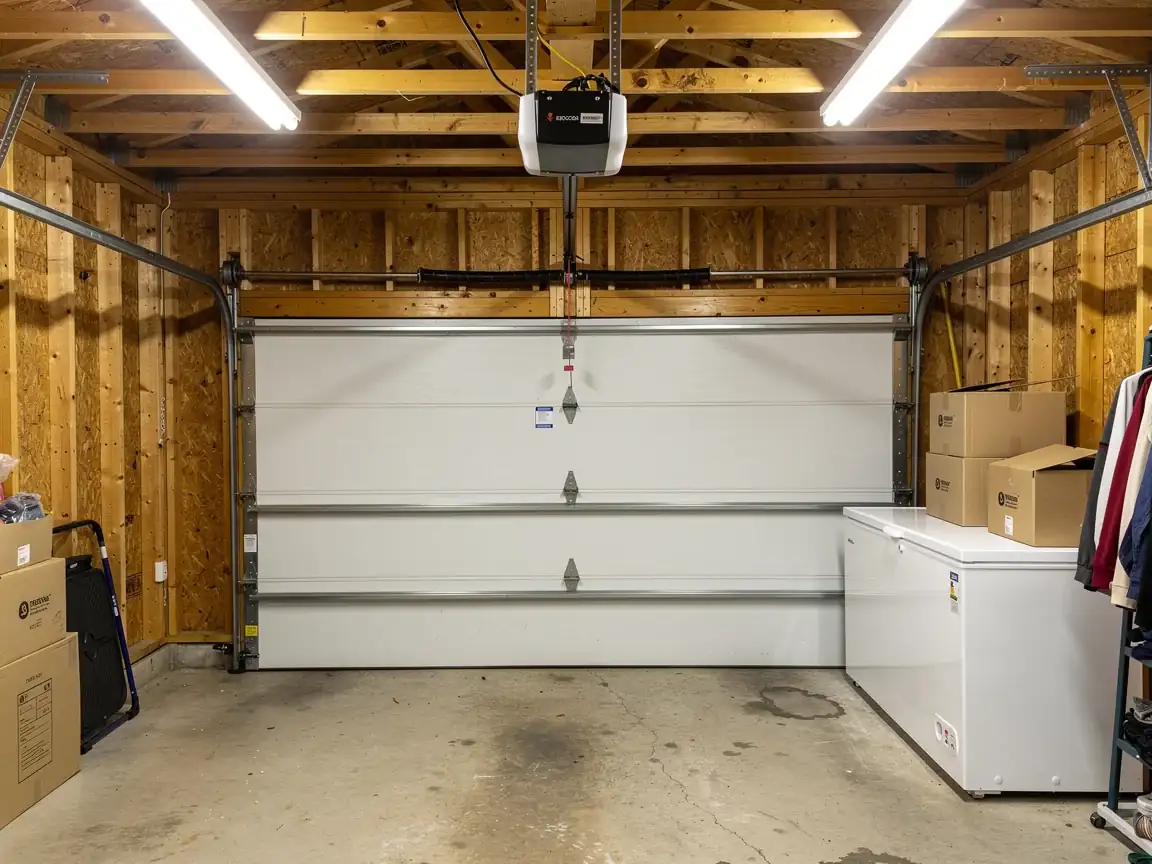
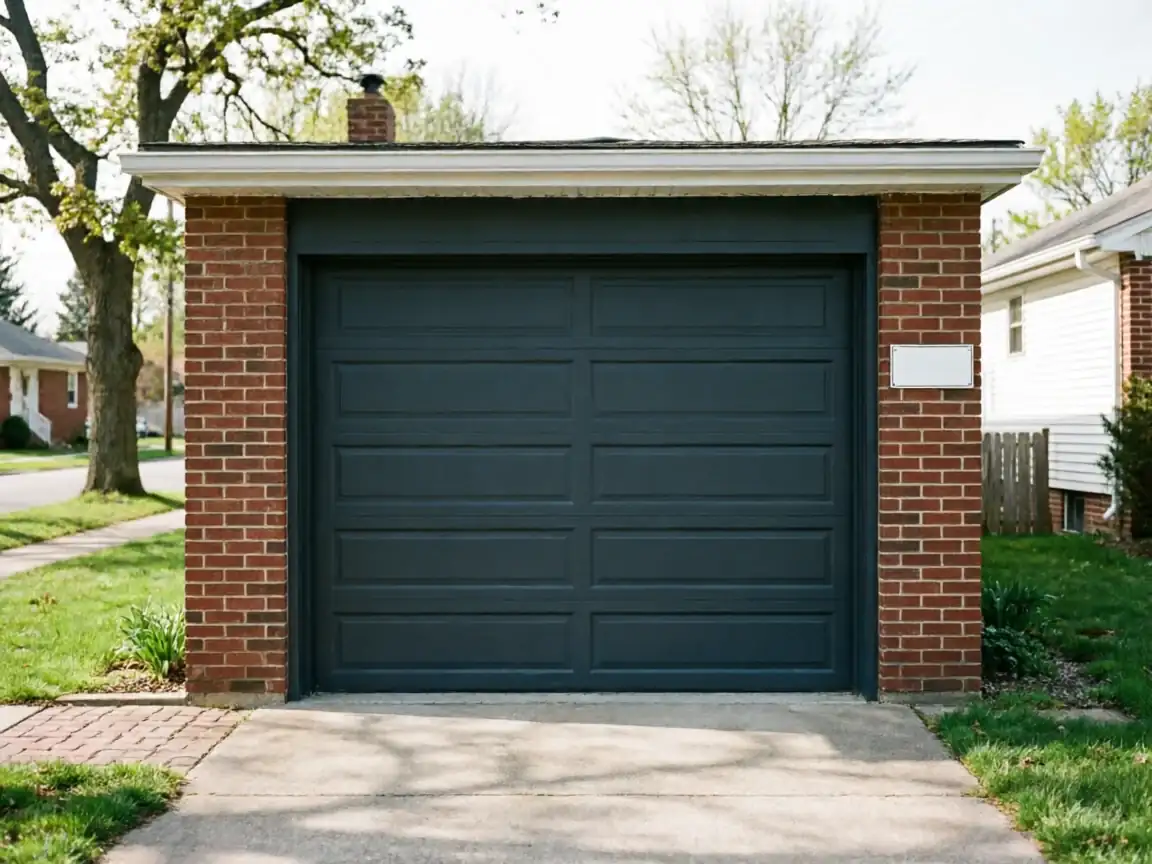
What we see on these jobs tracks the housing stock. The median home in Bartlett was built around 1992, newer than a lot of what we service closer to Aurora, where the broader area's housing runs 1958 to 2003 with a median near 1981. That later build date means more homes here came with factory steel doors on torsion springs and early photo-eye safety sensors rather than the older extension-spring setups you still find on pre-1980s garages. The faults differ too - sensor misalignment and opener logic boards show up more than the spring and cable failures that dominate on the oldest stock. Cold winters still take a toll on spring tension and lubrication either way, since this whole area sits in a moderate-cold climate band.
Stocked Parts
Because we're driving in from Aurora, what's on the truck when we leave matters. For 1990s-era doors like the ones common in Bartlett, that means standard torsion springs sized for steel sectional doors, photo-eye sensor pairs, and the logic boards that fail on openers from that generation. We carry rollers and standard-width tracks that fit garages built to that era's sizing too.
Honest limitation: if your door is an older extension-spring style, or a less common panel size, we may not have that exact part on the truck the first time out. In that case we'll diagnose on site, give you a straight answer, and order what's needed rather than guess.
The Symptom
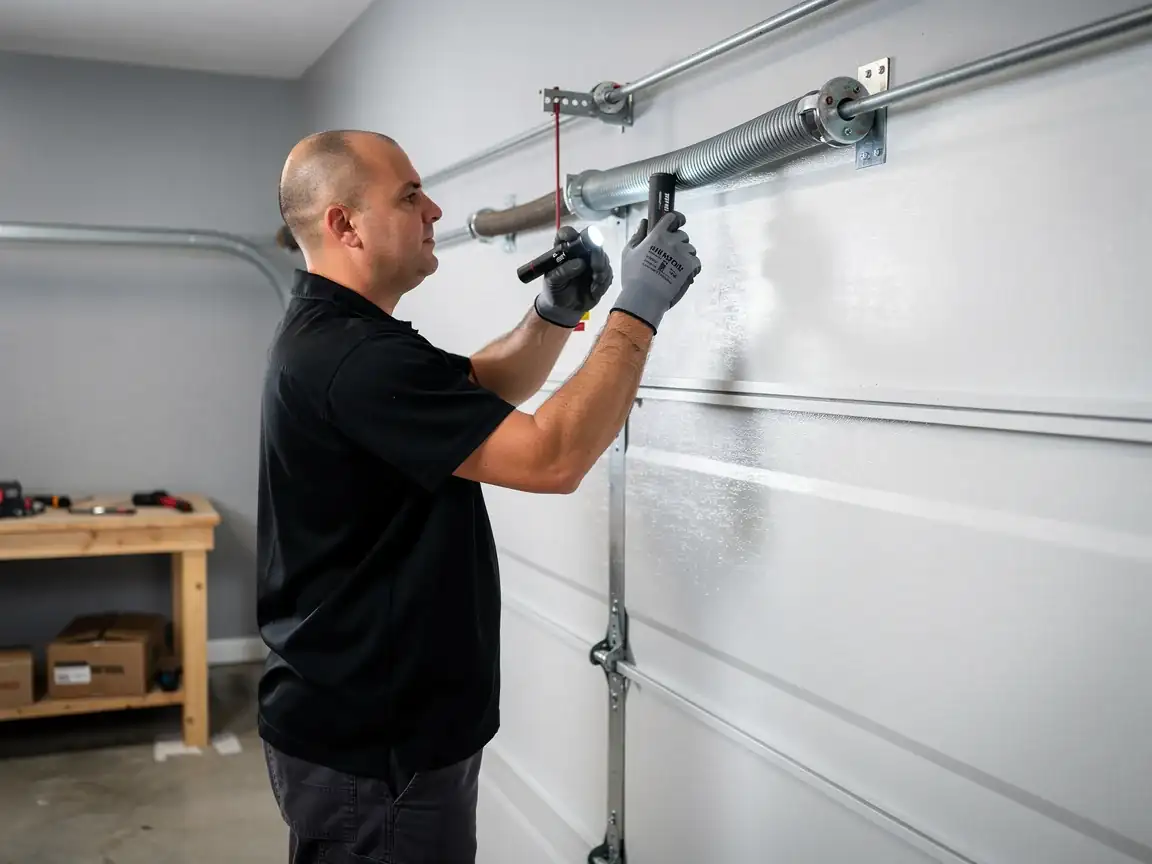
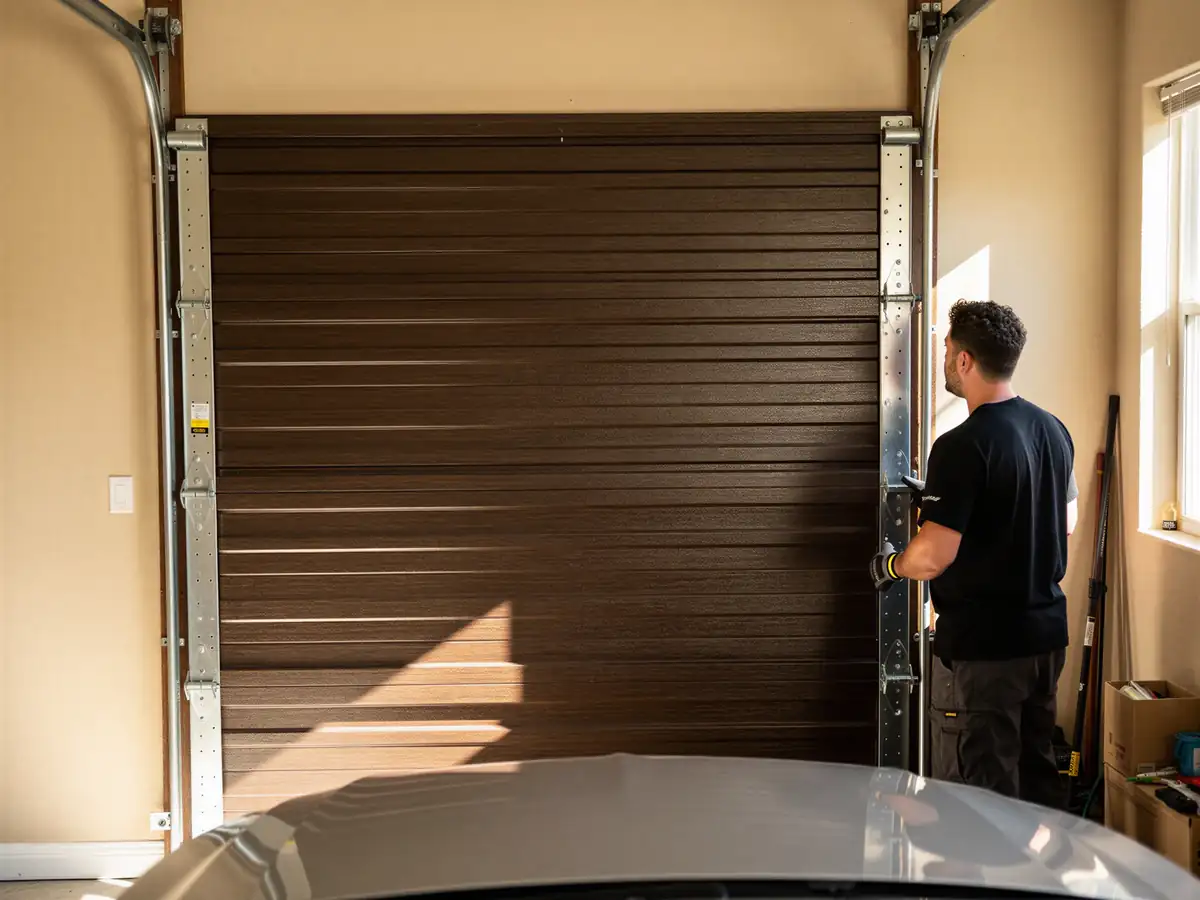
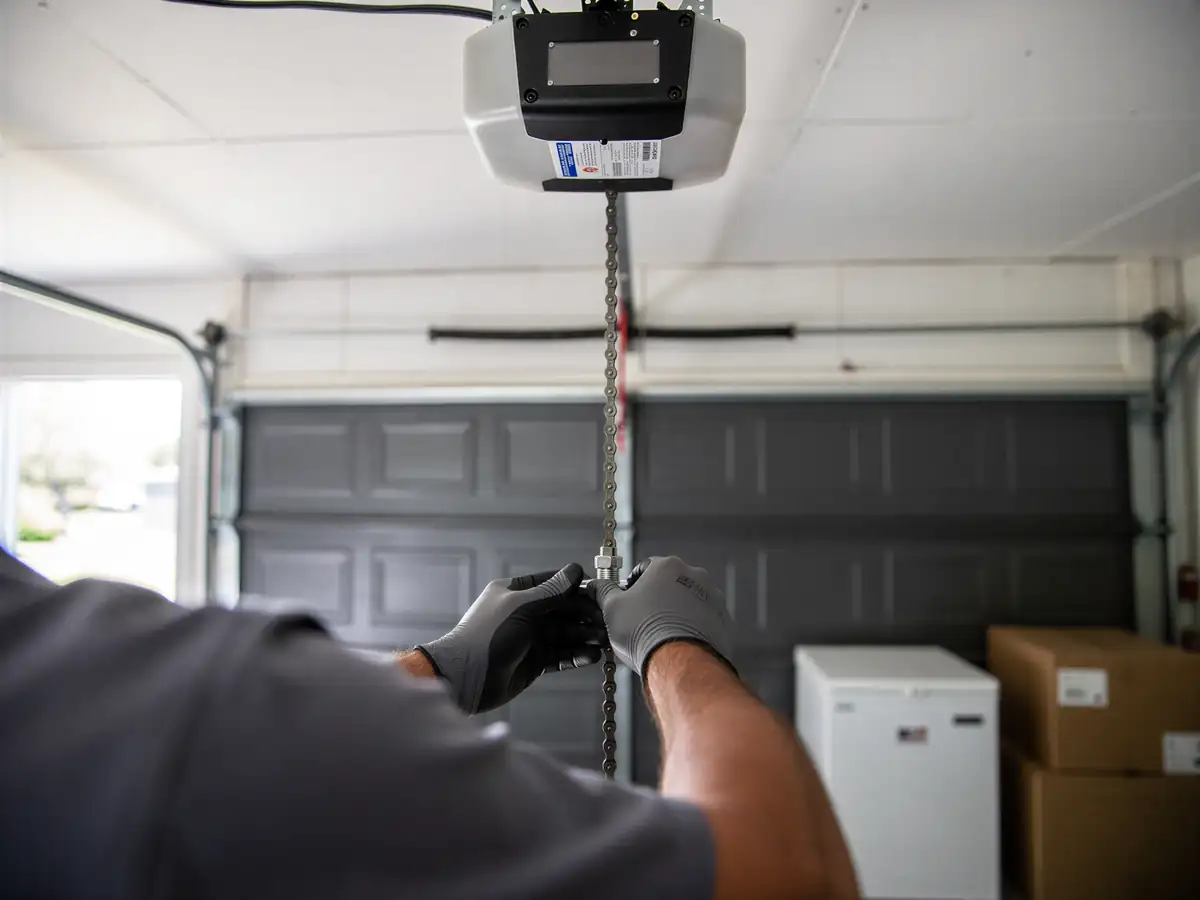
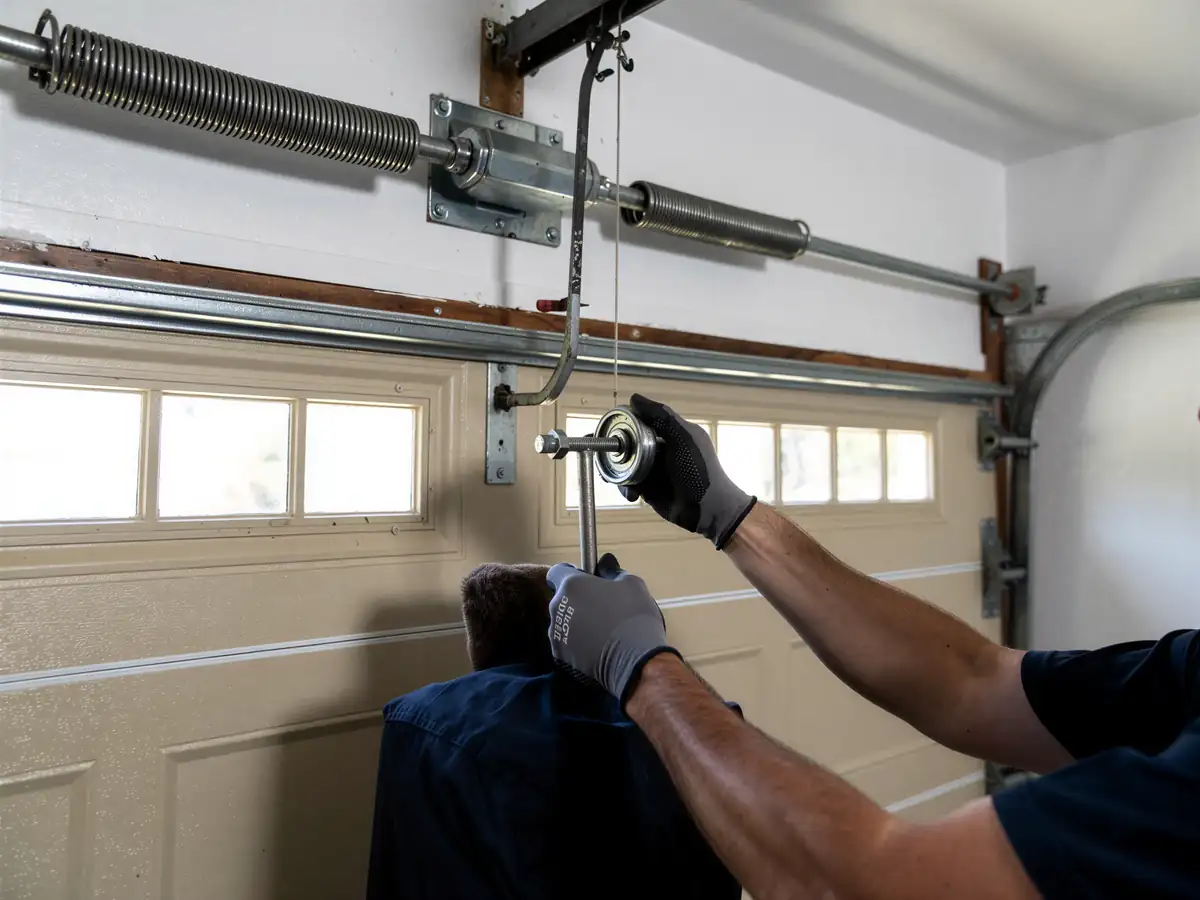
The door opens partway and reverses, or it won't respond to the opener at all but moves fine by hand - that combination points to the photo-eye sensors or the opener's circuit board, not the spring, and it's common on the newer opener models that came standard in homes built through the 1990s and 2000s. A door that's heavy to lift by hand, sags on one side, or makes a bang followed by total refusal to move is a torsion spring, and that's not a DIY fix on any door built with sealed torsion hardware.
Cold mornings make both worse. Stiff lubricant and contracted metal add load right when a spring or cable is already near the end of its life, so a fault that was marginal in October can fail outright in January.
Doing It Yourself
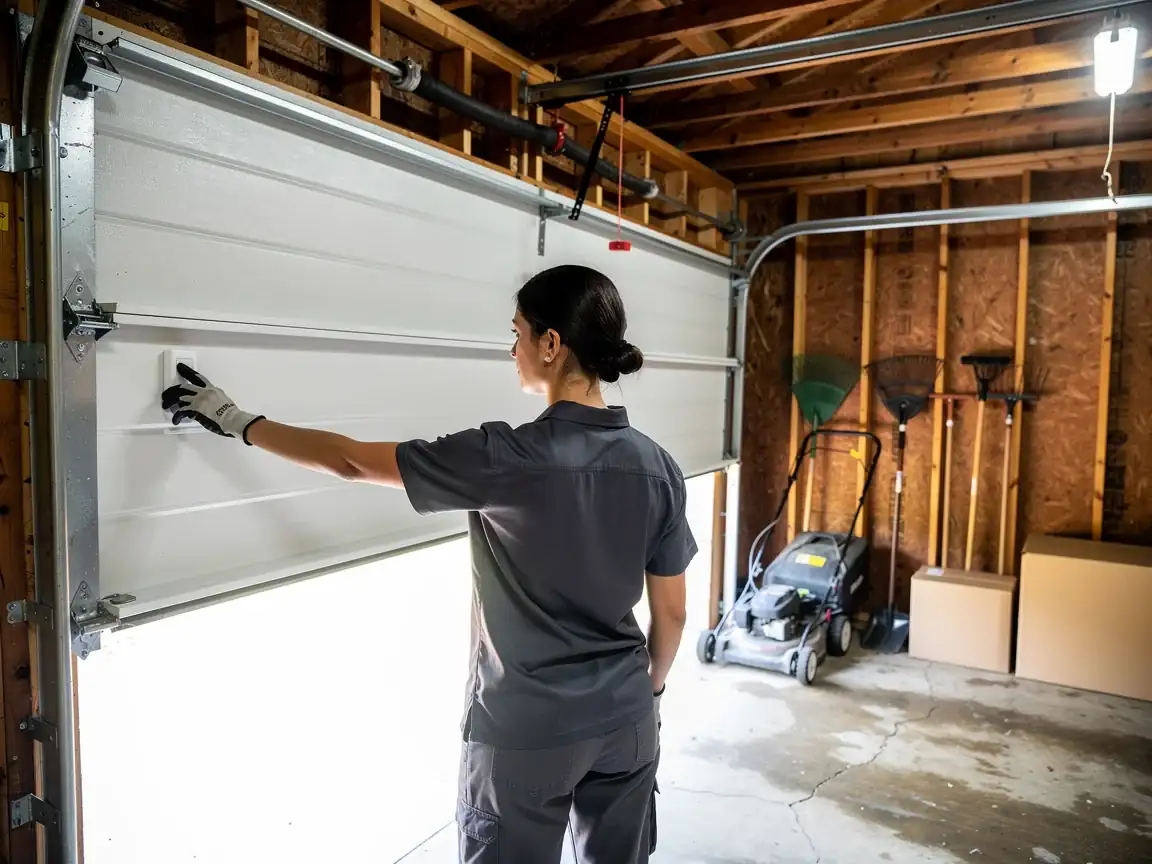
Check the photo-eye sensors first - they sit a few inches off the floor on each side of the track, and dirt, a spiderweb, or a knocked-out-of-alignment bracket is enough to stop the door cold. Wipe the lenses and make sure both lights are solid, not blinking. If that doesn't fix it, check the wall switch and the opener's circuit breaker before assuming the motor is dead.
What not to touch: the torsion spring itself. It's under enough tension to cause real injury, and on doors built to 1990s-era code that tension is set for the specific door weight - guessing wrong isn't a minor mistake. If lifting the door by hand feels heavy or uneven, leave the spring alone and call it in.
How Long You Are Without the Door
Most single-fault jobs
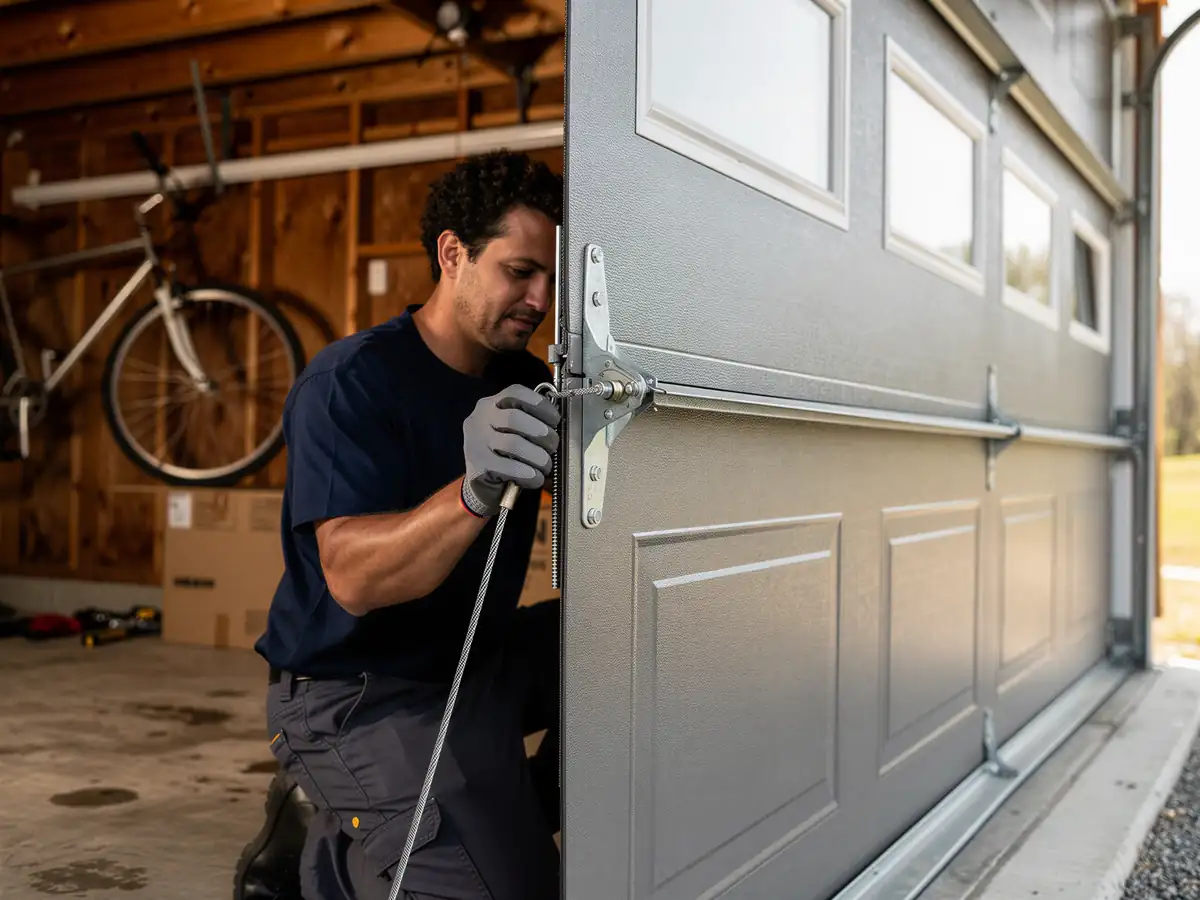
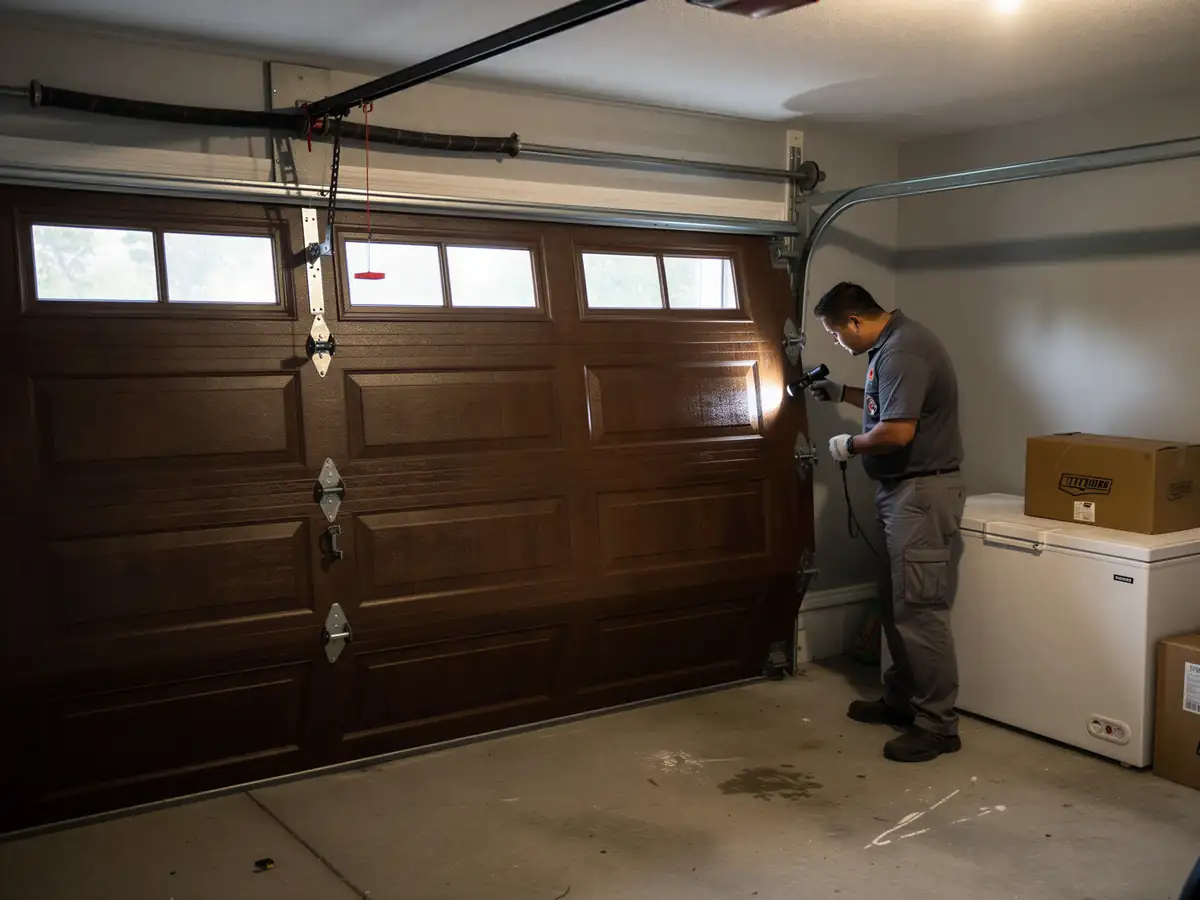
A bad sensor, a failed circuit board, a single broken spring - get resolved in one visit once we're on site, parts allowing. The 15-mile drive from Aurora is the variable: it's built into scheduling, not into the repair time itself, so once the truck arrives the work moves at the normal pace for the fault.
Where it stretches out is uncommon parts or a door that needs a part we didn't stock for this trip
In that case we'll secure the door if it's safe to leave as-is, and you're looking at a second visit rather than a same-day finish. We'd rather tell you that up front than promise a fix we can't deliver on the first trip out.